Microsoft’s AI-901, the current version of Azure AI Fundamentals, is open to anyone for $99 with no employer requirement, while every Claude certification requires your organization to hold Claude Partner Network membership before you can even register; this access gap should weigh more heavily in your decision than either exam’s specific content.
The direct answer: Start with AI-901 if you want a broadly recognized, immediately accessible AI credential backed by Microsoft’s long-established certification ecosystem. Pursue a Claude certification specifically if your organization already holds Claude Partner Network access and your daily work involves building or architecting Claude-powered systems, since AI-901 does not test any single foundation model’s implementation details the way Claude’s certifications do. Full official details live on Microsoft’s AI-900 vs AI-901 comparison and Anthropic’s Partner Academy certifications page.
Claude Certification vs AI-900/AI-901 at a Glance
| Detail | Microsoft AI-901 | Claude Certifications, CCAO-F through CCAR-P |
| Registration access | Open to anyone, no employer requirement | Requires Claude Partner Network membership, personal emails blocked at checkout |
| Cost | $99 | $99 to $175 depending on credential |
| Scope | AI concepts, Azure AI Foundry basics, AI agents at a conceptual level | Deep, Claude-specific implementation and architecture skill |
| Prerequisites | None | None between any of the 4 Claude credentials |
| Validity | Fundamentals-level, does not expire | 12 months |
| Market maturity | Established Microsoft certification ecosystem, decade-plus of AZ and AI credentials | New, launched March 2026 |
Important: AI-901 recently replaced AI-900, which retired June 30, 2026, and shifted its framing from AI concept recognition toward building basic AI apps and agents, including Microsoft Foundry basics. If you are comparing older material describing AI-900 specifically, confirm you are looking at current AI-901 content instead. For the complete breakdown of that transition, see our AI-900 vs AI-901 guide.
What AI-901 Actually Tests
| Area | Focus |
| Core AI and generative AI concepts | Foundational understanding, including large language models and generative AI as mainstream concepts |
| Microsoft Foundry basics | Conceptual introduction to Microsoft’s unified AI application platform |
| AI agents and agentic concepts | What AI agents are and how they fit into Microsoft’s AI application stack |
| Building simple AI applications | How Azure AI services combine into functional applications, at a conceptual level |
| Responsible AI | Extended into generative AI and agent-specific responsible AI considerations |
Key point: AI-901 tests conceptual understanding, not hands-on implementation. It validates that you understand what AI services exist within the Azure ecosystem and how they combine, without requiring you to actually build or architect a production system the way Claude’s Developer and Architect tracks do.
What Claude Certifications Actually Test
| Credential | Focus |
| CCAO-F | Non-technical Claude fluency for business roles, no coding |
| CCDV-F | Hands-on Claude API and Agent SDK implementation across 8 domains |
| CCAR-F | Production Claude system architecture across 5 domains, tested through realistic deployment scenarios |
| CCAR-P | Enterprise-scale Claude deployment ownership |
Note: Claude’s certification exams ban AI assistance during the test itself, no Claude, no ChatGPT, no browsing, everything must be internalized, a detail that underscores how much these exams assume genuine hands-on fluency rather than conceptual familiarity. For the complete overview of all 4 credentials, see our Claude Certification Path guide.
The Real Difference: Broad Platform Literacy vs Deep Model-Specific Skill
The direct comparison: AI-901 validates broad conceptual literacy across Microsoft’s entire AI ecosystem, useful regardless of which specific AI tools your organization eventually adopts. Claude certifications validate deep, hands-on skill specific to one model provider, useful specifically if your organization has committed to Claude and holds the Partner Network access required to even register.
| Your Situation | Better Fit |
| You want an AI credential accessible today regardless of employer | AI-901 |
| Your organization uses multiple AI platforms or hasn’t committed to one | AI-901 |
| Your organization already holds Claude Partner Network access | Consider a Claude certification matching your role |
| You want the most established, widely recognized entry-level AI certification | AI-901 |
| Your daily work is specifically building or architecting Claude-powered systems | A Claude certification, once access is confirmed |
Cost Comparison
Microsoft AI-901
| Item | Cost |
| Exam fee | $99 |
| Retake, if needed | Full fee again |
| Renewal | Never expires, Fundamentals-level credential |
Claude Certifications
| Credential | Cost |
| CCAO-F | $99 |
| CCDV-F | $125 |
| CCAR-F | $125 |
| CCAR-P | $175 |
The honest comparison: Both entry points cost the same $99. The real cost difference is not financial, AI-901’s total cost of entry is genuinely just the exam fee, while Claude certification’s real cost of entry includes securing organizational Partner Network access first, something no amount of individual budget solves.
Who Should Pursue Which Credential
Anyone wanting a broadly recognized, immediately accessible AI credential. AI-901 fits, backed by Microsoft’s established certification ecosystem and open registration.
Professionals at organizations using or evaluating multiple AI platforms. AI-901’s broader, less vendor-committed framing transfers more readily across different employer contexts than a Claude-specific credential.
Engineers and architects at organizations with confirmed Claude Partner Network access whose daily work centers on Claude specifically. A Claude certification matching your role validates specialized skill AI-901’s conceptual scope does not test. See our CCAO-F vs CCDV-F comparison and CCDV-F vs CCAR-F comparison to choose the right one.
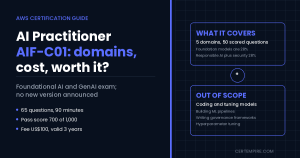
Candidates who could reasonably pursue both. AI-901 establishes broad, portable AI literacy that most hiring contexts recognize immediately. A Claude certification, once access is available, adds specific depth for Claude-focused work. For a similar comparison against AWS’s entry-level AI credential, see our Claude Certification vs AWS AI Practitioner guide.
Common Mistakes When Comparing These Paths
Assuming AI-901 tests hands-on Claude-adjacent skills because it covers AI agents conceptually. It does not test any specific foundation model’s implementation details, Claude or otherwise, at a deep level.
Pursuing a Claude certification before confirming your organization actually has Partner Network access. No amount of individual preparation overcomes this registration gate.
Comparing these 2 paths as if they compete for the identical decision. AI-901 is broad and open. Claude certifications are narrow and gated. The real comparison is about access and scope, not simply which content is better.
Assuming older AI-900 study materials fully prepare you for AI-901. The exam shifted its framing toward building AI apps and agents and introduced Microsoft Foundry content that AI-900 never covered.
Dismissing Claude certification as not worth comparing because it’s newer. For professionals with confirmed Partner Network access doing Claude-specific work, it validates skill AI-901’s broader scope does not cover.
FAQS
Which is easier to get, AI-901 or a Claude certification?
AI-901, purely on accessibility. It requires no organizational sponsorship, while every Claude certification requires your employer to hold Claude Partner Network membership before you can register.
How much does AI-901 cost compared to Claude certifications?
AI-901 costs $99, identical to CCAO-F. CCDV-F and CCAR-F cost $125, and CCAR-P costs $175.
Do these certifications test the same content?
No. AI-901 tests broad AI concepts and Microsoft Foundry basics conceptually. Claude certifications test deep, hands-on, Claude-specific implementation and architecture skill.
Can I take a Claude certification exam without my employer’s involvement?
No. Registration requires an account connected to an organization already in the Claude Partner Network, and personal email addresses are blocked at checkout.
Does AI-901 expire?
No, as a Fundamentals-level Microsoft credential, it does not expire. Claude certifications are valid for 12 months with a free renewal option within that window.
Should I get both certifications?
It’s reasonable if you have access to both. AI-901 provides broad, portable AI credibility, while a Claude certification adds specific depth if your work involves Claude and your organization has Partner Network access.
What replaced AI-900?
AI-901, effective as Microsoft’s current Azure AI Fundamentals exam following AI-900’s retirement on June 30, 2026, shifting emphasis toward building AI apps and agents rather than pure concept recognition.
Is AI-901 harder than a Claude certification?
They are difficult to compare directly since they test different scope. AI-901 covers broad conceptual ground, while Claude certifications, particularly CCAR-F and CCDV-F, test deep scenario-based or implementation-specific skill.
What happens if I want a Claude certification but my employer isn’t a Partner?
Certification is not currently accessible to you as an individual. See our guide to joining the Claude Partner Network for what your organization would need to do first.
Which certification should someone new to AI pursue first?
AI-901, given its open access, Microsoft’s established recognition, and broad foundational content applicable regardless of which AI platforms you eventually work with.