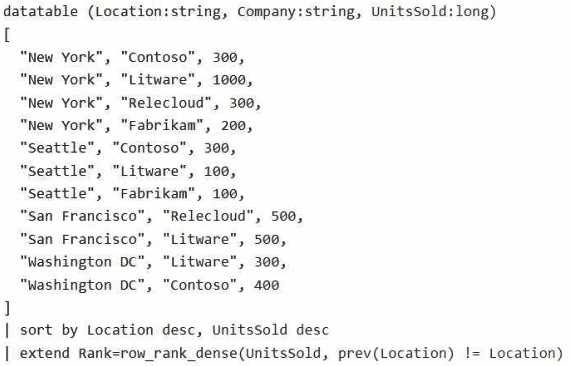
Here is a step-by-step evaluation of the query:
- sort by Location desc, UnitsSold desc: The table is first sorted by
Location in descending alphabetical order (Washington DC, Seattle, San Francisco, New York). Within each location, it's sorted by UnitsSold in descending numerical order. - extend Rank=row_rank_dense(UnitsSold, prev(Location) != Location): This adds a
Rank column. The row_rank_dense(Term, Restart) function assigns a rank based on the Term (UnitsSold) and restarts the rank (sets it back to 1) whenever the Restart condition (prev(Location) != Location) is true.
This query effectively partitions the data by Location and then assigns a dense rank based on UnitsSold (highest UnitsSold gets rank 1, the next highest gets 2, etc.).
Resulting Table (abbreviated):
"Washington DC", "Contoso", 400, Rank 1 "Washington DC", "Litware", 300, Rank 2 "Seattle", "Contoso", 300, Rank 1 "Seattle", "Fabrikam", 100, Rank 2 "Seattle", "Litware", 100, Rank 2 "San Francisco", "Litware", 500, Rank 1 "San Francisco", "Relecloud", 500, Rank 1 "New York", "Litware", 1000, Rank 1 "New York", "Contoso", 300, Rank 2 "New York", "Relecloud", 300, Rank 2 "New York", "Fabrikam", 200, Rank 3
Statement Analysis:
- Litware from New York...: No. The top row is "Washington DC", "Contoso" because of the
sort by Location desc. - Fabrikam in Seattle...: Yes. In the "Seattle" group, "Contoso" (300) gets rank 1. "Fabrikam" (100) has the next highest
UnitsSold value, so it gets rank 2. "Litware" (100) shares this rank. - Litware in San Francisco...: Yes. "Litware in San Francisco" (500) has the highest
UnitsSold for its location, getting rank 1. "Litware in New York" (1000) also has the highest UnitsSold for its location, getting rank 1.

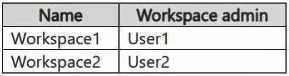 You have a security group named Group1 that contains User1 and User3. The Fabric admin creates the domains shown in the following table.
 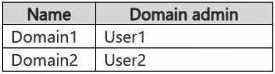 User1 creates a new workspace named Workspace3. You add Group1 to the default domain of Domain1. For each of the following statements, select Yes if the statement is true. Otherwise, select No. NOTE: Each correct selection is worth one point.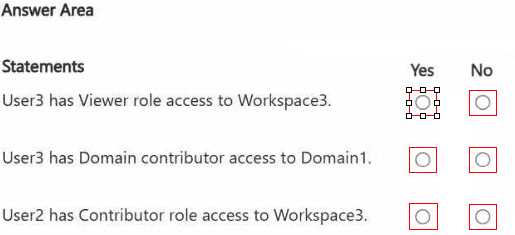
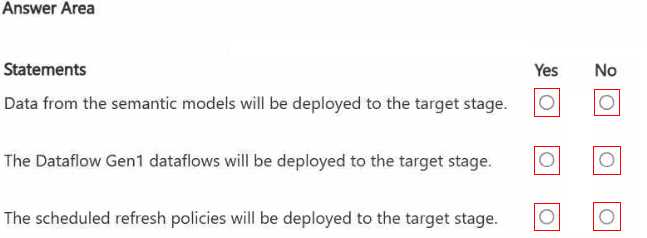
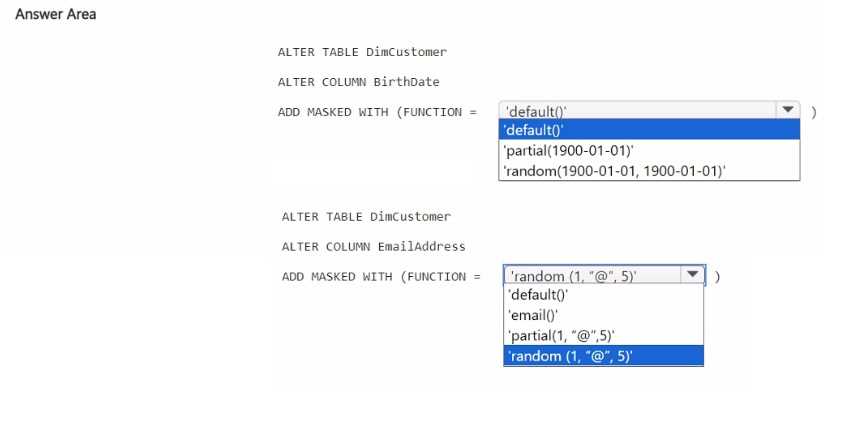
 For each of the following statements, select Yes if the statement is true. Otherwise, select No. NOTE: Each correct selection is worth one point.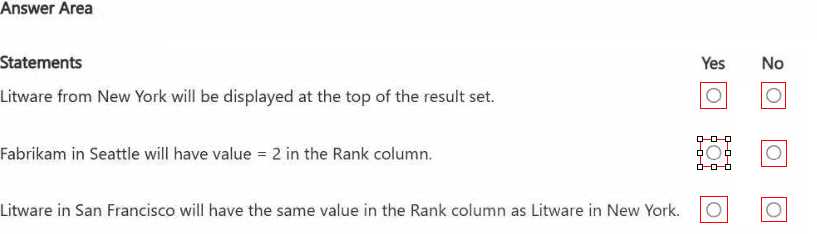
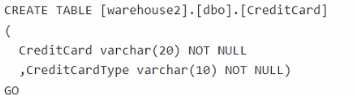 You need to ensure that the team can view only the first two characters and the last four characters of the Creditcard attribute. How should you complete the statement? To answer, select the appropriate options in the answer area. NOTE: Each correct selection is worth one point.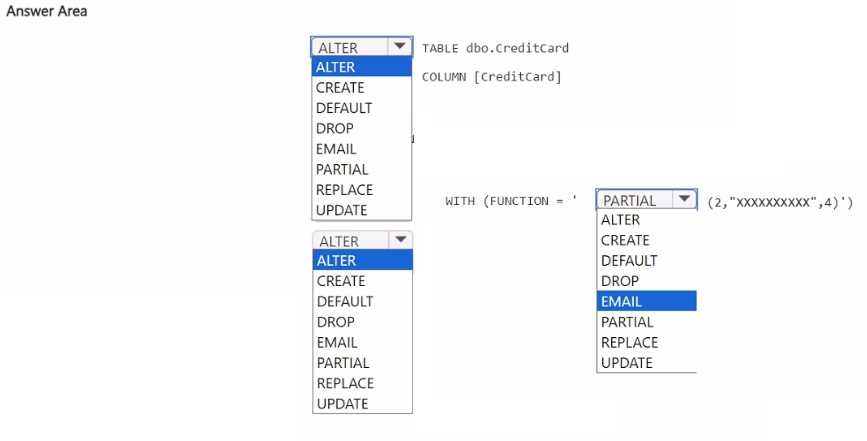
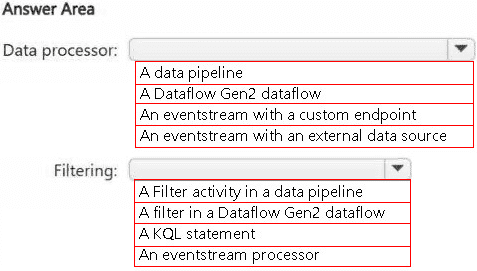
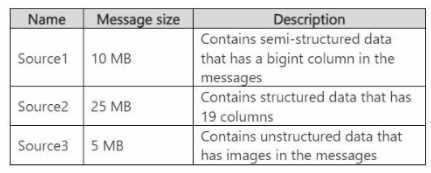 The solution must minimize development effort. What should you include in the recommendation for each source? To answer, select the appropriate options in the answer area. NOTE: Each correct selection is worth one point.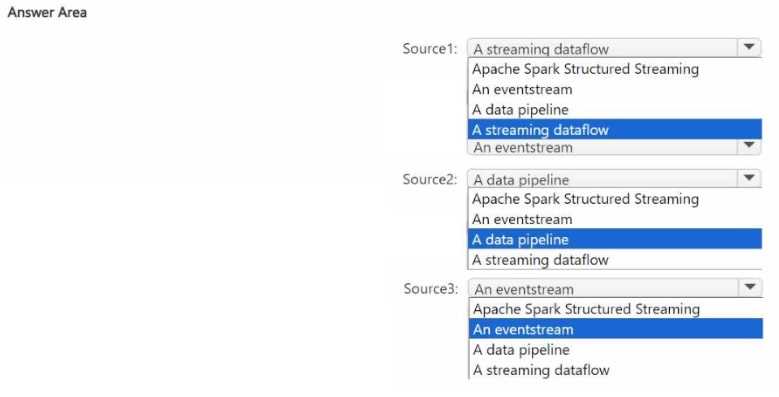
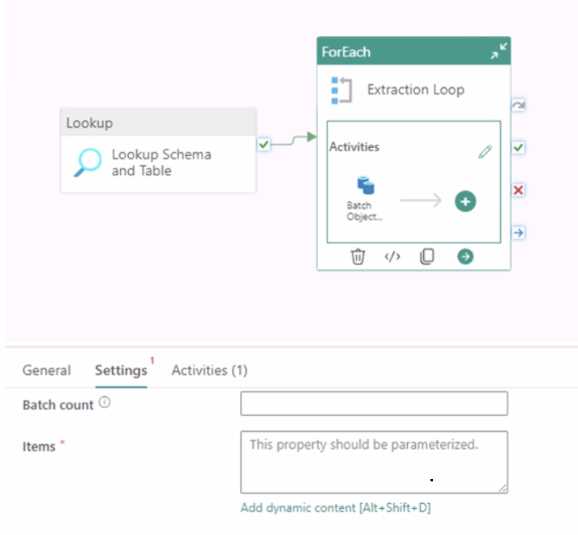 Dynamic Data Copy does NOT use parametrization. You need to configure the ForEach activity to receive the list of tables to be copied. How should you complete the pipeline expression? To answer, select the appropriate options in the answer area. NOTE: Each correct selection is worth one point.
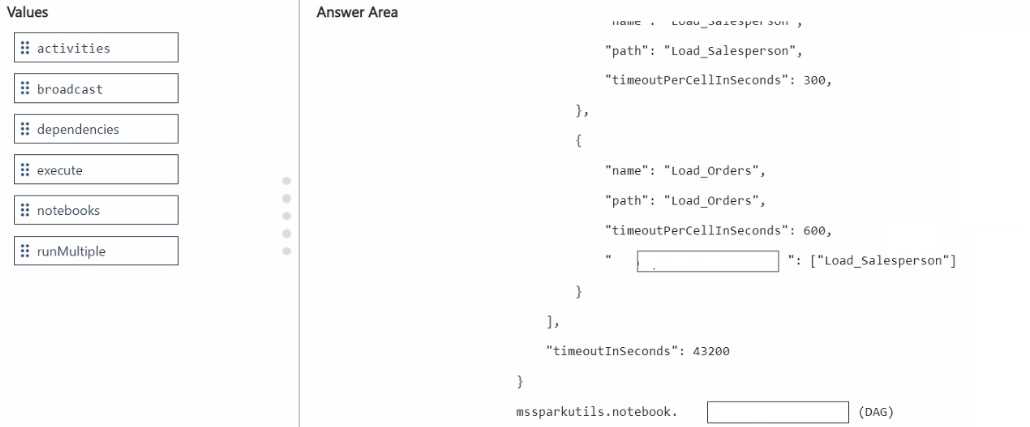
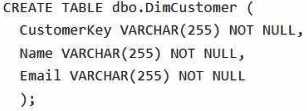 You need to set the Customerkey column as a primary key of the DimCustomer table. Which three code segments should you run in sequence? To answer, move the appropriate code segments from the list of code segments to the answer area and arrange them in the correct order.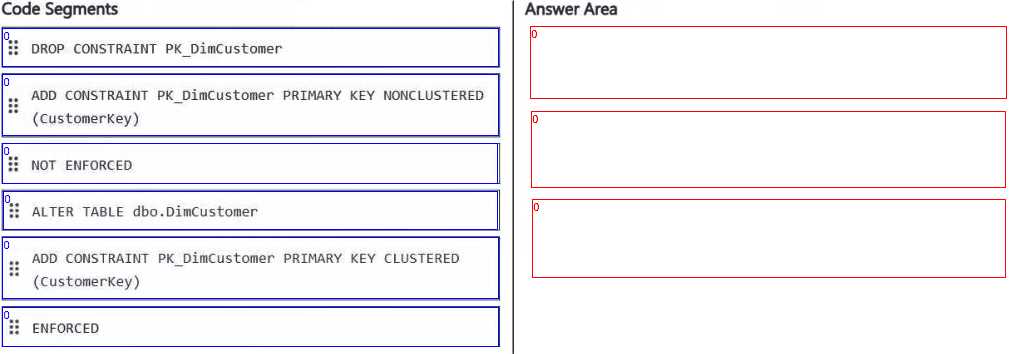
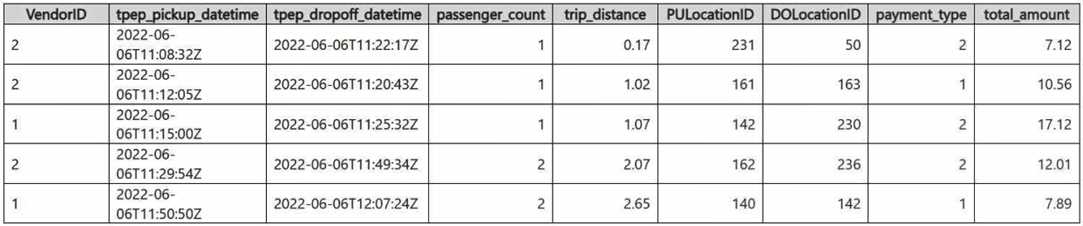 You need to build two KQL queries. The solution must meet the following requirements: One of the queries must partition RunningTotalAmount by VendorID. The other query must create a column named FirstPickupDateTime that shows the first value of each hour from tpep_pickup_datetime partitioned by payment_type. How should you complete each query? To answer, drag the appropriate values the correct targets. Each value may be used once, more than once, or not at all. You may need to drag the split bar between panes or scroll to view content. NOTE: Each correct selection is worth one point.