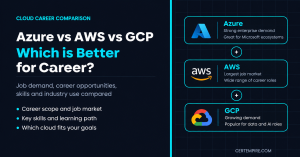
Azure vs AWS vs GCP: which is better for your career? Start with AWS if you want the most job openings, choose Azure if you aim for large Microsoft-based employers, and pick Google Cloud if you want a data and AI focus.
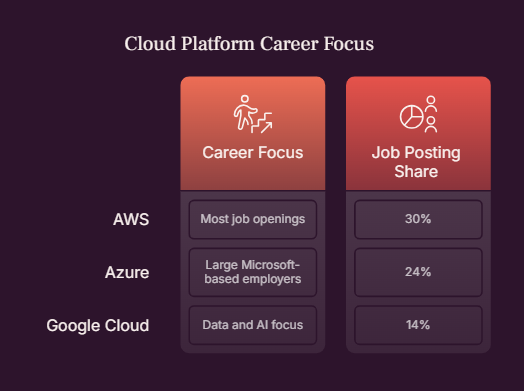
In U.S. tech job postings from January 2025 to March 2026, AWS appeared in 30%, Azure in 24%, and Google Cloud in 14%, according to Oxylabs Research. Still, the best pick depends on your target employers, not on a ranking.
This guide gives you a quick decision table, demand by role, pay data with honest limits, and a five-question scorecard.
Quick Answer: Which Cloud Fits Which Career Goal
AWS fits most beginners, Azure fits Microsoft-based employers, and Google Cloud fits data and AI specialists. Find your goal in this table.
| Your goal | Best first cloud | Why |
| Most job openings, startups, general tech roles | AWS | It appears in the most postings (30%) |
| A large enterprise or a Microsoft-based employer | Azure | It fits the Microsoft tools many employers already run |
| Data, analytics or AI/ML work | Google Cloud, or AWS | Google Cloud has a data focus but fewer postings |
| Not sure yet | AWS basics, then add a second cloud | Core ideas carry over between clouds |
Market Share and Job Demand: What the Numbers Say
AWS still leads on both market share and job postings, but Azure and Google Cloud are growing faster.
Synergy Research Group put Q3 2026 cloud infrastructure spending at about $167.7 billion, up 55% from a year earlier. Amazon held 26% of that market, Microsoft 19% and Google 16%. Microsoft and Google grew much faster than Amazon. Synergy also says AI-specific cloud services now make up about a third of the market.
Market share counts spending, not jobs. For jobs, Oxylabs Research studied roughly 850,000 U.S. tech postings from January 2025 to March 2026. Nearly 42% asked for at least one of the three big clouds. AWS appeared in 30%, Azure in 24% and Google Cloud in 14%. AWS and Azure together appeared in 15%, the most common pairing.
Developers tell a similar story. In Stack Overflow’s 2026 Developer Survey, 41.8% reported extensive work with AWS in the past year, against 25.1% for Azure and 24.5% for Google Cloud.
Demand by role in U.S. postings
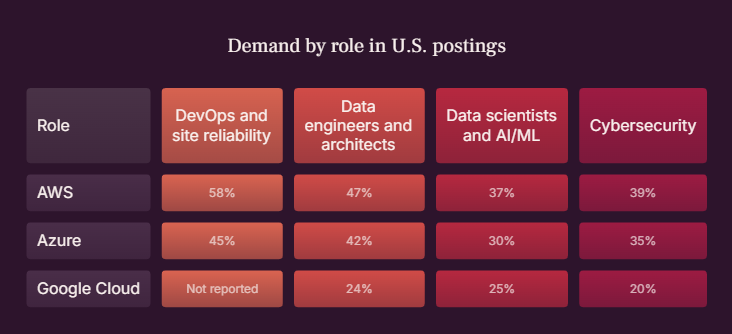
The cloud that leads depends on the job. This table comes from the same Oxylabs study.
| Role | AWS | Azure | Google Cloud |
| DevOps and site reliability | 58% | 45% | Not reported |
| Data engineers and architects | 47% | 42% | 24% |
| Data scientists and AI/ML | 37% | 30% | 25% |
| Cybersecurity | 39% | 35% | 20% |
Two patterns stand out. First, even in data and AI roles, AWS and Azure outnumber Google Cloud, so its edge is a focused field, not more openings. Second, Azure leads AWS in 11 mostly Upper Midwest and Southern states, which Oxylabs links to regional enterprise ties in manufacturing, agriculture and healthcare.
Keep the limits in mind. The data covers U.S. postings only, relies on keyword matching and is not weighted by pay or seniority. The U.S. is 44% of the world cloud market, and Synergy lists India, Indonesia, Ireland, Canada and Taiwan among the fastest-growing markets in local currency. Check your own country’s job boards before you decide.
AWS Careers: The Widest Door
AWS is the safest first pick if you want the most openings and the broadest range of employers.
It leads in every role in the table above, and it is strongest in DevOps and site reliability postings (58%). It also dominates among employers new to cloud. Revelio Labs found that in July 2024, more than three in five postings from first-time cloud hirers targeted AWS skills, against fewer than one in four for Azure.
The trade-off is a narrowing lead. Revelio found AWS in about 40% of cloud technician postings in July 2024, down from more than 60% in 2017, while Azure rose from 21% to 34%. More openings also usually mean more applicants, so a strong project matters even more.
Common AWS-based roles include cloud engineer, DevOps engineer, solutions architect and site reliability engineer. If DevOps is your goal, our AWS vs DevOps career path guide shows how the two fit together.
Azure Careers: Strong Where Microsoft Is Already Inside
Azure is the strongest pick when your target employer already runs on Microsoft tools.
Azure appears in 24% of U.S. tech postings, including 45% of DevOps and site reliability postings and 42% of data engineering postings. It leads in 11 states, and Revelio found it gaining ground in IT services and in aerospace and defense. Because AWS and Azure show up together in 15% of postings, many employers want people who know both.
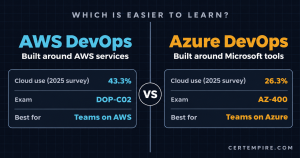
The trade-off is exam change. Microsoft’s own AZ-400 page says that DevOps exam retires on February 1, 2027, so check Microsoft Learn before you plan around it. For a beginner view of that choice, read our guide on AWS DevOps vs Azure DevOps.
One perk is worth knowing. Microsoft’s fundamentals certifications do not expire, and its associate and expert certifications renew free each year through an online assessment.
Google Cloud Careers: The Specialist Route
Google Cloud is the specialist pick: a smaller job market with a data and AI flavor.
It appears in 14% of U.S. tech postings, about 2.1 times less often than AWS. In data and AI roles its share rises to 24% to 25%. It is not a weak platform, though. Google held 16% of cloud spending in Q3 2026 and grew faster than Amazon. In Stack Overflow’s 2026 survey, 24.5% of developers reported extensive Google Cloud work, almost level with Azure. Among current users, 42.6% said they want to keep using it, close to Azure at 43.2% and AWS at 45.8%.
The practical catch is volume. Fewer postings mean fewer places to apply. In my reading, Google Cloud makes the most sense when you already target a data or AI team, or an employer that uses it. If you are starting from zero with no target employer, it is a riskier first bet.
Does AWS or Azure Pay More? What the Data Can and Cannot Say
No source I found proves that one cloud pays more. Role, seniority and city move pay far more than the logo does.
Two public snapshots show why. A cloud career guide citing Glassdoor, with no date, lists median total pay for cloud developers at about $130,000 for AWS, $152,000 for Azure and $162,000 for Google Cloud. A cloud salary guide citing Talent.com, also undated and self-reported, lists $140,000 for AWS, $141,619 for Azure and $143,000 for Google Cloud. The Google Cloud figure there rests on only 632 reports.
| Source type | AWS | Azure | Google Cloud |
| Glassdoor, as cited in a career guide | About $130,000 | About $152,000 | About $162,000 |
| Talent.com, as cited in a salary guide | $140,000 | $141,619 | $143,000 |
Both lists put AWS lowest, yet the gap swings from about $3,000 to $32,000. That tells me the data is too noisy to build a decision on. It also does not say whether job title, seniority or location explains the gap.
A better method takes ten minutes:
- Pick your exact target title and city.
- Collect ten postings that show a salary range.
- Note which cloud each posting asks for.
Your own sample will beat any national average.
How to spot an outdated cloud comparison
Many comparison pages quote old numbers. Run three quick checks on any guide, including this one:
- Check the date on every market share figure. Shares move each quarter.
- Check whether each pay figure names its source and year.
- Check whether the job data comes from your own country.
A guide that fails these checks is a weak base for a career decision.
Cloud Certifications Compared: Entry Exams, Cost and Renewal
Each vendor has a beginner-friendly exam. The real differences are price, length and how long the credential lasts.
| Entry exam | Fee | Length | Valid for |
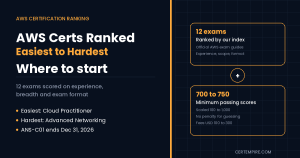
| AWS Certified Cloud Practitioner (CLF-C02) | $100 | 90 minutes, 65 questions | 3 years |
| Azure Fundamentals (AZ-900) | Varies by country | 45 minutes | Does not expire |
| Google Associate Cloud Engineer | $125 | 2 hours, 50 to 60 questions | 3 years |
These exams are not a like-for-like match. Cloud Practitioner and AZ-900 are foundational, while Google’s Associate Cloud Engineer is a step above and expects about six months of hands-on work. I list it because Google’s page gives full exam details.
Renewal rules differ too. AWS lets you recertify by passing the latest exam, passing an associate or professional exam, or finishing its game-based Cloud Quest option. Microsoft renews associate and expert certifications each year with a free, open-book online assessment. Google offers a shorter renewal exam for the Associate Cloud Engineer certification as well as the standard exam.
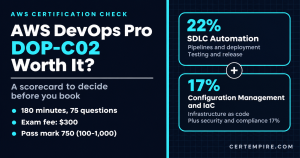
A beginner exam shows effort, not skill. In my reading, a small project you can explain closes more interviews than a badge alone. When you are ready for a deeper AWS exam, see our guide on whether the AWS DevOps Engineer Professional is worth it.
What Engineers and Learners Say About Choosing
Most public advice agrees on AWS for job volume and disagrees on almost everything else. Here is what real people have shared on developer forums and blogs.
- A forum poster in 2019 chose AWS for its user base and job count, while admitting a preference for Google’s technology. A reply called that preference unfounded.
- Another engineer suggested AWS first, then Google Cloud. They found Azure’s design a little odd, but said infrastructure concepts come quickly once you know AWS.
- One developer ranked clouds by situation. For a Windows-based employer, Azure comes first. For job hunting, the order is AWS, Azure, then Google Cloud. They personally liked Azure’s console best.
- A junior MLOps engineer noted that AWS and Azure list more jobs but draw more competition. Their advice was to match the platform to your goal and learn its AI services.
Treat these as opinions, not data. Still, they point the same way as the job numbers: the right first cloud depends on where you want to work.
How to Choose: A Five-Question Scorecard
Let your local job posts break ties, because they are evidence and rankings are not. Answer these five questions in order.
| Question | If your answer is… | Lean toward |
| Which cloud do most of ten target job posts name? | One cloud clearly leads | That cloud |
| Does your employer or target employer run Microsoft 365 or Active Directory? | Yes | Azure |
| Do you want data engineering or ML roles? | Yes | Google Cloud, with AWS as backup |
| Are you starting from zero with no target employer? | Yes | AWS |
| Does a large local employer you want to join publicly use one cloud? | Yes | That cloud |
If your answers split, follow question one. It is the only question based on real openings near you.
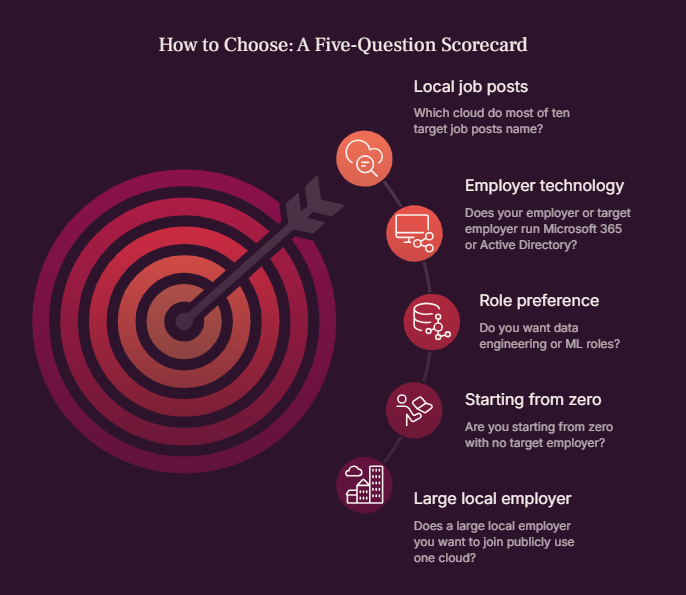
To run the job-post test, search your target title on a job board, open ten postings and tally the clouds they name. Do it in your own country, because the Oxylabs data is U.S. only. The scorecard is my own rule of thumb, not an industry standard.
Skills That Transfer, and a 90-Day Plan
Learn the ideas first and the console second, because ideas carry across all three clouds. Networking, identity and access, storage, compute and monitoring work much the same everywhere.
The Oxylabs top ten backs this up. Kubernetes appears in 14% of postings, Docker in 13% and Terraform in 8%, and none of them belongs to one vendor. One career guide I read estimates a second cloud takes weeks, not months, once your fundamentals are solid. Treat that as a rough estimate.
Here is a simple plan for your first cloud:
- Days 1 to 30: Pick one cloud with the scorecard. Learn core services on a free account.
- Days 31 to 60: Build one small project, such as a web app with a database, deployed through a pipeline.
- Days 61 to 90: Sit the beginner exam, write up your project and apply.
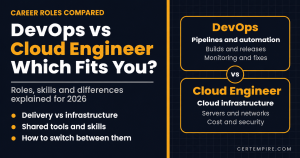
Not sure which job title to aim for? Our guide to DevOps vs cloud engineer explains the roles.
Frequently Asked Questions
Will GCP overtake AWS?
Not soon, based on current numbers. In Q3 2026, Synergy had Amazon at 26% of cloud spending and Google at 16%, a 10-point gap. Google grew faster, so the gap may narrow, but no one can promise it. Plan around the job market today.
Is AWS losing to Azure?
AWS is still ahead, but its lead is shrinking. Revelio found AWS in a smaller share of cloud technician postings in 2024 than in 2017, while Azure’s share rose. Oxylabs still shows AWS in 30% of U.S. postings against 24% for Azure.
Is GCP harder than AWS?
I found no neutral study that measures this. Difficulty depends on your background and the exam level. Compare same-level exams, read each official exam guide, and try sample questions before you choose.
Does GCP have a future?
Yes. Google held 16% of cloud spending in Q3 2026 and grew faster than Amazon. Developers use it widely too, at 24.5% in Stack Overflow’s 2026 survey. The main limit is fewer job postings, not a lack of momentum.
Should I learn AWS or GCP?
Learn AWS first for the widest job market. Choose Google Cloud first only if you already target a data or AI team, or an employer that runs on it. Use the scorecard above, and check ten local postings before you commit.
Which is the best cloud certification to start with?
The best start is the entry exam for the cloud your target employers use. That means Cloud Practitioner for AWS, AZ-900 for Azure, or Associate Cloud Engineer for Google Cloud. AZ-900 never expires, while the other two last three years.
What are the top 3 cloud platforms?
The top three are AWS, Microsoft Azure and Google Cloud. By Q3 2026 spending, Synergy ranks them in that order, at 26%, 19% and 16% of the market. Together that is about 61% of all cloud infrastructure spending.
Conclusion: Pick the Cloud Your Target Employers Use
So, Azure vs AWS vs GCP: which is better for your career? AWS gives the widest door, Azure wins at Microsoft-based employers, and Google Cloud suits data and AI specialists. The right answer is the one your own job posts point to.
Run the ten-posting test, pick one cloud, and build one project in 90 days. When you are ready to practice, try the free practice tests at Cert Empire and find more guides on the Cert Empire blog. To compare pay and roles in depth, read our AWS vs DevOps career path hub guide.