Free Plat-Admn-202 Practice Test Questions and Answers (2026)

View Mode
Q: 1
The Loyalty Program Manager at Northern Trail Outfitters (NTO) has defined a new Promotion in Salesforce Loyalty Management. NTO would like to communicate this new Promotion with its eligible members. Which two integrated Salesforce applications can facilitate this com
Options
21 comments in the community discussion
1
Its C and D for me. If UC is launching a separate program, I think they'd need to build new components (C) and also a new portal (D). Not totally certain though, since maybe existing stuff could be reused?
1
B/D, not A-trap since one portal can't serve two programs in Loyalty Management.
Q: 2
Northern Trail Outfitters (NTO) has launched a new promotion, which gives a hat and a pair of gloves to each member of the Loyalty Program that bought a coat in winter. However, winter has arrived, and the reports are missing information about the voucher definition of hat and gloves associated with any existing voucher and have found that there are transactions that contain the coat product. Which two options should the Loyalty Administrator review to verify why the promotion vouchers associated with the members who have bought coats are missing?
Options
20 comments in the community discussion
1
A and B make the most sense here since Batch Management tracks job status and processes lots of transactions. Pretty sure that's what Salesforce expects on the exam-saw similar logic in the official study guide. Disagree?
A B for sure, had something like this in a mock. Batch jobs handle volume and let you track status, not about file uploads here.
Q: 3
Cloud kicks wants to identify specific tier members to be used for a journey within Marketing Cloud. The company wants to encourage Loyalty Tier B customers to become Loyalty Tier A customers. What objects must be synchronized into Marketing Cloud to achieve the segmentation for this audience.
Options
21 comments in the community discussion
1
Its A and C, unless the org uses a custom setup. Evaluation Flow is for immediate (real-time) points, Schedule-Triggered Flow for batch jobs. Pretty sure those are the official methods but open to correction if new features exist.
1
A and C fit, pretty sure. Evaluation Flow handles real-time, Schedule-Triggered runs batch jobs. Saw similar coverage in the official guide and some practice sets.
Q: 4
A Consultant needs to configure the Loyalty tier groups for a Loyalty Program with the following specifications: Qualifying period is reset once a year on the 31st of March. The member-tier is not extended upon expiration. Which two settings within the Loyalty tier groups configuration should the Consultant configure to meet the required specifications?
Options
20 comments in the community discussion
2
B tbh, D looks tempting but View Member Profile is the standard Salesforce way here.
2
Option B, Had something like this in a mock and B was the right move.
Q: 5
A Consultant will need to create a new voucher definition for a new voucher, wherever the new voucher has the requirements. A total of two vouchers will be issued to the member. The first voucher has a face value of $100, and the second voucher has a face value of $200. Both vouchers must be used within three months after the first voucher’s disbursement date. The first voucher will be issued to the members over a period of a month. Which voucher definition settings will fulfill the new voucher’s requirements?
Options
18 comments in the community discussion
1
D imo, you need to actually reward advocacy like social shares not just purchases for this strategy.
1
B tbh. A points-based system (option B) seems like it should help, since it rewards spending consistently, and that keeps customers coming back. Maybe that's how you get advocates right? Not totally sure though, because it doesn't really focus on advocacy actions outside purchases. Anyone think B makes sense here?
Q: 6
A company's Marketing Team needs to set up a promotion and use Promotion Market Segments where members of a specific age range and with expressed preferences will benefit from this promotion. What is the recommended solution for the team to set up the Promotion Market Segments?
Options
25 comments in the community discussion
2
A/D. B trips people up, but targeted strategy really means segmentation and personalization, not just background data cleanup. Anyone disagree?
1
I don't think it's C. The question's about "targeted strategy," which in Salesforce lingo usually means segmentation and tailored messaging, so that's A and D. C just covers tier-based rewards, not targeted actions. Pretty sure A/D is right but happy to hear if someone thinks different.
Q: 7
A Loyalty Manager wants to send an SMS to a member's mobile device after the member has made a purchase and their non-qualifying points have been increased. An integrated solution between Salesforce Loyalty Management and Salesforce Marketing Cloud is proposed to meet this business need. Which two Salesforce solutions are required to meet the business's needs?
Options
21 comments in the community discussion
1
Option C and D
1
B tbh
Q: 8
Northern Trail Outfitters an online clothing store has recently enabled the Loyalty Program. Which objects count toward data storage capacity?
Options
22 comments in the community discussion
2
Its D for me. I remember a similar one on a practice - D seemed right because it's got batch update tools, and the screen looked like what we used for these automations. Might be wrong if they really mean instant though, not 100%.
1
D imo. The question mentions least dev effort and batch entry (like D) usually handles new records in bulk with minimal config, even if not truly real-time. Not 100 percent but seems less complex than setting up a real-time trigger.
Q: 9
An airline’s Loyalty program offers several ways to accrue points, including: * Enrollment Bonus * Member Referral * Flight Purchase * Additional information on the member profile. The Salesforce Administrator must classify the different accrual transaction journals. What should the administrator configure to meet these requirements?
Options
13 comments in the community discussion
1
B tbh. Without that license and right perms, app just stays hidden for the user.
1
So tired of Salesforce making permissions this confusing. B
Q: 10
What are the three steps required to complete integration between Loyalty and B2C Commerce Cloud when using the reference cartridge?
Options
23 comments in the community discussion
2
Makes sense to pick C for this. Two flows lets you split tier rules and orchestration, which is what Salesforce usually recommends.
1
Option C. DPE sounds tempting but it's more for high-volume needs, not this standard two-flow separation. Anyone disagree?
Q: 11
Which set of features should a Consultant check before setting up expanded partner management?
Options
9 comments in the community discussion
1
For me, B, C, and E here. Discount Percentage, Fixed Value, and Product or Service are the actual voucher types you can configure in Salesforce Loyalty Management. Gift Card tends to just describe how rewards are delivered. If anyone's seen otherwise let me know.
1
This flips if 'Gift Card' is defined as a reward type instead of just a delivery method, but in the Salesforce context, usually B, C, and E are correct. Gift Card mostly refers to fulfillment rather than the voucher type. If they change how they classify it though, D could be possible. Anyone getting differ
Q: 12
Northern Trail Outfitters wants to show member information in its member portal hosted outside of Salesforce. What is a prerequisite for using Loyalty APIs to fetch the member information?
Options
8 comments in the community discussion
2
Its C and D, seen some similar phrasing in official practice tests and the study guide.
1
Agree with the picks, it's A and B.
Q: 13
A Loyalty Program Manager has proposed a new promotion with the following redemption requirements on their non-qualifying points for the two respective tiers. * for Gold-tier members, a single non-qualifying point is equal to $2 if the total purchase value is $200 or more. * for Gold-tier members, a single non-qualifying point is equal to $1 if the total purchase value is less than $200. * for Gold-tier members, a single non-qualifying point is equal to $1, irrespective of the total value of the purchase. Considering the above requirements, which three redemption rule options should be selected for the proposed promotion?
Options
6 comments in the community discussion
C vs D here. I think it's D since each way to earn points (referral, bonus, etc) is a subtype of an accrual. Pretty sure Journal Subtype is built for this but I'm new to Loyalty Mgmt, so could be missing something. Agree?
Q: 14
The Loyalty Analytics Base App license provides technical Consultants access to Loyalty analytics data with what limitations?
Options
8 comments in the community discussion
C for sure. Transaction Journals show every point activity, so you get the most accurate read on how people actually use the program. Analytics Studio is more for summarizing, not tracking each engagement step. Pretty sure that's what they're testing here.
Why not A here? I’ve seen similar questions in the official guide and Analytics Studio is where most of the reporting and dashboards happen. Seems like a logical way to measure engagement too.
Q: 15
In order to view the information pertaining to a member’s recent transactions and manual adjustments on the Contact record, what are the two suggestions that an IT Administrator should propose to the Member Services team? Select two
Options
7 comments in the community discussion
1
A/C/E imo. C (tiers) is for the gamification part, and you need both types of currency (A) so you can track earning vs. redemption. E because promotions are how you issue points in the first place. Not totally sure about A vs. B, but pretty sure it's A due to the need for non-qualifying points too.
1
A/C/E makes sense, since you need both currencies for qualifying and redemption, plus tiers for gamification, and promotions to actually award points. Pretty well-worded question honestly. Anyone else see similar structure on their actual exam practice?
Q: 16
What three types of vouchers can be configured in Loyalty Management?
Options
12 comments in the community discussion
3
Option C makes sense because the Profile Cards component needs a primary loyalty program set to know what data to show. Even with all access granted, if the program isn’t marked as primary, Salesforce doesn’t know which member details to pull in. Happened to me before, so pretty confident here. Agree?
1
B . I was under the impression that if Member Preferences Embedded Dashboard isn't set up, some profile components won't render correctly, especially if the cards show custom member fields. I get the argument for primary program, but missing embedded dashboards can also hide components in Lightning. Not 100 percent, ma
Q: 17
Which Loyalty Management Key Component should be used to quickly aggregate a high volume of data spread across many Loyalty Management objects?
Options
13 comments in the community discussion
1
Option B Clear question, since you need a Connected App to allow external API access.
B imo. Trap here is thinking C matters more, but without the Connected App you can't even hit the API.
Q: 18
The Loyalty Administrator for Northern Trail Outfitters (NTO) Insider program defines tier groups - Status Tier Group with a Fixed Model and Period of one year. The three tiers are defined - Silver (base), Gold (next tier), and Platinum (the highest tier). Qualifying Points reset date is set at December 31,2022, with a frequency of one year. Extend Expiration for this tier group is Qualifying Points Reset Date. A member joins NTO Insider in the Silver tier and, after a year of engagement, gets upgraded to the Gold tier on March 16, 2023. Which date would be the new Expiry date for this member after the tier is upgraded to Gold?
Options
11 comments in the community discussion
1
I’d say A and B. Rewards definitely matter, and I thought segmentation (B) would help target offers for higher spend, which should impact customer lifetime value too. Kinda torn with D though, since both seem like core features. Open to hearing why D wins over B here.
B tbh. Segmentation (B) seems important for customizing offers to drive repeat purchases and target high-value groups, which should help with spend and lifetime value. Not sure why D would be higher priority unless they're really focusing on gamification. What am I missing?
Q: 19
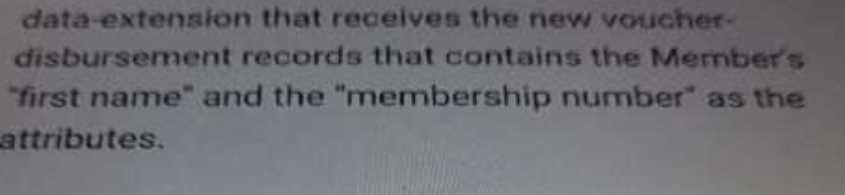
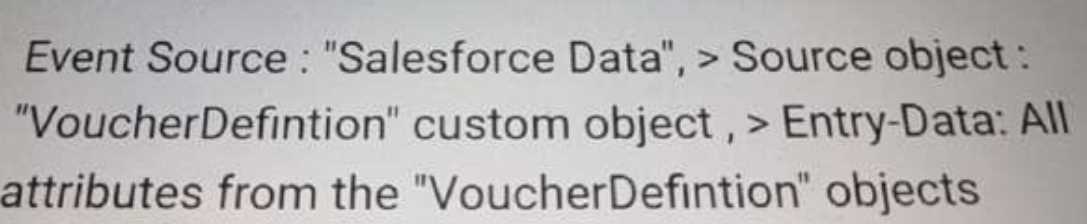
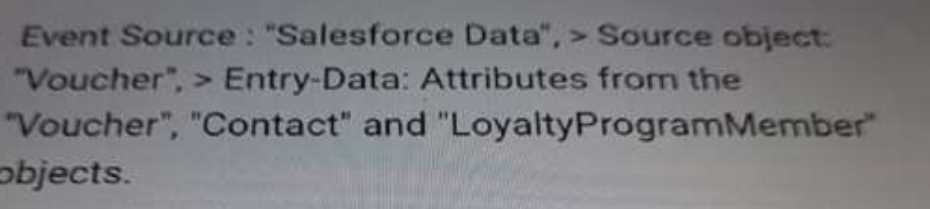
A loyalty Program would like to set up a new process where a push notification or email will be sent to the client immediately after a voucher is added to their member account within Salesforce Marketing Cloud. The notification message will require the “first name” and the “membership number” to personalize the message and, a custom object named “voucher issued” with the necessary data attributes. Which option for the entry event should be selected as the preferred implementation approach that can meet the requirements with the least amount of development effort? A) Salesforce Loyalty Management question B) Salesforce Loyalty Management question C) Salesforce Loyalty Management question D) Salesforce Loyalty Management question
Options
8 comments in the community discussion
B tbh, since they got upgraded on March 16, 2023, feels like the new expiry would be a year from that date.
Q: 20
A Consultant needs to design a new tier-upgrade process for a new Loyalty Program. The custom object to store the qualified members and a batch job is identified for this process. Which two components should the Consultant select for this process?
Options
9 comments in the community discussion
1
B/D? Makes sense for global March 31 reset, but C could work if based on join date. Not totally sure.
1
C , since qualifying period could be based on anniversary. I thought about B too, but seems like both could work depending how the program is designed. Not fully sure though, open to other takes.
Question 1 of 20

What's covered in this practice questions set

4: Program Processing and Experiences · 10 questions

📖 About this Domain

This domain covers the technical execution of loyalty programs, focusing on how member activities are captured and processed. It details the use of Transaction Journals, batch jobs, and flows to automate loyalty logic. You will learn the backend mechanics that drive accruals, redemptions, and tier updates.

🎓 What You Will Learn

  • You will learn how Transaction Journals record member activities and are processed by Loyalty Program Processes to update ledgers.
  • You will understand the configuration of different Loyalty Program Processes like Accrual, Redemption, and Reversal.
  • You will learn to use Flow Builder and other automation tools to manage processes like tier assessments and point expirations.
  • You will explore how to surface loyalty program data and actions to members through Experience Cloud sites and APIs.

🛠️ Skills You Will Build

  • You will build the skill to configure and debug Loyalty Program Processes for various transaction types.
  • You will be able to design and implement automation using flows for critical loyalty events like tier upgrades and point adjustments.
  • You will gain the ability to connect member-facing experiences with backend loyalty processing logic.
  • You will learn to troubleshoot processing errors by analyzing Transaction Journals and batch job logs.

💡 Top Tips to Prepare

  • Master the Transaction Journal object model and its processing lifecycle from creation to finalization.
  • Gain hands-on experience with Flow Builder to automate tier processing and other loyalty rules.
  • Review the standard batch jobs for point expiration and tier assessment, including their scheduling and execution logic.
  • Understand how Loyalty Management components are used within an Experience Cloud site for member self-service.

1: Loyalty Program Design and Setup · 4 questions

📖 About this Domain

This domain covers the foundational configuration of a loyalty program in Salesforce. It involves setting up core components like the program, tiers, and currencies based on business requirements.

🎓 What You Will Learn

  • Configure the Loyalty Program object, including its journals and process rules.
  • Establish Tier Groups and Tiers, defining tier models and assessment frequencies.
  • Define Program Currencies, distinguishing between qualifying and non-qualifying points.
  • Create and associate Member Benefits and Voucher Definitions to reward program members.

🛠️ Skills You Will Build

  • Translate loyalty business requirements into a functional Salesforce data model configuration.
  • Implement tiering structures using Tier Groups, Tiers, and qualifying point logic.
  • Configure point economies by setting up Program Currencies and their expiration rules.
  • Structure member rewards by linking specific benefits and vouchers to program tiers.

💡 Top Tips to Prepare

  • Master the object relationships between Loyalty Program, Tier Group, and Program Currency.
  • Practice configuring tier assessment frequency and tier grace period settings in a dev org.
  • Memorize the difference and application of qualifying points (QP) versus non-qualifying points (NQP).
  • Utilize the Loyalty Management guided setup to understand the end-to-end program creation process.

2: Member Management · 3 questions

📖 About this Domain

This domain focuses on the complete lifecycle of a loyalty program member within Salesforce. It covers the technical aspects of member enrollment, data management, and profile maintenance using core Loyalty Management objects and processes.

🎓 What You Will Learn

  • You will learn the different methods for member enrollment, including manual creation, automated flows, and API-based integrations.
  • You will understand the data model for members, specifically the Loyalty Program Member object and its relationship to Contacts and Accounts.
  • You will grasp the mechanics of member tier management, including how tier processing jobs evaluate qualifying points to assign tiers.
  • You will explore how to manage member profiles, preferences, and consent to drive personalized engagement.

🛠️ Skills You Will Build

  • You will build the skill to configure and troubleshoot member enrollment processes using Salesforce automation tools.
  • You will develop the ability to manage member data, including merging duplicate member records and updating profiles.
  • You will be able to set up and execute tier processing rules to manage member progression through loyalty tiers.
  • You will learn to leverage member data and preferences to support segmentation and personalization strategies.

💡 Top Tips to Prepare

  • Master the data model, focusing on the Loyalty Program Member, Individual, and Group Member objects.
  • Understand the sequence and impact of the tier processing batch jobs on member records.
  • Review the capabilities of the Loyalty Management Connect APIs for member enrollment and data updates.
  • Practice the member merge process in a sandbox to understand how transaction journals and point balances are consolidated.

3: Transactional and Non-Transactional Processes · 2 questions

📖 About this Domain

This domain covers the ingestion and processing of member activities using the Transaction Journal object. It details the configuration of Loyalty Program Processes for both transactional and non-transactional events. The focus is on how the system handles data to award points, process redemptions, and manage tiers.

🎓 What You Will Learn

  • You will learn to configure the Transaction Journal object to capture member purchase and activity data for processing.
  • You will understand how to use Data Processing Engine (DPE) definitions to run batch processes on loyalty data.
  • You will learn to build real-time accrual and redemption logic using Flow and Loyalty Program Process templates.
  • You will differentiate the setup for transactional processes against non-transactional processes like social shares or survey completions.

🛠️ Skills You Will Build

  • You will build the skill to map external transaction data to the Salesforce Transaction Journal object fields.
  • You will gain proficiency in creating and debugging Loyalty Program Processes for accrual, redemption, and tier adjustments.
  • You will develop the ability to decide between batch (DPE) and real-time (Flow) processing for loyalty use cases.
  • You will be able to configure rules that award non-qualifying points for specific member engagement activities.

💡 Top Tips to Prepare

  • Master the data model, specifically the relationship between Transaction Journal, Loyalty Program Member, and Loyalty Ledger objects.
  • Practice building a complete accrual process triggered by a Transaction Journal record using a Flow-based Loyalty Program Process.
  • Understand the specific nodes and logic within a Data Processing Engine (DPE) definition used for loyalty calculations.
  • Review the pre-built Flow templates for Loyalty Management to understand the standard processing logic for accruals and redemptions.

5: Integrations and System Architecture · 1 questions

📖 About this Domain

This domain covers the technical architecture of Salesforce Loyalty Management and its integration capabilities. It focuses on connecting loyalty processes with other Salesforce clouds and third-party systems using APIs and data models. Understanding system interoperability is critical for a seamless loyalty program implementation.

🎓 What You Will Learn

  • You will learn to utilize Loyalty Management Connect APIs and Bulk APIs for real-time and batch data processing.
  • You will learn the Loyalty Management data model, including key objects like Loyalty Program Member and Transaction Journal.
  • You will learn to apply integration patterns for connecting external systems like POS and e-commerce platforms.
  • You will learn how to leverage core platform tools like Flow and Platform Events for custom loyalty processes.

🛠️ Skills You Will Build

  • You will build the skill to design end-to-end loyalty solutions considering system architecture and data flows.
  • You will build proficiency in integrating external systems using Loyalty Management APIs for seamless data exchange.
  • You will build the ability to map customer and transactional data to the standard Loyalty Management object model.
  • You will build competence in troubleshooting data synchronization and API callout failures within the loyalty ecosystem.

💡 Top Tips to Prepare

  • Focus on the Loyalty Management ERD (Entity Relationship Diagram) to understand object relationships.
  • Review the Loyalty Management Developer Guide, specifically the Connect API and Bulk API sections.
  • Practice mapping common loyalty use cases, like purchase transactions and returns, to specific API endpoints.
  • Understand the role of Salesforce Flow and Platform Events in orchestrating complex, cross-system loyalty processes.

Premium Access Includes

  • Quiz Simulator
  • Exam Mode
  • Progress Tracking
  • Question Saving
  • Flash Cards
  • Drag & Drops
  • 3 Months Access
  • PDF Downloads
Get Premium Access
Scroll to Top

FLASH OFFER

Days
Hours
Minutes
Seconds

avail 10% DISCOUNT on YOUR PURCHASE