Free 300-435 Practice Test Questions and Answers (2026)

Last Update Check
View Mode
Q: 1
In which direction does the Cisco DNA Center Intent API communicate?
Options
34 comments in the community discussion
6
Option C for sure. Northbound APIs like the Intent API are built to let apps interact with DNA Center from above the platform, not for directly talking to devices (that would be southbound, D). Seen this in Cisco docs and practice questions too. Unless I’m missing something, C is the way to go.
6
C . Southbound (D) is tempting since it goes device level, but intent APIs always mean northbound in Cisco docs.
Q: 2
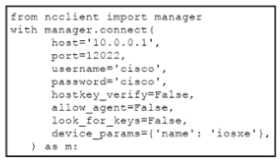
Refer to the exhibit. Cisco 300-435 question What is the correct ncclient method to use to collect the running configuration of a Cisco IOS XE device that uses NETCONF?
Options
35 comments in the community discussion
6
D . The get_config method is specifically for fetching configs like running or startup, not operational state. B (get) is tempting but that's for operational data, config needs D. Easy to get those mixed up if you don't check the API docs.
4
Option D is correct. 'get_config' is exactly what the official guide and most labs say to use for grabbing running config with ncclient and NETCONF. Pretty sure if you check Python API docs, you'll see the same. Anyone seen exam questions flip between this and 'get'?
Q: 3
The Cisco DNA Center Sites API must be used to add a device to a site, but only the site name is available. Which API call must be used to retrieve the site identifier so that the device can be properly added to the network?
Options
36 comments in the community discussion
2
Yeah, it's C in this case.
1
C
Q: 4
Which two features are characteristics of software-defined networks when compared to traditional infrastructure? (Choose two.)
Options
30 comments in the community discussion
1
C/D? Manual config (A, B) is a classic traditional approach, but SDN is all about overlays and flexibility. E looks like a trap since not every SDN admin needs to code. Pretty confident C and D are what the exam wants.
1
Its C and D, not E. Software dev skill isn't required, overlays and adaptability are key traits.
Q: 5
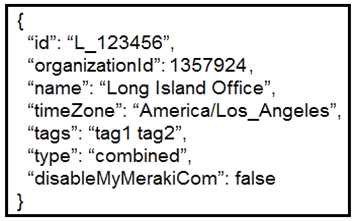
Refer to the exhibit. Cisco 300-435 question Which two parameters are mandatory when the Cisco Meraki API is used to create a network? (Choose two.)

Options
33 comments in the community discussion
1
B since disableMyMerakiCom sometimes shows up as "required" in older scripts when org policies force disablement at creation. Not totally convinced because normally C and E should be enough, but strict org config could flip things. Let me know if anyone's seen that trip people up recently.
Cisco's official API guide and their DevNet labs both highlight C and E as required params for creating a Meraki network. OrganizationId tells it where, type tells it what. I think this matches what I've seen in recent practice exams, but happy to hear if someone spotted otherwise.
Q: 6
Fill in the blank to complete the statement. Cisco 300-435 question
Your Answer
45 comments in the community discussion
2
Its ZTP for this one. Cisco uses Zero Touch Provisioning specifically for initial device setup, not PXE. Saw a similar question on a practice test and they wanted ZTP, but somebody correct me if I'm missing anything.
1
ZTP is the right fit, since Cisco always pushes Zero Touch Provisioning for automating device onboarding. PXE is tempting but that's more for server OS installs, not switch/router provisioning. Pretty sure it's ZTP here, unless I'm missing a catch in the question.
Q: 7
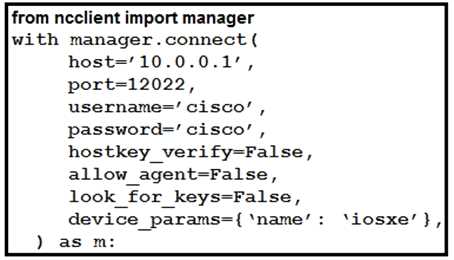
Refer to the exhibit. Cisco 300-435 question Which ncclient method is used to collect the running configuration of a Cisco IOS XE device that uses NETCONF?
Options
34 comments in the community discussion
3
Option D
2
D. saw a similar format in some practice sets. Exam reports match this too.
Q: 8
What are two characteristics of synchronous calls to APIs? (Choose two.)
Options
40 comments in the community discussion
2
C/D? This flips if they cared about async behavior but blocking and added latency both scream synchronous to me.
1
Its B and C
Q: 9
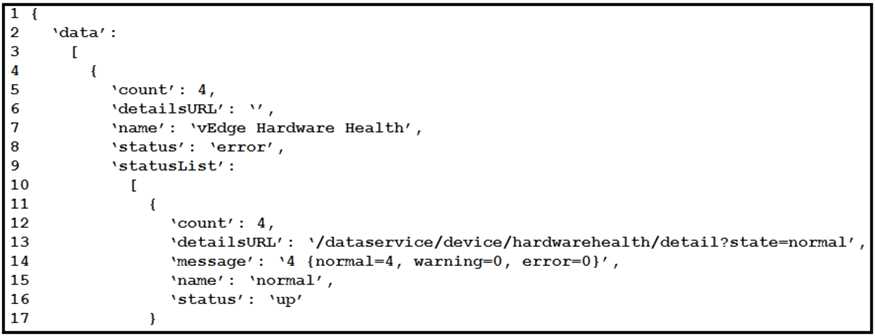
Refer to the exhibit. Cisco 300-435 question Cisco SD-WAN deployment must be troubleshooted using vManage APIs. A call to vEdge Hardware Health API returns the data in the exhibit (only a portion is shown). If this JSON is converted to a Python dictionary and assigned to the variable “d”, how the status is accessed that is indicated on line 16?

Options
43 comments in the community discussion
2
Its D, most official SD-WAN API labs and the exam blueprints show similar Python access patterns.
1
B tbh, since if the JSON keys 'data' and 'statusList' are objects and not lists, you wouldn't need index positions. Sometimes these API outputs skip nesting with arrays if there’s only one element. I might be off if they’re always arrays here, though. Anyone else see examples where it's not a list?
Q: 10
What is a difference between OpenConfig and native YANG data models?
Options
36 comments in the community discussion
1
Option C makes sense to me since it mentions both vendors and standards bodies like IETF, which usually get involved with YANG models. I've seen a similar question on practice exams and went for C, thinking it was about platform independence. Might be off though, let me know if you see it differently.
1
I don’t think it’s A. C makes sense if you consider standards bodies like IETF are involved too.
Q: 11
Refer to the exhibit. Cisco 300-435 question A Python script must be created to deactivate vSmart Policy Cisco SD-WAN vManage Configuration APIs. The documentation states the URL is as shown in the exhibit for this REST call using POST, and that “policyId” is a required request parameter. Which line of Python code makes this call, assuming the variable “s” is a valid Requests session object and the variable “policy-id” is the policyId?
Options
13 comments in the community discussion
6
Option B Saw a very similar SD-WAN REST call on practice, and it needs the policyId as part of the URL path with the POST method. The others either use wrong params or data structure. Pretty sure, but let me know if you see different.
1
I get why D is tempting since a lot of APIs want params in the data body, but the SD-WAN docs show policyId in the URL path for this endpoint. So it's B here. Seen this match up on some hands-on practice too, but open if I've missed something.
Q: 12
Which environment must be enabled to complete the zero-touch provisioning process on a IOS XE device?
Options
16 comments in the community discussion
4
Cisco keeps changing this stuff between versions, but for most real-world cases it's Option D.
1
D imo. Guest shell is what you have to enable for zero-touch provisioning automation on IOS XE. The other options like EEM or TCL won't do the full ZTP workflow. Pretty sure about this based on recent practice tests, but open to arguments if someone's seen something different.
Q: 13
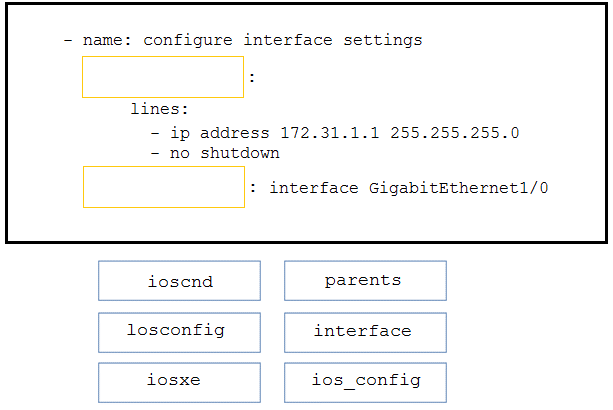
DRAG DROP Drag and drop the code from the bottom onto the box where the code is missing in the Ansible playbook to apply the configuration to an interface on a Cisco IOS XE device. Not all options are used. Cisco 300-435 question
Your Answer
14 comments in the community discussion
1
C/D? If their YAML parser is strict, D wins, but if it's lenient, C slips through. Seen both flagged as correct in practice dumps before.
1
Option D, The indentation matches proper Ansible YAML, unlike C.
Q: 14
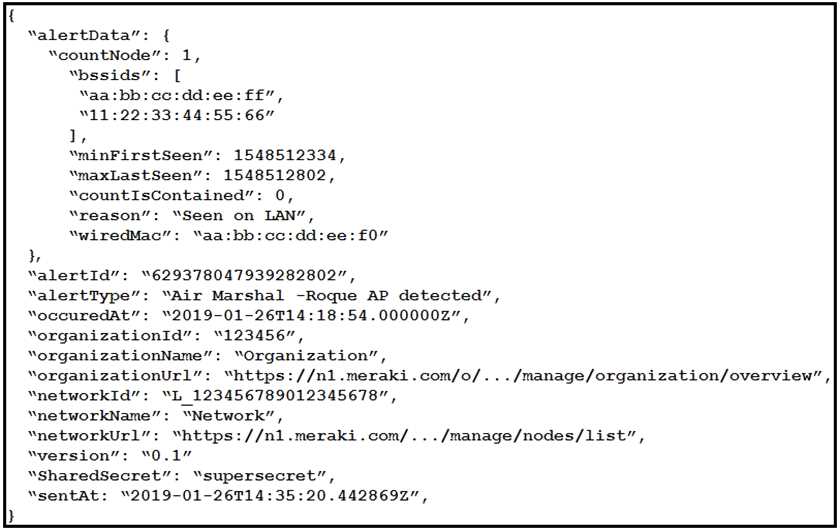
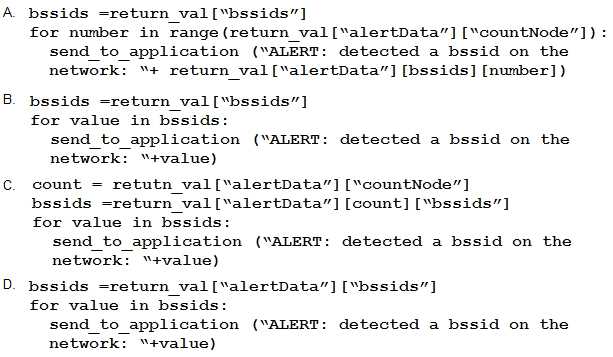
Refer to the exhibit. Cisco 300-435 question The goal is to write a Python script to automatically send a message to an external messaging application when a rogue AP is detected on the network. The message should include the broadcast SSID that is in the alert. A function called “send_to_application” is created, and this is the declaration: send_to_application(message) The exhibit also shows the data that is received by the application and stored in the variable return_val. Which Python code completes the task? Cisco 300-435 question
Options
14 comments in the community discussion
5
D . The key detail is that the requirement says the message must include the broadcast SSID found in the alert, but looking at how the data is passed in, D actually grabs both SSID and the bssids from return_val and sends them together. B looks tempting if you only read "SSID" but that's a trap since the full data is n
D imo. The key is that the alert message wants both the SSID and bssids included, not just SSID alone. Some practice sets show B as tempting but it's incomplete for this task. Pretty sure it's D unless there's a hidden requirement about the message format.
Q: 15
Which two statements are benefits of YANG-push telemetry data over traditional data collection methods? (Choose two.)
Options
11 comments in the community discussion
1
Bandwidth is a big one but I think D actually fits too. D
1
A and C tbh
Q: 16
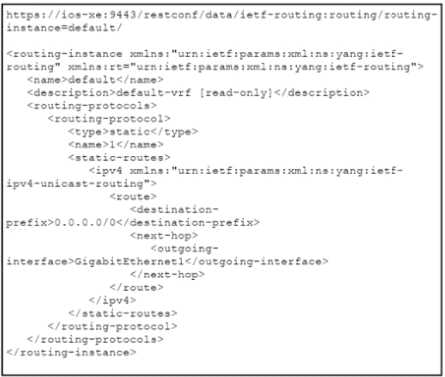
Refer to the exhibit. Cisco 300-435 question A RESTCONF GET request is sent to a Cisco IOS XE device. The base URL of the request and the response in XML format are shows in the exhibit. what is the YANG data node that is referenced in the response?
Options
19 comments in the community discussion
6
Option B
1
Yeah, it's B. Static-routes is a container node per the YANG model, not a list or leaf-list like some might think from other options. Pretty sure unless they're being extra tricky with wording.
Q: 17
What is a capability of MV Sense MQTT API?
Options
15 comments in the community discussion
B looks possible since APIs often handle config, but I remember MV Sense MQTT doesn’t automate device setup directly. It’s mostly for streaming event data, not pushing configs. Could be off, correct me if I missed something.
Not B, that's config automation on a different API. A is the one that matches MV Sense MQTT because it's for streaming and subscribing to camera data. The other options are easy to mix up-C feels tempting but doesn't fit here.
Q: 18
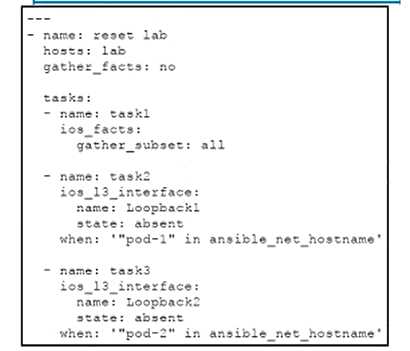
Cisco 300-435 question Refer to the exhibit. The lab group consists of four Cisco IOS XE routers named pod-11,pod-12, and pod-22. What is the result of running the Ansible playbook to reset the lab?
Options
16 comments in the community discussion
1
C not B. Seen similar lab setups and Loopback1 is what gets removed from pod-11 and pod-12.
I usually double-check the official Cisco docs for playbook behavior like this, plus trying it in an actual lab. I think it's C since the playbook targets Loopback1 on pod-11 and pod-12, so only those interfaces get removed. Not fully sure though if there's tricky task templating. Anyone reference a practice exam ye
Q: 19
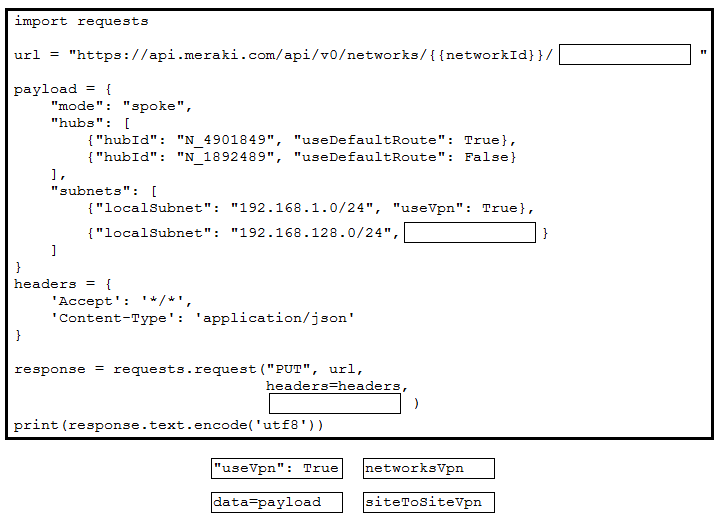
DRAG DROP Drag and drop the code from the bottom onto the box where the code is missing to construct a Python script to automate the process of updating the site-to-site VPN settings of the network. Not all options are used. Cisco 300-435 question
Your Answer
16 comments in the community discussion
2
Pretty sure it’s C here. Meraki’s API uses PUT to update site-to-site VPN configs, not POST or GET. That fits with the reference link in the explanation. Anyone disagree?
1
Guessing B , I had something like this in a mock and it worked for VPN updates.
Q: 20
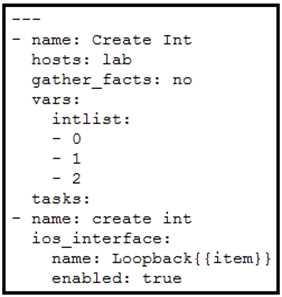
Cisco 300-435 question Refer to the exhibit. Interfaces named Loopback0, Loopback1, and Loopback2 must be created and enabled on a Cisco IOS XE target device in the lab group. Which loop must be added to the end of the Ansible “create int” task?
Options
13 comments in the community discussion
2
Had something like this in a mock, and it's A. with_items iterates through the interface list variable in Ansible playbooks, so matches the intent here. The others aren’t valid loop keywords for this use. Anyone disagree?
1
A tbh. Only with_items handles a list like intlist in Ansible, that's the classic syntax. C (with_list) looks tempting but isn't actually valid in standard playbooks from what I've seen, it's kind of a trap answer. Could be wrong if Ansible changed something recently though, anyone seen otherwise?
Question 1 of 20

Premium Access Includes

  • Quiz Simulator
  • Exam Mode
  • Progress Tracking
  • Question Saving
  • Flash Cards
  • Drag & Drops
  • 3 Months Access
  • PDF Downloads
Get Premium Access
Scroll to Top