Free 200-301 Practice Test Questions and Answers (2026)

Last Update Check
View Mode
Q: 1
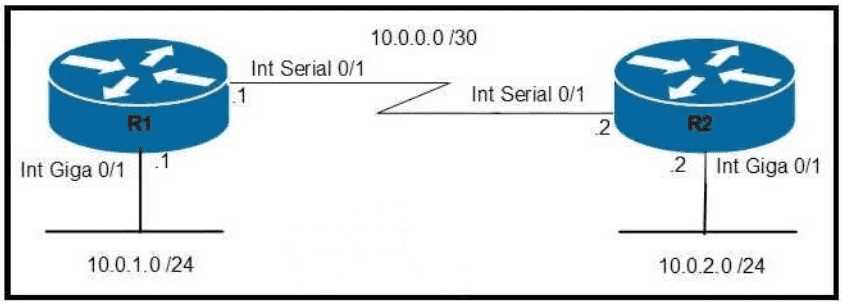
Refer to the exhibit. Cisco CCNA 200-301 question Which command configures OSPF on the point-to-point link between routers R1 and R2?
Options
Q: 2
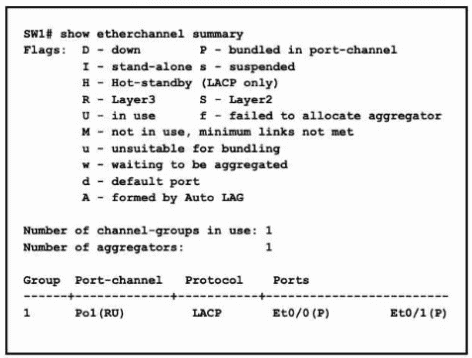
Refer to the exhibit. Cisco CCNA 200-301 question Refer to the exhibit. A network engineer is adding another physical interface as a new member to the existing Port-Channel1 bundle. Which command set must be configured on the new interface to complete the process?
Options
Q: 3
Which WAN topology provides a combination of simplicity quality, and availability?
Options
Q: 4
Which protocol must be implemented to support separate authorization and authentication solutions for wireless APs?
Options
32 comments in the community discussion
2
Its B here. TACACS+ actually splits up authentication and authorization, so you can manage them separately. RADIUS doesn't really do that, it mixes both steps together. Pretty sure that's what they're asking for, but open to other takes if I missed something.
1
Check the official CCNA guide for this, pretty sure it's B.
Q: 5
What is a function of the Cisco DNA Center Overall Health Dashboard?
Options
35 comments in the community discussion
6
Option A makes the most sense. The overall health dashboard in DNA Center shows top issues across the whole network, not individual device logs or CPU stats. Official guides and a few practice tests mention this "top 10 global issues" summary feature pretty often. Someone correct me if I missed something!
1
A tbh, C is tempting but the dashboard is about top global issues, not just wireless status.
Q: 6

Which command entered on a switch configured with Rapid PVST* listens and learns for a specific time period?

Options
40 comments in the community discussion
6
Yeah, D forward-time sets how long a port stays in listening and learning. That's exactly what the question is about, not BPDU hello intervals. Pretty sure this is right unless I'm missing some nuance.
6
Doesn’t forward-time specifically set how long a port spends in listening and learning for STP/Rapid PVST? I’ve seen similar wording pop up on exam reports. Just want to double-check I’m not mixing it up with hello-time here.
Q: 7
It work security team noticed that an increasing number of employees are becoming victims of phishing attacks. Which security program should be implemented to mitigate the problem?
Options
38 comments in the community discussion
6
My pick: D, unless the question means technical only but phishing is a user problem first. If the attack was malware via USB I'd rethink but here user awareness training flips the outcome.
5
Option D that’s the main one for phishing since it targets the user side.
Q: 8
What is the main capability of multifactor authentication?
Options
Q: 9
Which interface is used to send traffic to the destination network? 10.90.207.87/26 [110/1912] via F0/7 10.90.207.87/26 [110/28968] via F0/6 10.90.207.87/26 [120/14] via F0/4 10.90.207.87/26 [120/11] via F0/5
Options
Q: 10
What is the role of SNMP in the network?
Options
Q: 11
What is a function of TFTP in network operations?
Options
Q: 12
Which IPv6 address block sends packets to a group address rather than a single address?
Options
6 comments in the community discussion
1
Probably D here. FF00::/8 is the multicast range for IPv6, so it fits the group address part. C might look tempting since FE80::/10 is common, but that's only for link-local traffic, not multicast.
1
D imo, FF00::/8 is the multicast block for IPv6. C (FE80::/10) is link-local, not group/multicast. Pretty sure the question wants multicast specifically, so D makes sense here. Anyone disagree?
Q: 13
How do traditional campus device management and Cisco DNA Center device management differ in regards to deployment?
Options
6 comments in the community discussion
Its D. With Cisco DNA Center you get automation tools like ZTP and PnP, so devices can be rolled out way faster versus doing everything manually in the traditional model. Saw similar wording in practice exams, pretty sure about this one.
D imo. DNA Center automates deployment with features like Zero-Touch Provisioning and Plug and Play, so it gets networks up way faster than old-school manual CLI setup. C is tempting but scale isn't always quicker with traditional methods, especially without automation. Feel free to disagree but pretty sure D matches C
Q: 14

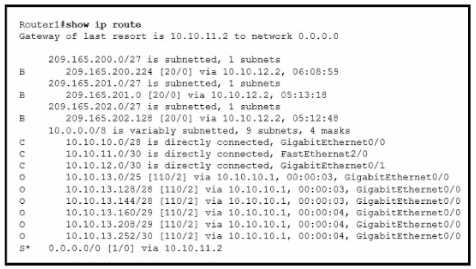
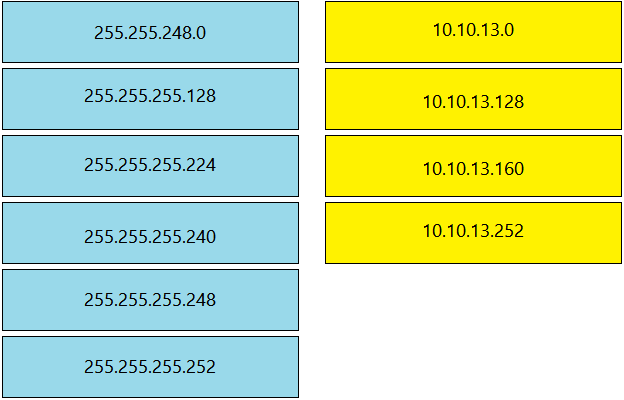
DRAG DROP Refer to the exhibit. Drag and drop the subnet masks from the left onto the corresponding subnets on the right. Not all subnet masks used.
Drag & Drop
Q: 15

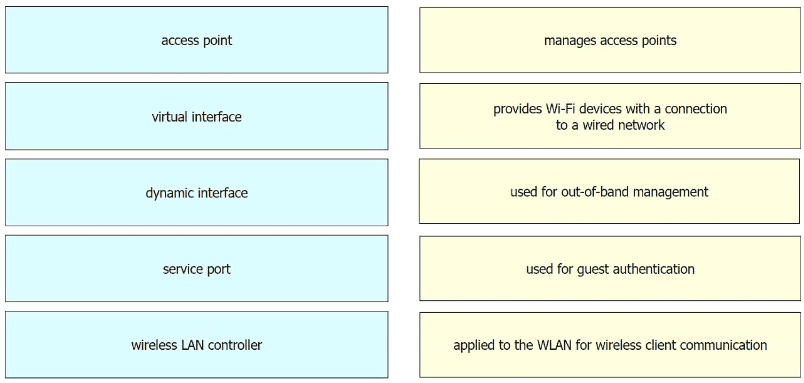
DRAG DROP Drag and drop the WLAN components from the left onto the component details on the right. Cisco CCNA 200-301 question

Drag & Drop
Q: 16
What differentiates the Cisco OfficeExtend AP mode from FlexConnect AP mode?
Options
7 comments in the community discussion
Question trips some people up if they forget FlexConnect does local switching-OfficeExtend always tunnels. C
Its C, official guide and Cisco exam blueprints call out the tunnel vs local switch difference.
Q: 17

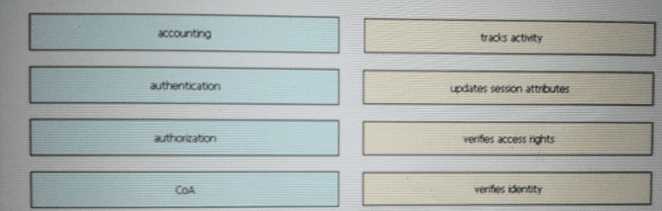
DRAG DROP Drag and drop the AAA terms from the left onto the description on the right. Cisco CCNA 200-301 question

Drag & Drop
Q: 18
Which type of attack can be mitigated by dynamic ARP inspection?
Options
8 comments in the community discussion
3
Option D
1
D tbh
Q: 19

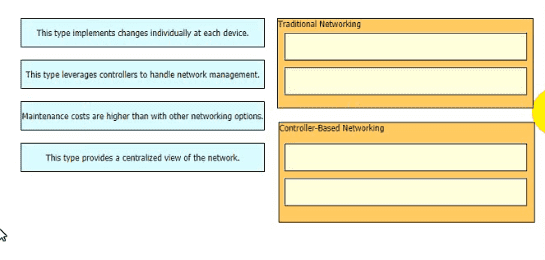
DRAG DROP Drag and drop the statements about networking from the left onto the corresponding networking types on the right Cisco CCNA 200-301 question

Drag & Drop
Q: 20

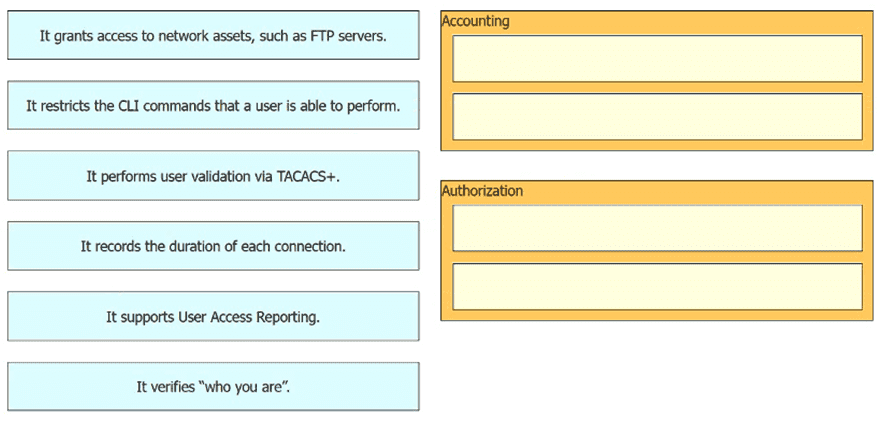
DRAG DROP Drag and drop the statement about AAA services from the left to the corresponding AAA services on the right. Cisco CCNA 200-301 question

Drag & Drop
Question 1 of 20

Premium Access Includes

  • ✓Quiz Simulator
  • ✓Exam Mode
  • ✓Progress Tracking
  • ✓Question Saving
  • ✓Flash Cards
  • ✓Drag & Drops
  • ✓3 Months Access
  • ✓PDF Downloads
Scroll to Top