Free CS0-003 Practice Test Questions and Answers (2026)

Last Update Check
View Mode
Q: 1
A cybersecurity analyst is tasked with scanning a web application to understand where the scan will go and whether there are URIs that should be denied access prior to more in-depth scanning. Which of following best fits the type of scanning activity requested?
Options
24 comments in the community discussion
2
Option B
1
C/D? But B actually makes more sense because it's all about figuring out the app structure first, not finding vulns yet. Just initial discovery so you know what to scan in detail later. Pretty sure that's what they're asking.
Q: 2
Which of the following is the most important reason for an incident response team to develop a formal incident declaration?
Options
32 comments in the community discussion
4
Option B Official guide and incident response frameworks are pretty clear this is the main reason.
3
Option B. seen advice like this in official study guides too.
Q: 3
Which of the following will most likely ensure that mission-critical services are available in the event of an incident?
Options
26 comments in the community discussion
6
C . DRP is what brings mission-critical services back quick after incidents.
2
Its C
Q: 4
A security analyst reviews the latest vulnerability scans and observes there are vulnerabilities with similar CVSSv3 scores but different base score metrics. Which of the following attack vectors should the analyst remediate first?
Options
32 comments in the community discussion
4
C . Network attack vector is always top priority since anyone can hit it remotely. Correct me if I'm missing something.
1
Not C, B. AV:A can be a problem if your network has lots of adjacent segments, kinda tricky sometimes.
Q: 5
An incident response team is working with law enforcement to investigate an active web server compromise. The decision has been made to keep the server running and to implement compensating controls for a period of time. The web service must be accessible from the internet via the reverse proxy and must connect to a database server. Which of the following compensating controls will help contain the adversary while meeting the other requirements? (Select two).
Options
29 comments in the community discussion
1
Yeah, B and D are what I picked too. EDR helps monitor and disrupt attacker activity in real-time without killing service, and microsegmentation keeps the attack contained by only allowing required traffic. Pretty sure that's what CompTIA wants here, but can see why E looks tempting.
1
Looks like B and D make the most sense but I could see some folks picking E. Not 100 percent confident though.
Q: 6
During an incident, analysts need to rapidly investigate by the investigation and leadership teams. Which of the following best describes how PII should be safeguarded during an incident?
Options
29 comments in the community discussion
4
B . Most exam guides and official practice tests stress using a mix of encryption and strict permissions for handling PII during incidents. Limiting access is classic least privilege, so B covers it. Anyone see issues here?
4
B. Had something like this in a mock exam, and the combo of restricting team permissions plus encryption covers both technical and procedural controls. Limits who can access PII while also protecting data at rest. Pretty sure that's what they're going for here.
Q: 7
Using open-source intelligence gathered from technical forums, a threat actor compiles and tests a malicious downloader to ensure it will not be detected by the victim organization's endpoint security protections. Which of the following stages of the Cyber Kill Chain best aligns with the threat actor's actions?
Options
37 comments in the community discussion
6
Option D, It's Weaponization, not B-compiling and testing the payload is past recon stage. Trap here is thinking OSINT always means B.
1
C/D? Pretty sure D is correct, compiling and testing points to Weaponization, but OSINT mention could trip people up into picking B.
Q: 8
Which of the following risk management principles is accomplished by purchasing cyber insurance?
Options
46 comments in the community discussion
6
D . Buying cyber insurance doesn't stop or reduce the risk, it just hands the financial hit to someone else. C is a classic trap here since mitigation is about actually reducing impact, not just shifting it.
5
If the policy is just about shifting who covers the loss, that's risk transfer. So I'd pick D here. Only flips if you actually reduce chance or impact directly.
Q: 9
A security analyst needs to ensure that systems across the organization are protected based on the sensitivity of the content each system hosts. The analyst is working with the respective system owners to help determine the best methodology that seeks to promote confidentiality, availability, and integrity of the data being hosted. Which of the following should the security analyst perform first to categorize and prioritize the respective systems?
Options
31 comments in the community discussion
5
Option D makes sense here, since you can't really categorize or prioritize protection if you don't know the value or criticality of each system. A is tempting but that comes after asset valuation. Pretty sure that's how CYSA+ expects you to approach it, but let me know if you see it differently.
2
Option D is what I'd pick. Determining asset value always comes first since you can't really prioritize protection or choose controls without knowing what's most important to the business. Pretty standard risk management step, I think. If anyone has seen a question twist where A makes more sense, let me know.
Q: 10
Which of the following is most appropriate to use with SOAR when the security team would like to automate actions across different vendor platforms?
Options
34 comments in the community discussion
4
B . APIs are how SOAR actually connects and automates between different vendors. Not 100 percent but that's what I'd pick.
3
B . APIs actually let SOAR automate stuff between lots of vendors, not just share data like threat feeds do.
Q: 11
Which of the following entities should an incident manager work with to ensure correct processes are adhered to when communicating incident reporting to the general public, as a best practice? (Select two).
Options
8 comments in the community discussion
1
C imo, and E fit better. Legal for making sure the statement doesn't create liability and PR for controlling how the public hears about the incident. Governance sounds tempting but just manages policy, not actual comms processes. Open to other views but pretty sure based on practice.
C/E, legal for compliance and PR for public messaging, that's the usual combo here.
Q: 12
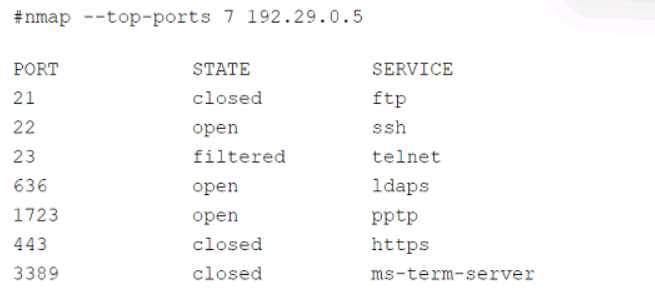
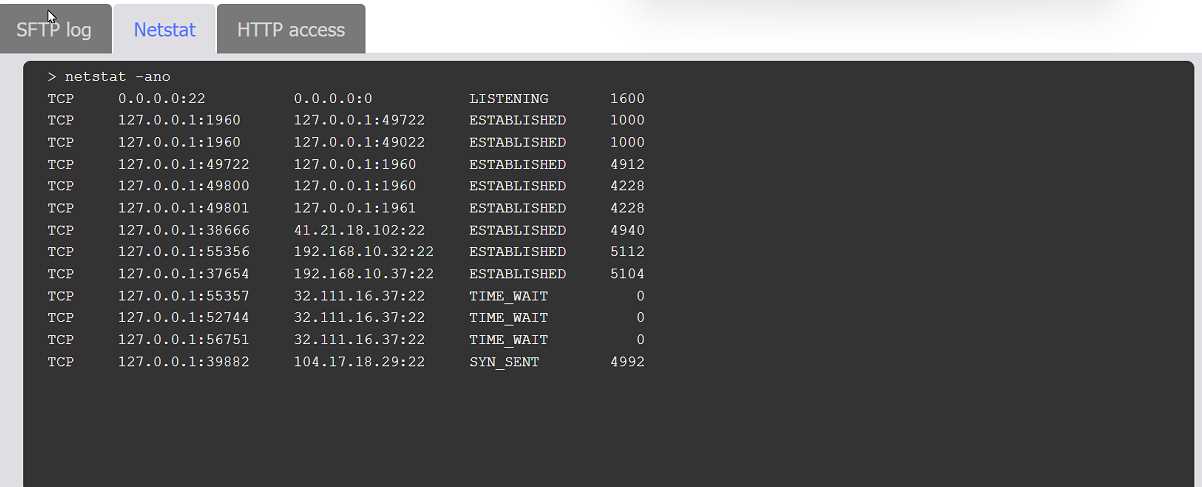
A security audit for unsecured network services was conducted, and the following output was generated: CompTIA Analyst+ CS0-003 question Which of the following services should the security team investigate further? (Select two).
Options
8 comments in the community discussion
1
I saw something like this in a practice test, went with D and F.
1
A is wrong, C and A. Saw a similar question on practice, FTP (21) and Telnet (23) always flagged as unsecured.
Q: 13
A systems administrator is reviewing after-hours traffic flows from data-center servers and sees regular outgoing HTTPS connections from one of the servers to a public IP address. The server should not be making outgoing connections after hours. Looking closer, the administrator sees this traffic pattern around the clock during work hours as well. Which of the following is the most likely explanation?
Options
8 comments in the community discussion
1
Yeah, looks like A to me.
Maybe A. Outbound HTTPS at regular intervals really sounds like C2 beaconing, especially if it's ongoing outside business hours. Can't be sure it's not exfiltration but the pattern fits command and control more. Anyone disagree?
Q: 14
Which of the following statements best describes the MITRE ATT&CK framework?
Options
8 comments in the community discussion
6
Option D, the open-source and evolving part is what sets ATT&CK apart.
D , saw this on a few practice exams and "open-source project that evolves" is always the key phrase for ATT&CK.
Q: 15
Which of the following best explains the importance of the implementation of a secure software development life cycle in a company with an internal development team?
Options
15 comments in the community discussion
4
Option B seen in similar practice questions and official study material. Secure SDLC focuses on risk management and compliance.
1
Option B is right, it directly addresses risk reduction and compliance. C might look tempting if you miss that agile/testing isn’t the main point here. Quick check: does the question mean "best for regulatory compliance" or just general software quality? That could change things.
Q: 16
The Chief Information Security Officer for an organization recently received approval to install a new EDR solution. Following the installation, the number of alerts that require remediation by an analyst has tripled. Which of the following should the organization utilize to best centralize the workload for the internal security team? (Select two).
Options
9 comments in the community discussion
1
Had something like this in a mock. SOAR (A) and SIEM (B) are the best picks because SIEM pulls all alert data into one view and SOAR handles the automation to cut down manual work. XDR is more about detection across sources, not really centralizing workload for analysts.
Makes sense to me, going with A and B. SOAR centralizes and automates response, SIEM collects and correlates the alerts. Not totally sure but don't see how NGFW or MSP would help here.
Q: 17
A Chief Information Security Officer wants to implement security by design, starting …… vulnerabilities, including SQL injection, FRI, XSS, etc. Which of the following would most likely meet the requirement?
Options
6 comments in the community discussion
2
Its C, DAST specifically goes after those runtime vulnerabilities like SQLi and XSS. The other options don't really fit what's being asked.
1
Nah, I don't think it's D. C hits those runtime issues (SQLi, XSS) and supports security by design. D is more about fixing errors, not full vulnerability testing. Trap answer for sure.
Q: 18
An organization's threat intelligence team notes a recent trend in adversary privilege escalation procedures. Multiple threat groups have been observed utilizing native Windows tools to bypass system controls and execute commands with privileged credentials. Which of the following controls would be most effective to reduce the rate of success of such attempts?
Options
6 comments in the community discussion
1
I actually would pick B here. MFA adds another layer, making privilege escalation tougher even if native tools get used.
1
Probably D-blocking untrusted apps is key here. From what I saw in the official study guide and practice exams, tools like PowerShell get abused all the time. Only app control really stops those escalation tricks cold. If anyone saw a different answer in recent test questions, let me know.
Q: 19

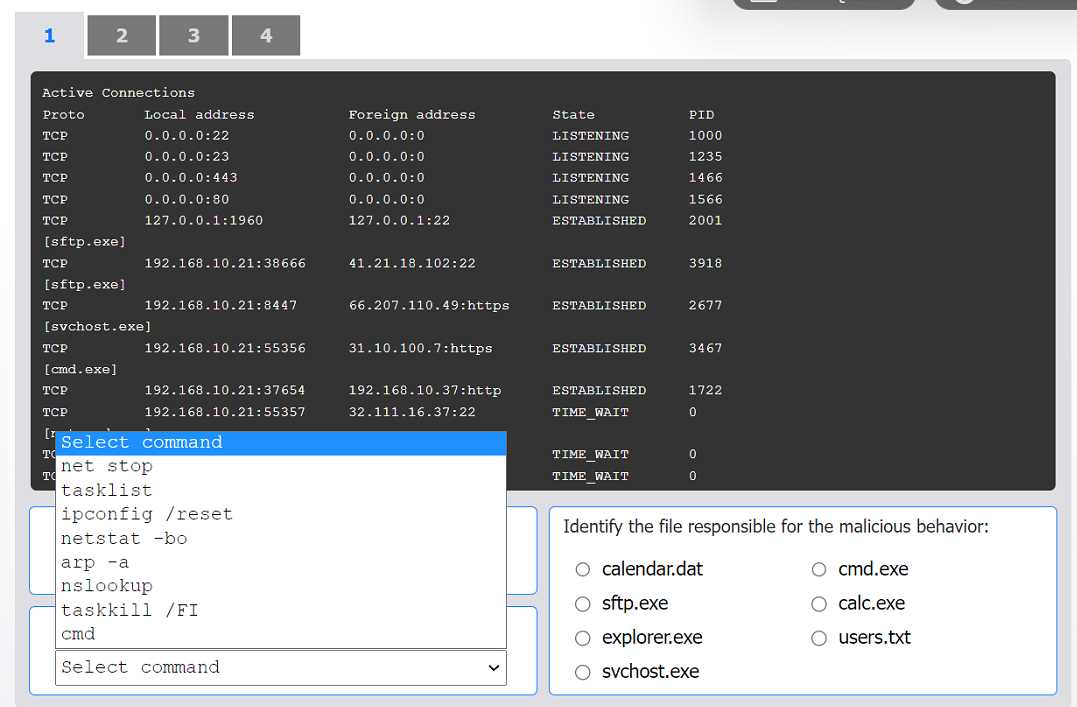
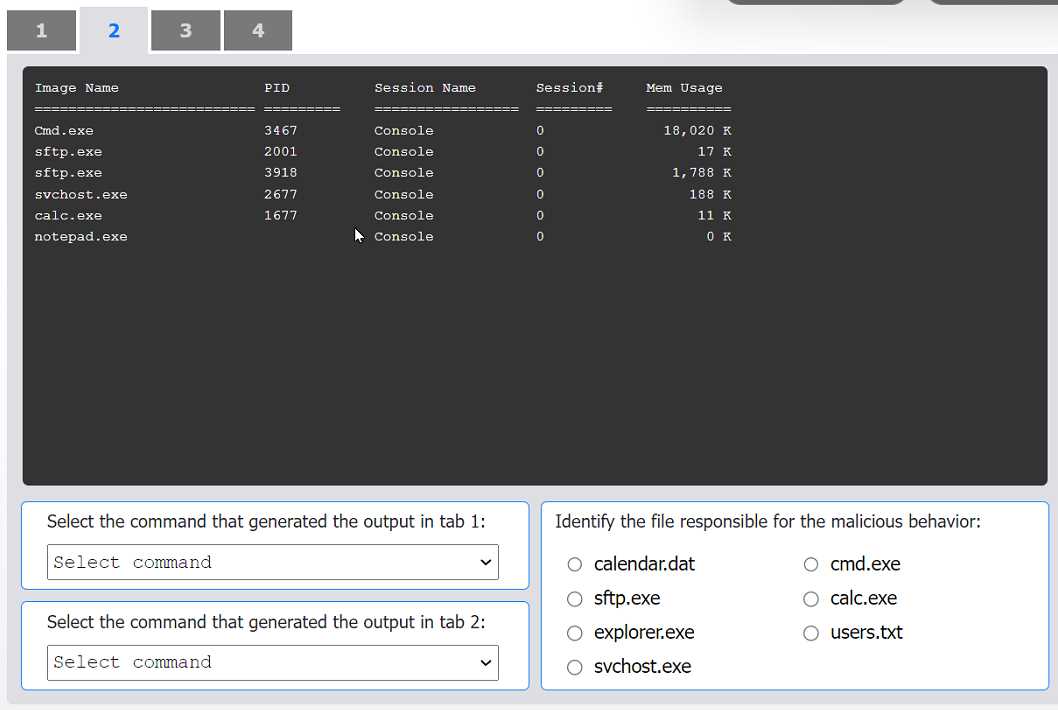
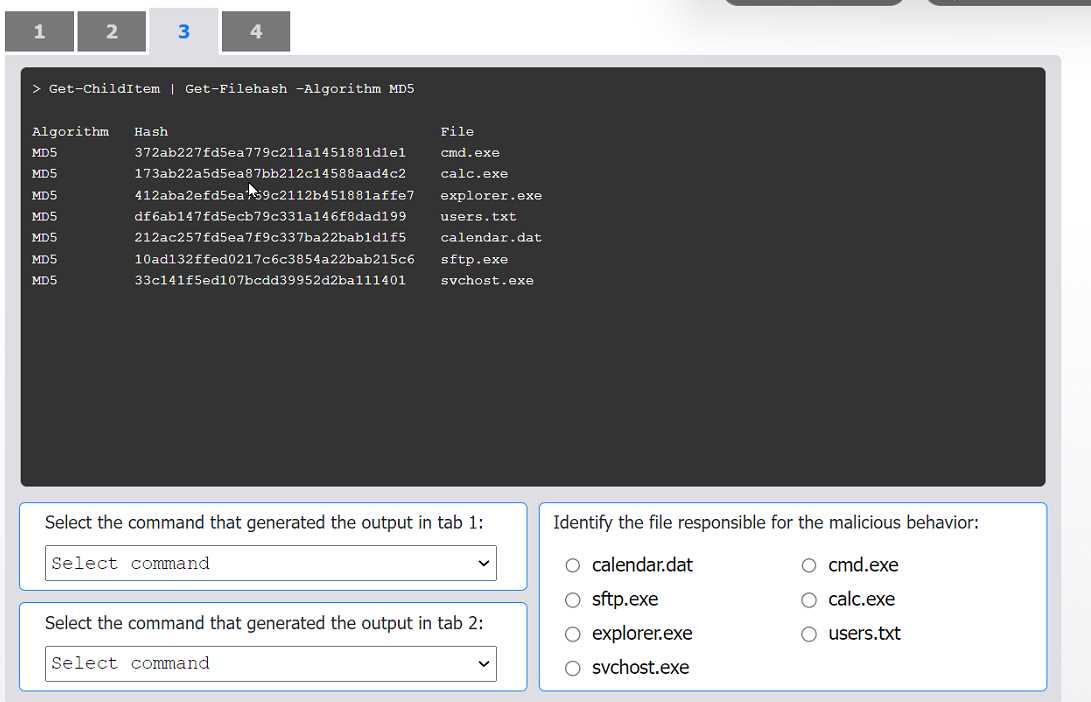
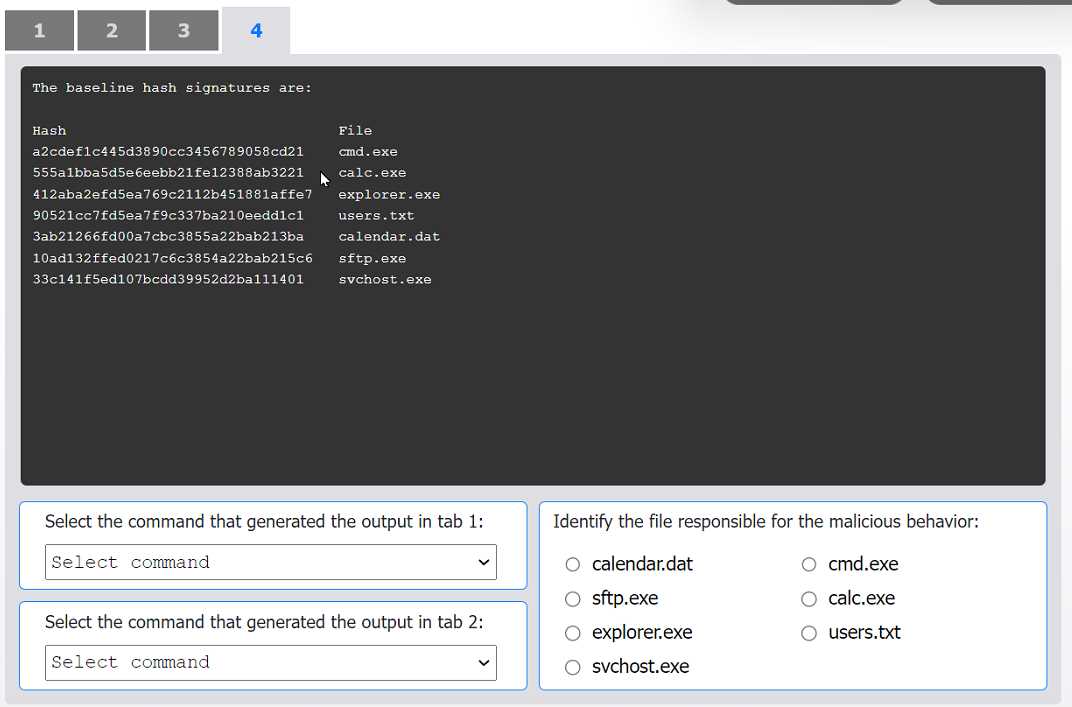
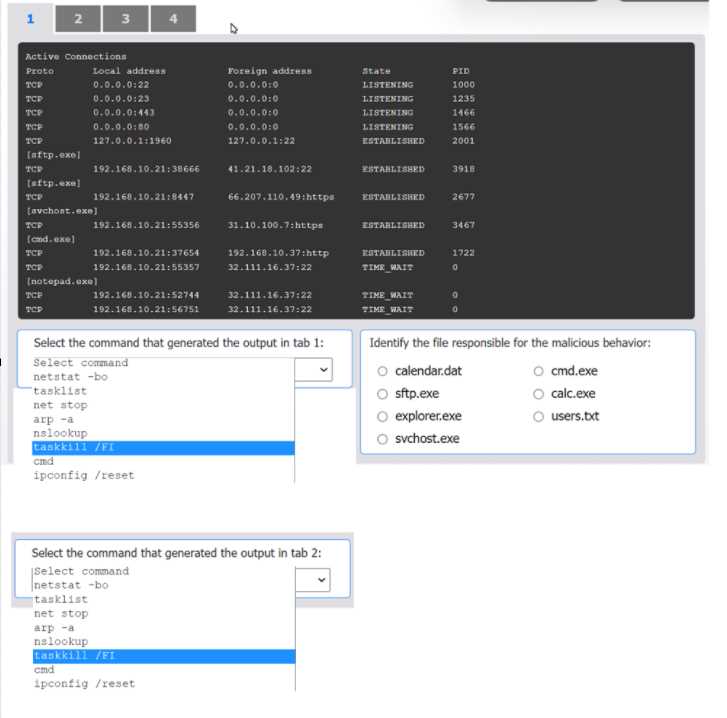
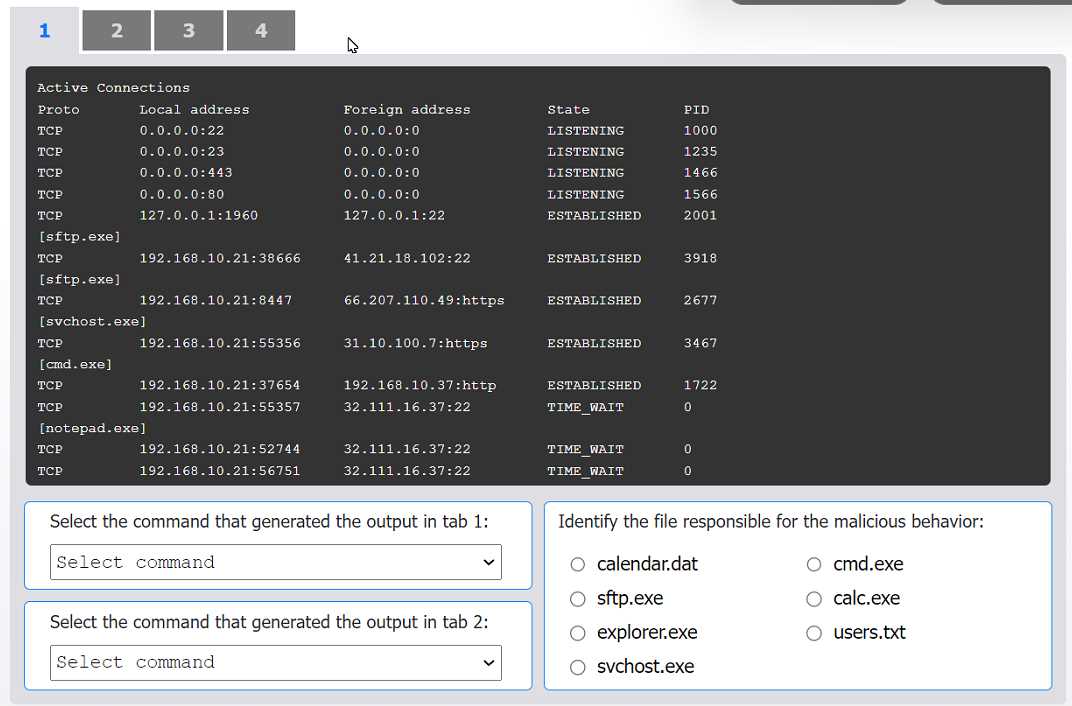
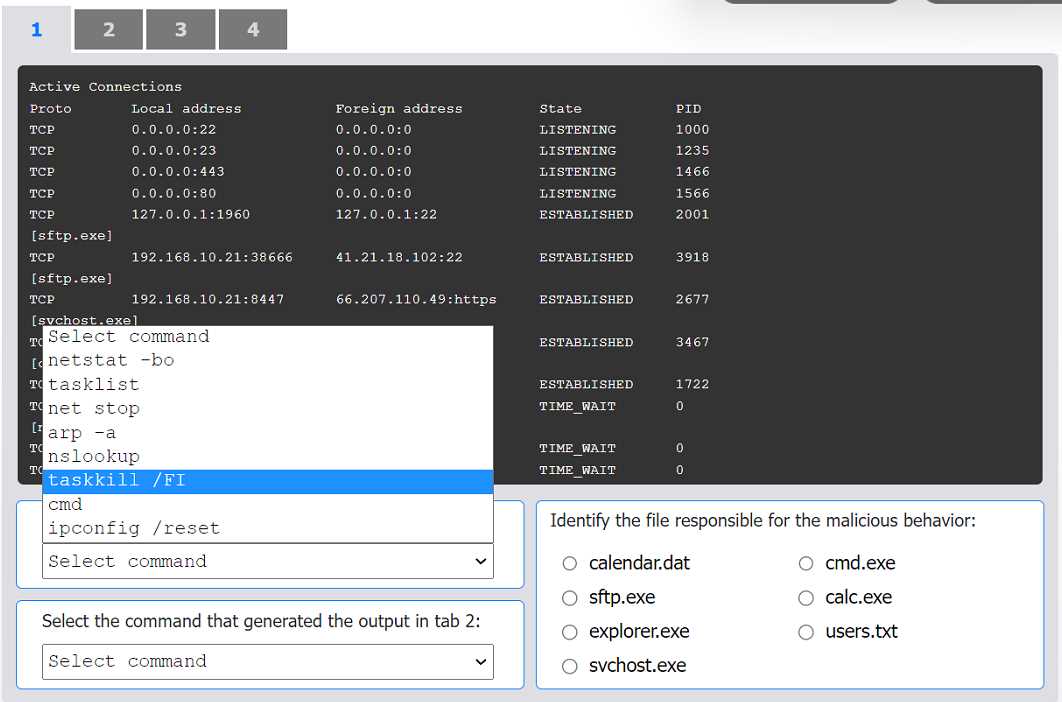
HOTSPOT An organization has noticed large amounts of data are being sent out of its network. An analyst is identifying the cause of the data exfiltration. INSTRUCTIONS Select the command that generated the output in tabs 1 and 2. Review the output text in all tabs and identify the file responsible for the malicious behavior. If at any time you would like to bring back the initial state of the simulation, please click the Reset All button. CompTIA Analyst+ CS0-003 question CompTIA Analyst+ CS0-003 question CompTIA Analyst+ CS0-003 question CompTIA Analyst+ CS0-003 question CompTIA Analyst+ CS0-003 question CompTIA Analyst+ CS0-003 question CompTIA Analyst+ CS0-003 question

Your Answer
11 comments in the community discussion
5
Don’t think it’s sftp.exe, even though it looks fishy. When you check the hashes, only cmd.exe is altered and making those outbound connections, which shouldn’t normally happen. Pretty sure cmd.exe is the culprit here, but open to other angles.
5
Makes sense, the file triggering it is cmd.exe.
Q: 20

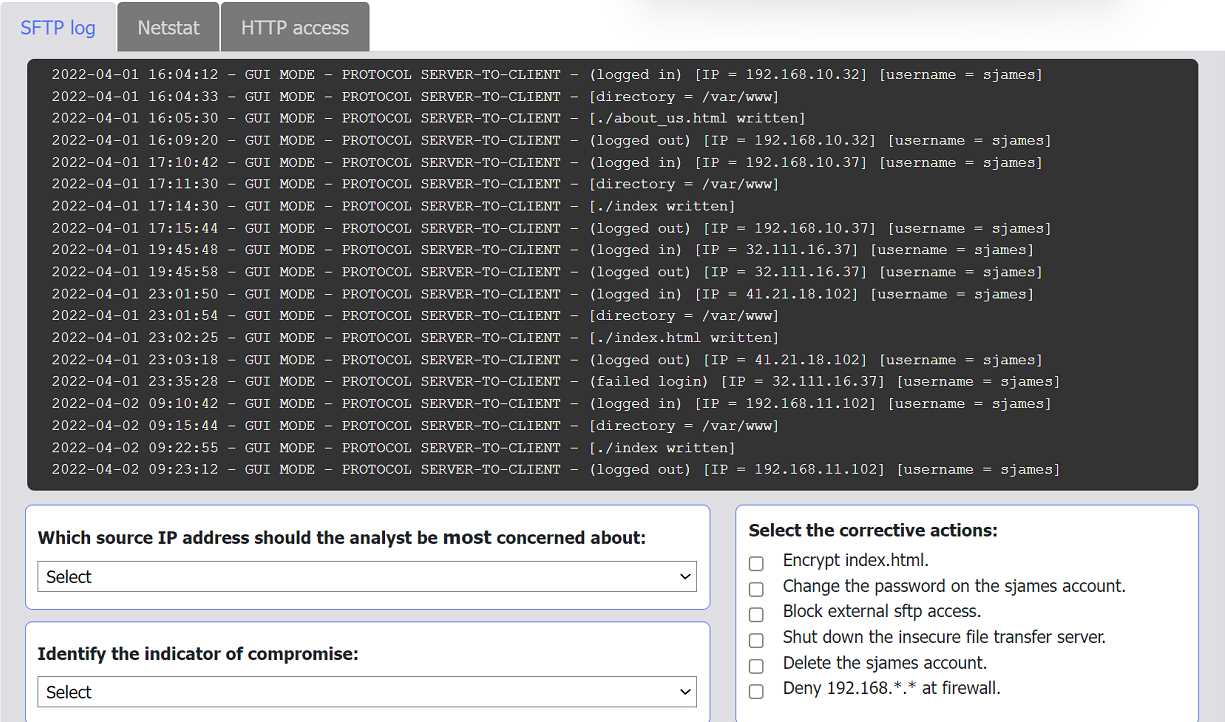
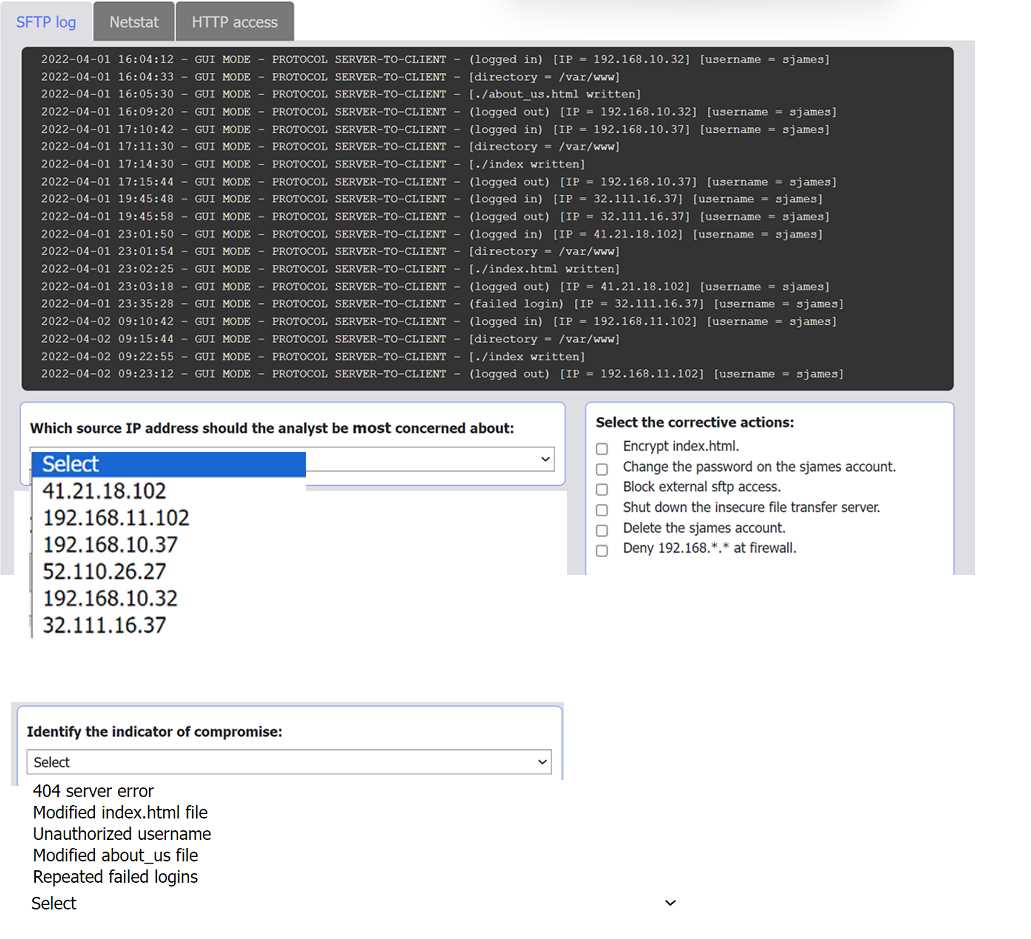
SIMULATION An organization's website was maliciously altered. INSTRUCTIONS Review information in each tab to select the source IP the analyst should be concerned about, the indicator of compromise, and the two appropriate corrective actions. CompTIA Analyst+ CS0-003 question CompTIA Analyst+ CS0-003 question CompTIA Analyst+ CS0-003 question CompTIA Analyst+ CS0-003 question

Your Answer
15 comments in the community discussion
5
Nah, it's not the internal IP. The external 41.21.18.102 logged in as sjames and changed the index.html, so that's your source and IoC. Deleting the account and changing its password are the right actions, internal IP's just normal server traffic imo.
4
Not 10.7.34.82, it's 41.21.18.102 for the source IP here.
Question 1 of 20

Premium Access Includes

  • Quiz Simulator
  • Exam Mode
  • Progress Tracking
  • Question Saving
  • Flash Cards
  • Drag & Drops
  • 3 Months Access
  • PDF Downloads
Get Premium Access
Scroll to Top