Free 350-801 Practice Test Questions and Answers (2026)

Last Update Check
View Mode
Q: 1
Which two steps should be taken to provision a phone after the Self-Provisioning feature was configured for end users? (Choose two.)
Options
28 comments in the community discussion
5
B. not D. The extra CoS value in D is a common distractor. Seen it like this in practice.
1
Probably B and D
Q: 2
A Cisco Unity Connection Administrator must set a voice mailbox so that it is accessed from a secondary device. Which configuration on the voice mailbox makes this change?
Options
30 comments in the community discussion
2
Not A, BD. Per global config, Port Group plus Accept Unsolicited Notification handle MWI for SIP trunk setup.
1
Its C. Official Cisco study guide and labs both mention Alternate Extensions for this use case. Practice questions show the same approach.
Q: 3
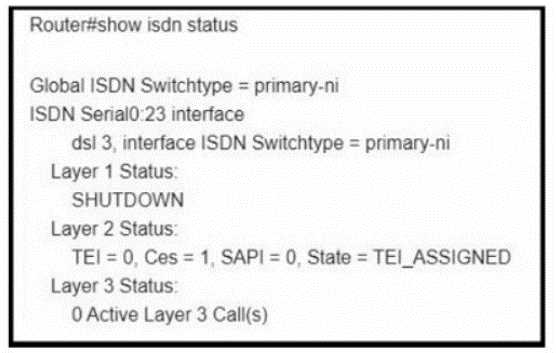
Refer to the exhibit. CISCO 350-801 question Refer to the exhibit. Users at a company located In New York cannot place calls. The New York gateway is configured with P-199 a T1 ISDN PRI card with 24 channels. The engineer runs the show isdn status command and receives output. Which action must the engineer take to resolve the issue?
Options
27 comments in the community discussion
1
A is wrong, D. If the ISDN status shows administratively down for Layer 1, that's usually a shutdown config on the controller. Issuing no shut should bring it up. Not totally sure if there's some weird config, but that's the typical Cisco issue here.
1
Its D, upgrade is the thing you have to do first or Device Connector won’t let you onboard anything.
Q: 4
When multiple potential patterns are present, which two things are considered when Cisco UCM selects a destination pattern? (Choose two.)
Options
29 comments in the community discussion
5
Makes sense to pick A for this, since partitions and calling search spaces manage which devices can call each other.
1
B
Q: 5
An administrator configures the voicemail feature in a Cisco collaboration deployment. The user mailboxes must be configured when the Cisco Unity Connection server is configured. Which action accomplishes this task?
Options
25 comments in the community discussion
6
C. not A. AXL sync pulls users and creates mailboxes during initial Unity Connection setup. SIP integration just handles call routing, no user import. Pretty sure that's what they're testing here.
4
Option D makes sense if "codec g729r8" is shown under the dial peer in the exhibit. That's what gets used for that call leg. I think that's it unless some global voice class changes things here.
Q: 6
An engineer deploys a Cisco Expressway-E server for a customer who wants to utilize all features on the server. Which feature does the engineer configure on the Expressway-E?
Options
27 comments in the community discussion
4
Makes sense to pick B here. Mobile and Remote Access really is the standout feature for Expressway-E, not the others.
1
Option C and E look right. G.729r8 and G.729ar8 both need to be transcoded to G.711 variants since endpoints can't negotiate that directly, which is a classic dspfarm use case. Pretty sure about this but open to correction.
Q: 7
Endpoint A is attempting to call endpoint B. Endpoint A only supports G.711ulaw with a packetization rate of 20 ms, and endpoint B supports packetization rate of 30 ms for G.711ulaw. Which two media resources are allocated to normalize packetization rates through transrating? (Choose two.)
Options
28 comments in the community discussion
1
A and E imo, saw similar on a real exam. IOS-based MTPs, not transcoders, handle G.711 packetization mismatch. Pretty sure that's right.
1
Probably A and E. Saw a similar question in a practice test and it was only IOS-based MTPs that could handle different packetization rates, not transcoders. Check the official Cisco exam guide to confirm.
Q: 8
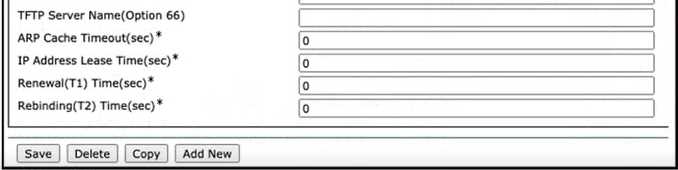
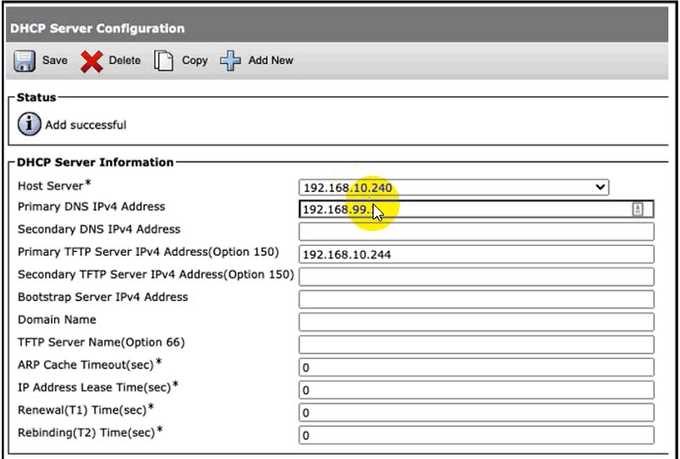
Refer to exhibit. CISCO 350-801 question P-31 CISCO 350-801 question Refer to the exhibit. A collaboration engineer configures Cisco UCM to act as a DHCP server. What must be done next to configure the DHCP server?
Options
26 comments in the community discussion
5
Option A is correct here. SRST lets phones reregister automatically to the publisher when connectivity to the subscriber fails. Device Pool just groups settings, doesn’t handle failover directly. Seen this a lot in practice configs.
3
Option A is it. SRST provides that fallback registration when the subscriber connection drops. Device Pool (D) only tells the phone which call manager group to use, doesn't handle reregistration itself. Seen this on similar exam questions, but happy if someone thinks otherwise.
Q: 9
An administrator configures international calling on a Cisco UCM cluster and wants to minimize the number of route patterns that are needed. Which route pattern enables the administrator to match variable-length numbers?
Options
27 comments in the community discussion
1
I don't think it's B, C is actually the one you want. The exclamation point in 9.011! matches any number of digits after the international prefix, so you only need one pattern for all countries. B with @ seems right at first but that's usually for directory numbers, not dialing patterns in this context. Anyone still
1
For me, B, since specifying the video codec like h264 should be needed for video streams.
Q: 10
Which external DNS SRV record must be present for Mobile and Remote Access?
Options
35 comments in the community discussion
6
B. you can double check the official Cisco documentation or practice with lab DNS configs if you want to be sure.
4
Option C for sure, "Maximum Number of Registered Devices" is the key setting. Option A adds unregistered devices, which isn't needed here. Seen similar questions trip folks up in practice tests, but C matches exactly.
Q: 11
Refer to the exhibit. Which two codec permutations should be transcoded by this dspfarm? (Choose two.)
Options
8 comments in the community discussion
1
I don’t think it’s A or B since those codecs aren’t even in the profile. From what I remember, DSPFarm can only transcode between the codecs it's configured for, so C and E fit. iLBC and G.728 are a trap here because they’re missing from the codec list.
1
A makes sense here. UCM sits in the middle and relays SIP messages between both phones, so you get duplicates for each signaling leg in the trace. Not 100% but that's what I've seen in practice.
Q: 12
An administrator executes the debug isdn q931 command while debugging a failed call. After a test call is placed, the logs return a disconnect cause code of 1. What is the cause of this problem? P-44
Options
7 comments in the community discussion
D imo. Cause code 1 with ISDN debug means the number was never assigned, so there's no endpoint to route the call to. You'd see different cause codes if it was busy or rejected. Pretty confident here but open if there's something I'm missing from recent IOS versions.
D
Q: 13
A network administrator deleted a user from the LDAP directory of a company. The end user shows as Inactive LDAP Synchronized User in Cisco UCM. Which step is next to remove this user from Cisco UCM?
Options
7 comments in the community discussion
3
Pretty sure C is right, trap is that active/standby doesn't do load balancing. But does the question mean 'user failover' happens automatically in both modes, or do they want manual failover? That could change things.
B
Q: 14
A customer asked to integrate Unity Connection with Cisco UCM using SIP protocol. Which two features must be enabled on SIP security profiles? (Choose two.)
Options
9 comments in the community discussion
6
A is the one that strips the initial 9 and inserts 011, which aligns with PSTN requirements for international dialing. C looks tempting but it doesn’t actually add the international prefix, so that’s the trap. Seen similar questions in practice-let me know if I’m off.
4
A
Q: 15
On which protocol and port combination does Cisco Prime Collaboration receive notifications (Traps and InformRequests) from several network devices in the Collaboration infrastructure for which it has requested notifications?
Options
6 comments in the community discussion
9
Had something like this in a mock. The correct SIP call flow order should be: 100 Trying, 180 Ringing, two-way voice path, Connect ACK, two-way RTP channel. Pretty sure this matches the expected signaling and media setup for a basic call.
6
100 Trying > 180 Ringing > two-way voice path > Connect ACK > two-way RTP channel. This is the standard SIP call setup flow as far as I know, matches what I've seen in labs.
Q: 16
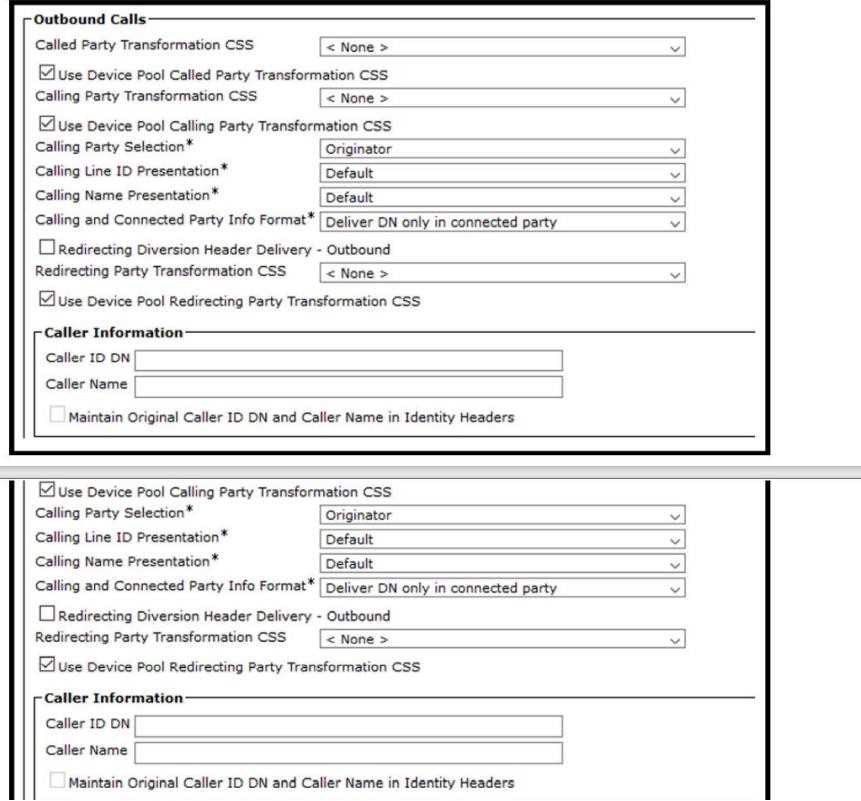
Refer to exhibit. CISCO 350-801 question Refer to the exhibit. Unanswered calls do not reach the voicemail associated with the phones Instead, callers receive the default greeting Which action fixes the configuration?
Options
8 comments in the community discussion
6
route pattern, voice mail pilot, voice mail profile, then voice mail server service parameters. That’s the setup order I’ve always used.
5
route pattern then voice mail pilot then voice mail profile then voice mail server service parameters, matches official guide.
Q: 17
What are two features of Cisco Expressway that the customer gets if Expressway-C and Expressway-E are deployed?(Choose two.)
Options
12 comments in the community discussion
5
Users, Add New with mailbox, pick template, enter details and Save. That's what I picked too.
3
Looks right to me. Users, Add New with mailbox, select template, then enter details and Save.
Q: 18
An administrator configures Cisco UCM to use UDP for SIP signaling and finds that an endpoint cannot make calls. Which action resolves this issue?
Options
3 comments in the community discussion
6
Go to Cisco Unity Connection Administration > Telephony Integrations, then select the Port group page, next click Edit > Servers > Add, finally enter the new TFTP server details and save. I think "Port group page" before adding servers trips some people up here! Seen a similar one on practice material.
3
Pretty straightforward if you follow the admin flow. It should be: Unity Connection Administration > Telephony Integrations, then Port group page, Edit Servers Add, and finally enter TFTP server details then save. Order matters for the config to go smoothly!
Q: 19

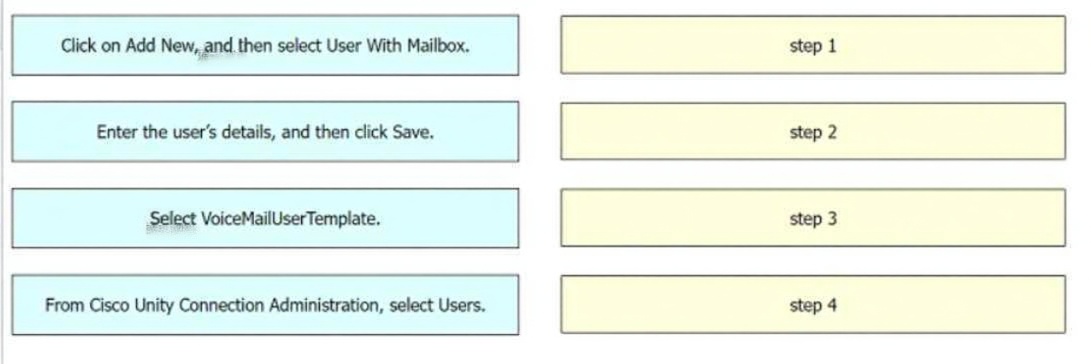
DRAG DROP An engineer must add a new user account and mailbox in Cisco Unity Connection. Drag and drop the configuration steps from the left into the correct order on the right. P-190

Drag & Drop
7 comments in the community discussion
2
A makes sense here. If you don’t activate the controller card, the PRI config just won’t take, and no B-channels get assigned for voice. Pretty sure that’s always required unless it’s already active.
Gotta start by activating the controller card before any ISDN PRI config works. A
Q: 20

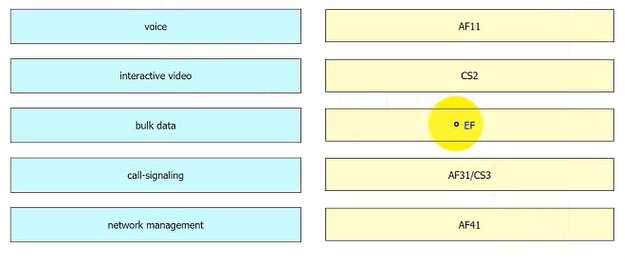
DRAG DROP According to the QoS Baseline Model, drag and drop the applications from the left onto the Per-Hop Behavior values on the right. CISCO 350-801 question

Drag & Drop
8 comments in the community discussion
6
C . When adding an MGCP gateway like VG320 in UCM, entering the FQDN or hostname is mandatory so CUCM can communicate with the device. Device pool matters but isn't what gets it registered to the database at this step. Anyone disagree?
Honestly, I'm between B and C but think it's C since UCM needs that hostname to recognize the gateway for MGCP.
Question 1 of 20

Premium Access Includes

  • Quiz Simulator
  • Exam Mode
  • Progress Tracking
  • Question Saving
  • Flash Cards
  • Drag & Drops
  • 3 Months Access
  • PDF Downloads
Get Premium Access
Scroll to Top