
Q: 1
Refer to the exhibit.
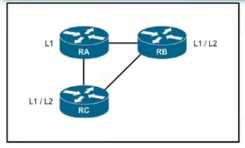 Routers RA and RB are IS-IS peers configured for NSF but router RC is an IS-IS peer without NSF
capability If RA undergoes processor switchover what is the effect on the network environment?
Routers RA and RB are IS-IS peers configured for NSF but router RC is an IS-IS peer without NSF
capability If RA undergoes processor switchover what is the effect on the network environment?
Routers RA and RB are IS-IS peers configured for NSF but router RC is an IS-IS peer without NSF
capability If RA undergoes processor switchover what is the effect on the network environment?Options
Discussion
No comments yet. Be the first to comment.
Be respectful. No spam.
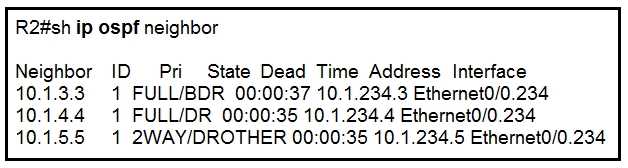 Why is neighbor 10.1.5.5 stuck in “2WAY” state?
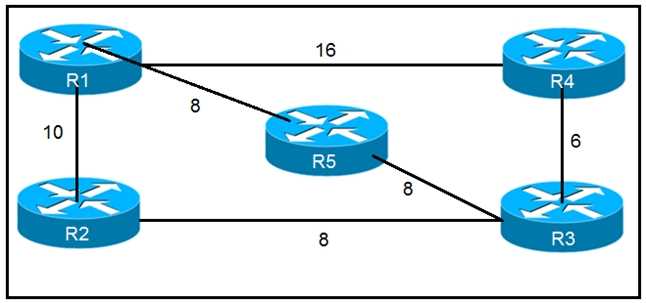 Which router does R1 install as an alternate next hop when trying to reach R3 if LFA is
enabled?
Which router does R1 install as an alternate next hop when trying to reach R3 if LFA is
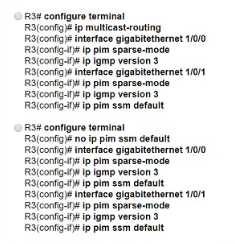
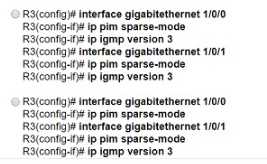
enabled?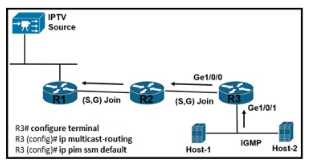 Refer to the exhibit. A network engineer is configuring router R3 to handle multicast streams, but
Host-2 cannot send subscriptions messages to the IPTV source. Which configuration must the
engineer apply to router R3 so it passes the IPTV stream to Host-2?
Refer to the exhibit. A network engineer is configuring router R3 to handle multicast streams, but
Host-2 cannot send subscriptions messages to the IPTV source. Which configuration must the
engineer apply to router R3 so it passes the IPTV stream to Host-2?
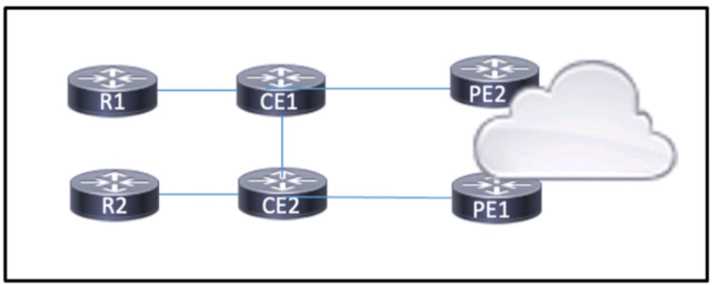 BGP is running on the network, and CE1 currently prefers routes to the internet via PE 1 A network
engineer must manipulate the BGP routes that CE1 receives from PE2 to be more desirable The
engineer configured a route map using MED and applied it on CE1 outbound from PE2. However,
after a BGP soft reset. PE1 is still preferred. Which action must the engineer take so that PE2 is
chosen as the next hop?
BGP is running on the network, and CE1 currently prefers routes to the internet via PE 1 A network
engineer must manipulate the BGP routes that CE1 receives from PE2 to be more desirable The
engineer configured a route map using MED and applied it on CE1 outbound from PE2. However,
after a BGP soft reset. PE1 is still preferred. Which action must the engineer take so that PE2 is
chosen as the next hop?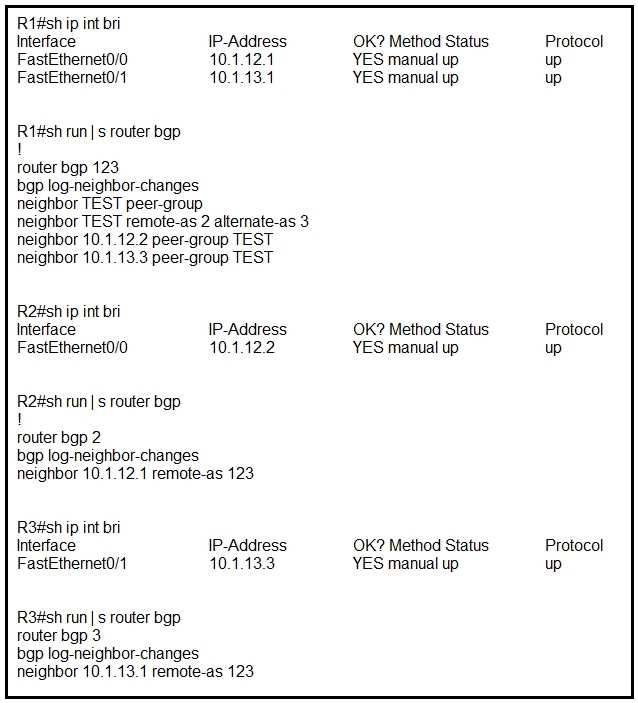 R1 is directly connected to R2 and R3. R1 is in BGP AS 123, R2 is in BGP AS 2, and R3
is in BGP AS 3. Assume that there is no connectivity issue between R1, R2 and R1, R3. Which result
between
BGP peers R1, R2 and R1, R3 is true?
R1 is directly connected to R2 and R3. R1 is in BGP AS 123, R2 is in BGP AS 2, and R3
is in BGP AS 3. Assume that there is no connectivity issue between R1, R2 and R1, R3. Which result
between
BGP peers R1, R2 and R1, R3 is true?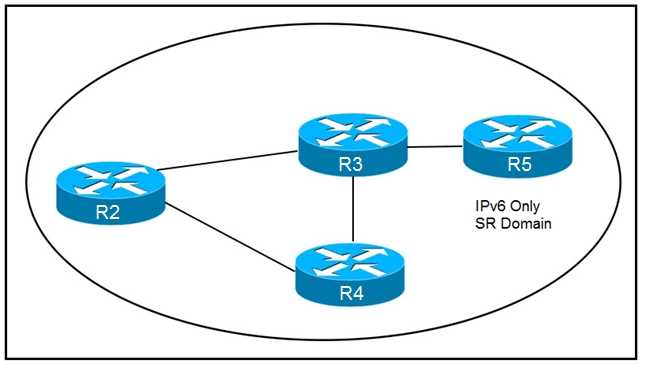 How are packets directed through the data plane when SRv6 is implemented?
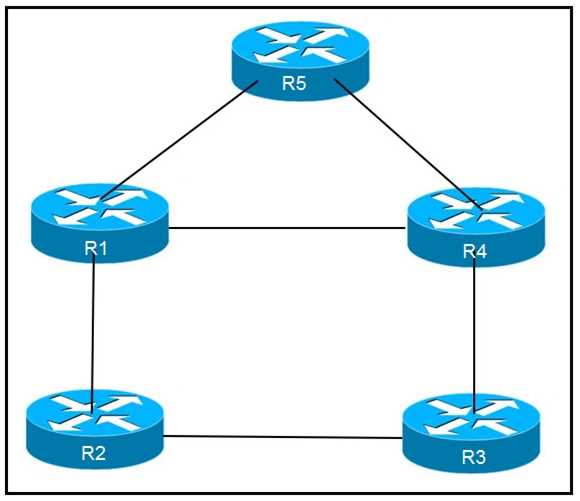 An engineer is addressing an IS-IS design issue which is running within the topology. All
links are running on FastEthernet, except the link between R5 and R4, which is Gigabit Ethernet.
Which statement about the design is true?
An engineer is addressing an IS-IS design issue which is running within the topology. All
links are running on FastEthernet, except the link between R5 and R4, which is Gigabit Ethernet.
Which statement about the design is true? Refer to the exhibit. Users connected to an application on 1.1.1.1 via routers CE1 and CE2 are
complaining of frequent disconnections. While troubleshooting the issue, a network engineer with
an employee ID: 4333:96:916 determined that the application itself is working normally, but the link
connected to the 1.1.1.1 application is flapping. The users on CE1 and CE2 are accessing applications
on 2.2.2.2 without difficulty. Which action resolves the issue?
Refer to the exhibit. Users connected to an application on 1.1.1.1 via routers CE1 and CE2 are
complaining of frequent disconnections. While troubleshooting the issue, a network engineer with
an employee ID: 4333:96:916 determined that the application itself is working normally, but the link
connected to the 1.1.1.1 application is flapping. The users on CE1 and CE2 are accessing applications
on 2.2.2.2 without difficulty. Which action resolves the issue? Refer to the exhibit Reuters R2. R3, R4 and R5 all reside in the same area, with R1 in a different area
R3 is overutilized and the engineer wants to reduce its CPU load The engineer configured router R4
to summarize routes that it receives from R5. but R3 is still receiving all of the R5 routes. Which
action resolves the issue?
Refer to the exhibit Reuters R2. R3, R4 and R5 all reside in the same area, with R1 in a different area
R3 is overutilized and the engineer wants to reduce its CPU load The engineer configured router R4
to summarize routes that it receives from R5. but R3 is still receiving all of the R5 routes. Which
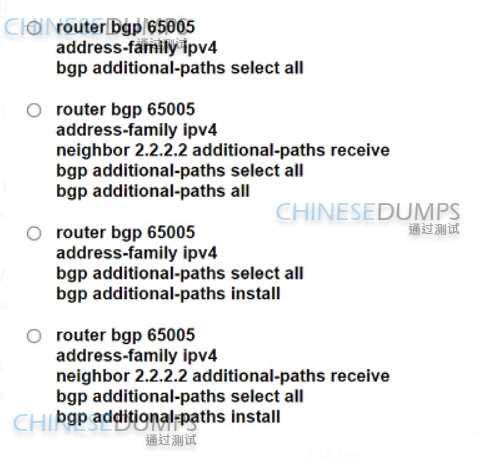
action resolves the issue? Refer to the exhibit. The initial BGP configuration of the network is complete, and all the routers
have established BGP neighborship. The engineer configured Router 2 with additional BGP paths to
install and advertise more paths to Router 1 and Router 3. Which configuration must the engineer
apply to Router 1 and Router 3 so that they will use and install all additional paths?
Refer to the exhibit. The initial BGP configuration of the network is complete, and all the routers
have established BGP neighborship. The engineer configured Router 2 with additional BGP paths to
install and advertise more paths to Router 1 and Router 3. Which configuration must the engineer
apply to Router 1 and Router 3 so that they will use and install all additional paths?
 Refer to the exhibit While troubleshooting a networking issue an engineer identified a suboptimal
communication issue on route reflector RR2 In the current environment
Router A is a non-route-reflector client for RR1 and RR2
Routers D and E are directly connected iBGP peers.
Router F is not an iBGP peer of routers D and E
Which action resolves the issue?
Refer to the exhibit While troubleshooting a networking issue an engineer identified a suboptimal
communication issue on route reflector RR2 In the current environment
Router A is a non-route-reflector client for RR1 and RR2
Routers D and E are directly connected iBGP peers.
Router F is not an iBGP peer of routers D and E
Which action resolves the issue? Refer to the exhibit. A network engineer just replaced five routers on this OSPF network. When the
routing protocol is brought up, R5 cannot reach routes that originate on R1. The engineer verified
that all connected links have established neighbor relationships. R5 reaches routes originating on R3
and R4. Which action resolves the issue?
Refer to the exhibit. A network engineer just replaced five routers on this OSPF network. When the
routing protocol is brought up, R5 cannot reach routes that originate on R1. The engineer verified
that all connected links have established neighbor relationships. R5 reaches routes originating on R3
and R4. Which action resolves the issue? After troubleshooting BGP traffic steering issue, which action did the network operator
take to achieve the correct effect of this configuration?
After troubleshooting BGP traffic steering issue, which action did the network operator
take to achieve the correct effect of this configuration? A network operator is troubleshooting packet loss seen from the R1 loopback interface to the R2
loopback interface over the core network. The operator is attempting to identify the next leg in the
path from PE1. Which interface and label path should the operator investigate next?
A network operator is troubleshooting packet loss seen from the R1 loopback interface to the R2
loopback interface over the core network. The operator is attempting to identify the next leg in the
path from PE1. Which interface and label path should the operator investigate next? All routers on this network have been configured with P1M-SM and R1 is the rendezvous point
However, when asymmetric routing is implemented to modify link usage the network begins to drop
certain multicast traffic Which action corrects the problem?
All routers on this network have been configured with P1M-SM and R1 is the rendezvous point
However, when asymmetric routing is implemented to modify link usage the network begins to drop
certain multicast traffic Which action corrects the problem? A network engineer applied configuration on R5 to summarize all OSPF routes, but R4 is still
receiving specific routes from R5. The engineer has confirmed that both R5 and R4 routers are
configured with correct summarization configuration but R5 Is not sending the summary routes What
action must the engineer take to fix the problem?
A network engineer applied configuration on R5 to summarize all OSPF routes, but R4 is still
receiving specific routes from R5. The engineer has confirmed that both R5 and R4 routers are
configured with correct summarization configuration but R5 Is not sending the summary routes What
action must the engineer take to fix the problem?