
Q: 8
HOTSPOT For each of the following statements, select Yes if the statement is true. Otherwise, select No. 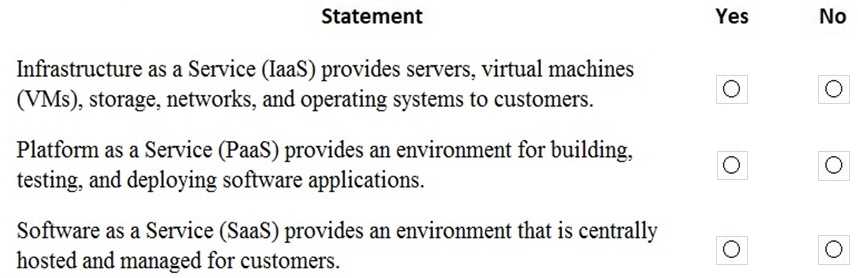
Your Answer
Discussion
Man, why does Microsoft keep rephrasing the same things? It's still No, Yes, Yes.
No, Yes, Yes
No, Yes, Yes. For IaaS the OS is on you, but provider handles it for PaaS and SaaS. Standard MS-900 split here.
That image throws people off. Kinda sneaky but if you check the fine print, for IaaS you do manage the OS so that one flips to No, then Yes for PaaS and SaaS. See it come up with this exact nuance.
Can someone clarify if the statements actually mention who manages the OS in IaaS?
No, Yes, Yes. For IaaS you handle the OS maintenance yourself, but with PaaS and SaaS the provider takes care of everything below your code or app. Pretty sure that's what they want here, but clarify if the wording is tricky.
No, Yes, Yes
PaaS and SaaS handle more on the provider side but with IaaS you still take care of the OS. That's always tripped me up when learning the models, but I'm pretty sure that's right here. If anyone disagrees let me know.
PaaS and SaaS handle more on the provider side but with IaaS you still take care of the OS. That's always tripped me up when learning the models, but I'm pretty sure that's right here. If anyone disagrees let me know.
No, Yes, Yes
No, Yes, Yes. That first one trips people up since it's easy to think the provider does more in IaaS but customer still handles OS stuff. Seen similar in exam reports, second and third options are more straightforward.
Do they mention who does OS patching or just say "managed" by provider? If the question shifts to "customer can control patching" for IaaS, that actually goes to No instead of Yes. This detail has flipped answers for me before.
Be respectful. No spam.