Free NSK200 Practice Test Questions and Answers (2026)

View Mode
Q: 1
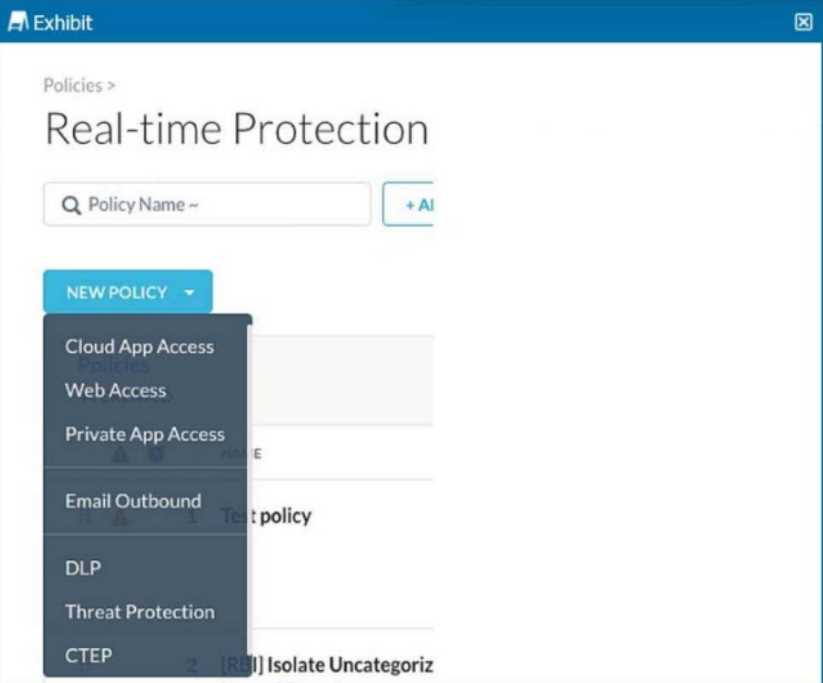
Review the exhibit. Netskope NSK200 question You are asked to create a new Real-time Protection policy to scan SMTP emails using data loss prevention (DLP) for personal health information (PHI). The scope is limited to only emails being sent from Microsoft Exchange Online to outside recipients.
Options
31 comments in the community discussion
2
Looks like this is one of those tricky cases where the enforcement layer matters more than just the DLP engine. B fits since Real-time Protection for outbound Exchange Online mail is what actually covers this flow. If it were just any DLP use case, then D could work, but here it's pretty specific. Agree?
2
B tbh. "Email Outbound policy" is the best fit because it targets sending Exchange Online emails to external users, which matches the question's scope. DLP policy (D) is a trap here since that's the detection engine, but not the enforcement policy type you need for this scenario. Pretty sure it's B but if someone has a
Q: 2
You are using Skope IT to analyze and correlate a security incident. You are seeing too many events generated by API policies. You want to filter for logs generated by the Netskope client only.
Options
33 comments in the community discussion
1
Probably A for this one, since selecting access_method and choosing Client narrows results to just agent-generated events. I saw a similar question in practice and "Client" was the right pick for cutting out API traffic. Open to pushback if I'm missing something here.
1
saw pretty similar problem in my exam in some exam reports, it's A
Q: 3
You are testing policies using the DLP predefined identifier "Card Numbers (Major Networks; all)." No DLP policy hits are observed.
Options
29 comments in the community discussion
1
Not A or C, B. These vendor DLP checks are strict about valid formats!
1
Why not C? Wouldn't normalizing to 16-digit numbers catch more patterns, or does the DLP still require valid card checks?
Q: 4
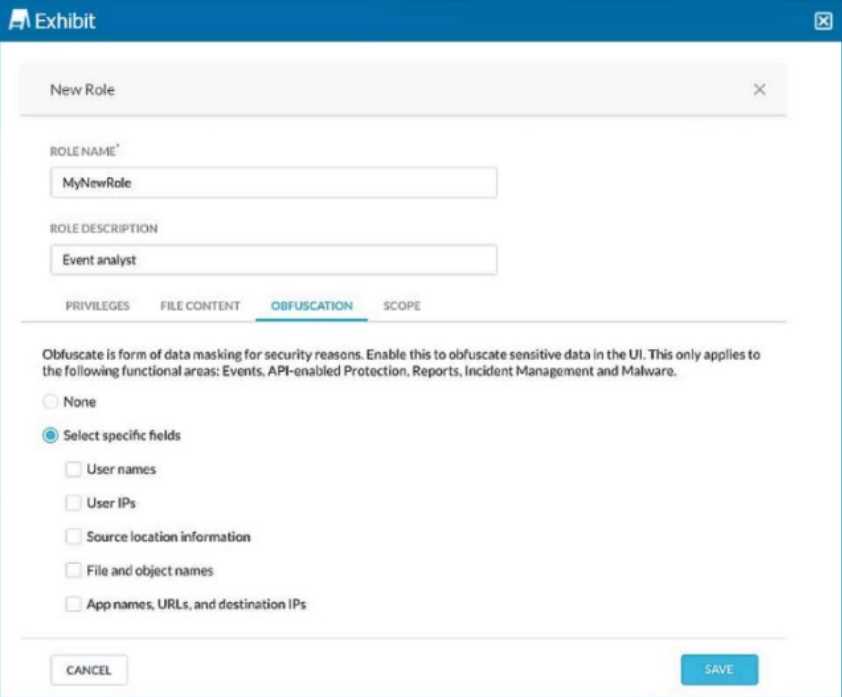
Review the exhibit. Netskope NSK200 question You are asked to create a new role that allows analysts to view Events and Reports while providing user privacy. You need to avoid directly exposing identities and user location information. Which three fields must you obfuscate in this scenario? (Choose three.)
Options
25 comments in the community discussion
2
A/B/E is right here. User IPs and names are direct identifiers, and source location gives away user whereabouts. Option C is a trap since app names or URLs aren’t PII, and D isn’t required for privacy in this scenario. Pretty sure ABE matches what similar exam questions want, but open to other views.
1
Its A, B, E. Only these actually tie to identity and location, so you'd obfuscate them to meet privacy. Makes sense right?
Q: 5
Your team is asked to investigate ten Netskope DLP incidents. You want to assign these incidents among different team members.
Options
33 comments in the community discussion
3
Option C not A. Assigning DLP incidents inside Netskope is handled by the DLP Incident workflow, not your general ticket tool. I've seen similar questions try to trip you up with A, but C matches the built-in process for incident ownership. Let me know if you disagree but I think C covers what the question wants.
1
C tbh, ticketing tool (A) is a common trap here but DLP assignments happen in the DLP Incident workflow.
Q: 6
You want to allow both the user identities and groups to be imported in the Netskope platform. Which two methods would satisfy this requirement? (Choose two.)
Options
29 comments in the community discussion
1
Is anyone sure if Bulk CSV upload (D) actually brings in group membership, or just the user accounts? I know SCIM (A) and Directory Importer (C) do both, but pretty fuzzy on how complete D is for groups.
1
A is my pick, and C. Had something like this in a mock-both SCIM and Directory Importer handle users and groups, not just one or the other. D is for one-time loads but doesn't work for ongoing sync. Think A/C is the safe pick here but happy to hear if someone found different.
Q: 7
You are deploying a Netskope client in your corporate office network. You are aware of firewall or proxy rules that need to be modified to allow traffic. Which two statements are true in this scenario? (Choose two.)
Options
38 comments in the community discussion
1
C/D tbh. The question is about firewall/proxy *allow* rules, not inspection, so B's a red herring. A looks like a legacy TLS trap. TCP 443 for basic tunnel, UDP 443 for DTLS performance-both needed for most deployments. Disagree?
1
Definitely C and D. The Netskope client always relies on TCP 443 for the tunnel to the cloud, and UDP 443 (DTLS) is just highly recommended for performance but not absolutely required. Never needed to set up SSL decryption (B) unless you have a specific inspection policy in place. Let me know if I missed something here
Q: 8
You created the Netskope application in your IdP for user provisioning and validated that the API Integration settings are correct and functional. However, you are not able to push the user groups from the IdP into your Netskope tenant.
Options
27 comments in the community discussion
4
Option D
1
Probably A. In some practice tests, group sync failures could be tied to deactivated users in IdP groups. Official guide touches on this but I'm not 100% sure, so check documentation to confirm.
Q: 9
You discover the ongoing use of the native Dropbox client in your organization. Although Dropbox is not a corporate-approved application, you do not want to prevent the use of Dropbox. You do, however, want to ensure visibility into its usage.
Options
32 comments in the community discussion
9
Option D fits here. With Destination Locations steering exceptions, you can direct Dropbox app traffic to Netskope for inspection, so you get visibility but don't block access. I think A and B would restrict usage, which isn't what they want. Pretty sure D, unless the organization has some unusual routing setup.
6
Option D
Q: 10
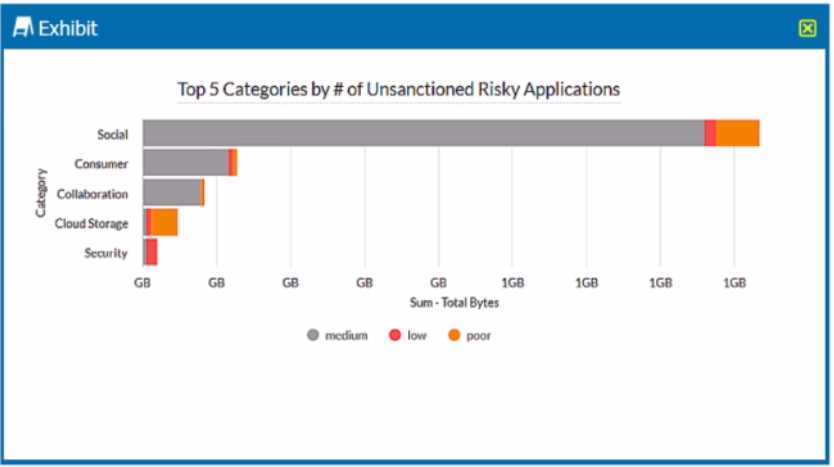
Review the exhibit. Netskope NSK200 question A security analyst needs to create a report to view the top five categories of unsanctioned applications accessed in the last 90 days. Referring to the exhibit, what are two data collections in Advanced Analytics that would be used to create this report? (Choose two.)
Options
32 comments in the community discussion
2
Its B and D for me
1
Yeah, it should be B and C here. Application Events gives you actions taken within cloud apps, and Page Events logs each time users hit a web app, which is perfect for usage visibility. D (Network Events) is tempting but more about raw traffic than application context, so not the best fit for app category reporting.
Q: 11
You use Netskope to provide a default Malware Scan profile for use with your malware policies. Also, you want to create a custom malware detection profile. In this scenario, what are two additional requirements to complete this task? (Choose two.)
Options
27 comments in the community discussion
2
Not sure why C isn't right here. Option B and C.
2
D imo, but is the focus on 'default' or 'custom' profile requirements? That would totally change which two I pick.
Q: 12
You are implementing tenant access security and governance controls for privileged users. You want to start with controls that are natively available within the Netskope Cloud Security Platform and do not require external or third-party integration. Which three access controls would you use in this scenario? (Choose three.)
Options
27 comments in the community discussion
1
A B C
1
My pick: A B C. D (MFA) looks tempting but it's not native here.
Q: 13
You are currently migrating users away from a legacy proxy to the Netskope client in the company’s corporate offices. You have deployed the client to a pilot group; however, when the client attempts to connect to Netskope, it fails to establish a tunnel. In this scenario, what would cause this problem?
Options
36 comments in the community discussion
6
Makes sense to pick B, since UDP 443 is needed for the DTLS tunnel with Netskope. If the firewall blocks it, no tunnel forms at all. Pretty sure that's the main reason, unless TCP fallback's in use.
4
Option B for this one. UDP 443 is required for the initial DTLS tunnel, and if that’s blocked, the client can’t even negotiate a fallback unless TCP fallback is enabled (which isn’t mentioned here). Pretty sure C would only matter if all access to EPoT was denied, not just DTLS. Open to arguments if anyone sees it diff
Q: 14
Your organization has three main locations with 30.000 hosts in each location. You are planning to deploy Netskope using iPsec tunnels for security. What are two considerations to make a successful connection in this scenario? (Choose two.)
Options
32 comments in the community discussion
2
Definitely has to be C and D here. With 30k hosts per site, you're gonna need to consider tunnel load and redundancy-browser or OS type doesn't really flip the answer unless it was about endpoint support.
2
Feels like C and D
Q: 15
Your company asks you to use Netskope to integrate with Endpoint Detection and Response (EDR) vendors such as Crowdstrike. Which two requirements are needed for a successful integration and sharing of threat data? (Choose two.)
Options
21 comments in the community discussion
2
A and C. Device classification (B) feels like a decoy since it's not really needed for the EDR integration itself, just for separate device-based controls. You definitely need an API Client ID for Crowdstrike integration and a remediation profile to decide on response actions. Open to other views if I'm missing somethi
2
I don’t think it’s A. B and C make more sense to me since API Client ID handles the connection, and device classification seems important for identifying what endpoints are actually reporting threats. Correct me if I’m off base.
Question 1 of 20

Premium Access Includes

  • Quiz Simulator
  • Exam Mode
  • Progress Tracking
  • Question Saving
  • Flash Cards
  • Drag & Drops
  • 3 Months Access
  • PDF Downloads
Get Premium Access
Scroll to Top

FLASH OFFER

Days
Hours
Minutes
Seconds

avail 10% DISCOUNT on YOUR PURCHASE