Free H12-821_V1.0 Practice Test Questions and Answers (2026)

View Mode
Q: 1
The native AC function allows an agile switch to integrate AC capabilities, achieving wired and wireless convergence. The agile switch centrally manages wired and wireless service traffic.
Options
28 comments in the community discussion
6
Yeah makes sense to me, that's True. Huawei's agile switch native AC is designed for that wired and wireless convergence, all managed in one place. Unless they're talking about some really old switch model, this fits the current lineup. Open to any other interpretations but I'm sticking with True.
6
My vote is True. Native AC is built into Huawei agile switches so they handle both wired and wireless together. Makes sense here.
Q: 2
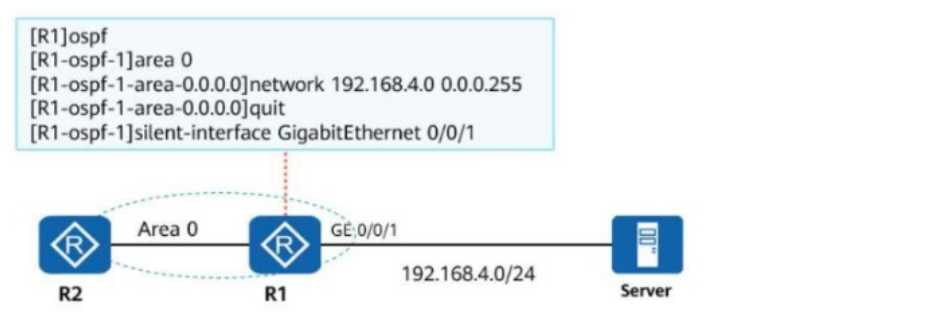
The following figure shows the OSPF network of an enterprise and the OSPF configurations of R1. Which of the following statements is false about the network? HUAWEI H12 821 V1 question
Options
31 comments in the community discussion
5
C. not B. Silent-interface only stops OSPF packets on GE0/0/1 but doesn't block advertising the subnet. B's a decoy here.
4
C. Silent-interface doesn't stop the subnet from being advertised in OSPF, so C is definitely the false one here.
Q: 3
Which of the following attributes cannot be directly referenced in an apply clause of a route-policy?
Options
30 comments in the community discussion
1
C or D for me. Community and tag are obvious apply candidates, but I've seen origin get tricky in some other vendors, maybe it's a trap here? Not sure B is right.
1
B tbh
Q: 4

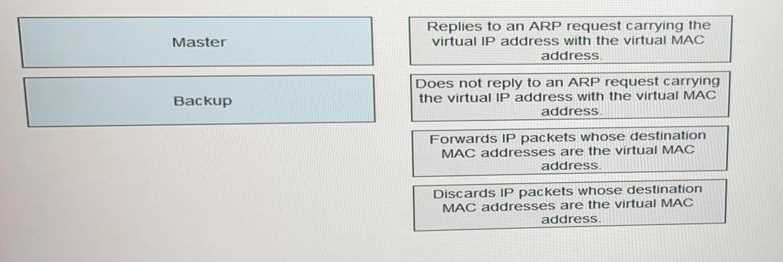
DRAG DROP Drag the following VRRP states to the corresponding working mechanisms. HUAWEI H12 821 V1 question

Drag & Drop
30 comments in the community discussion
6
Master is the one that replies to ARP for the virtual IP and forwards virtual MAC traffic, Backup just sits idle (no ARP, discards those packets). That's how VRRP separation works from what I remember. Correct me if you see something off.
4
Master: replies to ARP and forwards, Backup: does not reply and discards. Trap is thinking Backup actively handles traffic-only after failover. Seen similar on practice.
Q: 5

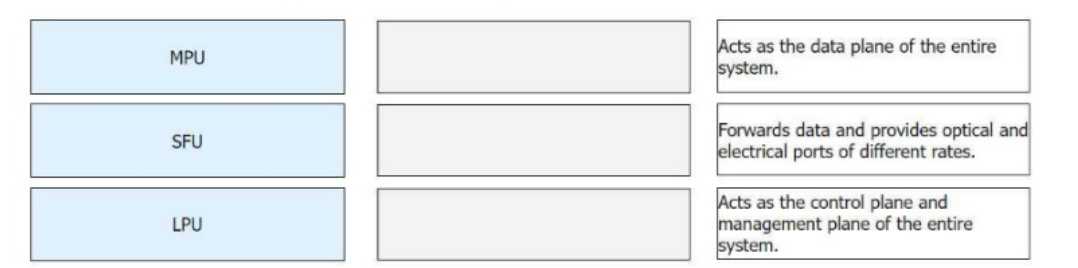
DRAG DROP Huawei modular devices have multiple hardware modules that provide different functions. Match the following hardware modules with their functions. HUAWEI H12 821 V1 question

Drag & Drop
24 comments in the community discussion
6
SFU = data plane, LPU = forwarding/ports, MPU = control & management. Official guide matches this.
5
Acts as the data plane → SFU, forwards data and ports → LPU, control and management plane → MPU. LPU is a common trap since it sounds like it’d be main for forwarding, but SFU actually handles the switching. I think this mapping is right.
Q: 6

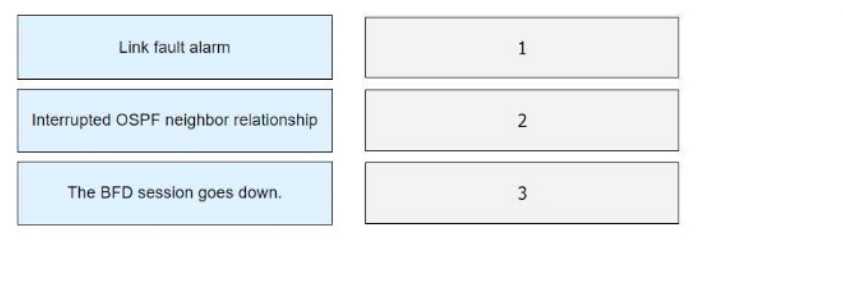
DRAG DROP BFD for OSPF is deployed on a directly connected link. If the physical link is disconnected, drag the following BFD processes to the corresponding sequence numbers. HUAWEI H12 821 V1 question

Drag & Drop
40 comments in the community discussion
6
This sequence is always so annoying. Link fault alarm to BFD session down then OSPF neighbor drops.
6
Link fault alarm → The BFD session goes down → Interrupted OSPF neighbor relationship is the right mapping. That's the normal chain of events for a direct physical link cut, pretty sure that's what they're after for this one.
Q: 7
In BGP, the origin attribute of the routes imported using the import-route command is incomplete.
Options
38 comments in the community discussion
6
True imo
6
Yeah this is True. When you use import-route in Huawei VRP, any routes brought into BGP from another protocol get the origin set to Incomplete. Only the network command sets it to IGP. Pretty sure that's how it works, but correct me if I'm missing something.
Q: 8
GRE is a Layer 2 VPN encapsulation technology that encapsulates packets of certain data link layer protocols so that the encapsulated packets can be transmitted over an IP network.
Options
30 comments in the community discussion
6
False . GRE operates at Layer 3 so it's not a native Layer 2 VPN tech. The question mixes it up-GRE tunnels IP packets, not typical L2 frames unless you do stuff like EoGRE which isn't standard GRE. Correct me if I'm missing something but pretty sure this is the logic.
6
False . Had something like this in a mock, GRE is a Layer 3 tunneling protocol, not a Layer 2 VPN. The question tries to trick you by calling it L2 but it's really not unless you specifically use EoGRE which is a different scenario. Agree?
Q: 9

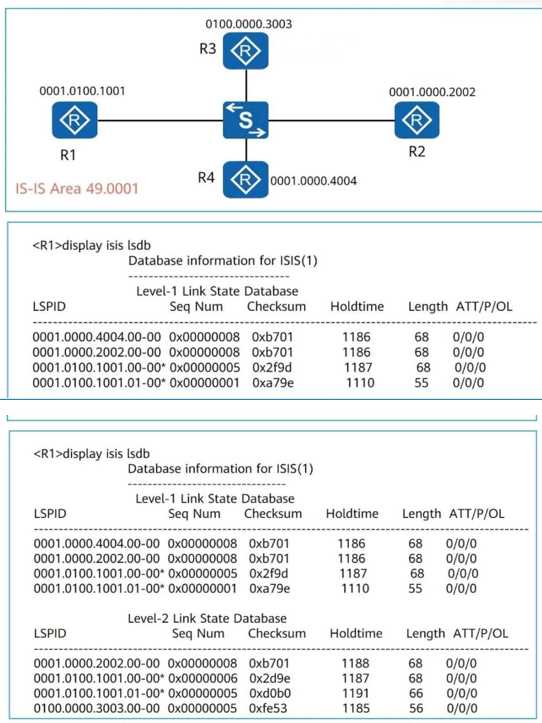
See the following figure. All routers on the network run IS-IS and are in area 49.0001. By referring to the LSDB of R1, the Level-2 DIS is. (Enter the device name, for example, R1.) HUAWEI H12 821 V1 question

Your Answer
31 comments in the community discussion
6
R3 is the Level-2 DIS here. In IS-IS, the router that generates the pseudonode LSP in the LSDB is always the DIS for that level, and in R1’s Level-2 database you find a record with R3 as the source. Pretty sure that seals it, unless configs were non-standard or there’s something we’re not seeing in the image. Anyone se
5
R3
Q: 10
Similar to the OSPF DR, the IS-IS DIS needs to be elected on a broadcast network. However, the OSPF DR is preemptive by default, whereas the IS-IS DIS is not preemptive by default.
Options
34 comments in the community discussion
7
Guessing False since OSPF DR elections are actually non-preemptive, while IS-IS DIS is preemptive if a higher priority router shows up. Saw similar detail in some practice sets. Good clear statement here.
6
Had something like this in a mock, and chose False.
Q: 11
ON a stateful inspection Firewall where there is no session table, when the status detection mechanism is enabled and the second packet (CYN+ACK) of 3-way hadshakes reaches the firewall. Which of the following statements is true?
Options
12 comments in the community discussion
2
Probably D since with state detection on and no existing session, the firewall relies on its security policy to decide if packets pass. Had something like this in a mock, answer was always about what the policy allows. Agree?
1
Looks like D, since it depends on what the firewall policy allows even if the session table isn’t there. Not totally sure though.
Q: 12
On an enterprise network, the directly connected interfaces of two OSPF routers are on different network segments and have different masks. To establish an OSPF neighbor relationship between the two interfaces, you can change their network types to which of the following?
Options
7 comments in the community discussion
Its A and C, since broadcast (D) and NBMA (B) still need matching masks which trips people up.
C or A both work, since P2P and P2MP types allow OSPF to form neighbors without matching subnet masks. I remember seeing a similar thing in official labs. Pretty sure that's the logic here.
Q: 13
The traffic limiting policy feature only supports the number of connections initiated by the specified IP or the number of connections received.
Options
7 comments in the community discussion
2
False Based on the official guide, traffic limiting is not just IP-based. Anyone else confirm from lab practice?
True . Had something like this in a mock and the explanation focused on counting connections per IP, either source or destination. I thought the feature was pretty much restricted to those criteria and didn't cover per-rule or user-based limits. If that's changed, let me know, but pretty sure it's IP connections only.
Q: 14
Which of the following statements is false about the default processing of the next hop address when a BGP device advertises a route?
Options
7 comments in the community discussion
4
Option B is the false one here. By default, when you send a route from an EBGP peer to an IBGP peer, BGP keeps the original next hop unchanged-doesn't swap it to the local interface unless you use next-hop-self. Pretty sure about this but open to corrections.
B/C? If you look at a strict default config, B is technically false because when a BGP router advertises a route learned from EBGP to an IBGP peer, the next hop isn't changed by default. I've seen some practice exams trip people up over whether the interface address is swapped here. Pretty sure it's B unless there's a
Q: 15

A Huawei firewall by default creates security zones named untrust, dmz, _________ and local. (Use Lowercase letters.)

Your Answer
9 comments in the community discussion
8
trust Straightforward one, was glad this was clear in the exam reports.
4
Nah, "internal" is a common mistake, but it's actually trust Huawei uses for internal LAN. Trap question for sure.
Q: 16
Which of the following statements regarding BGP route advertisement are false?
Options
12 comments in the community discussion
1
C/D? D is definitely false since BGP can advertise routes from more than just IGPs, but A is also incorrect because BGP doesn't send every learned route, only the best path. C is true by default due to IBGP split-horizon. Think it's A and D, unless I'm missing some edge case. Open to counterpoints.
1
My pick: only A is the false statement here. BGP advertises the best path so A doesn't accurately describe BGP behavior, but D seems off since BGP can learn routes from both IGPs and EBGP/IBGP peers. Anyone see it differently?
Q: 17

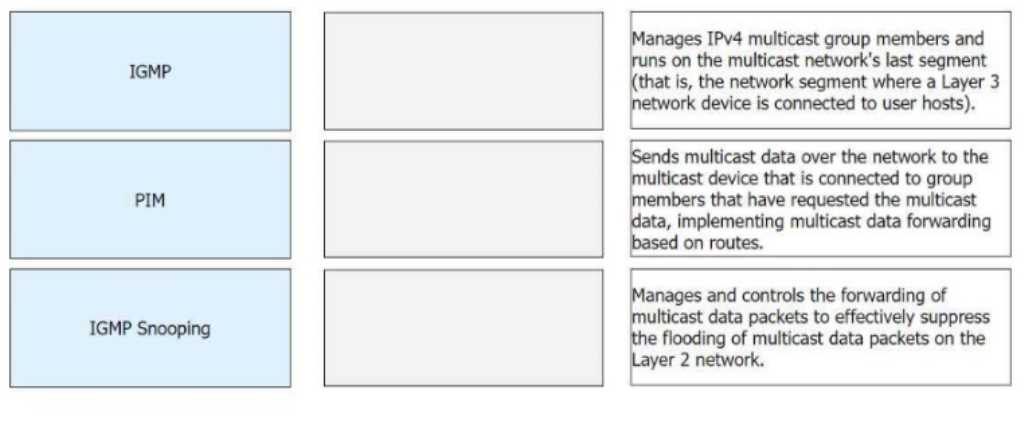
DRAG DROP Match the following IPv4 multicast protocols with the corresponding functions. HUAWEI H12 821 V1 question

Drag & Drop
8 comments in the community discussion
6
Makes sense with IGMP for group membership, PIM for multicast routing, IGMP Snooping to prevent L2 flooding.
2
IGMP -> group membership, PIM -> multicast forwarding based on routes, IGMP Snooping -> controls L2 flooding. Had something like this in a mock but I usually mix up IGMP and Snooping since both deal with membership. Pretty sure this is right, correct me if I'm off.
Q: 18
On an office network of an enterprise, OSPF is enabled on two directly connected routers. During adjacency establishment, the state machine stays in the 2-way state. Which of the following statements are not possible causes?
Options
9 comments in the community discussion
B tbh, router ID conflict is a trap here.
C and D. No explanation needed, those just aren't causes for 2-way issues in OSPF. Confident on this.
Q: 19
ACLs are a common matching tool in routing policies. An ACL can be configured on a router to match routes.
Options
6 comments in the community discussion
4
Guessing True for this one. I've seen ACLs used a lot in route-policies, not just filtering traffic.
2
Seen it in VRP as well, ACLs aren't just for packet filtering. They're definitely used for matching routes in policies. True.
Q: 20
In the OSPF protocol, intra-area route calculation involves only Router LSA, Network LSA, and Summary LSA.
Options
8 comments in the community discussion
3
False . Intra-area OSPF uses just Router LSAs (Type 1) and Network LSAs (Type 2). Summary LSAs (Type 3) are for inter-area routing, not within the same area. Pretty sure that's what the RFC says too. Agree?
2
Guessing False. Summary LSAs are only for inter-area, trap is thinking they're used inside the area.
Question 1 of 20

What's covered in this practice questions set

1: IGP Advanced Principles (OSPF, IS-IS) · 7 questions

📖 About this Domain

This domain covers key concepts related to 1: IGP Advanced Principles (OSPF, IS-IS).

🎓 What You Will Learn

  • Core concepts of 1: IGP Advanced Principles (OSPF, IS-IS)
  • Best practices and implementation
  • Real-world application scenarios

🛠️ Skills You Will Build

  • Technical proficiency in 1: IGP Advanced Principles (OSPF, IS-IS)
  • Problem-solving abilities
  • Practical implementation skills

💡 Top Tips to Prepare

  • Review official documentation and study guides
  • Practice with hands-on exercises
  • Focus on understanding core principles

6: Network Features, Services, and O&M · 6 questions

📖 About this Domain

This domain covers advanced network functions, focusing on Quality of Service (QoS), network security, and Operations, Administration, and Maintenance (O&M). It details the implementation of DiffServ models, ACLs, AAA, and network monitoring protocols like SNMP and NQA.

🎓 What You Will Learn

  • Learn DiffServ model implementation, including traffic classification, marking, congestion management with PQ/WRR/WFQ, and congestion avoidance using WRED.
  • Understand the configuration and principles of ACLs, AAA for user access control, and IPsec VPN for secure network tunnels.
  • Grasp the functions of SNMP for network device management, NQA for network quality analysis, and the role of eSight.
  • Learn the operational principles and configuration of DHCP for IP address automation and FTP for file transfer protocol.

🛠️ Skills You Will Build

  • You will build skills to configure traffic policies using MQC to implement complex QoS requirements on VRP platforms.
  • You will be able to deploy ACLs to filter traffic and configure AAA schemes for RADIUS/HWTACACS authentication.
  • You will gain proficiency in using NQA test instances and SNMP MIBs to monitor and diagnose network faults.
  • You will develop the ability to configure DHCP servers, relay agents, and clients, along with FTP server/client setups.

💡 Top Tips to Prepare

  • Master the Modular QoS Command-Line (MQC) structure: traffic classifier, traffic behavior, and traffic policy.
  • Deeply understand the 'once matched, stop' principle for ACL rule matching and the use of wildcards.
  • Know the key differences and security enhancements between SNMPv1, SNMPv2c, and SNMPv3.
  • Commit the four-step DHCP Discover, Offer, Request, Acknowledge (DORA) process to memory, including message types.

3: Route Control · 3 questions

📖 About this Domain

This domain focuses on the mechanisms for managing routing information. It details the use of tools like route-policies and IP-prefix lists to filter routes and modify attributes. Mastery is critical for implementing routing policies and controlling network traffic flow.

🎓 What You Will Learn

  • You will learn to use filtering tools such as ACLs, IP-prefix lists, and AS-path filters to control routing updates.
  • You will understand how to implement route-policies to modify path attributes like preference, MED, and local preference.
  • You will learn to apply routing policies to control route import between different routing protocols.
  • You will grasp the principles and configuration of Policy-Based Routing (PBR) to influence packet forwarding paths.

🛠️ Skills You Will Build

  • You will build the skill to configure complex route-policies to enforce specific network traffic engineering requirements.
  • You will develop proficiency in using IP-prefix lists for precise matching and filtering of network prefixes.
  • You will gain the ability to manipulate BGP path attributes to control inbound and outbound traffic paths.
  • You will be able to implement PBR to forward traffic based on criteria beyond the destination IP address.

💡 Top Tips to Prepare

  • Master the logic of route-policy nodes, including the 'if-match' and 'apply' clauses and their processing order.
  • Practice extensively with the syntax of IP-prefix lists, especially the 'greater-equal' and 'less-equal' parameters.
  • Utilize lab environments to test the impact of route filtering and attribute modification on routing tables.
  • Memorize the BGP path selection algorithm and how each attribute influences the final best-path decision.

2: BGP Principles and Configuration · 3 questions

📖 About this Domain

This domain introduces the Border Gateway Protocol (BGP), the standard Exterior Gateway Protocol for inter-Autonomous System routing. It covers BGP's fundamental operating principles, peer establishment, and basic route advertisement on VRP-based devices.

🎓 What You Will Learn

  • You will learn BGP fundamentals, including AS numbers, BGP message types, and the BGP Finite State Machine (FSM).
  • You will understand how to establish IBGP and EBGP peer relationships and their distinct route advertisement rules.
  • You will grasp BGP route advertisement methods and the best-path selection process based on path attributes.
  • You will learn the basic CLI commands for configuring BGP processes and peerings on Huawei network equipment.

🛠️ Skills You Will Build

  • You will build the skill to configure and verify EBGP and IBGP peer sessions using the VRP command-line interface.
  • You will be able to inject routing information into BGP using the network command and by importing routes from IGPs.
  • You will develop the ability to analyze BGP path attributes like AS_Path, Origin, and MED to determine the optimal route.
  • You will gain proficiency in troubleshooting BGP peer states and connectivity using display commands.

💡 Top Tips to Prepare

  • Focus on memorizing the BGP path attributes and their selection order, as this is a core concept for exam questions.
  • Utilize eNSP for hands-on practice of BGP peer configuration and route advertisement scenarios.
  • Clearly differentiate the operational rules for IBGP, such as split-horizon, versus EBGP route propagation.
  • Master the BGP FSM states and the conditions that cause state transitions for effective troubleshooting.

4: MPLS Principles and Configuration · 1 questions

📖 About this Domain

This domain covers Multiprotocol Label Switching (MPLS) fundamentals, a core data-carrying mechanism. It details the MPLS architecture, control plane, and data plane operations essential for high-performance networks.

🎓 What You Will Learn

  • Understand the basic MPLS architecture, including Forwarding Equivalence Class (FEC), Label Switched Path (LSP), and the roles of LSRs.
  • Learn the working principles of the Label Distribution Protocol (LDP) for dynamic label distribution and management.
  • Grasp the MPLS packet forwarding process, including label push, swap, and pop operations.
  • Explore the configuration and verification of basic MPLS and LDP on Huawei VRP devices.

🛠️ Skills You Will Build

  • Ability to configure basic MPLS and enable LDP on Huawei network devices.
  • Skill in establishing and verifying both static LSPs and dynamic LSPs.
  • Competence in troubleshooting common LDP session establishment and LSP formation failures.
  • Proficiency in using display commands to check the MPLS forwarding-table and LDP peer status.

💡 Top Tips to Prepare

  • Master the differences between the MPLS control plane and data plane operations, as this is a key exam focus.
  • Utilize eNSP to practice configuring MPLS and LDP scenarios to solidify your understanding of the command-line interface.
  • Focus on the entire label lifecycle, from distribution and binding via LDP to the final forwarding decision.
  • Memorize the key fields in the outputs of `display mpls lsp` and `display ldp session` for troubleshooting questions.

5: Ethernet Switching Technologies

📖 About this Domain

This domain covers Layer 2 network principles on the VRP platform. It focuses on building scalable, redundant, and loop-free Ethernet networks using fundamental switching technologies.

🎓 What You Will Learn

  • Learn VLAN principles, including port types like access, trunk, and hybrid, and GVRP for dynamic VLAN registration.
  • Understand Spanning Tree Protocols (STP, RSTP, MSTP) to prevent broadcast storms and ensure network stability.
  • Master link aggregation using Eth-Trunk in both manual and LACP modes to increase bandwidth and provide link redundancy.
  • Grasp the operation of the MAC address table, including learning, aging, and static/dynamic entry management.

🛠️ Skills You Will Build

  • Ability to configure and troubleshoot inter-VLAN communication using Layer 3 switches.
  • Skill in deploying and optimizing STP, RSTP, and MSTP for fast convergence and efficient loop prevention.
  • Competency in implementing Eth-Trunk for link aggregation and load balancing across multiple physical links.
  • Proficiency in securing the Layer 2 domain using features like port security and MAC address binding.

💡 Top Tips to Prepare

  • Focus on the STP/RSTP port states and the root bridge election process, as these are common exam topics.
  • Practice command-line configuration of VLANs, Eth-Trunk, and MSTP regions in a lab environment like eNSP.
  • Memorize the key differences between STP, RSTP, and MSTP, especially regarding convergence mechanisms and timers.
  • Understand how MAC address learning and forwarding decisions are made by a switch on a per-frame basis.

Premium Access Includes

  • Quiz Simulator
  • Exam Mode
  • Progress Tracking
  • Question Saving
  • Flash Cards
  • Drag & Drops
  • 3 Months Access
  • PDF Downloads
Get Premium Access
Scroll to Top

FLASH OFFER

Days
Hours
Minutes
Seconds

avail 10% DISCOUNT on YOUR PURCHASE