Free FCSS_EFW_AD-7-6 Practice Test Questions and Answers (2026)

View Mode
Q: 1
How will configuring set tcp-mss-sender and set tcp-mss-receiver in a firewall policy affect the size and handling of TCP packets in the network?
Options
42 comments in the community discussion
2
Option B
2
C tbh, seems like a reasonable answer since the MSS config should consider headers and payload to avoid fragmentation. Trap is that C makes it sound more manual than how FortiGate handles MSS adjustment, but I still think thinking about header size matters here. Not super confident though.
Q: 2
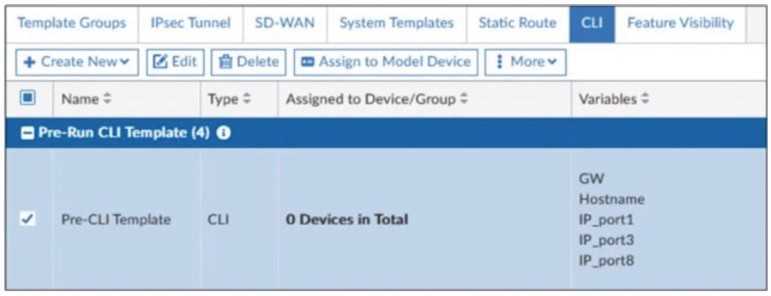
Refer to the exhibit. A pre-run CLI template that is used in zero-touch provisioning (ZTP) and low-touch provisioning (LTP) with FortiManager is shown. Fortinet FCSS EFW AD 7 question The template is not assigned even though the configuration has already been installed on FortiGate. What is true about this scenario?
Options
42 comments in the community discussion
5
Option B, they get auto-unassigned after the first install. Pretty sure that’s how ZTP/LTP pre-run templates work with FortiManager.
2
Wouldn't C be correct if you had to prevent config conflicts by unassigning manually in some scenarios?
Q: 3
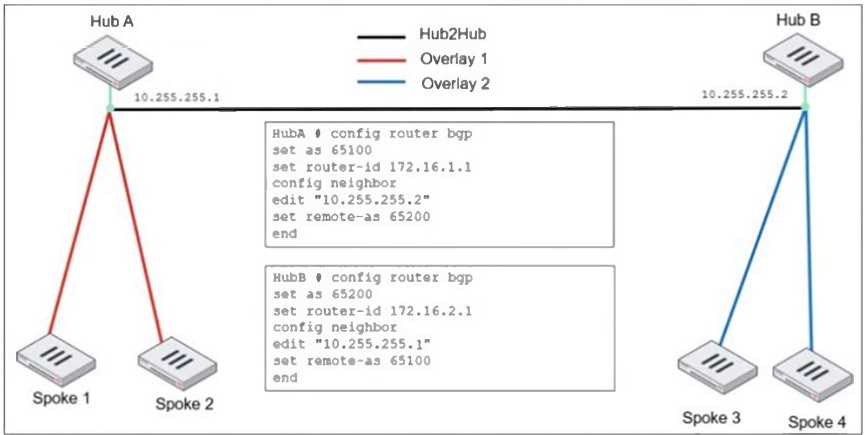
Refer to the exhibit, which shows an ADVPN network Fortinet FCSS EFW AD 7 question An administrator must configure an ADVPN using IBGP and EBGP to connect overlay network 1 with 2. What two options must the administrator configure in BGP? (Choose two.)
Options
49 comments in the community discussion
2
Hmm, I think it should be C and B. IBGP multihop (C) sounds necessary since overlays might not be directly connected, and next-hop-self (B) is usually required. A could be a trap if we're not using eBGP across multiple hops. Happy to be corrected if I'm missing a nuance.
1
A is wrong, B and A. Needed for multihop eBGP and next-hop-self on iBGP in ADVPN.
Q: 4
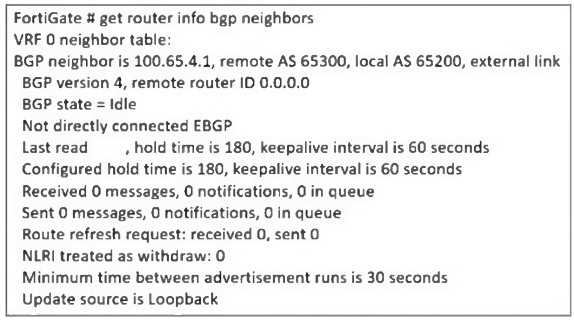
Refer to the exhibit, which contains a partial command output. Fortinet FCSS EFW AD 7 question The administrator has configured BGP on FortiGate. The status of this new BGP configuration is shown in the exhibit. What configuration must the administrator consider next?
Options
43 comments in the community discussion
3
Option D since eBGP by default doesn't allow multihop. Here the peer isn't directly connected, so enabling ebgp-enforce-multihop should fix it. Pretty common BGP issue on FortiGates, but let me know if I'm missing a detail.
1
I gotta say B here. Local AS config can cause sessions not to establish, so that's what I'd check before tweaking multihop.
Q: 5
An administrator is checking an enterprise network and sees a suspicious packet with the MAC address e0:23:ff:fc:00:86. What two conclusions can the administrator draw? (Choose two.)
Options
46 comments in the community discussion
1
A and C here. The MAC prefix is unique to HA with VDOMs, and decoding the group-id lands under 255. Disagree?
1
B and D maybe? That MAC could look like it's tied to FGSP setups (B) and something port specific (D) if you don't pay attention to the octet breakdown. I think FortiGate clustering protocols can get confusing with these addresses. Not totally sure, feel free to show me where I'm off.
Q: 6
An administrator must minimize CPU and RAM use on a FortiGate firewall while also enabling essential security features, such as web filtering and application control for HTTPS traffic. Which SSL inspection setting helps reduce system load while also enabling security features, such as web filtering and application control for encrypted HTTPS traffic?
Options
39 comments in the community discussion
5
D . Cert inspection mode barely touches CPU/RAM since it skips decrypting everything, but you can still do domain-based filtering and app control on HTTPS. Full SSL would kill performance. Pretty sure this is what they’re asking but open to pushback.
2
C vs D here. C sounds right at first with the 'efficient' bit, but it's vague and doesn't mean a specific FortiGate setting. D is literal-certificate inspection mode is way less resource-heavy and still does basic HTTPS filtering. Pretty sure D is what the exam wants, but I get why C looks tempting.
Q: 7
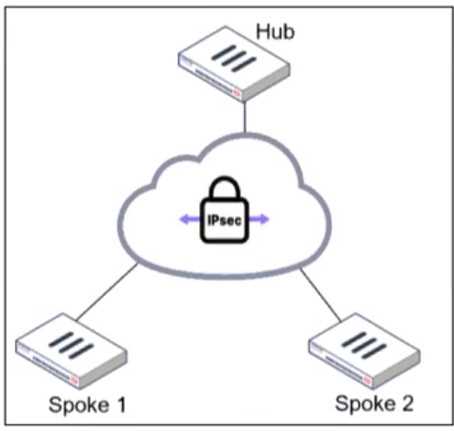
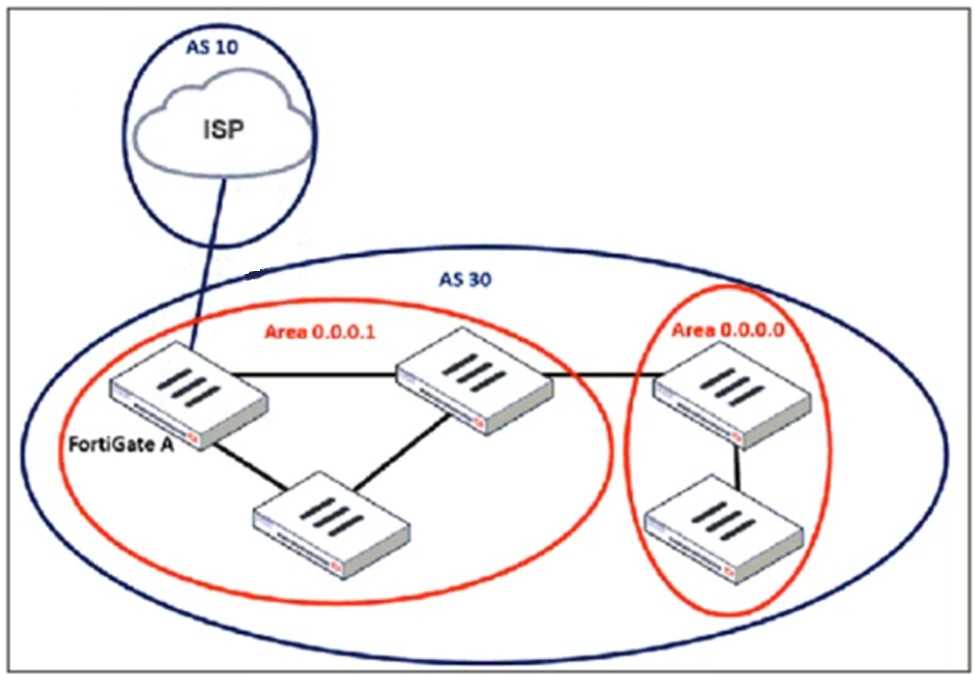
Refer to the exhibit. Fortinet FCSS EFW AD 7 question An administrator is deploying a hub and spokes network and using OSPF as dynamic protocol. Which configuration is mandatory for neighbor adjacency?
Options
38 comments in the community discussion
6
Makes sense to go with B here. In hub and spoke OSPF, setting network-type to point-to-multipoint on the hub ensures neighbors come up without extra configs for DR/BDR. I think that's what's required but let me know if you see it differently.
5
Option B
Q: 8
An administrator must standardize the deployment of FortiGate devices across branches with consistent interface roles and policy packages using FortiManager. What is the recommended best practice for interface assignment in this scenario?
Options
45 comments in the community discussion
2
Its A, D looks good but it's a bit of a trap since metadata variables are what let you standardize across branches.
1
A not D, D just auto-identifies interface types but A (metadata variables) actually makes configs consistent per branch.
Q: 9
An administrator needs to install an IPS profile without triggering false positives that can impact applications and cause problems with the user's normal traffic flow. Which action can the administrator take to prevent false positives on IPS analysis?
Options
35 comments in the community discussion
6
My pick: A since narrowing the IPS profile to your actual OS, protocol, and app reduces signatures checked, so you get way less risk of false positives. Makes sense from what I've seen in real config. If someone had different lab results, happy to hear it.
2
Probably A here. Filtering the IPS profile by OS, protocol, and app minimizes unnecessary signatures, which cuts down on false positives. That's what admin guides push for too. Pretty sure about this but let me know if I'm missing something.
Q: 10
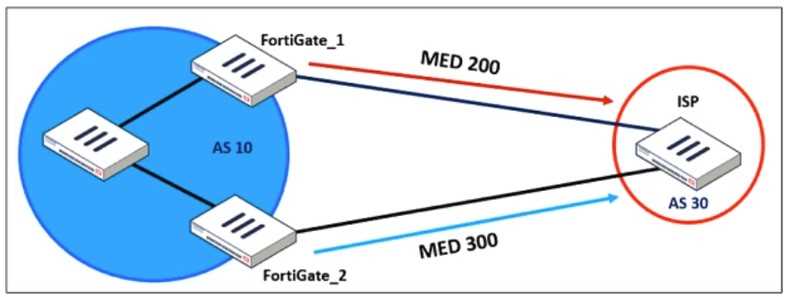
Refer to the exhibit, which shows a network diagram. Fortinet FCSS EFW AD 7 question An administrator would like to modify the MED value advertised from FortiGate_1 to a BGP neighbor in the autonomous system 30. What must the administrator configure on FortiGate_1 to implement this?
Options
37 comments in the community discussion
2
Probably A for this one. Only a route-map-out lets you actually tweak BGP attributes like MED on outgoing advertisements.
2
A
Q: 11
What action can be taken on a FortiGate to block traffic using IPS protocol decoders, focusing on network transmission patterns and application signatures?
Options
43 comments in the community discussion
6
B. Saw nearly the same question in my exam and B was correct there too.
5
B. official admin guide and practice labs both highlight application control profiles for signature-based blocking.
Q: 12
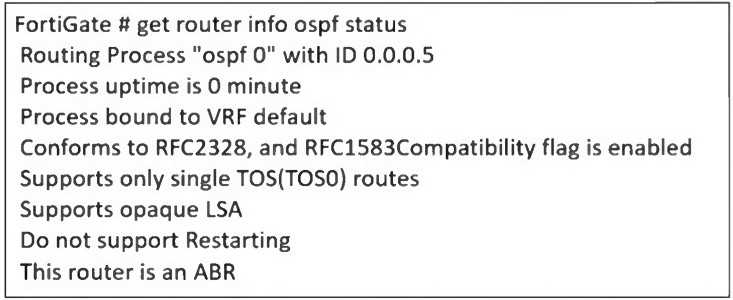
Refer to the exhibit, which contains the partial output of an OSPF command. Fortinet FCSS EFW AD 7 question An administrator is checking the OSPF status of a FortiGate device and receives the output shown in the exhibit. What two conclusions can the administrator draw? (Choose two.)
Options
34 comments in the community discussion
1
B/C tbh. Some might pick D by mistake if they see ECMP mentioned, but the output directly proves B and C (multiple areas, ASBR).
Looks pretty clear to me. B and C, since the output says it's an area border router (so multiple areas) and an ASBR (so injecting external routes). ECMP isn't mentioned at all. I think that's solid, unless I'm missing something small.
Q: 13
Why does the ISDB block layers 3 and 4 of the OSI model when applying content filtering? (Choose two.)
Options
35 comments in the community discussion
2
Its A and B. D might seem tempting but that's more about URL filtering at layer 7, not how ISDB actually works for L3/L4. C's mention of proxy mode is a distractor here imo.
1
Option C and D for me. ISDB sounds like it's tied to proxy mode and limiting things by URL/domain, which fits content filtering. Not convinced A is right here, feels like a textbook trap.
Q: 14
Refer to the exhibit, which shows an enterprise network connected to an internet service provider. Fortinet FCSS EFW AD 7 question An administrator must configure a loopback as a BGP source to connect to the ISP. Which two commands are required to establish the connection? (Choose two.)
Options
32 comments in the community discussion
1
A and B here. eBGP with loopback needs ebgp-enforce-multihop to let the connection work, and update-source points BGP to use the loopback IP. D is for next hop recursion which isn’t required in this ask. Pretty sure about this combo but correct me if you’ve done it differently in practice.
1
Its A and B. Both needed when you set up BGP neighbors via loopback so the session can come up.
Q: 15
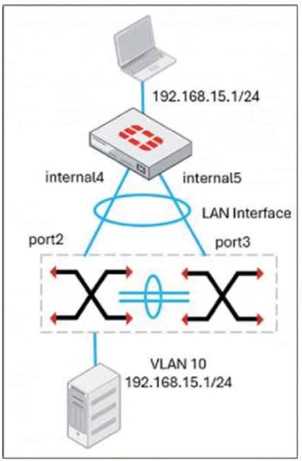
Refer to the exhibit, which shows a LAN interface connected from FortiGate to two FortiSwitch devices. Fortinet FCSS EFW AD 7 question What two conclusions can you draw from the corresponding LAN interface? (Choose two.)
Options
23 comments in the community discussion
1
B and C for sure. You need 802.3ad LAG for connecting to MCLAG peers, and that interface is always used for FortiLink when managing downstream switches/VLANs from FortiGate. Pretty standard setup unless something's changed in recent firmware, right?
1
I don’t think A fits, it’s B and C. FortiGate needs 802.3ad for MCLAG and FortiLink manages the VLANs, not SD-WAN.
Question 1 of 20

Premium Access Includes

  • Quiz Simulator
  • Exam Mode
  • Progress Tracking
  • Question Saving
  • Flash Cards
  • Drag & Drops
  • 3 Months Access
  • PDF Downloads
Get Premium Access
Scroll to Top

FLASH OFFER

Days
Hours
Minutes
Seconds

avail 10% DISCOUNT on YOUR PURCHASE