
Q: 18
DRAG DROP A project team has developed the initial schedule using a network diagramming method and has arrived at the overall project duration. Upon examining the schedule, the project manager finds that there are several activities that may require buffers to mitigate or eliminate potential scheduling conflicts. Match the following common terms with their explanations that evaluate the buffers or constraints. 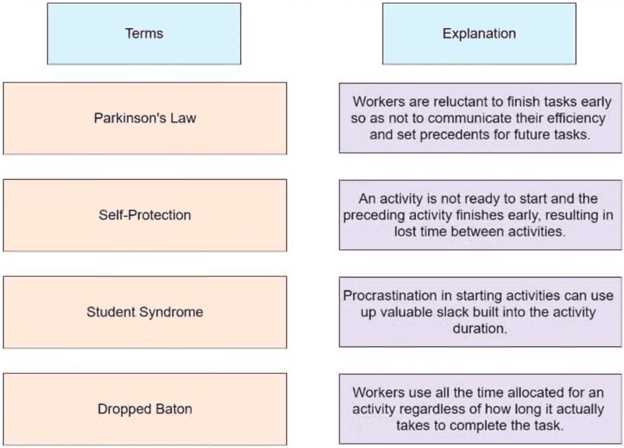
Drag & Drop
Discussion
Self-Protection matches with reluctance to finish early, Dropped Baton is when the next task isn't ready after an early finish, Student Syndrome is classic last-minute start/procrastination, Parkinson's Law is using all the time given. This fits PMP CCPM terminology I think, but open if someone sees it differently.
Totally agree with mapping as: Parkinson's Law matches use all time, Self-Protection is reluctance to finish early, Student Syndrome aligns with procrastination, Dropped Baton for not ready after early finish. Lines up with how these terms are used, but happy to be corrected if I missed something.
Pretty sure it should be: Self-Protection for reluctance to finish early, Dropped Baton for not ready after early finish, Student Syndrome for procrastination, and Parkinson's Law for using all allocated time. This matches exam feedback I’ve seen.
Self-Protection = reluctant to finish early, Dropped Baton = not ready after early finish, Student Syndrome = procrastination, Parkinson's Law = use all time. Not B for 'use all time', that's Parkinson's Law. Seen this split on other mock exams.
Workers use all time -> Self-Protection, reluctant to finish early -> Parkinson's Law, procrastination -> Student Syndrome, not ready after early finish -> Dropped Baton. If the manager tracks actuals closely, sometimes workers don't apply Self-Protection at all.
Bit tricky-I'd map Workers use all time to Self-Protection, Reluctant to finish early to Parkinson's Law, Procrastination to Student Syndrome, Not ready after early finish to Dropped Baton.
Be respectful. No spam.