
Q: 1
Review the exhibit.
 You are asked to create a new Real-time Protection policy to scan SMTP emails using data loss
prevention (DLP) for personal health information (PHI). The scope is limited to only emails being sent
from Microsoft Exchange Online to outside recipients.
You are asked to create a new Real-time Protection policy to scan SMTP emails using data loss
prevention (DLP) for personal health information (PHI). The scope is limited to only emails being sent
from Microsoft Exchange Online to outside recipients.
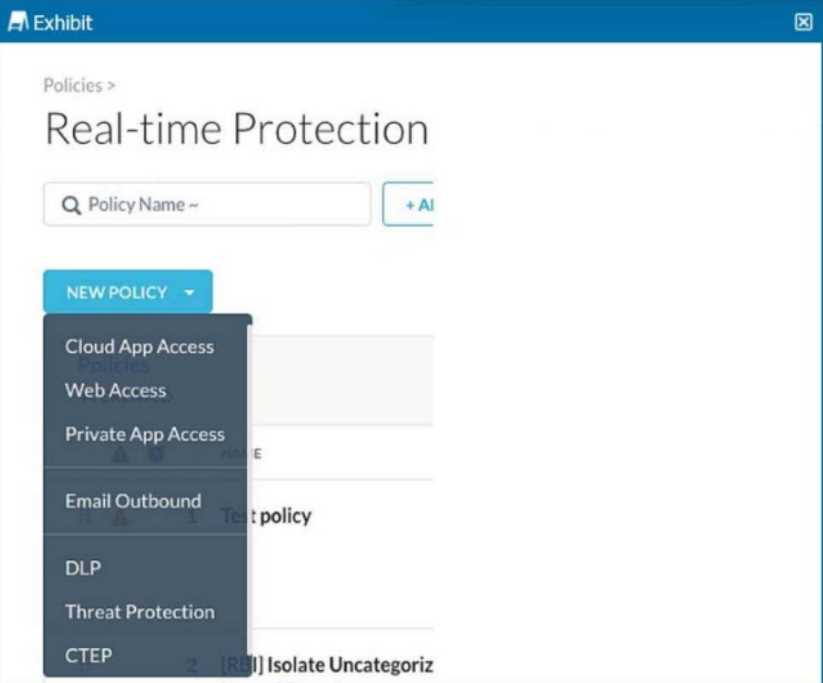 You are asked to create a new Real-time Protection policy to scan SMTP emails using data loss
prevention (DLP) for personal health information (PHI). The scope is limited to only emails being sent
from Microsoft Exchange Online to outside recipients.
You are asked to create a new Real-time Protection policy to scan SMTP emails using data loss
prevention (DLP) for personal health information (PHI). The scope is limited to only emails being sent
from Microsoft Exchange Online to outside recipients.Options
Discussion
Looks like this is one of those tricky cases where the enforcement layer matters more than just the DLP engine. B fits since Real-time Protection for outbound Exchange Online mail is what actually covers this flow. If it were just any DLP use case, then D could work, but here it's pretty specific. Agree?
B tbh. "Email Outbound policy" is the best fit because it targets sending Exchange Online emails to external users, which matches the question's scope. DLP policy (D) is a trap here since that's the detection engine, but not the enforcement policy type you need for this scenario. Pretty sure it's B but if someone has a different take, open to hear it.
B , official guide and hands-on labs show Email Outbound policy is what you need for Exchange Outbound DLP scenarios like this.
Seriously, Netskope loves to trip you up with DLP vs policy type. B is probably right since it's the actual Real-time Protection layer that filters Exchange Online outbound mail. Not 100% sure though, so open to arguments for D.
D , since the question says it's for scanning PHI, I'd assume DLP policy is the right pick. Saw similar wording on a practice set where "DLP" was enough if scanning was the focus. Open to being wrong though.
D . Since it's DLP scanning for PHI, I'd pick DLP policy. The question says "scan" so feels like a DLP config, not the enforcement layer. Let me know if I missed something obvious.
C or D for me. CTEP policy handles threat protection, but with PHI scanning I'd expect DLP policy (D) to fit too. Bit confusing since both relate to inspection, but I think D is closer unless they're being super specific about needing 'Email Outbound.' Happy to be corrected if I missed something obvious.
Option D since DLP policy sounds like it would cover PHI scanning. Could be a trick though.
Looking at this, wouldn't D be the right policy if the main concern is scanning for PHI? The question highlights DLP and doesn't mention enforcement actions directly. Anyone used the official Netskope guide or practice tests for a scenario like this?
D Had something like this in a mock, DLP policy was the right pick there too.
Be respectful. No spam.
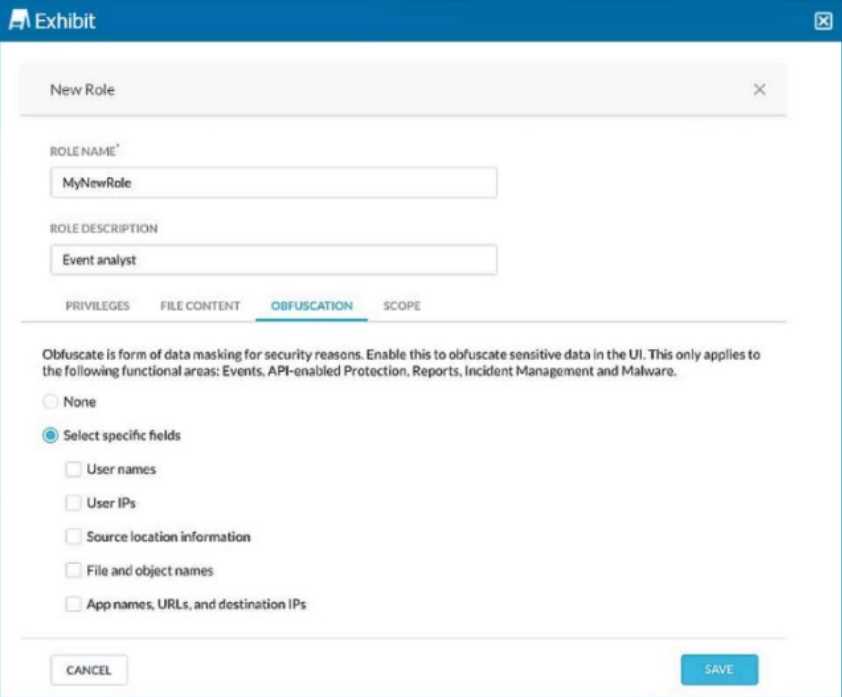 You are asked to create a new role that allows analysts to view Events and Reports while providing
user privacy. You need to avoid directly exposing identities and user location information.
Which three fields must you obfuscate in this scenario? (Choose three.)
You are asked to create a new role that allows analysts to view Events and Reports while providing
user privacy. You need to avoid directly exposing identities and user location information.
Which three fields must you obfuscate in this scenario? (Choose three.)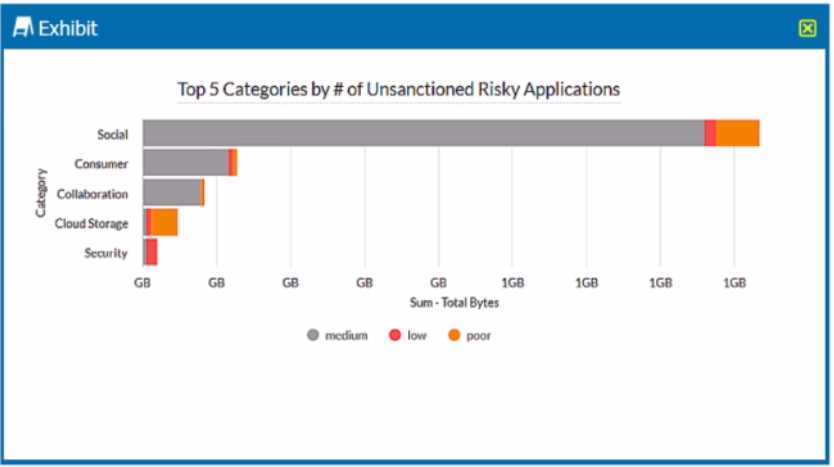 A security analyst needs to create a report to view the top five categories of unsanctioned
applications accessed in the last 90 days. Referring to the exhibit, what are two data collections in
Advanced Analytics that would be used to create this report? (Choose two.)
A security analyst needs to create a report to view the top five categories of unsanctioned
applications accessed in the last 90 days. Referring to the exhibit, what are two data collections in
Advanced Analytics that would be used to create this report? (Choose two.)