To find customers whose last names start with "Mc" or "MC", we need to ensure our SQL query
correctly identifies and compares these prefixes regardless of case variations. Let's analyze the given
options:
Option B: WHERE UPPER(SUBSTR(cust_name, INSTR(cust_name, ' ') + 1)) LIKE UPPER('MC%')
This clause uses UPPER to convert both the extracted substring (starting just after the first space,
assuming it indicates the start of the last name) and the comparison string 'MC%' to uppercase. This
ensures case-insensitive comparison. The LIKE operator is used to match any last names starting with
"MC", which will correctly capture both "Mc" and "MC". This option is correct.
Option C: WHERE INITCAP(SUBSTR(cust_name, INSTR(cust_name, ' ') + 1)) LIKE 'Mc%'
This clause applies INITCAP to the substring, which capitalizes the first letter of each word and makes
other letters lowercase. The result is compared to 'Mc%', assuming only the last name follows the
space. This approach will match last names starting with "Mc" (like "McEwen"), but not "MC".
However, considering we're looking for "Mc" specifically, this clause works under the assumption
that "Mc" is treated as proper capitalization for these last names. Thus, it can also be considered
correct, albeit less inclusive than option B.
The other options either use incorrect syntax or apply case-sensitive matches without ensuring that
both "Mc" and "MC" are captured:
Option A: Contains syntax errors (unmatched quotes and wrong use of IN).
Option D: Uses case-sensitive match without combining both "Mc" and "MC".
Option E: Only matches "Mc", which is too specific.

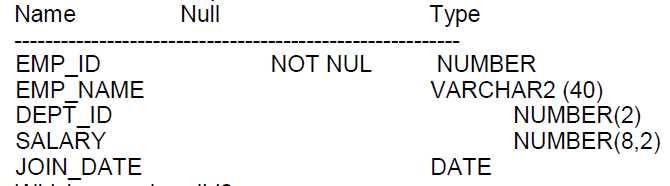
 NLS_DATE_FORMAT is set to DD-MON-YY.
Which query requires explicit data type conversion?
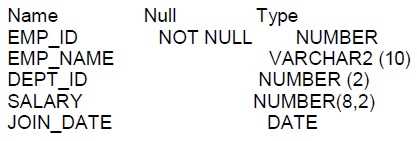
NLS_DATE_FORMAT is set to DD-MON-YY.
Which query requires explicit data type conversion?