Free 1Z0-076 Practice Test Questions and Answers (2026)

View Mode
Q: 1
You must configure flashback database for your Oracle 19c databases that will be part of a Data Guard Broker configuration. The databases are all in ARCHIVELOG mode. You will execute the SQL statement: ALTER DATABASE FLASHBACK ON; Which three are true concerning this command?
Options
18 comments in the community discussion
2
ABE? I saw a similar question in the official practice test and the Oracle docs back this up, but if anyone checked the user guide recently let me know. Always good to double check with lab if possible.
1
B is valid, but A and E too. D is tricky-a lot of folks pick it by mistake, but flashback isn't pushed to standbys automatically. Similar question showed up in practice and the trap was thinking D or F applied. Pretty sure it's ABE.
Q: 2
You have a Data Guard Broker configuration called 'Somewhere' as shown: DGMGRL> SHOW CONFIGURATION; Configuration - Somewhere Protection Mode: MaxPerformance Databases: Nearby - Primary database FS - Far Sync Farout - Physical standby database Fast-Start Failover: DISABLED Configuration Status: SUCCESS You then run this command: DGMGRL> SHOW DATABASE 'Nearby' 'InconsistentProperties'; Which two are true about the output of this DGMGRL command?
Options
26 comments in the community discussion
1
Had something like this in a mock before and the correct combo was A and D. Far sync can't have its own inconsistent properties, and "SHOW DATABASE 'InconsistentProperties'" checks the DB instance vs its spfile/runtime, not vs other DBs. Pretty sure about these two, but happy to see if anyone spots a gap.
1
For me, B. The wording says it checks for properties inconsistent between databases, so it sounds like 'Nearby' vs 'Farout' would make sense here. I think SHOW DATABASE 'InconsistentProperties' could be looking at database-level config differences, not just internal to Nearby. Anyone disagree?
Q: 3
Which statement is true regarding Oracle Net connectivity for a Data Guard Broker configuration?
Options
19 comments in the community discussion
5
D . Official Oracle docs and a couple exam sims show you need TNS on the primary for standby connections in a Broker setup. Pretty sure that's the core config needed, unless anyone has seen different in labs?
1
Its C, based on what I saw in the official guides and some practice tests.
Q: 4
Which THREE statements are TRUE about the supported workload in Active Data Guard standby databases?
Options
25 comments in the community discussion
1
Option B C, E. That's what matches Oracle docs for ADG workloads. Reporting apps offload, sequence/global temp usage works (with limits), and DML redirection is supported post-19c. I think that's right but let me know if I missed any nuance.
1
Option B C, E line up with what's in the Oracle official docs and what practice exams mention about ADG standby workload. Reporting with global temp tables and DML redirection are supported, plus that sequence usage note for read-mostly apps. Not 100 percent sure on every edge case but this matches the official coursew
Q: 5
Examine the Data Guard configuration after an accidental switchover to Sheep: DGMGRL> show configuration; Configuration - Animals Protection Mode: MaxAvailability Databases: sheep - Primary database dogs - Logical standby database cats - Physical standby database (disabled) ORA-16795: the standby database needs to be re-created Fast-Start Failover: DISABLED Configuration Status: SUCCESS Which three statements will be true after a switchover to Dogs?
Options
24 comments in the community discussion
1
Its B, C, D. Sheep becomes logical standby and stays enabled, Dogs is the new primary, and Cats stays disabled unless manually enabled because of ORA-16795. Not totally sure on C but that's usually how it works with logical standbys.
1
C or D, but B too fits. After switchover, Dogs becomes primary (D), Sheep swaps to logical standby and usually stays enabled (C), while Cats can't be enabled automatically because of ORA-16795 so B also correct. Unless I'm missing a catch here, that's how I've seen it work.
Q: 6
Which three are prerequisites for enabling Fast-Start Failover?
Options
27 comments in the community discussion
1
C D E tbh, but if I'm missing something shout it out.
1
Mock exams and Oracle docs cover this. Anyone else see C, D, E always listed as required?
Q: 7
Which TWO statements are true about configuring Oracle Net Service in a Data Guard environment?
Options
22 comments in the community discussion
2
Static registration for the listener is a must for DGMGRL to restart instances, so A checks out. Also, the preinstall package doesn't take care of every Oracle Net parameter needed for Data Guard, so C is valid too. Pretty sure that's what Oracle docs hint at. Open to being proven wrong but I think A and C are it.
2
I've seen similar questions on exam reports and I keep picking B and D. The preinstall package should set kernel params, and Enterprise Manager usually doesn't need static service registration to restart instances, at least in recent versions. Pretty sure about this but open to correction.
Q: 8
Which three are true about using RMAN in a Data Guard environment?
Options
23 comments in the community discussion
1
I'm thinking C makes sense since recovery catalogs are often needed when moving backups between primary and standby. Maybe I'm missing something, but the docs seem to lean that way. Anyone see cases where A or B fits better?
1
A B, D tbh. Archived redo and datafile backups from standby can be used on primary, but not control file backups. Oracle docs mention this, but if anyone's seen a different behavior in newer releases let me know.
Q: 9
You created the PRODSBY1 physical standby database for the PROD primary database using gql and RMAN. You are planning to create a Data Guard Broker configuration. You execute the command: Oracle 1Z0-076 question Which three statements are true regarding the execution of the command?
Options
24 comments in the community discussion
1
A is wrong, F. Had something like this in a mock and needed connectivity to both.
1
Its F. I remember a similar question where it required Net connectivity to both PROD and PRODSBY1 before creating the Data Guard Broker config. Maybe I'm mixing up the step, but I think F makes sense here even if others say just PROD is needed. Open to being wrong!
Q: 10
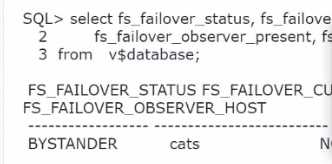
Examine this query and its output: Oracle 1Z0-076 question Which two statements are true?
Options
30 comments in the community discussion
2
D and E imo
1
D/E, not C. 'Bystander' is a classic trap, since it means it's just watching but not part of failover. Similar question popped up in practice and these were correct.
Q: 11

Which four requirements can be met by deploying a logical standby database?

Options
10 comments in the community discussion
A C, E, F tbh. D is a trap since switchover/failover is more of a physical standby thing.
Probably D. Logical standby can definitely be used for DR with switchover and failover, so I’d include that requirement.
Q: 12
Which two are prerequisites for configuring flashback database for Oracle 19c databases, in a Data Guard environment?
Options
10 comments in the community discussion
1
B and C are needed because flashback needs archived logs and a fast recovery area for storing those logs. Fast recovery area is where all the flashback data goes, and ARCHIVELOG mode is required for rollbacks. Question is super clear about the requirements, makes it easy to spot.
B and C, seen this exact combo on a similar practice exam before.
Q: 13
Which THREE are always benefits of using a logical standby database?
Options
6 comments in the community discussion
1
So tired of these Oracle questions asking for "always" benefits! D imo, along with A and B. Logical standby is great for DR (A) and reporting (B), plus rolling upgrades (D). Option C is more about snapshot standby, not logical. Disagree?
Its A, B, C. Logical standby works for DR and reporting, and I think patch testing is always possible too.
Q: 14
You must design an Oracle Data Guard configuration for a DSS database that meets these permanent requirements: 1. Creating and maintaining bitmap indexes should not impact the performance of the primary database. 2. Creating and maintaining materialized views should not impact the performance of the primary database. Additionally, there are these requirements, only one of which is ever done at any one time: 1. It should be possible to apply designated patches with a minimum amount of downtime. 2. Upgrading to a new database release should be performed with the least possible amount of downtime. 3. New application software releases should be tested against an exact and up-to-date replica of the primary database. Which configuration meets these requirements with the fewest of databases?
Options
5 comments in the community discussion
2
Option A fits best. Logical standby lets you run DDL like bitmap indexes and materialized views separate from the primary so there's no performance hit, and you can still do rolling upgrades plus app testing easily. Really clear scenario breakdown here, I think A covers all needs with just one standby.
Wouldn’t a physical standby fail the DDL isolation test since it can’t handle those changes off primary? Feels like only logical satisfies both parts.
Q: 15
Examine the following parameter settings of the physical standby database: • STANDBY_FILE_MANAGEMENT=AUTO • ENABLED_PDBS_ON_STANDBY= During which TWO tasks are files automatically created in the physical standby database after structure changes on the primary database?
Options
13 comments in the community discussion
C/D? I see why people consider E, but in most official Oracle docs with STANDBY_FILE_MANAGEMENT=AUTO, files are auto-created on standby only when you add a datafile or create a tablespace (C), or create a PDB (D). Renaming (E) usually just changes the control file reference, unless it's a new path with no file-which
E , had something like this in a mock and picked E with C.
Q: 16
Your expertise is requested for these customer requirements: The Data Guard environment must be in maximum protection mode. Reports must be offloaded to a physical standby database. There must be no lag between the primary and standby databases that affect the reports produced. The primary database must be resilient in case of a single network failure. Which solution is correct for these requirements?
Options
10 comments in the community discussion
1
Probably A. Saw something like this on a practice exam, two standbys with real-time query covers both resilience and zero lag requirements.
Likely it's A. The two standby setup covers for single network failure and keeps max protection with zero lag reporting.
Q: 17
Which two are true about database roles in an Oracle Data Guard configuration?
Options
12 comments in the community discussion
2
A/E, since D is tricky but doesn't fit the Data Guard cascading rules. Others seem like distractors here.
1
A/E tbh, similar questions pop up in Oracle docs and on the official practice test.
Q: 18
Which three statements are true about snapshot standby databases?
Options
7 comments in the community discussion
1
Its B, C, E. D looks tempting but pretty sure only those three support resize here.
1
B C, E tbh
Q: 19
In Oracle Database 19c, you can set the value of database initialization parameters in a database using the EDIT DATABASE... SET PARAMETER Command: DGMGRL> EDIT DATABASE 'boston' SET PARAMETER log_archive_trace - 1; Which THREE statements are TRUE about the command?
Options
9 comments in the community discussion
1
Probably B, C, E. Based on the official docs and similar exam/practice questions, only dynamic parameters can be edited while the DB is up (C), and changes apply directly to the specified DB (E). If you're not sure, Oracle's admin guide covers this.
1
B/C/E tbh, matches what I've seen. The EDIT DATABASE ... SET PARAMETER is used for dynamic params, and the db needs to be open so C makes sense. E is right since it applies directly to the Boston DB, not just broker files. Pretty sure static params won't work here unless you bounce the instance. Let me know if I missed
Q: 20
Which three are true regarding prerequisites for a logical standby database as a disaster recovery solution?
Options
7 comments in the community discussion
C/D? I get why A and D throw people off since nologging ops are a big fail for logical standby, but B is kind of a distractor because ROWID types aren't actually blocked, while BFILE is. Pretty sure it's A, C, D but wouldn't be shocked if someone mixed up B and C.
A/C/D lines up with what I've seen in the official docs and most Oracle exam practice. If you want to double check, I'd read the Oracle Data Guard guide and run through any lab questions on logical standby.
Question 1 of 20

Premium Access Includes

  • ✓Quiz Simulator
  • ✓Exam Mode
  • ✓Progress Tracking
  • ✓Question Saving
  • ✓Flash Cards
  • ✓Drag & Drops
  • ✓3 Months Access
  • ✓PDF Downloads
Get Premium Access
Scroll to Top

FLASH OFFER

Days
Hours
Minutes
Seconds

avail 10% DISCOUNT on YOUR PURCHASE

