Free SC-100 Practice Test Questions and Answers (2026)

Last Update Check
View Mode
Q: 1
A customer is deploying Docker images to 10 Azure Kubernetes Service (AKS) resources across four Azure subscriptions. You are evaluating the security posture of the customer. You discover that the AKS resources are excluded from the secure score recommendations. You need to produce accurate recommendations and update the secure score. Which two actions should you recommend in Microsoft Defender for Cloud? Each correct answer presents part of the solution. NOTE: Each correct selection is worth one point.
Options
27 comments in the community discussion
1
A and E tbh, official guide and MS practice tests both cover this sort of secure score scenario for AKS pretty often.
1
Its A and E. Auto provisioning gets the monitoring agents on all AKS, and Defender plans actually unlock those recommendations for secure score. B isn't needed just for secure score on this workload from what I’ve seen.
Q: 2
You have an Azure subscription that contains multiple network security groups (NSGs), multiple virtual machines, and an Azure Bastion host named bastion1. Several NSGs contain rules that allow direct RDP access to the virtual machines by bypassing bastion! You need to ensure that the virtual machines can be accessed only by using bastion! The solution must prevent the use of NSG rules to bypass bastion1. What should you include in the solution?
Options
26 comments in the community discussion
6
Makes sense to pick B for this one. Security admin rules in Azure Virtual Network Manager actually override any NSG settings, so they block RDP unless it's through Bastion no matter what someone's done at the NSG level. Agree?
1
Probably B here since security admin rules from Azure Virtual Network Manager override NSG rules, so you can make sure RDP is only allowed via Bastion. Regular firewall or NSG config wouldn't fully block those bypasses. Pretty sure that's what the question's looking for, but let me know if anyone sees it differently.
Q: 3
Your company plans to provision blob storage by using an Azure Storage account The blob storage will be accessible from 20 application sewers on the internet. You need to recommend a solution to ensure that only the application servers can access the storage account. What should you recommend using to secure the blob storage?
Options
30 comments in the community discussion
2
I don't think it's C, I'd pick D here. NSG inbound rules (C) can't control access to Azure Storage coming from public internet IPs, that's a common trick option. Storage account firewall rules (D) are made for this, letting you set an allow list of only those app servers' IPs. Pretty sure that's what Microsoft wants
2
D imo. The storage account firewall directly lets you allow only those app server public IPs, not NSGs.
Q: 4
Your company has on-premises Microsoft SQL Server databases. The company plans to move the databases to Azure. You need to recommend a secure architecture for the databases that will minimize operational requirements for patching and protect sensitive data by using dynamic data masking. The solution must minimize costs. What should you include in the recommendation?
Options
38 comments in the community discussion
6
C. Azure SQL Database
1
C , saw similar logic in the official guide and practice questions for SC-100.
Q: 5
You are designing security for an Azure landing zone. Your company identifies the following compliance and privacy requirements: • Encrypt cardholder data by using encryption keys managed by the company. • Encrypt insurance claim files by using encryption keys hosted on-premises. Which two configurations meet the compliance and privacy requirements? Each correct answer presents part of the solution. NOTE: Each correct selection is worth one point.
Options
37 comments in the community discussion
1
A and B tbh. Blob with customer-provided keys checks the on-prem key box for insurance, and Managed HSM for SQL DB fits company-managed keys for cardholder data. Not 100% but fits what I've seen in practice.
Nah, I don't think it's C. A and B match best since "hosted on-premises" rules out Azure-managed HSM here.
Q: 6

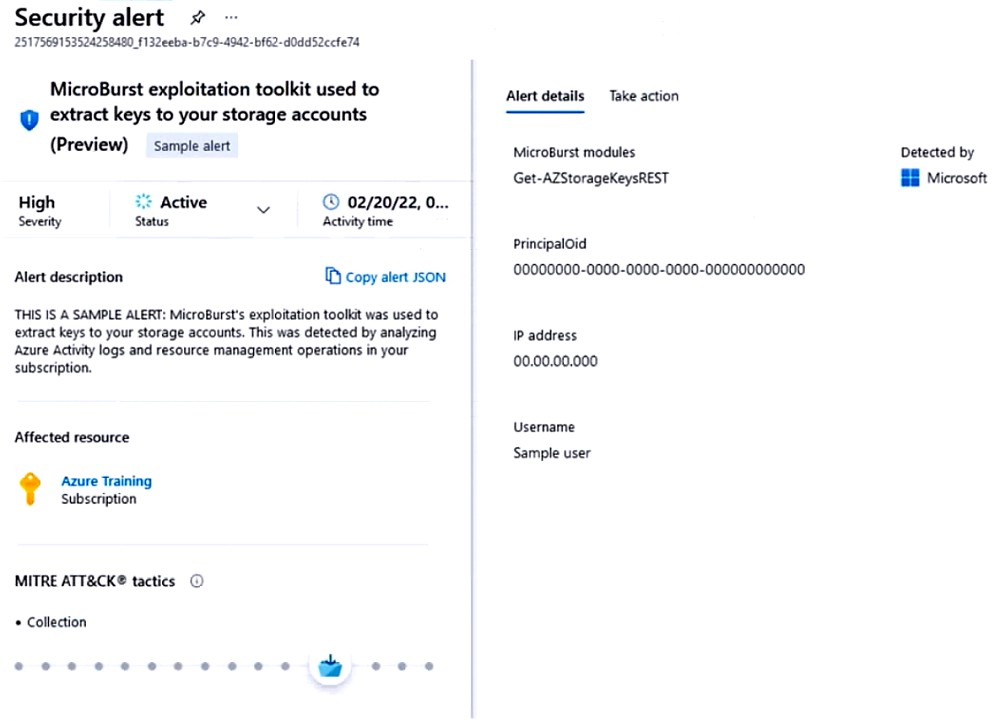
You receive a security alert in Microsoft Defender for Cloud as shown in the exhibit. (Click the Exhibit tab.) After remediating the threat which policy definition should you assign to prevent the threat from reoccurring?

Options
36 comments in the community discussion
2
If the alert had been about shared keys instead of public access, C would flip ahead of A.
1
Probably A here, since I remember a similar question in some exam reports and it was flagged as the clear fix for public access on storage. The scenario's about anonymous blob exposure, not shared key stuff. Happy to hear if anyone saw it play out differently.
Q: 7
Your company is developing a new Azure App Service web app. You are providing design assistance to verify the security of the web app. You need to recommend a solution to test the web app for vulnerabilities such as insecure server configurations, cross-site scripting (XSS), and SQL injection. What should you include in the recommendation?
Options
36 comments in the community discussion
5
Option D and if anyone wants to dig deeper, the official study guide and practice labs really help clarify these testing types.
1
I remember similar question on practice test, pretty sure it's B.
Q: 8
You have an Azure subscription. You plan to deploy Azure App Services apps by using Azure DevOps. You need to recommend a solution to ensure that deployed apps maintain compliance with Microsoft cloud security benchmark (MCSB) recommendations. What should you include in the recommendation?
Options
22 comments in the community discussion
2
Its A. I figured DevOps security in Defender for Cloud tracks compliance for apps as they’re deployed. Compliance checks seem like a thing you'd want in your deployment pipeline anyway, not just after. Is there something I'm missing with Azure Policy here?
1
D , since Azure Policy actually enforces those MCSB rules at the resource level no matter how you deploy. It's not just a DevOps thing-policy applies even if someone does a manual deployment. Branch policies in DevOps (C) can't guarantee compliance after deployment. Feel free to challenge if anyone sees it differently.
Q: 9
Your company plans to deploy several Azure App Service web apps. The web apps will be deployed to the West Europe Azure region. The web apps will be accessed only by customers in Europe and the United States. You need to recommend a solution to prevent malicious bots from scanning the web apps for vulnerabilities. The solution must minimize the attach surface. What should you include in the recommendation?
Options
36 comments in the community discussion
4
Makes sense to pick B. Only Azure Application Gateway WAF offers direct bot protection, not just geo filtering like D.
1
D is wrong, B. WAF gives you bot protection and targeted rules for this use case.
Q: 10
You have a multicloud environment that contains an Azure subscription, an Amazon Web Services (AWS) subscription, and a Google Cloud Platform (GCP) subscription. You plan to assess data security and compliance. You need to design a Compliance Manager solution that meets the following requirements: • Provides recommended improvement actions that include detailed implementation guidance • Automatically monitors regulatory compliance • Minimizes administrative effort What should you include in the solution?
Options
29 comments in the community discussion
1
A is the better pick. Defender for Cloud actually covers regulatory monitoring and gives actionable recommendations with guidance for all three clouds, not just Azure. D seems like a trap since connectors alone don't automate compliance checks. I think I'm right, but open to other views.
1
C or D? I know Sentinel does a lot for monitoring but not really compliance actions, and those connectors seem only partial. But honestly A (Defender for Cloud) ticks the automation and cross-cloud boxes, right? Not totally sure since sometimes D gets mentioned for Compliance Manager setups. If anyone's got hands-on ex
Q: 11

HOTSPOT You have a Microsoft 365 £5 subscription. You plan to implement Microsoft Priva Subject Rights Requests for Microsoft 365 data. You need to streamline the creation and processing of subject rights requests. The solution must minimize development effort. What should you include in the solution? To answer, select the appropriate options in the answer area. NOTE: Each correct selection is worth one point.

Your Answer
15 comments in the community discussion
6
Makes sense to use Microsoft Graph API for setting up the Subject Rights Requests since it's the main interface for M365 data, then Power Automate for actually handling workflows with little coding. Pretty sure this keeps dev effort low, unless you need heavy custom logic.
2
I'd go with Microsoft Graph API for the initial request creation since it's the direct way to interact with M365 data, then Power Automate for handling workflows and approvals. This combo is what Microsoft recommends in official guides when you want quick deployment with low-code. I think that's correct here, but cu
Q: 12

HOTSPOT Your company plans to follow DevSecOps best practices of the Microsoft Cloud Adoption Framework for Azure to integrate DevSecOps processes into continuous integration and continuous deployment (Cl/CD) DevOps pipelines You need to recommend which security-related tasks to integrate into each stage of the DevOps pipelines. What should recommend? To answer, select the appropriate options in the answer area. NOTE: Each correct selection is worth one point.

Your Answer
13 comments in the community discussion
6
I got a similar scenario in a lab recently. Infrastructure scanning fits best with build and test since you want to catch IaC issues early, and SAST is typically on commit so you catch code issues before merging. Anyone disagree?
4
Which pipeline stage would you put infrastructure scanning in according to MS DevSecOps best practices?
Q: 13

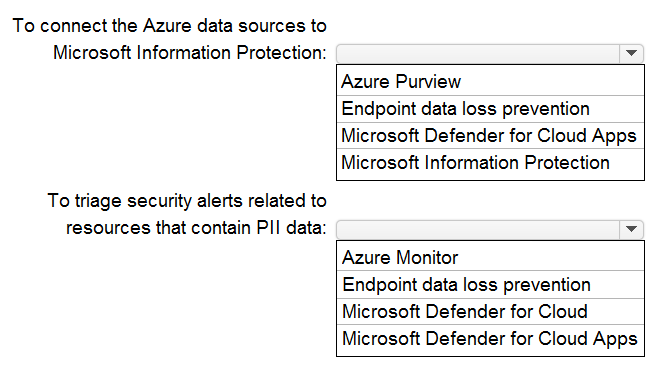
HOTSPOT Your company is migrating data to Azure. The data contains Personally Identifiable Information (Pll). The company plans to use Microsoft Information Protection for the Pll data store in Azure. You need to recommend a solution to discover Pll data at risk in the Azure resources. What should you include in the recommendation? To answer, select the appropriate options in the answer area. NOTE: Each correct selection is worth one point. SC-100 question

Your Answer
12 comments in the community discussion
6
Would Purview still be first if the data types were outside Azure, or does that flip it to Compliance center for hybrid scenarios?
6
Azure Purview then Microsoft Defender for Cloud. Purview actually scans the data for PII and labels it, that's why it's first. Defender for Cloud handles alerts or risks after the PII's been identified. This is how I've seen it in training, unless there's a new change?
Q: 14

HOTSPOT You have a hybrid cloud infrastructure. You plan to deploy the Azure applications shown in the following table. What should you use to meet the requirement of each app? To answer, select the appropriate options in the answer area. NOTE: Each correct selection is worth one point.
Your Answer
8 comments in the community discussion
8
Which service handles XSS protection for web apps, and which one supports LinkedIn authentication for users?
6
WAF is the only one here that really blocks XSS, not Azure Firewall. For social login like LinkedIn, it's gotta be Azure AD B2C-not B2B unless you're federating orgs. Pretty sure this lines up with most exam reports.
Q: 15

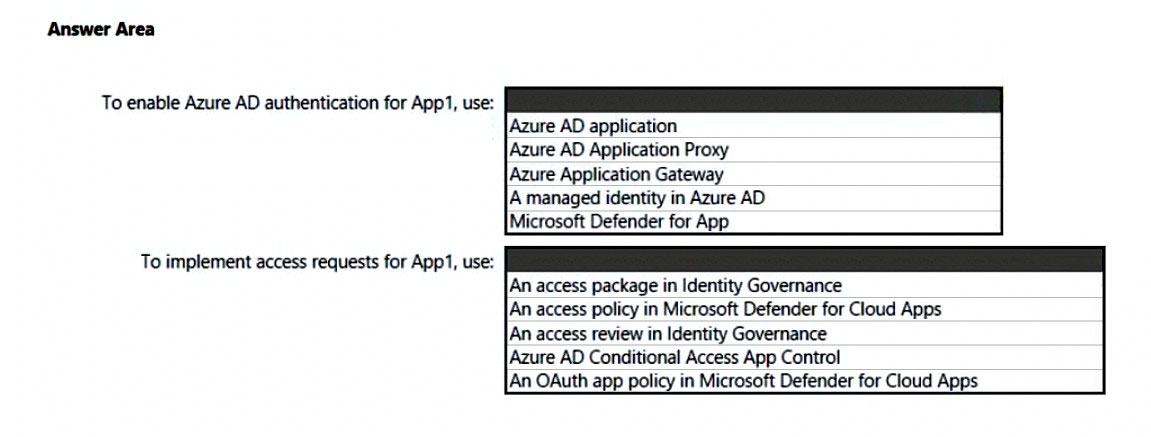
HOTSPOT You are creating the security recommendations for an Azure App Service web app named App1. App1 has the following specifications: • Users will request access to App1 through the My Apps portal. A human resources manager will approve the requests. • Users will authenticate by using Azure Active Directory (Azure AD) user accounts. You need to recommend an access security architecture for App1. What should you include in the recommendation? To answer, select the appropriate options in the answer area. NOTE: Each correct selection is worth one point.
Your Answer
9 comments in the community discussion
9
Enable Azure AD authentication using Azure AD Application, and use an access package in Identity Governance.
3
Yeah, Azure AD app registration handles authentication, and access package in Identity Governance covers the HR approval workflow. Both line up with what’s described for My Apps + requests. Don’t think PIM or conditional access fits as clean here. Agree?
Q: 16

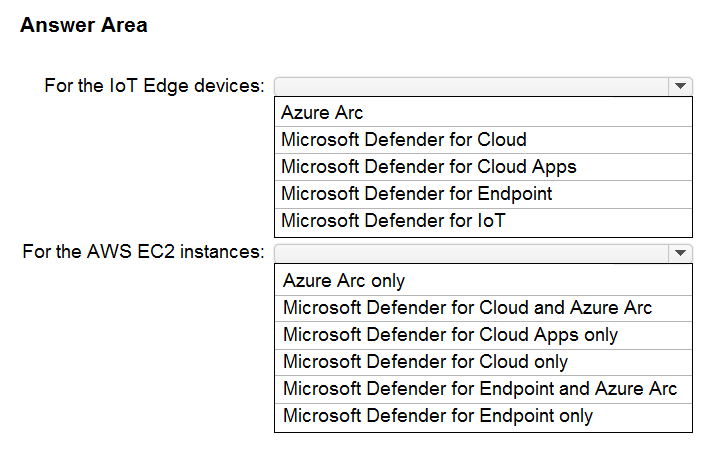
HOTSPOT Your company has a multi-cloud environment that contains a Microsoft 365 subscription, an Azure subscription, and Amazon Web Services (AWS) implementation. You need to recommend a security posture management solution for the following components: • Azure loT Edge devices • AWS EC2 instances Which services should you include in the recommendation? To answer, select the appropriate options in the answer area. NOTE: Each correct selection is worth one point.
Your Answer
12 comments in the community discussion
5
IoT Edge: Microsoft Defender for IoTAWS EC2: Defender for Cloud and Azure ArcSaw similar in exam reports.
3
IoT Edge Devices: Microsoft Defender for IoT, AWS EC2: Defender for Cloud plus Azure Arc
Q: 17

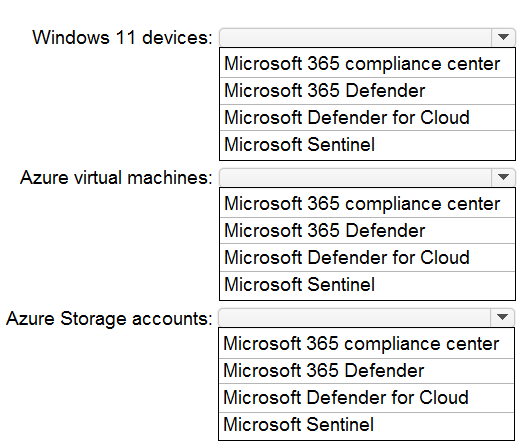
HOTSPOT You have a Microsoft 365 E5 subscription and an Azure subscripts You need to evaluate the existing environment to increase the overall security posture for the following components: • Windows 11 devices managed by Microsoft Intune • Azure Storage accounts • Azure virtual machines What should you use to evaluate the components? To answer, select the appropriate options in the answer area. SC-100 question

Your Answer
7 comments in the community discussion
7
Windows 11 devices use Microsoft 365 Defender, Azure VMs and storage accounts use Microsoft Defender for Cloud. Saw similar on exam reports.
Q: 18

HOTSPOT Your network contains an on-premises Active Directory Domain Services (AO DS) domain. The domain contains a server that runs Windows Server and hosts shared folders The domain syncs with Azure AD by using Azure AD Connect Azure AD Connect has group writeback enabled. You have a Microsoft 365 subscription that uses Microsoft SharePoint Online. You have multiple project teams. Each team has an AD DS group that syncs with Azure AD Each group has permissions to a unique SharePoint Online site and a Windows Server shared folder for its project. Users routinely move between project teams. You need to recommend an Azure AD identity Governance solution that meets the following requirements: • Project managers must verify that their project group contains only the current members of their project team • The members of each project team must only have access to the resources of the project to which they are assigned • Users must be removed from a project group automatically if the project manager has MOT verified the group s membership for 30 days. • Administrative effort must be minimized. What should you include in the recommendation? To answer select the appropriate options in the answer area. NOTE: Each correct selection is worth one point.

Your Answer
13 comments in the community discussion
6
Totally agree with Access Reviews and cloud security groups. Access Reviews hit all the requirements for verification and auto-removal. Since group membership changes need to happen in Azure, on-prem groups just won’t cut it for this scenario. Pretty sure group writeback is essential to keep access consistent across
2
Seen similar in the official guide and practice, looks like Access Reviews with Azure AD security groups and group writeback.
Q: 19

HOTSPOT For a Microsoft cloud environment, you are designing a security architecture based on the Microsoft Cybersecurity Reference Architectures (MCRA). You need to protect against the following external threats of an attack chain: • An attacker attempts to exfiltrate data to external websites. • An attacker attempts lateral movement across domain-joined computers. What should you include in the recommendation for each threat? To answer, select the appropriate options in the answer area.

Your Answer
11 comments in the community discussion
2
Defender for Cloud Apps handles monitoring and blocking exfiltration attempts, so I'd pick that for the first threat. For lateral movement, Defender for Identity fits since it picks up suspicious activity in AD like pass-the-hash. Pretty sure this lines up with MCRA, correct me if I'm off.
1
Defender for Cloud Apps for data exfiltration, Defender for Identity for lateral movement. That lines up with how each tool is positioned in Microsoft's reference docs and what I've seen in some exam reports. Not 100% sure but this looks right, anyone else?
Q: 20

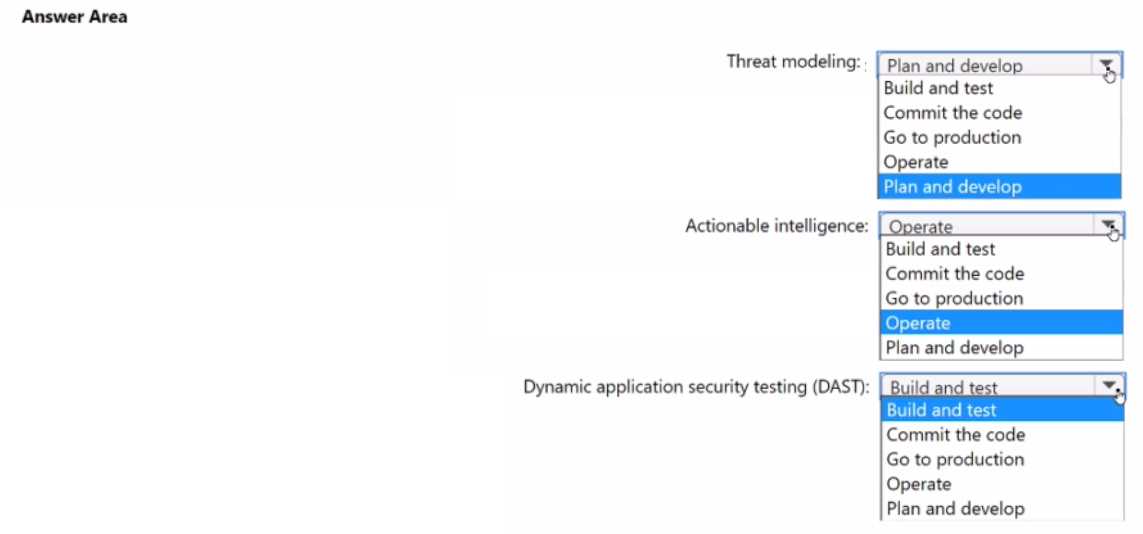
HOTSPOT You need to recommend a security methodology for a DevOps development process based on the Microsoft Cloud Adoption Framework for Azure. During which stage of a continuous integration and continuous deployment (CI/CD) DevOps process should each security-related task be performed? To answer, select the appropriate options in the answer area. NOTE: Each correct selection is worth one point SC-100 question

Your Answer
11 comments in the community discussion
6
Plan and develop for threat modeling, build and test for DAST, operate for actionable intelligence.
6
Threat modeling fits in plan and develop, DAST should happen in build and test, actionable intelligence lines up with operate. That's how the CAF for Azure maps it. Pretty sure this is how MS expects it to be sequenced.
Question 1 of 20

Premium Access Includes

  • Quiz Simulator
  • Exam Mode
  • Progress Tracking
  • Question Saving
  • Flash Cards
  • Drag & Drops
  • 3 Months Access
  • PDF Downloads
Get Premium Access
Scroll to Top