Free HPE0-S59 Practice Test Questions and Answers (2026)

View Mode
Q: 1
What is a restriction of using a RoCE network?
Options
Q: 2

HOTSPOT Click the area within the iLO management interface that will allow you to access workload Advisor. HP HPE0 S59 question

Your Answer
Q: 3
Your customer has a logical enclosure configured using a angle HPE Synergy frame with the following configuration - two HPE Virtual Connect SE 100Gb F32 Modules for Synergy - two HPE Synergy Virtual Connect SE 32Gb FC Modules -12 HPE Synergy 480 Gen10 Plus compute nodes with appropriate mezzanine cards They plan to add a new HPE Synergy frame to an existing logical enclosure with the following configuration - two HPE Synergy Virtual Connect SE 32Gb FC Modules - two HPE Synergy 20Gb interconnect Link Modules - Eight HPE Synergy 480 Gen 10 Plus compute nodes with appropriate mezzanine cards Which statement about the planned configuration change is true?
Options
Q: 4
When should Private Network be enabled?
Options
Q: 5
As a result of the troubleshooting process, you recommend replacing, HPE Synergy Composer modules which HPE Synergy Composer 2 Why would you recommend this change?
Options
Q: 6
Which HPE Virtual Connect feature allows an administrator to suppress excessive inbound multicast broadcast and destination lookup failure (OLF) packets?
Options
Q: 7
Your customer reports that they cannot deploy HPE Synergy compute nodes using HPE OneView for VMware vCenter Server (HPE OV4VC). What should you check during troubleshooting process?
Options
Q: 8

DRAG DROP Match HPE SimpliVity team with the definition. HP HPE0 S59 question

Drag & Drop
Q: 9
A logical interconnect group can span on multiple HPE Synergy frames for which interconnect type?
Options
Q: 10
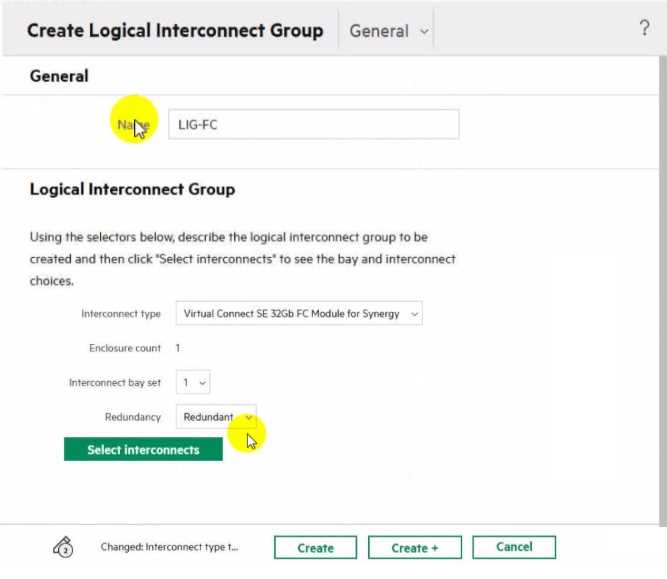
Your customer wants to add dedicated Fibre Channel connectivity to the HPE Synergy frame running HPE Synergy 480 Gen10 compute modules, each with one CPU socket populated Currently they use two 12 Gb SAS switches and two HPE Virtual Connect SE 100Gb F32 Modules for HPE Synergy installed in third fabric. What must be done to enable dedicated FC connectivity for this HPE Synergy frame?
Options
Question 1 of 20

What's covered in this practice questions set

2: Describe and differentiate HPE compute solutions, and position them for the appropriate customer use cases. · 4 questions

📖 About this Domain

This domain covers the HPE compute portfolio, including ProLiant, Synergy, Apollo, and EdgeLine systems. It focuses on differentiating these solutions based on their architecture, features, and target workloads. The objective is to correctly position the right compute platform for specific customer use cases.

🎓 What You Will Learn

  • Differentiate between HPE ProLiant rack (DL), tower (ML), and blade (BL) servers for traditional data center needs.
  • Understand the architecture of HPE Synergy as a composable, software-defined infrastructure for hybrid cloud environments.
  • Identify the use cases for HPE Apollo systems, focusing on High-Performance Computing (HPC) and big data analytics.
  • Describe HPE EdgeLine Converged Edge Systems for compute and data capture at the intelligent edge.

🛠️ Skills You Will Build

  • Analyze customer requirements and map them to the optimal HPE compute solution.
  • Articulate the value proposition of composable infrastructure versus traditional server architectures.
  • Position specialized systems like Apollo for HPC workloads and EdgeLine for IoT use cases.
  • Compare HPE compute solutions against competitive offerings based on technical specifications and workload suitability.

💡 Top Tips to Prepare

  • Master the HPE ProLiant Gen10/Gen11 server portfolio, including DL, ML, and BL series differentiators.
  • Study the core components of HPE Synergy, such as the Composer, Image Streamer, and compute/storage/fabric modules.
  • Review official HPE solution briefs and white papers that detail customer use cases for Apollo and EdgeLine systems.
  • Utilize HPE sizing tools to practice matching compute solutions to specific application requirements.

3: Describe and demonstrate how to manage, monitor, and secure HPE compute solutions. · 3 questions

📖 About this Domain

This domain covers the operational lifecycle of HPE compute solutions. It focuses on the tools and methodologies for managing, monitoring, and securing HPE ProLiant servers. Key technologies include HPE iLO, OneView, and the Silicon Root of Trust.

🎓 What You Will Learn

  • Utilize HPE management tools like iLO, OneView, and Compute Ops Management for server lifecycle tasks.
  • Implement monitoring strategies using Active Health System (AHS) logs, IML, and HPE InfoSight for Servers.
  • Configure foundational security features including Silicon Root of Trust, Server Configuration Lock, and iLO security states.
  • Perform firmware and driver updates using Smart Update Manager (SUM) and Integrated Smart Update Tools (iSUT).

🛠️ Skills You Will Build

  • Deploy and manage server configurations using HPE OneView server profiles and templates.
  • Monitor infrastructure health and performance, responding to alerts and utilizing predictive analytics.
  • Harden HPE ProLiant servers by implementing built-in security features from the silicon to the OS.
  • Execute remote management and troubleshooting tasks effectively using the iLO interface and its diagnostic tools.

💡 Top Tips to Prepare

  • Gain hands-on familiarity with the HPE iLO web interface, especially security settings and remote management features.
  • Understand the core concepts of HPE OneView, such as server profiles and logical interconnects, for infrastructure automation.
  • Memorize the secure boot process and the role of the Silicon Root of Trust in firmware validation.
  • Review the functionalities of HPE InfoSight for Servers for proactive health monitoring and predictive data analytics.

4: Describe how to troubleshoot and repair HPE compute solutions. · 2 questions

📖 About this Domain

This domain covers the systematic methodology for diagnosing and resolving faults in HPE compute solutions. It emphasizes using HPE-specific tools and procedures for hardware and firmware issues. The focus is on isolating problems and performing correct repair actions on HPE ProLiant servers.

🎓 What You Will Learn

  • Learn the standard HPE troubleshooting methodology to isolate faults in ProLiant servers and related infrastructure.
  • Learn to utilize HPE diagnostic tools like the Integrated Management Log (IML) and Active Health System (AHS) for fault analysis.
  • Learn to identify common hardware failures, including issues with DIMMs, processors, and Smart Array controllers.
  • Learn to diagnose and resolve Power-On Self-Test (POST) errors and firmware-related issues.

🛠️ Skills You Will Build

  • You will build the skill to interpret diagnostic data from iLO, IML, and AHS logs to pinpoint root causes.
  • You will build the ability to perform component-level fault isolation for Field Replaceable Units (FRUs).
  • You will build proficiency in executing correct repair and replacement procedures according to HPE guidelines.
  • You will build the skill to use UEFI diagnostics and other utilities to validate system health post-repair.

💡 Top Tips to Prepare

  • Master the interpretation of Active Health System (AHS) logs for deep-dive diagnostics.
  • Memorize the common POST error codes and LED indicator sequences for HPE ProLiant Gen10 and Gen11 servers.
  • Review the official HPE documentation for Customer Self Repair (CSR) and FRU replacement procedures.
  • Practice with troubleshooting scenarios that require you to choose the correct diagnostic tool for a given fault.

1: Describe, differentiate, and apply industry-standard, foundational compute architectures and technologies. · 1 questions

📖 About this Domain

This domain covers foundational compute architectures. It focuses on industry-standard components like processors, memory, storage, and I/O. You will learn to describe and differentiate these core server technologies.

🎓 What You Will Learn

  • Differentiate between CPU architectures, including x86 and ARM, and their core, clock speed, and cache specifications.
  • Identify memory types like RDIMM and LRDIMM, and understand concepts such as memory channels and HPE Persistent Memory.
  • Distinguish storage interfaces like SATA, SAS, and NVMe, and explain the function of various RAID levels.
  • Describe networking components, including NICs and converged network adapters, and virtualization features like SR-IOV.

🛠️ Skills You Will Build

  • Analyze workload needs to select appropriate CPU, memory, and storage components for an HPE solution.
  • Compare server component specifications to design an optimized Bill of Materials (BOM).
  • Evaluate the performance and resiliency trade-offs between different storage and RAID configurations.
  • Identify potential system performance bottlenecks related to compute, memory, or I/O subsystems.

💡 Top Tips to Prepare

  • Memorize the key features of Intel Xeon Scalable and AMD EPYC processor families relevant to HPE ProLiant servers.
  • Study HPE ProLiant QuickSpecs to see how industry standards are implemented in specific server models.
  • Practice applying HPE memory population rules for different server generations and processor configurations.
  • Create comparison tables for storage protocols (SATA, SAS, NVMe) and RAID levels to clarify their specific use cases.

Premium Access Includes

  • Quiz Simulator
  • Exam Mode
  • Progress Tracking
  • Question Saving
  • Flash Cards
  • Drag & Drops
  • 3 Months Access
  • PDF Downloads
Get Premium Access
Scroll to Top

FLASH OFFER

Days
Hours
Minutes
Seconds

avail 10% DISCOUNT on YOUR PURCHASE