Free CTS Practice Test Questions and Answers (2026)

View Mode
Q: 1

[Installing AV Systems]

Which type of contract involves ongoing support for an AV system, regardless of the age of the facility or who did the initial installation?

Options
11 comments in the community discussion
B tbh, D is just maintenance not full ongoing support like service agreements cover.
Seen similar questions in some AV official practice tests and the guides always define B as the right contract for full, ongoing support (not just maintenance or warranty). Service agreements are set up any time, even if a different company did the install. Pretty sure this is what they want here, but
Q: 2
[Developing AV Solutions] When designing an AVB system, ensuring that these are AVB compliant is critical.
Options
9 comments in the community discussion
1
Had something like this in a mock, I picked B since loudspeakers seem important in AVB audio signal chains. But if the key word is "most critical," would that change based on if endpoints or network gear matter more?
Hard to say, D, since AVB really relies on the network electronics being compliant. Trap is B, but that's just an endpoint.
Q: 3

[Developing AV Solutions] When evaluating site conditions for an AV project that requires a free-standing rack that is 49 RU or taller, the condition that will force assembly on site instead of building the rack in the shop and delivering it fully assembled is when the:


Options
10 comments in the community discussion
1
Nah, I'd pick B here. Elevator height is a hard stop-if the rack doesn't fit, you literally can't deliver it assembled. C just messes with scheduling but doesn't actually force on-site assembly. Seen this in similar practice questions.
1
Seems like C would matter here, since if the room can only be accessed after hours, maybe it complicates delivery. C
Q: 4
[Developing AV Solutions] Which of the following is an example of PPE?
Options
9 comments in the community discussion
A makes more sense to me, since a fiberglass ladder is used for safety on electrical jobs. You don't actually wear it, but it's still designed to protect you from hazards like shocks. I get why people pick B, but I've always seen ladders listed as PPE in some training material. Maybe I'm missing something here?
C or D, but leaning more toward B. The high visibility vest is classic PPE since it's meant to protect the worker from getting hit or overlooked, whereas ladders and polos aren't worn for protection. Fiberglass ladder is a common trap here. Anyone see it differently?
Q: 5
[Installing AV Systems] In order to calculate throw distances for an existing installation, what is the FIRST thing to evaluate?
Options
15 comments in the community discussion
4
C . Throw distance formulas always start with knowing your screen size, since you need image width for the math. Ceiling height or light levels can affect placement later, but you can’t calculate anything without that screen measurement. Unless there’s some weird edge case, pretty sure C is the expected first step.
2
Option C
Q: 6
[Developing AV Solutions] Which of the following takes the highest precedence when the interpretations of applicable codes and standards are in conflict?
Options
10 comments in the community discussion
2
Is it D here, the local authority having jurisdiction? I'm a bit confused if fire codes ever trump that. Can someone confirm?
Hard to say, D. The AHJ makes the call when codes conflict, not national or fire code unless stated otherwise.
Q: 7

[Conducting a Needs Assessment] In the scope of work (SOW), an interface is described as being installed in the lectern. While the work is underway onsite, the client asks for the interface to be moved to a table next to the lectern. What is the proper response from the technician?

Options
10 comments in the community discussion
3
Option A is the right move. The tech shouldn't approve scope changes on their own, that's for the project manager. C looks tempting but acting before PM approval can cause issues with documentation or scope creep.
1
A , similar question showed up on a practice exam.
Q: 8
[Performing Maintenance and Servicing] When should preventive maintenance be undertaken?
Options
15 comments in the community discussion
1
B , had something like this in a mock and usually we only jump in after failures get reported. Makes sense for regular maintenance, right? Correct me if I'm missing something.
D , official guide and practice questions say preventive maintenance is scheduled not failure-based.
Q: 9
[Developing AV Solutions] The amount of light emitted through a projection system lens is TYPICALLY specified and measured
Options
8 comments in the community discussion
7
Option B. Seen this in practice tests and official guide, projector brightness is specified in lumens.
1
Its D
Q: 10
[Conducting a Needs Assessment] During a site survey, a sound pressure level (SPL) meter can be used for measuring
Options
16 comments in the community discussion
1
B tbh, that's pretty much what you use an SPL meter for-getting the ambient noise level before installing or calibrating audio. Official AVIXA guides mention this a lot. If you've done practice exams, B keeps showing up.
1
Wish vendors would stop recycling questions like this. B is correct since SPL meters are really just for measuring the ambient noise level in a room. The other options don’t match what the tool actually does.
Q: 11

[Developing AV Solutions]

When an audio device can no longer accurately reproduce the audio signal, It is called

Options
3 comments in the community discussion
Ugh, these terms always show up and it's easy to overthink. Pretty sure it's C here since distortion is what happens when the audio device can't reproduce the signal faithfully anymore, according to similar practice questions. Could see some confusion with saturation but I think that's more specific.
Q: 12

[Developing AV Solutions]

A client wants to upgrade tire AV system in a boardroom and add control of the lights and shades to the control panel. What information is MOST relevant to gather to enable this integration?

Options
3 comments in the community discussion
D imo, comms protocols matter most since your controller needs to speak the same "language" as the lights and shades. Number of IR ports might help sometimes but not always relevant. Anyone think B actually beats D here?
Not sure about IR ports, honestly. Most important is knowing what protocols the lighting and shade controls use, since the AV controller needs to ‘talk’ to them. Who’s seen systems run over IP or RS-232 lately? D seems right here.
Q: 13
[Conducting a Needs Assessment] During a site survey, a client states that there will be no acoustical treatment to their new council chamber and they want a voice lifting (reinforcement) system. Which loudspeaker should be recommended to achieve optimal speech intelligibility?
Options
4 comments in the community discussion
5
Yeah, option C makes sense in this scenario.
1
Probably C, since the narrow beam keeps sound focused on listeners instead of reflecting everywhere in an untreated room. A lot of folks trip up and pick B but that just spreads the problem. Anyone see a reason it wouldn't be C?
Q: 14

[Developing AV Solutions]

The contrast control sets the

Options
4 comments in the community discussion
2
D . Contrast is all about adjusting the difference between the brightest whites and darkest blacks, not hue or color temp. Pretty straightforward if you've worked with display settings before.
I thought it was B, since hue adjustments can seem tied to contrast on some displays.
Q: 15
[Developing AV Solutions] A university has equipped all of its theatres with laser projectors. The maintenance department should schedule
Options
3 comments in the community discussion
7
Option B seems right, I think. Laser projectors don't have lamps to swap out like old ones, but they still need cleaning and focus checks. Dust can mess with image quality over time. Not totally sure, but I've seen similar in exam reports. Can someone confirm?
Q: 16
[Developing AV Solutions] Which of these symbols is generally used to represent a network?
Options
3 comments in the community discussion
1
Option C Standard symbol for networks is the cloud, at least in most AV diagrams I've seen. Not totally certain since we can't see the images.
C imo. Usually the cloud symbol stands for a network in AV and IT diagrams. Not 100% sure without seeing the actual images but that's how standards show it.
Q: 17

[Developing AV Solutions]

Assuming that the screen and projector are both Ethernet controllable devices, where does the control system for the AV solution need to exist?

Options
5 comments in the community discussion
3
A . C is a common distractor here, the only real requirement is network connectivity for Ethernet control.
C isn’t required here, A is the key. Devices are Ethernet controllable so as long as the control system is on the same network, it’ll work regardless of physical placement. Pretty sure that’s what they’re after.
Q: 18
[Conducting a Needs Assessment] What should be identified during a project's needs analysis?
Options
3 comments in the community discussion
2
Its B. You want to figure out who all the stakeholders are during needs analysis so you actually know whose requirements matter most. A and C are important but don't come first-those get worked out once you've talked to stakeholders. Pretty sure that’s how it's shown in exam prep books but happy to hear if someone thin
1
B
Q: 19

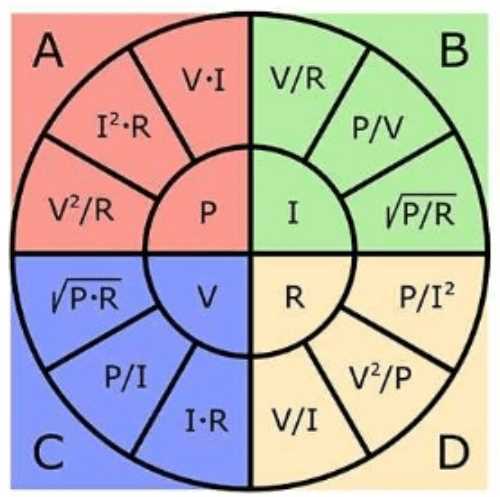
HOTSPOT [Developing AV Solutions] Which section of the Ohm's Law chart should be used to calculate values expressed in Ohms? Select the answer by clicking anywhere within the correct quadrant. Avixa CTS Exam Questions question? ?

Your Answer
4 comments in the community discussion
Bottom-right quadrant. That's where the Ohm's Law chart puts all the resistance (Ohms) formulas, like R = E/I. Pretty sure that's the right spot for questions on calculating resistance.
Q: 20

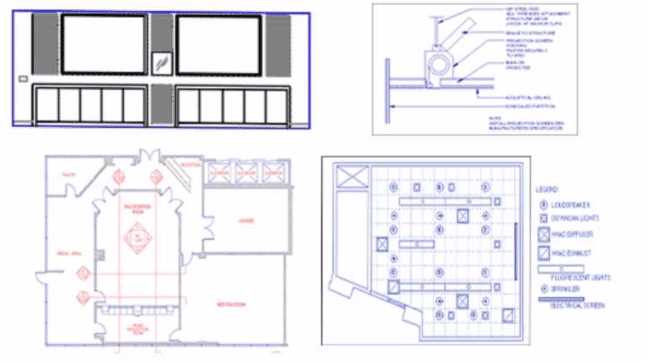
HOTSPOT [Developing AV Solutions] Which drawing represents a Reflected Ceiling Plan (RCP)? Please click anywhere on the correct image. Avixa CTS Exam Questions question? ?

Your Answer
4 comments in the community discussion
3
Upper-right plan view with the ceiling grid and device symbols. That matches what an RCP typically shows, like luminaire and loudspeaker placements.
1
Upper-right plan view, that's the RCP. Saw similar layout style referenced in practice tests.
Question 1 of 20

Premium Access Includes

  • Quiz Simulator
  • Exam Mode
  • Progress Tracking
  • Question Saving
  • Flash Cards
  • Drag & Drops
  • 3 Months Access
  • PDF Downloads
Get Premium Access
Scroll to Top

FLASH OFFER

Days
Hours
Minutes
Seconds

avail 10% DISCOUNT on YOUR PURCHASE