Free CAS-005 Practice Test Questions and Answers (2026)

View Mode
Q: 1
[Governance, Risk, and Compliance (GRC)] A security engineer is assisting a DevOps team that has the following requirements for container images: Ensure container images are hashed and use version controls. Ensure container images are up to date and scanned for vulnerabilities. Which of the following should the security engineer do to meet these requirements?
Options
30 comments in the community discussion
5
B . CI/CD pipeline gates are how you enforce image hashing, versioning, and auto scans before anything hits production. Small edge case: if the team already had strong post-deploy auditing then C might get confusing in a badly worded question, but this one specifically asks for the upfront controls.
3
Option B makes sense. Setting security and quality checks in the CI/CD pipeline is how you can automate hashing, version control, and vulnerability scanning before any containers go live. The other choices don't guarantee these checks happen upfront. Pretty sure this is what they're after but let me know if anyone s
Q: 2
[Governance, Risk, and Compliance (GRC)] An audit finding reveals that a legacy platform has not retained loos for more than 30 days The platform has been segmented due to its interoperability with newer technology. As a temporarysolution, the IT department changed the log retention to 120 days. Which of the following should the security engineer do to ensure the logs are being properly retained?
Options
29 comments in the community discussion
2
C. SIEM is purpose-built for aggregating and retaining logs, so it aligns with GRC requirements here. Pretty sure that's what real audits expect. Agree?
1
C imo, SIEM handles retention and compliance best, but if the legacy system couldn't export logs out at all, none of these would actually fix it. Still, CompTIA's logic leans C I think.
Q: 3
[Security Architecture] A developer makes a small change to a resource allocation module on a popular social media website and causes a memory leak. During a peak utilization period, several web servers crash, causing the website to go offline. Which of the following testing techniques is the most efficient way to prevent this from reoccurring?
Options
35 comments in the community discussion
6
Option C fits best. Regression testing specifically checks if new code changes break existing things, like memory handling. The memory leak could’ve been caught with good regression tests. Pretty sure that's what they're looking for here, but open to other thoughts.
5
Option C, Regression testing is designed to catch issues from new code changes like this, so it's most efficient here.
Q: 4
[Emerging Technologies and Threats] Which of the following best explains the business requirement a healthcare provider fulfills by encrypting patient data at rest?
Options
30 comments in the community discussion
5
D . CompTIA loves tossing in that privacy plus portability combo for anything healthcare, seen similar on recent practice sets.
1
D makes sense here. Encrypting at rest is all about protecting patient privacy but also letting providers move or store data safely, which ties directly to portability (HIPAA stuff). C is more about limiting risk after a breach, but doesn't mention portability at all. Pretty sure D is what they're looking for, though o
Q: 5
[Emerging Technologies and Threats] A security engineer wants to reduce the attack surface of a public-facing containerized application Which of the following will best reduce the application's privilege escalation attack surface?
Options
41 comments in the community discussion
1
A , D is tempting for network isolation but the real privilege escalation fix is making sure the app doesn't run as root. A does that, so that's what I'd pick. Seen similar trap on practice exams.
1
A tbh, seen similar in exam reports about Docker privilege issues.
Q: 6
[Governance, Risk, and Compliance (GRC)] A compliance officer isfacilitating abusiness impact analysis (BIA)and wantsbusiness unit leadersto collect meaningful dat a. Several business unit leaders want more information about the types of data the officer needs. Which of the following data types would be the most beneficial for the compliance officer?(Select two)
Options
36 comments in the community discussion
1
Why is this even a question for BIA, seems obvious it's C and F.
1
Probably C and F here. BIA needs you to identify your critical processes and measure the impact or costs if they go down. B (contract obligations) seems tempting but that's more for compliance audits than the actual impact analysis. Anyone see it different?
Q: 7
[Security Architecture] A senior security engineer flags the following log file snippet as having likely facilitated an attacker’s lateral movement in a recent breach: qry_source: 19.27.214.22 TCP/53 qry_dest: 199.105.22.13 TCP/53 qry_type: AXFR | in comptia.org ------------ directoryserver1 A 10.80.8.10 ------------directoryserver2 A 10.80.8.11 ------------ directoryserver3 A 10.80.8.12 ------------ internal-dns A 10.80.9.1 ----------- www-int A 10.80.9.3 ------------ fshare A 10.80.9.4 ------------ sip A 10.80.9.5 ------------ msn-crit-apcs A 10.81.22.33 Which of the following solutions, if implemented, would mitigate the risk of this issue reoccurring?
Options
39 comments in the community discussion
5
Option A. Disabling DNS zone transfers is what stops external AXFR attempts cold. Others help, but only A addresses the specific risk from the log. Pretty sure that's what CompTIA wants here, but let me know if you read it different.
1
Not convinced D would actually stop the AXFR issue, isn't that more about who can query for records, not who can pull zone transfers? The log points straight to a zone transfer being abused. A seems more direct for preventing this. Anyone see a use case where D would be better?
Q: 8
[Security Assessments and Testing] During a vulnerability assessment, a scan reveals the following finding: Windows Server 2016 Missing hotfix KB87728 - CVSS 3.1 Score: 8.1 [High] - Affected host 172.16.15.2 Later in the review process, the remediation team marks the finding as a false positive. Which of the following is the best way toavoid this issue on future scans?
Options
38 comments in the community discussion
2
Makes sense to go with B here. Authenticated scans actually check the server’s config and patch levels directly, so they cut down on those annoying false positives. Not 100 percent but pretty sure this is what fixes the issue.
1
Its B, authenticated scan. Banner-grabbing (C) is a trap here since it can still miss patch info. Seen this on other exams.
Q: 9
[Security Architecture] Which of the following supports the process of collecting a large pool of behavioral observations to inform decision-making?
Options
24 comments in the community discussion
5
Option C. since Big Data is what actually enables collecting massive behavioral datasets, not D unless you're processing them.
2
Option C. Matches what's in the official objectives and study guide.
Q: 10
[Security Operations] An organization found a significant vulnerability associated with a commonly used package in a variety of operating systems. The organization develops a registry of software dependencies to facilitate incident response activities. As part of the registry, the organization creates hashes of packages that have been formally vetted. Which of the following attack vectors does this registry address?
Options
27 comments in the community discussion
4
A. C is tempting but the registry with vetted hashes is really about stopping supply chain risk, not side channels.
2
Don't think it's B. Option C makes more sense to me here because side-channel analysis can look at how software interacts, and keeping hashes helps track changes. I saw similar advice in some official guides. Disagree?
Q: 11
[Governance, Risk, and Compliance (GRC)] A systems administrator wants to introduce a newly released feature for an internal application. The administrate docs not want to test the feature in the production environment. Which of the following locations is the best place to test the new feature?
Options
14 comments in the community discussion
4
Option A Staging environment fits since it's meant for production-like testing before rollout. Makes sense, right?
B not A
Q: 12
[Security Architecture] Asecuntv administrator is performing a gap assessment against a specific OS benchmark The benchmark requires the following configurations be applied to endpomts: • Full disk encryption * Host-based firewall • Time synchronization * Password policies • Application allow listing * Zero Trust application access Which of the following solutions best addresses the requirements? (Select two).
Options
8 comments in the community discussion
1
C or E. HIDS is tempting for policies and firewall, so maybe C and E are the real intent here?
C and D tbh. E is a common trap since HIDS does policy checks, but only SASE covers Zero Trust app access.
Q: 13
[Security Architecture] A company wants to invest in research capabilities with the goal to operationalize the research output. Which of the following is the best option for a security architect to recommend?
Options
10 comments in the community discussion
1
Had something like this in a mock. B is the only one that actually lets you automate and use research results for defense, so it fits the "operationalize" part. Open to being corrected but pretty confident here.
1
Seen exam reports where D gets picked, but B is the only choice that really lets you automate research outputs efficiently. B
Q: 14
[Identity and Access Management (IAM)] An external SaaS solution user reports a bug associated with the role-based access control module. This bug allows users to bypass system logic associated with client segmentation in the multitenant deployment model. When assessing the bug report, the developer finds that the same bug was previously identified and addressed in an earlier release. The developer then determines the bug was reintroduced when an existing software component was integrated from a prior version of the platform. Which of the following is the best way to prevent this scenario?
Options
11 comments in the community discussion
1
Its A. C looks tempting for automation but regression testing is what actually catches repeat bugs after changes.
1
Yeah, this is textbook regression testing (A). The whole idea is to run past bug scenarios whenever you pull in older components or make changes, so you can catch stuff like this before it hits production. Code signing and SCA wouldn't actually catch the logic flaw itself. Pretty sure A's the answer here.
Q: 15
[Security Architecture] A security architect must make sure that the least number of services as possible is exposed in order to limit an adversary's ability to access the systems. Which of the following should the architect do first?
Options
7 comments in the community discussion
1
B tbh
1
B/C? If attack surface reduction includes disabling unnecessary services, then B is more accurate technically.
Q: 16
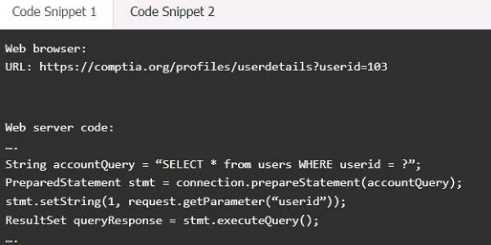
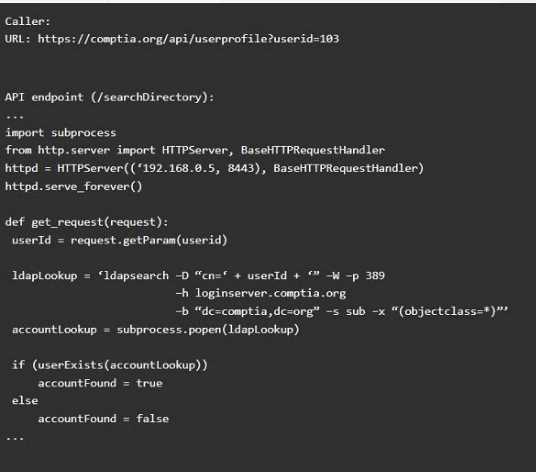
SIMULATION [Identity and Access Management (IAM)] A product development team has submitted code snippets for review prior to release. INSTRUCTIONS Analyze the code snippets, and then select one vulnerability, and one fix for each code snippet. Code Snippet 1 CompTIA Security X CASP+ CAS-005 question Code Snippet 2 CompTIA Security X CASP+ CAS-005 question Vulnerability 1: SQL injection Cross-site request forgery Server-side request forgery Indirect object reference Cross-site scripting Fix 1: Perform input sanitization of the userid field. Perform output encoding of queryResponse, Ensure usex:ia belongs to logged-in user. Inspect URLS and disallow arbitrary requests. Implementanti-forgery tokens. Vulnerability 2 1) Denial of service 2) Command injection 3) SQL injection 4) Authorization bypass 5) Credentials passed via GET Fix 2 A) Implement prepared statements and bind variables. B) Remove the serve_forever instruction. C) Prevent the "authenticated" value from being overridden by a GET parameter. D) HTTP POST should be used for sensitive parameters. E) Perform input sanitization of the userid field.
Your Answer
7 comments in the community discussion
7
SQL injection for the first snippet, fix is input sanitization on userid. Second snippet is CSRF, fix is anti-forgery tokens. Confident here.
Actually, I think cross-site scripting is the issue in the first code snippet, so output encoding of queryResponse would be the fix. People mix this up with SQLi because of user input, but this feels more like a classic XSS trap.
Q: 17
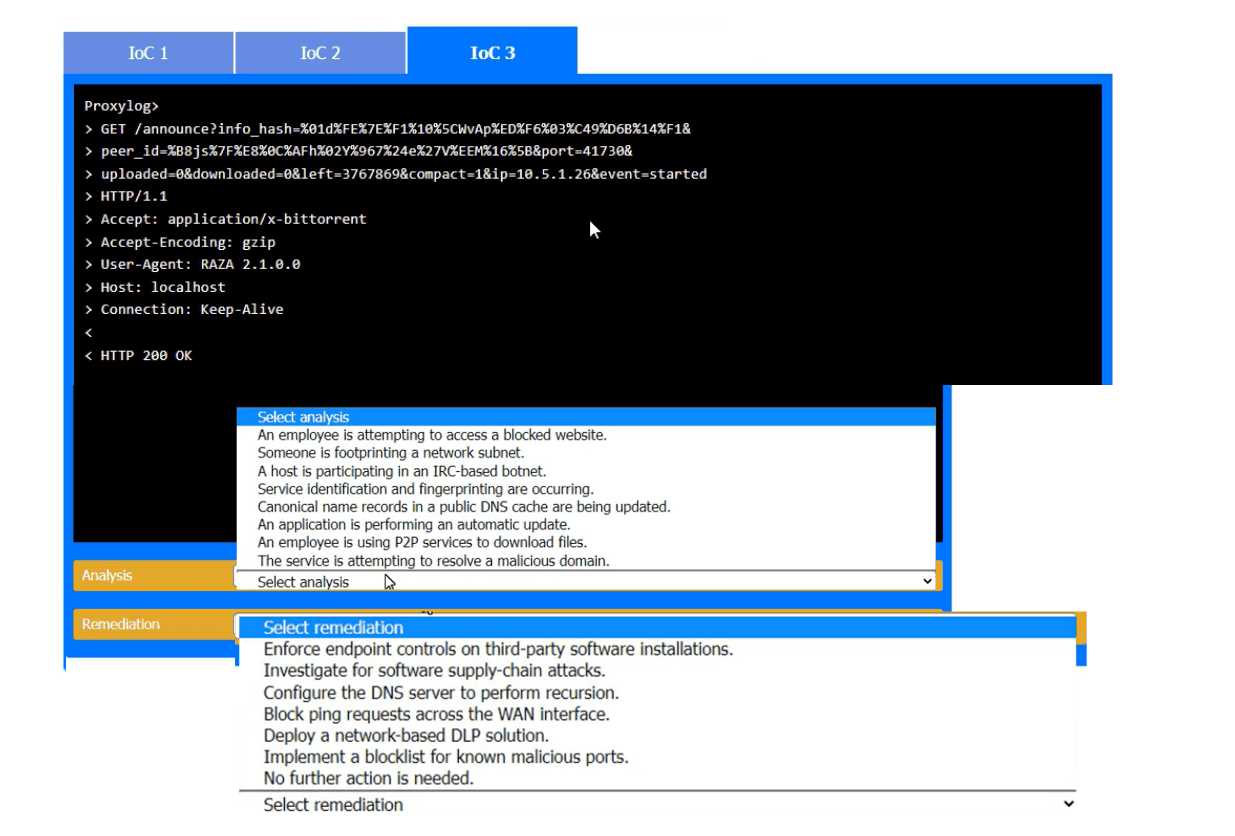
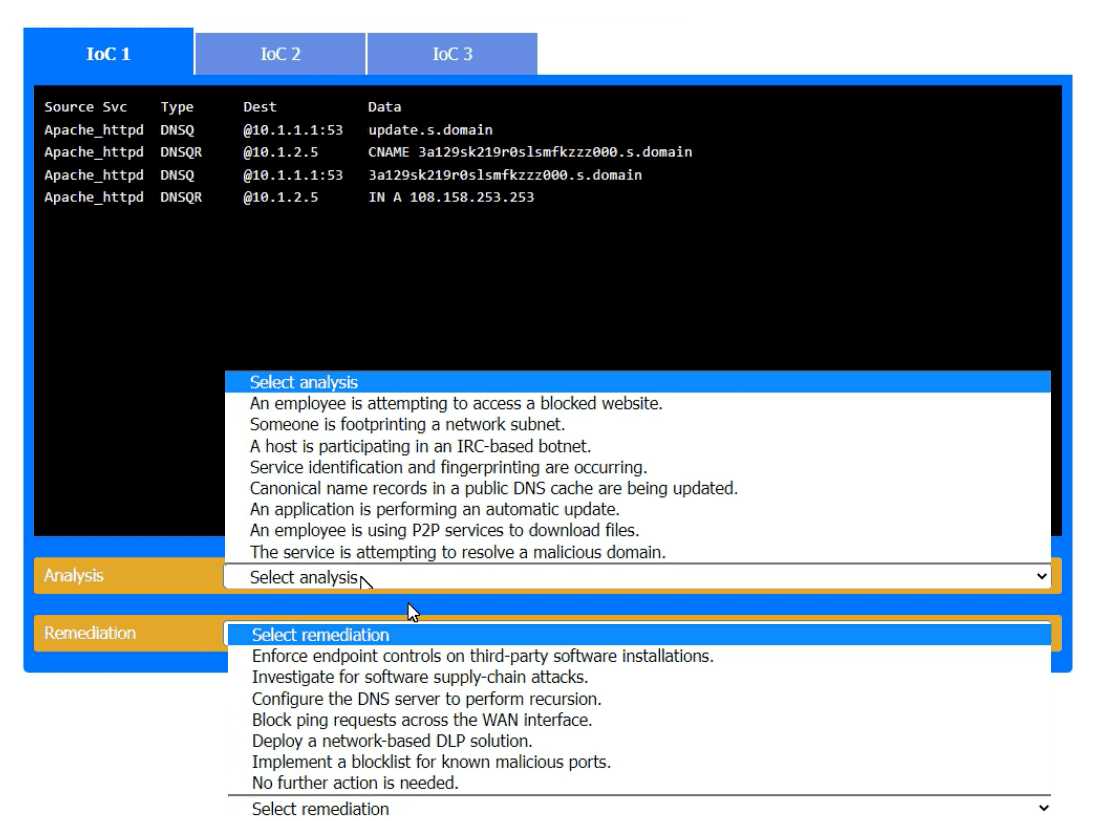
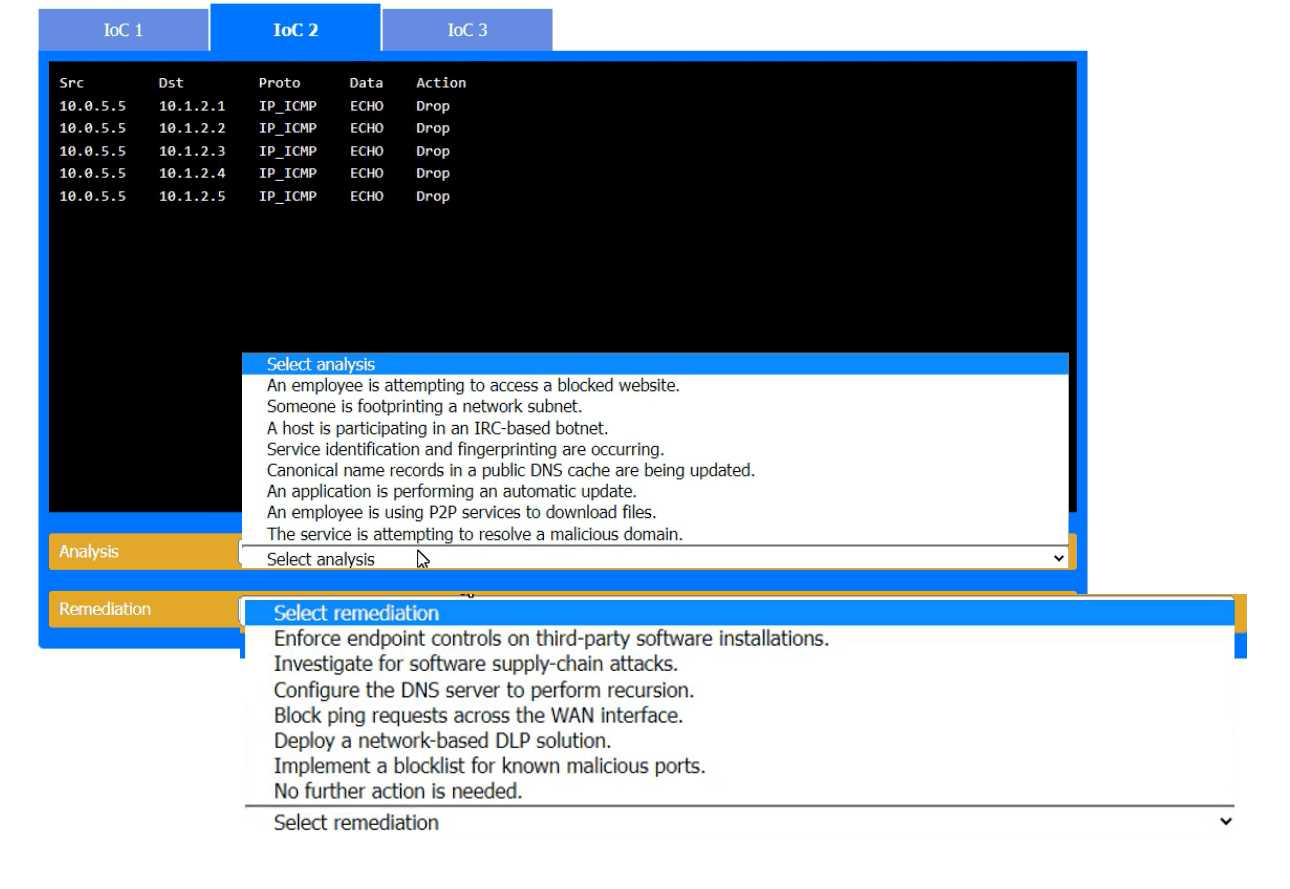
SIMULATION [Security Architecture] During the course of normal SOC operations, three anomalous events occurred and were flagged as potential IoCs. Evidence for each of these potential IoCs is provided. INSTRUCTIONS Review each of the events and select the appropriate analysis and remediation options for each IoC. CompTIA Security X CASP+ CAS-005 question CompTIA Security X CASP+ CAS-005 question CompTIA Security X CASP+ CAS-005 question
Your Answer
7 comments in the community discussion
6
Yeah, I see why it's just "SEE THE"-that's probably all the system wants since the actual analysis and remediation steps are based on each image. The sim wants you to pull details from the screenshots rather than type out answers. Makes sense for a test like this, but let me know if I'm off.
4
Looks like "SEE THE" is the answer here, probably because it's a simulation and expects you to refer to the provided evidence images for analysis and remediation. Minimal text so you focus on reviewing each IoC's evidence. Makes sense for this CASP+ sim, but correct me if I'm missing something.
Q: 18
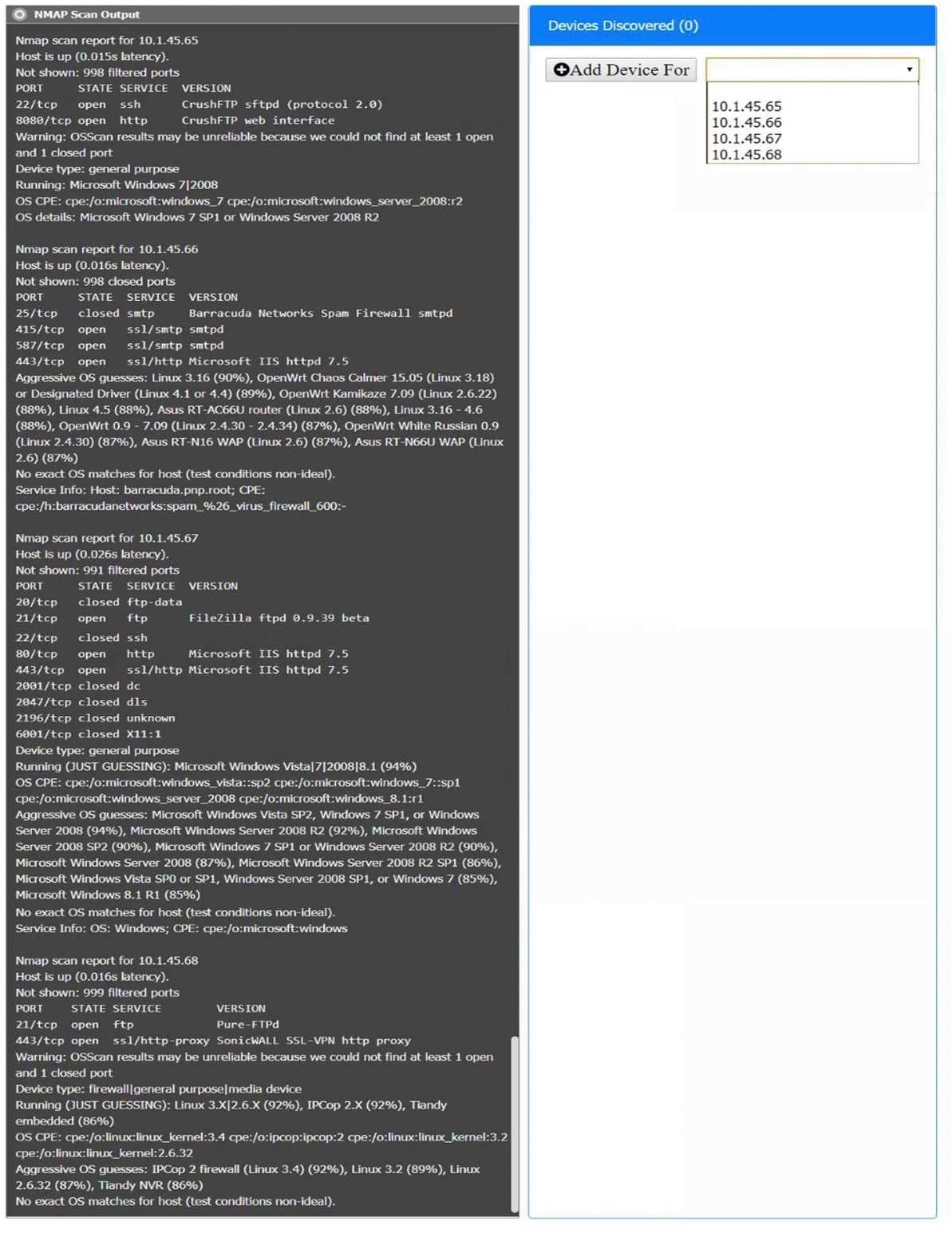
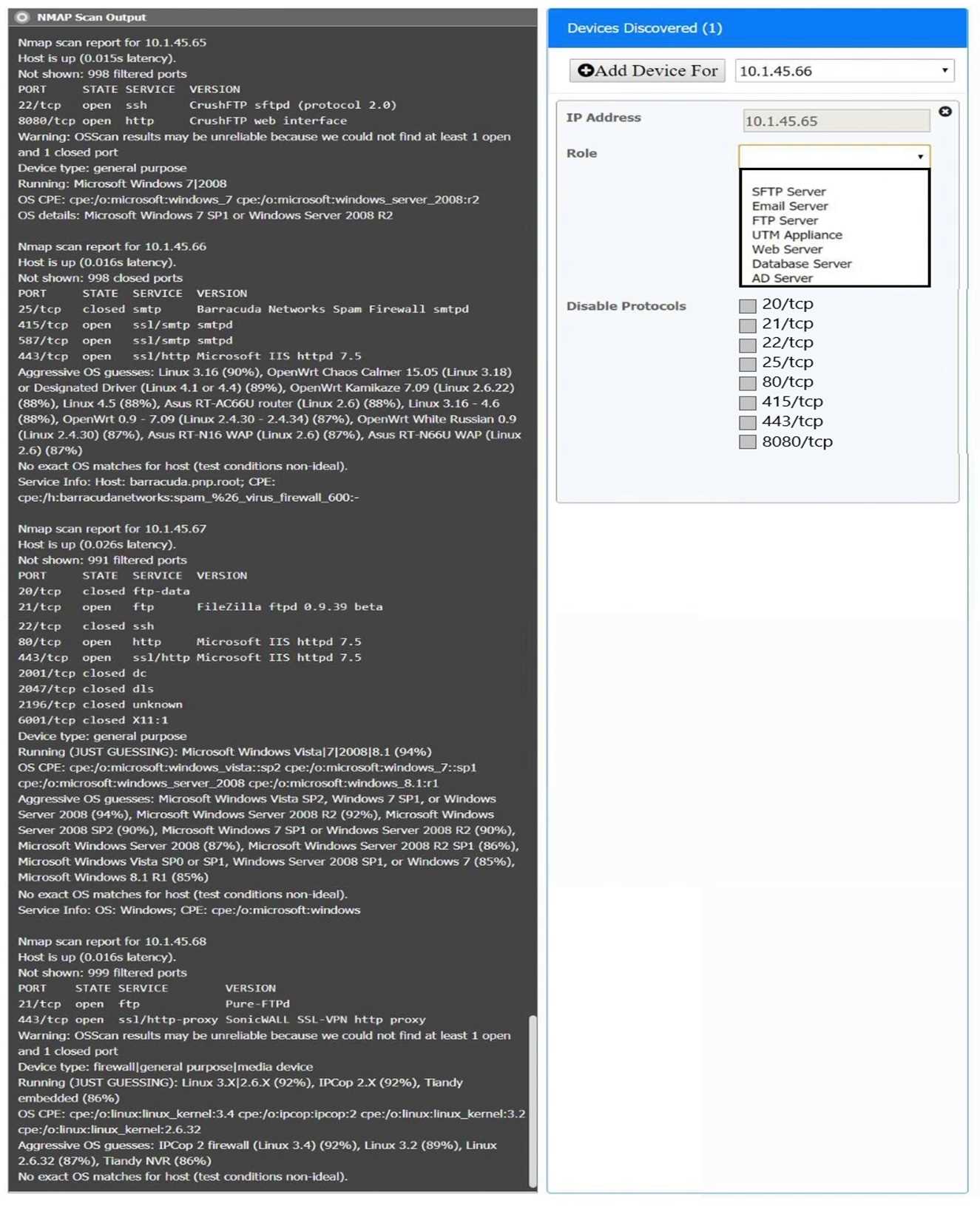
SIMULATION [Security Architecture] You are a security analyst tasked with interpreting an Nmap scan output from company’s privileged network. The company’s hardening guidelines indicate the following: There should be one primary server or service per device. Only default ports should be used. Non-secure protocols should be disabled. INSTRUCTIONS Using the Nmap output, identify the devices on the network and their roles, and any open ports that should be closed. For each device found by Nmap, add a device entry to the Devices Discovered list, with the following information: The IP address of the device The primary server or service of the device (Note that each IP should by associated with one service/port only) The protocol(s) that should be disabled based on the hardening guidelines (Note that multiple ports may need to be closed to comply with the hardening guidelines) If at any time you would like to bring back the initial state of the simulation, please click the Reset All button. CompTIA Security X CASP+ CAS-005 question CompTIA Security X CASP+ CAS-005 question
Your Answer
8 comments in the community discussion
3
I’m a bit lost with the matching here, but pretty sure you just need to list each device, its main service, and flag non-default or insecure ports so they can be closed. Anyone else see it that way?
Don’t think you need to disable port 80 for the web server. Port 80 is default for HTTP, and while it's not secure, the guidelines want only non-default or insecure protocols closed. I’d just flag non-defaults here, right?
Q: 19
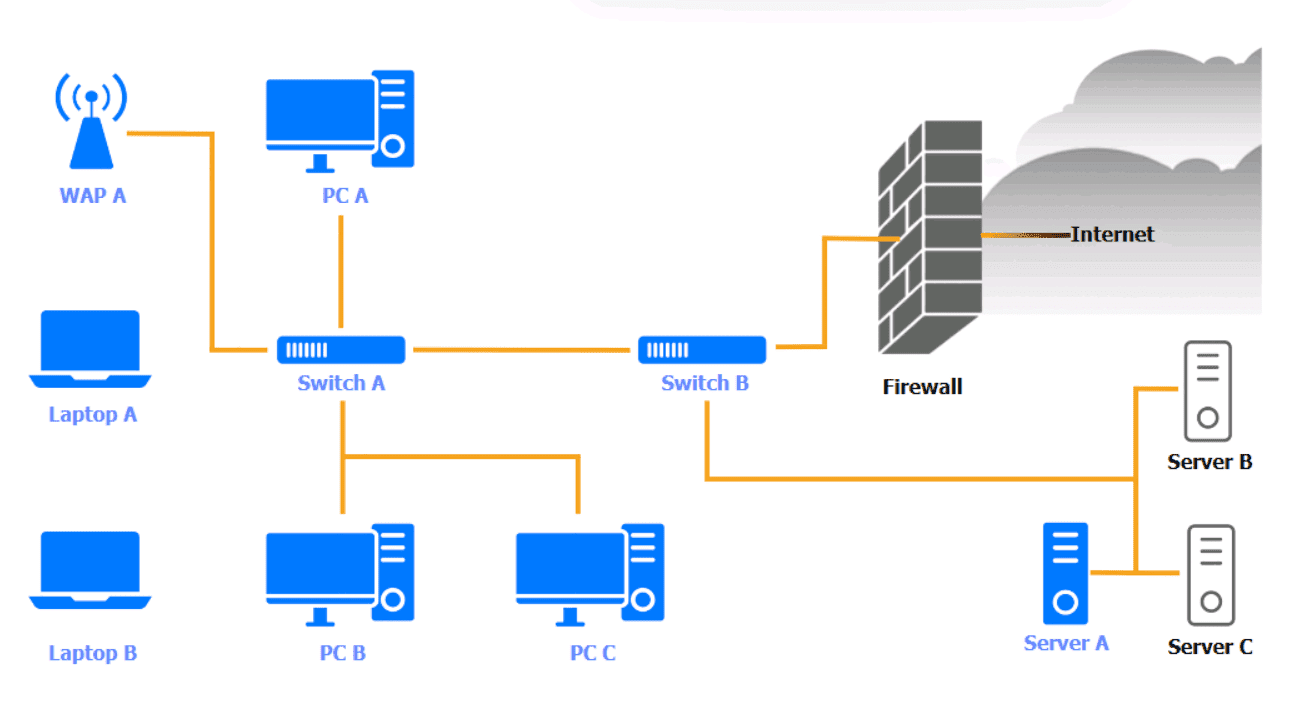
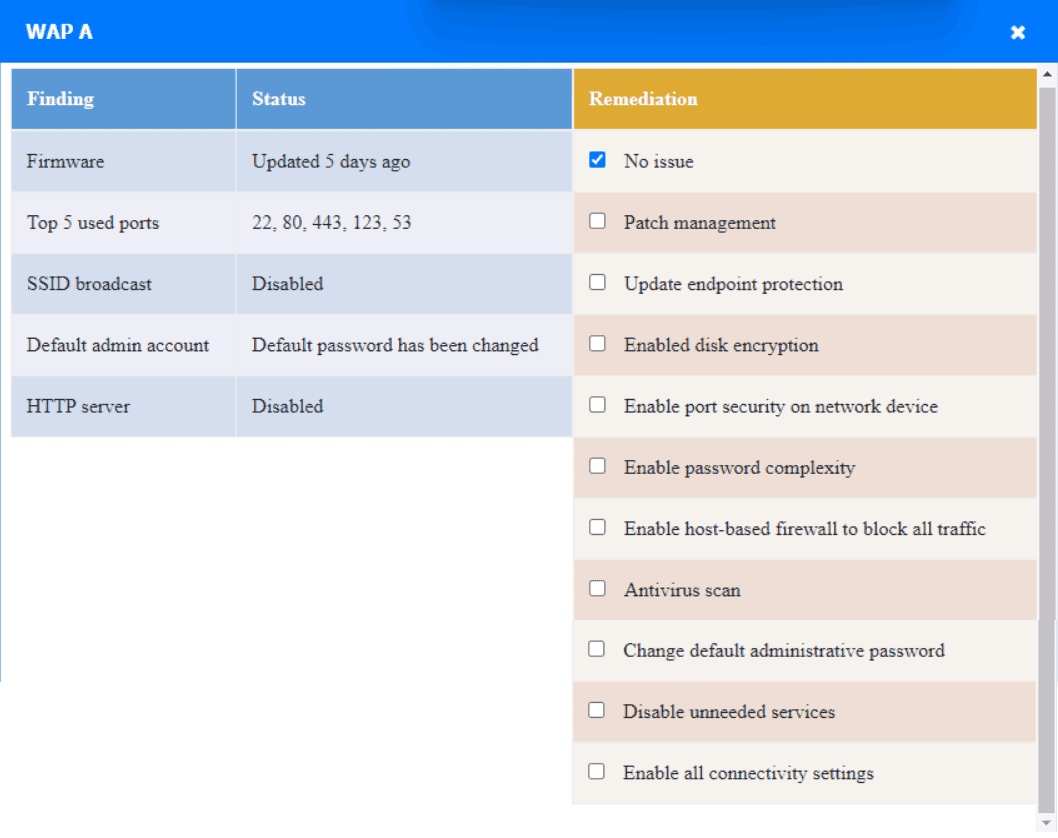
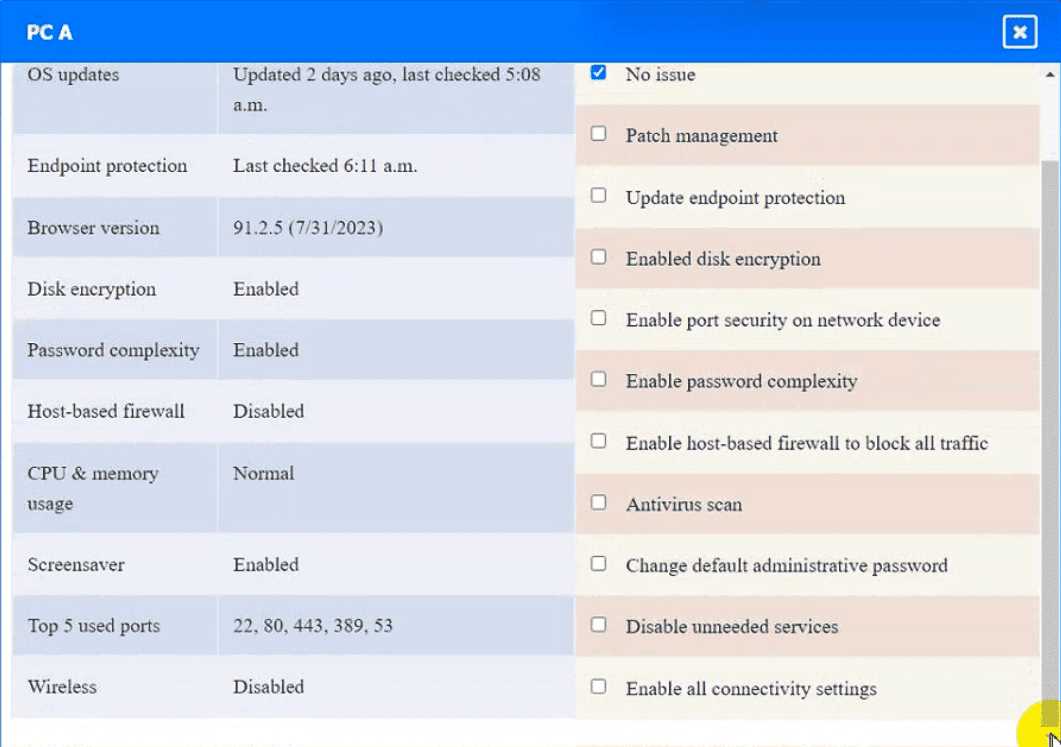
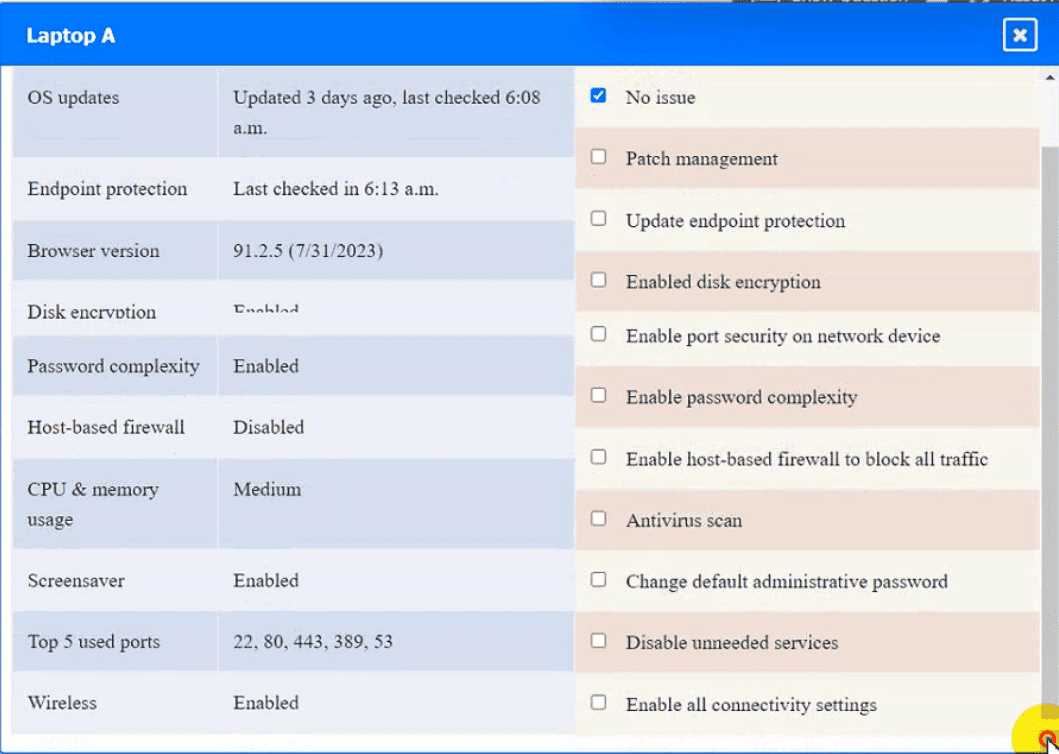
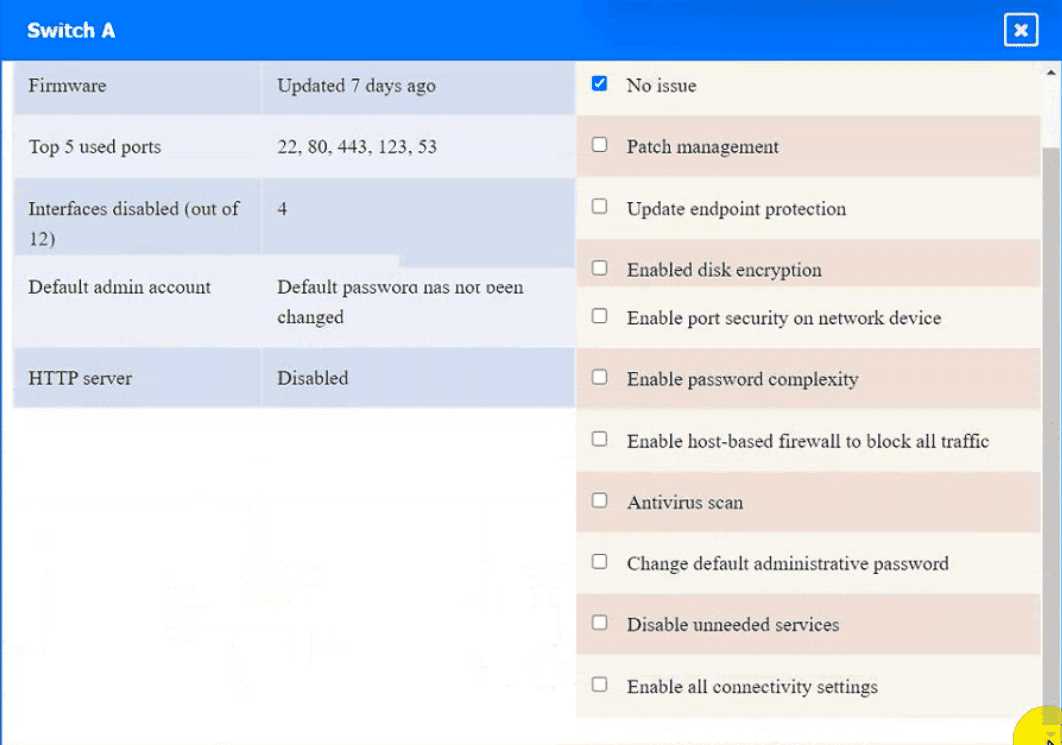
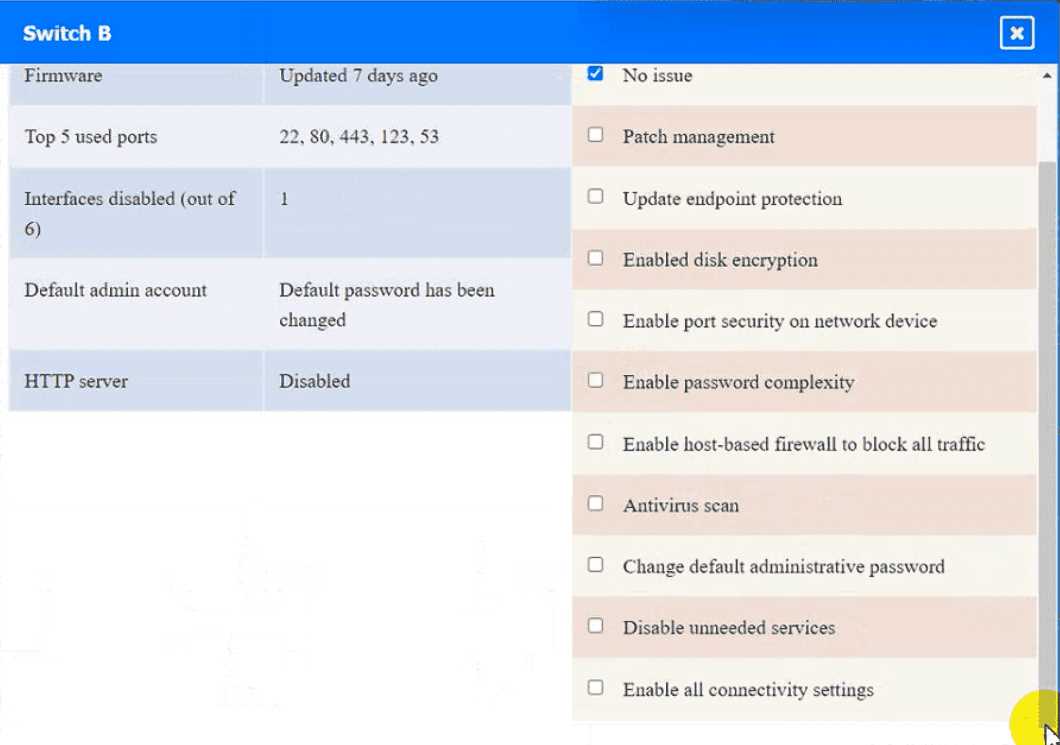
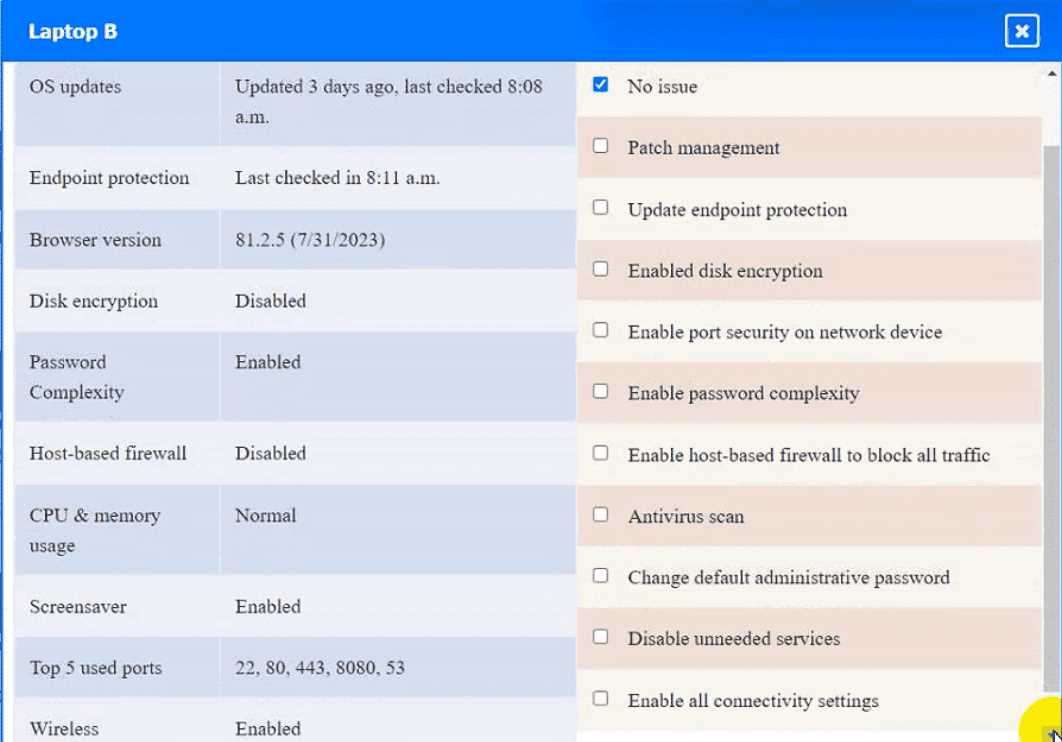
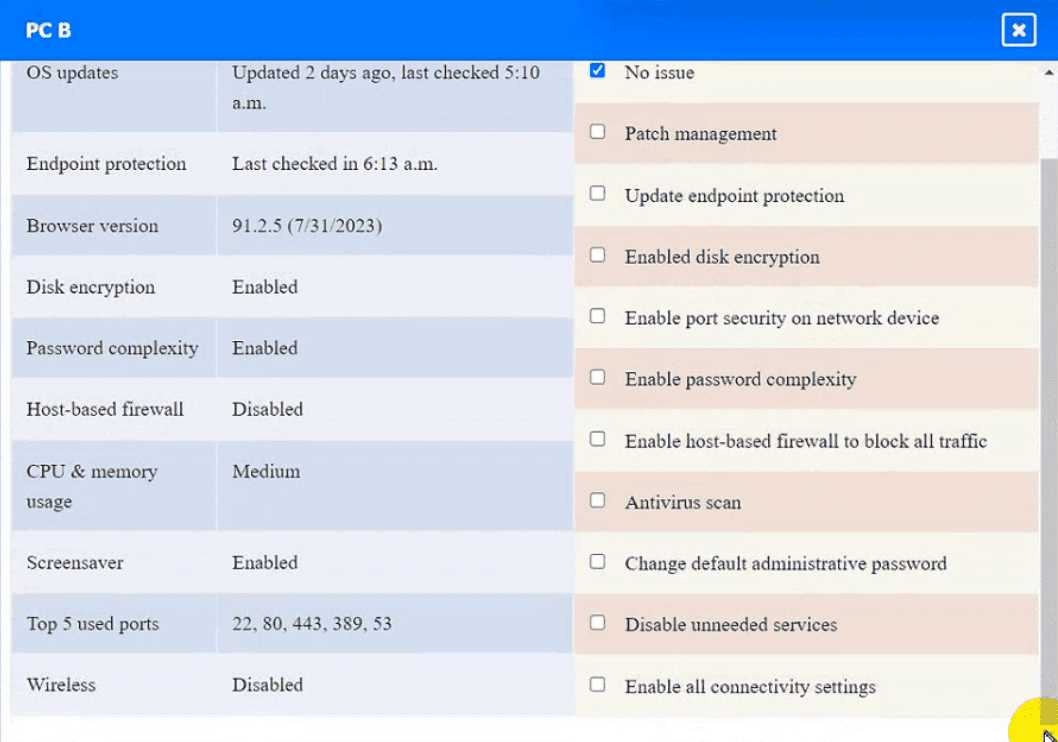
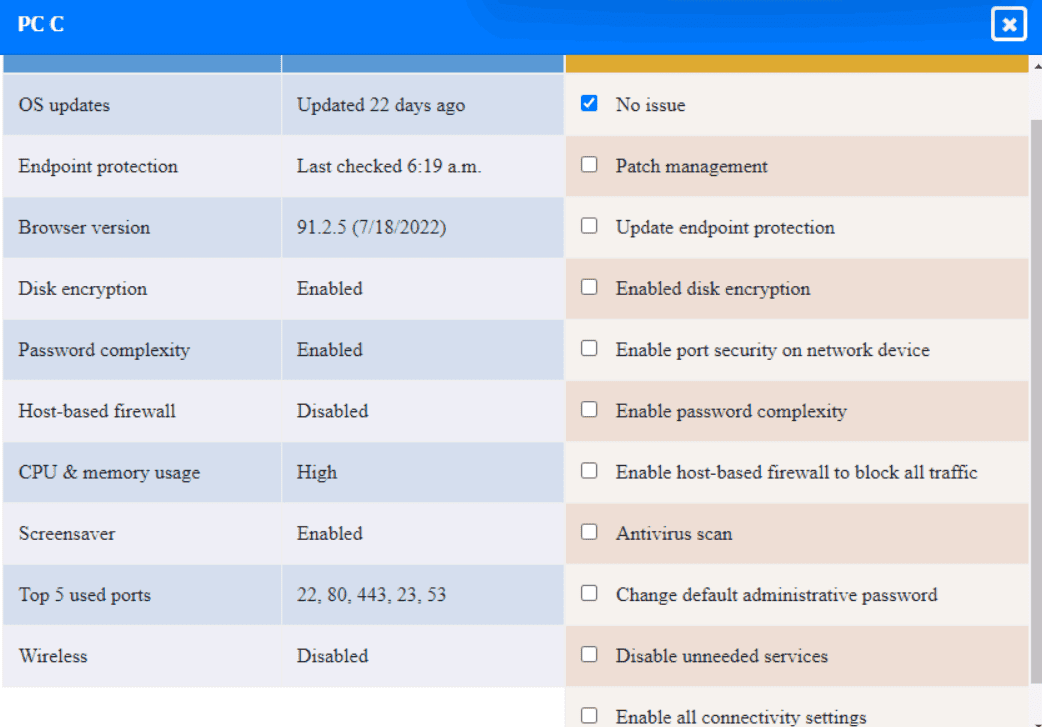
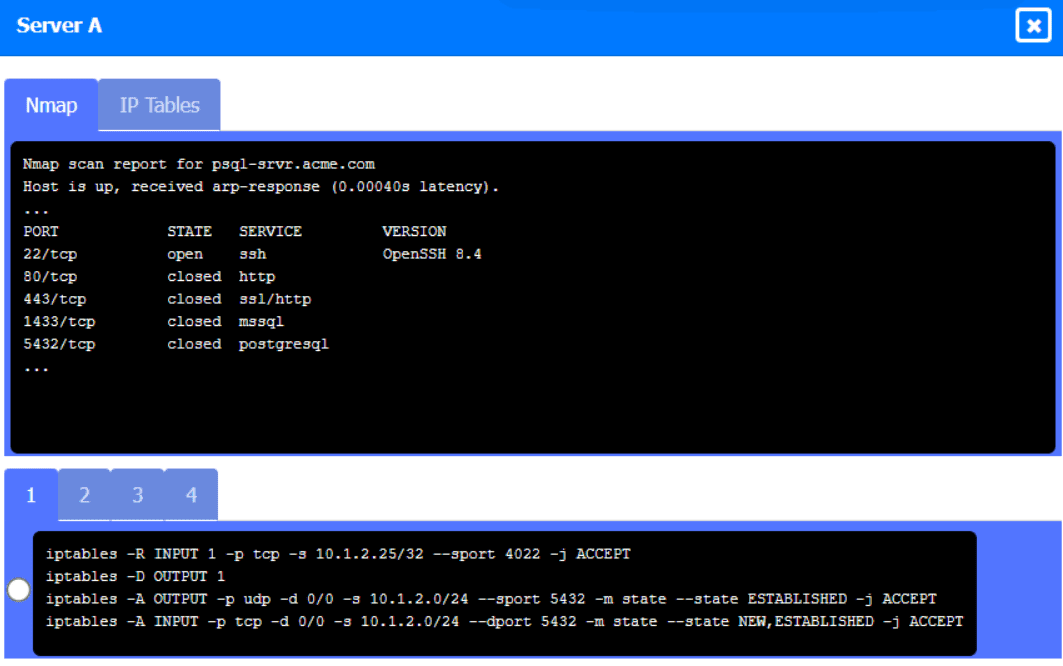
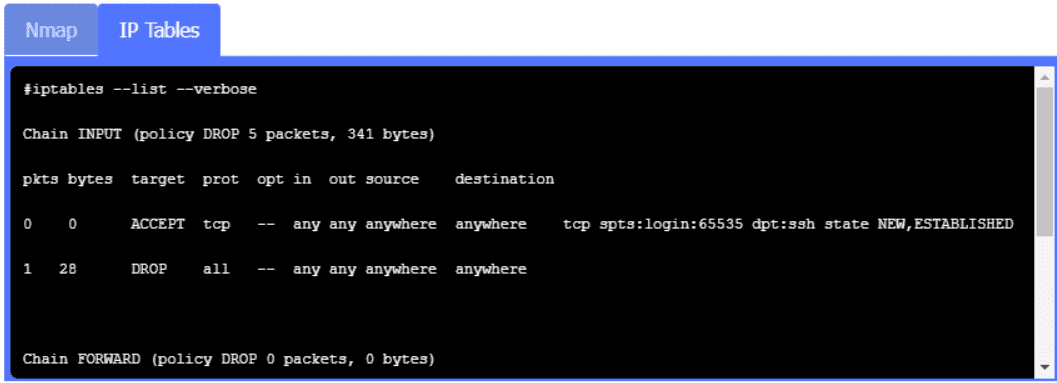
SIMULATION [Security Architecture] A security engineer needs to review the configurations of several devices on the network to meet the following requirements: • The PostgreSQL server must only allow connectivity in the 10.1.2.0/24 subnet. • The SSH daemon on the database server must be configured to listen to port 4022. • The SSH daemon must only accept connections from a Single workstation. • All host-based firewalls must be disabled on all workstations. • All devices must have the latest updates from within the past eight days. •All HDDs must be configured to secure data at rest. • Cleartext services are not allowed. • All devices must be hardened when possible. Instructions: Click on the various workstations and network devices to review the posture assessment results. Remediate any possible issues or indicate that no issue is found. Click on Server A to review output data. Select commands in the appropriate tab to remediate connectivity problems to the pOSTGREsql DATABASE VIA ssh CompTIA Security X CASP+ CAS-005 question WAP A CompTIA Security X CASP+ CAS-005 question PC A CompTIA Security X CASP+ CAS-005 question Laptop A CompTIA Security X CASP+ CAS-005 question Switch A CompTIA Security X CASP+ CAS-005 question Switch B: CompTIA Security X CASP+ CAS-005 question Laptop B CompTIA Security X CASP+ CAS-005 question PC B CompTIA Security X CASP+ CAS-005 question PC C CompTIA Security X CASP+ CAS-005 question Server A CompTIA Security X CASP+ CAS-005 question CompTIA Security X CASP+ CAS-005 question CompTIA Security X CASP+ CAS-005 question CompTIA Security X CASP+ CAS-005 question CompTIA Security X CASP+ CAS-005 question
Your Answer
12 comments in the community discussion
5
Oddly specific but that's what the exam wants here. SEE THE
4
SEE THEHad something like this in a mock before, and "SEE THE" was literally the accepted answer for these sim formats. It's odd but that's what works for the grading here. Pretty sure that's all they're looking for.
Q: 20

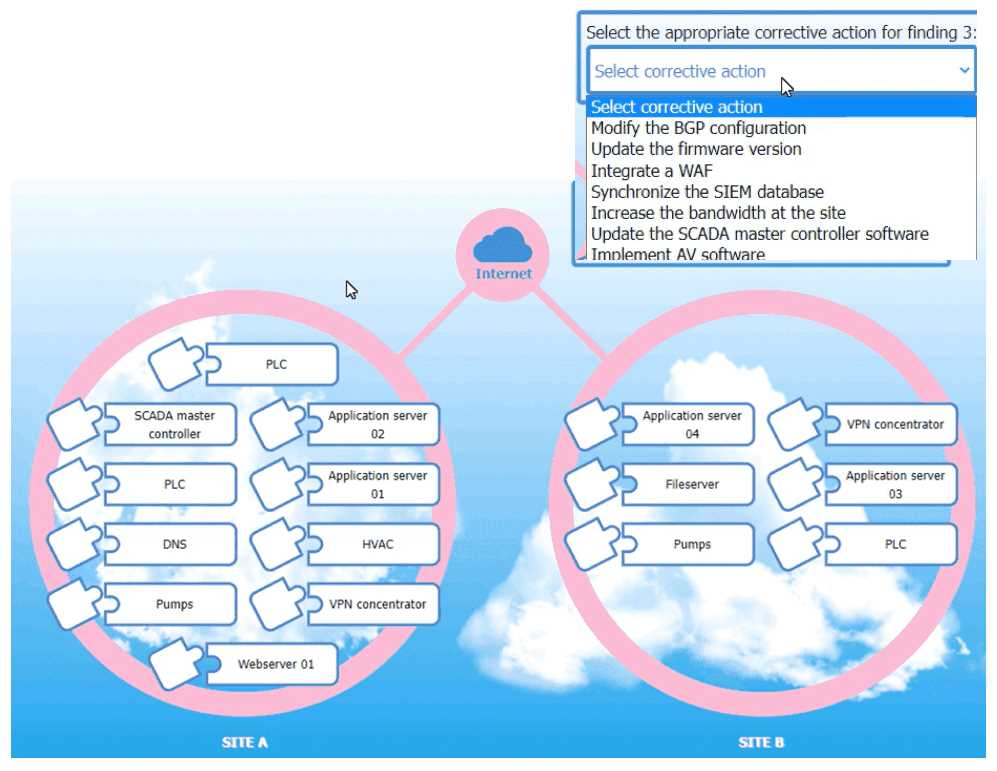
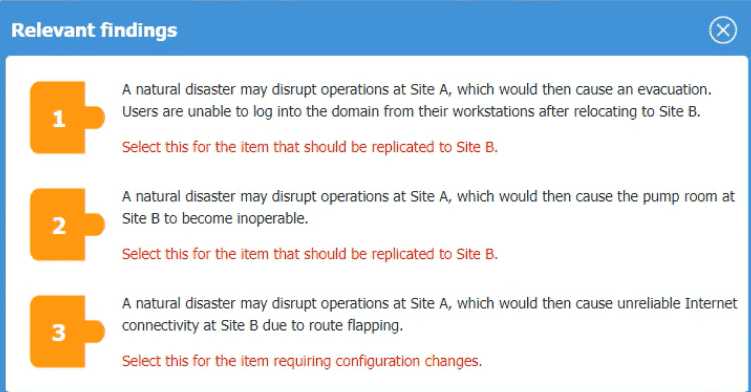
SIMULATION [Security Architecture] An organization is planning for disaster recovery and continuity ofoperations, and has noted the following relevant findings: 1. A natural disaster may disrupt operations at Site A, which would then cause an evacuation. Users are unable to log into the domain from-their workstations after relocating to Site B. 2. A natural disaster may disrupt operations at Site A, which would then cause the pump room at Site B to become inoperable. 3. A natural disaster may disrupt operations at Site A, which would then cause unreliable internet connectivity at Site B due to route flapping. INSTRUCTIONS Match each relevant finding to the affected host by clicking on the host name and selecting the appropriate number. For findings 1 and 2, select the items that should be replicated to Site B. For finding 3, select the item requiring configuration changes, then select the appropriate corrective action from the drop-down menu. CompTIA Security X CASP+ CAS-005 question CompTIA Security X CASP+ CAS-005 question

Your Answer
10 comments in the community discussion
9
DNS and pump controls should be replicated to Site B for findings 1 and 2, since those services are critical if Site A is lost. For the unreliable internet in finding 3, pretty sure modifying the BGP config on the VPN concentrator fixes route flapping. Makes sense?
6
Yeah, DNS replication covers login for users if they move, and pump controls need to be ready at Site B in case of failover. For the internet issue, modify BGP on the VPN concentrator. That's what I'd select.
Question 1 of 20

Premium Access Includes

  • Quiz Simulator
  • Exam Mode
  • Progress Tracking
  • Question Saving
  • Flash Cards
  • Drag & Drops
  • 3 Months Access
  • PDF Downloads
Get Premium Access
Scroll to Top

FLASH OFFER

Days
Hours
Minutes
Seconds

avail 10% DISCOUNT on YOUR PURCHASE