Free Associate-Cloud-Engineer Practice Test Questions and Answers (2026)

Last Update Check

View Mode
Q: 1
You have a number of compute instances belonging to an unmanaged instances group. You need to SSH to one of the Compute Engine instances to run an ad hoc script. You’ve already authenticated gcloud, however, you don’t have an SSH key deployed yet. In the fewest steps possible, what’s the easiest way to SSH to the instance?
Options
24 comments in the community discussion
1
C or B, but B is what Google expects since gcloud compute ssh does everything if no key yet.
1
B
Q: 2
You are the project owner of a GCP project and want to delegate control to colleagues to manage buckets and files in Cloud Storage. You want to follow Google-recommended practices. Which IAM roles should you grant your colleagues?
Options
23 comments in the community discussion
1
B
1
B imo, A is too broad and C doesn't handle bucket-level permissions.
Q: 3
You want to configure an SSH connection to a single Compute Engine instance for users in the dev1 group. This instance is the only resource in this particular Google Cloud Platform project that the dev1 users should be able to connect to. What should you do?
Options
16 comments in the community discussion
1
A , that's the pattern shown in the official documentation and practice tests, especially for scoped SSH via IAM.
1
D, not A
Q: 4
You have a Dockerfile that you need to deploy on Kubernetes Engine. What should you do?
Options
16 comments in the community discussion
1
Had something like this in a mock and went with B. I thought since App Engine also uses Dockerfiles, gcloud app deploy should work for Kubernetes Engine too. But now that I think about it, maybe that's only for App Engine deployments. Anyone else tripped up by the similar commands?
1
Option C
Q: 5
You have an object in a Cloud Storage bucket that you want to share with an external company. The object contains sensitive dat a. You want access to the content to be removed after four hours. The external company does not have a Google account to which you can grant specific user-based access privileges. You want to use the most secure method that requires the fewest steps. What should you do?
Options
27 comments in the community discussion
6
Option A works best since a signed URL allows secure, temporary access without needing a Google account and auto-expires after 4 hours. The other options either make data public or add unnecessary steps. I think A is the most direct and secure here, but open to other views if missed something.
6
Option A is the way to go. Creating a signed URL with a 4-hour expiration is secure and quick, and no Google account needed for access. I saw similar scenarios in official practice sets. If you want to double-check, the GCP official documentation covers signed URLs pretty well. Pretty sure A matches best here.
Q: 6
You create a Deployment with 2 replicas in a Google Kubernetes Engine cluster that has a single preemptible node pool. After a few minutes, you use kubectl to examine the status of your Pod and observe that one of them is still in Pending status: Google Associate Cloud Engineer question What is the most likely cause?
Options
26 comments in the community discussion
1
Its B, unless they specifically mention preemption just happened. Resource shortage hits first in these cases with a single node pool.
1
B , unless the question clearly called out a recent preemption event. In most cases, with just one node and two pods, resource constraints hit first and cause Pending. If cluster had autoscaling or multiple nodes, then maybe D. Others agree?
Q: 7
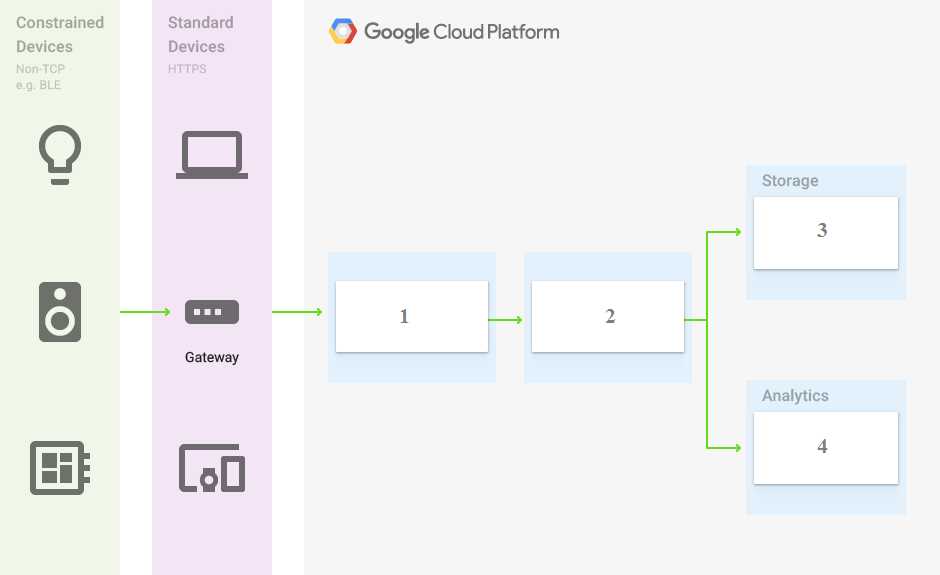
You are building a pipeline to process time-series dat a. Which Google Cloud Platform services should you put in boxes 1,2,3, and 4? Google Associate Cloud Engineer question
Options
27 comments in the community discussion
9
D. Saw a similar question in recent exam reports, matches the best for real-time time-series processing using GCP services.
2
I don’t think it’s D. C looks better since Cloud Storage comes right after Pub/Sub, which would handle raw event storage before anything else happens. That makes sense if you want to keep all incoming data, even before processing. Not totally sure but that’s how I’d see it.
Q: 8
You have an application that uses Cloud Spanner as a backend database. The application has a very predictable traffic pattern. You want to automatically scale up or down the number of Spanner nodes depending on traffic. What should you do?
Options
18 comments in the community discussion
6
D. not A. Manual cron or SRE alerting is a trap since only D gives actual autoscaling. Seen this approach in other exam reports.
1
D is correct, not A. Using a cron job (A) looks tempting since the traffic is predictable, but it's not real autoscaling. Only D builds a closed loop with alerts and Cloud Function so everything runs hands-off. Think I've seen this logic in other practice sets, but open to pushback if anyone's seen auto-scaling handled
Q: 9
You are using Deployment Manager to create a Google Kubernetes Engine cluster. Using the same Deployment Manager deployment, you also want to create a DaemonSet in the kube-system namespace of the cluster. You want a solution that uses the fewest possible services. What should you do?
Options
24 comments in the community discussion
1
B or C? Type Provider in A looks like a trap because it could count as another service. Not totally sure though.
1
Its C, since spinning up a Compute Engine instance and running kubectl seems simpler to me.
Q: 10
You are running a data warehouse on BigQuery. A partner company is offering a recommendation engine based on the data in your data warehouse. The partner company is also running their application on Google Cloud. They manage the resources in their own project, but they need access to the BigQuery dataset in your project. You want to provide the partner company with access to the dataset What should you do?
Options
18 comments in the community discussion
1
Its D, since you want the partner to control their own service account. Granting their service account access is least privilege. A is tempting but not correct here.
1
Why not just have the partner own their service account and you grant it access? That way you don't have to manage their credentials, and permissions stay tidy. Feels like that's standard on GCP for cross-project access. Or am I missing a reason to do it differently?
Q: 11
You want to verify the IAM users and roles assigned within a GCP project named my-project. What should you do?
Options
2 comments in the community discussion
C vs D? I'm actually going with D since the Roles section in the Console shows all the roles, and you can review their status there. It might not directly list users, but it gives a good overview of roles assigned across the project. Someone chime in if I'm missing a nuance here.
C or D depends on what exactly you mean by "verify users and roles". If you just want to see what custom roles exist, D works, but if the question means checking which users have which roles assigned (memberships), that's C. Are we talking about checking assignments or just listing available roles?
Q: 12
You have a development project with appropriate IAM roles defined. You are creating a production project and want to have the same IAM roles on the new project, using the fewest possible steps. What should you do?
Options
12 comments in the community discussion
5
Makes sense to go with A here
1
A imo
Q: 13
You created a Google Cloud Platform project with an App Engine application inside the project. You initially configured the application to be served from the us-central region. Now you want the application to be served from the asia-northeast1 region. What should you do?
Options
3 comments in the community discussion
C/D? Both mention setting asia-northeast1, but leaning C since you can add another app. Not totally sure.
Just to clarify, is the requirement specifically to move the existing app and its data, or just to deploy the same code in asia-northeast1? If actual migration is needed, that could impact whether D is still the best solution or if additional steps would be required.
Q: 14
You want to add a new auditor to a Google Cloud Platform project. The auditor should be allowed to read, but not modify, all project items. How should you configure the auditor's permissions?
Options
8 comments in the community discussion
6
Option C is correct since the built-in IAM Viewer role already has broad read-only permissions at the project level. A custom role (A or B) is unnecessary here and D would be too limited. Anyone disagree?
1
Had something like this in a mock before and chose A. I thought custom roles were better for security since you can specifically control what permissions are granted, even if just view-only. Might be overthinking it but custom seems safer to me than default roles. Anyone else prefer option A?
Q: 15
You have a Google Cloud Platform account with access to both production and development projects. You need to create an automated process to list all compute instances in development and production projects on a daily basis. What should you do?
Options
5 comments in the community discussion
I’m not sure C is correct here. gsutil doesn’t manage compute, so B is out. D seems manual, and C just says “go to Cloud Shell” but doesn’t specify listing by project or automation. I think A is better since you can script switching projects with gcloud configs, but maybe I’m missing something?
This looks like one from my exam last year in some practice sets, picked C there. Seemed like exporting from Cloud Shell to Storage daily would work.
Q: 16
You deployed an LDAP server on Compute Engine that is reachable via TLS through port 636 using UDP. You want to make sure it is reachable by clients over that port. What should you do?
Options
4 comments in the community discussion
1
Pretty sure it's C. You need to allow ingress not egress for the clients to reach the server, and a firewall rule tied to a network tag is the way to go. Anyone else seen this setup in GCP docs?
1
D imo, seen similar question in the official practice tests.
Q: 17
You have one project called proj-sa where you manage all your service accounts. You want to be able to use a service account from this project to take snapshots of VMs running in another project called proj-vm. What should you do?
Options
8 comments in the community discussion
2
C imo, I saw a similar question on my last practice and it matched.
1
Its C since IAM roles are what you need for cross-project resource access. Granting Compute Storage Admin to the service account in proj-vm gives it snapshot permissions. The other options mess with keys or scopes but don't solve the permission problem. Pretty sure that's right, correct me if I missed something.
Q: 18
You have a single binary application that you want to run on Google Cloud Platform. You decided to automatically scale the application based on underlying infrastructure CPU usage. Your organizational policies require you to use virtual machines directly. You need to ensure that the application scaling is operationally efficient and completed as quickly as possible. What should you do?
Options
3 comments in the community discussion
2
Option B but only if you actually set the autoscaling policy to target CPU usage, not just rely on the default. C wouldn't work for dynamic CPU changes and A fails org policy since it's not VMs directly. Anyone run into edge cases with B if app has stateful needs?
B makes sense since managed instance groups let you autoscale VM instances based on CPU metrics natively. This fits the org policy about using VMs directly, and it's faster and less manual than custom scripts or third-party tools. Pretty sure it's B but open to feedback if anyone's seen issues with this setup.
Q: 19
Your organization has strict requirements to control access to Google Cloud projects. You need to enable your Site Reliability Engineers (SREs) to approve requests from the Google Cloud support team when an SRE opens a support case. You want to follow Google-recommended practices. What should you do?
Options
6 comments in the community discussion
Its D, official guide and exam blueprint both stress groups over single users for this.
D imo. Google always recommends assigning IAM roles to groups rather than individual users, easier to manage and audit. The roles/accessapproval.approver is exactly what lets SREs approve support access requests, so putting them in a group and assigning that role matches best practice. Pretty sure that's t
Q: 20
You recently deployed a new version of an application to App Engine and then discovered a bug in the release. You need to immediately revert to the prior version of the application. What should you do?
Options
3 comments in the community discussion
Maybe C, since you can just point all traffic to the previous stable version instantly from the Versions page. The other options don’t really match any real-world App Engine flow. Not 100% sure but this lines up with what I’ve seen in practice.
C is correct. On App Engine, you can route all traffic back to the good version from the Versions page-no redeploy needed. Saw a similar question in practice, pretty sure this is fastest. Disagree?
Question 1 of 20

Premium Access Includes

  • Quiz Simulator
  • Exam Mode
  • Progress Tracking
  • Question Saving
  • Flash Cards
  • Drag & Drops
  • 3 Months Access
  • PDF Downloads
Get Premium Access
Scroll to Top