Free 200-101 Practice Test Questions and Answers (2026)

View Mode
Q: 1
An advertiser is running an A/B test on Facebook with the goal of finding whether creative strategy A or B achieves the most conversions. What is the null hypothesis of this test design?
Options
29 comments in the community discussion
1
Its C. Facebook's exam loves to use literal zeros for the null, even though classic stats would say equal rates (A). Seen this on a few practice questions. Bit weird, but that’s just how they write it here I think. If anyone sees different wording let me know.
1
Technically, I'd pick A here. The null usually tests for no difference (Conversions A = Conversions B), not both being zero. Unless the question meant a totally inactive campaign, it's a subtle trap. Anyone have a different read?
Q: 2

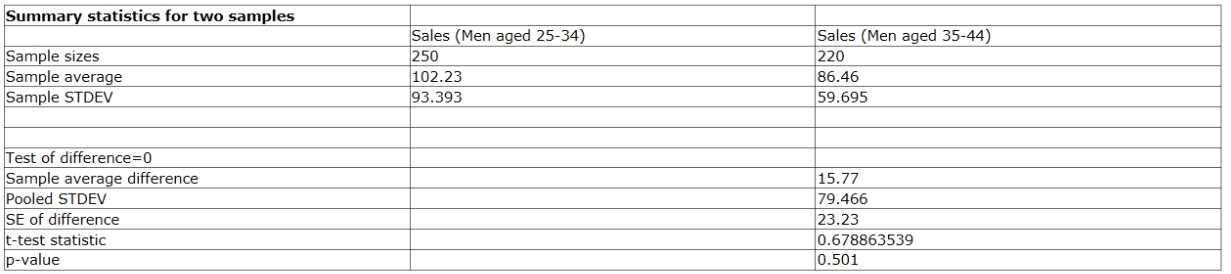
An analyst is interested on comparing two audiences: men, ages 25-34 and men, ages 35-44. The brand wants to know if the older male customers spend more money on average than the younger male customers. The analyst collected random samples of 250 older customers and 220 younger customers and analyzed their shopping baskets. On average, younger men spend $102.23, and older men spend $86.46. Additional statistics are shown below. Facebook Blueprint 200-101 question Which conclusion should the analyst make based on this data?
Options
23 comments in the community discussion
1
Agreed, it's A
1
A. the 90% level is stricter so you can't claim a difference.
Q: 3
An analyst analyzes 1,000 Facebook video campaigns and calculates there is a correlation of r = 0.6 between view duration of a campaign and additional ad recall lift. What should the analyst tell the company about the relationship between view duration and ad recall lift?
Options
28 comments in the community discussion
4
Makes sense to pick D for this one
4
Its D. With r = 0.6, r squared is 0.36, so 36%, but the closest match is option D at 40%. I think they rounded it up in the answer options. Agree?
Q: 4
A travel company wants to know if it gets additional conversions by relying only on its direct response strategies, as opposed to combining each strategy with branding campaigns. The company continuously keeps track of each strategy's performance, but it measures them separately. Also, each strategy's measurement has its own KPI. These are the latest results: • Branding campaigns: • A benchmark of 35 Brand Lift tests, SI.70 USD per additional ad recaller • An average of 125 conversions per campaign • Direct response campaigns: ; A benchmark of 20 Lift tests, $2.50 USD per Conversion Lift - An average of 370 conversions per campaign What should the company do to test if it gets more incremental conversions from relying only on direct response strategies?
Options
22 comments in the community discussion
6
Makes sense to pick C, since running both strategies at the same time and comparing conversion numbers gives a clear picture. That's usually how you'd directly measure incremental conversions in practice. Official guides point toward testing concurrently for real-world impact. Thoughts if anyone used a different method
2
C , had something like this in a mock. Running both strategies side by side is what actually shows you the incremental effect. Not 100% but that's how most FB Blueprint stuff frames these test scenarios.
Q: 5
A beverage brand plans to launch a World Cup campaign to generate awareness across digital, TV and print. It recently ran a marketing mix model to determine the performance of this campaign. The analysis proved that the campaign resulted in a lift in sales. Due to the high cost of World Cup ads, the ROI was $0.15, which is below their historical norms for campaigns. How should the analysis help contextualize the results?
Options
30 comments in the community discussion
1
Option A
1
A tbh
Q: 6
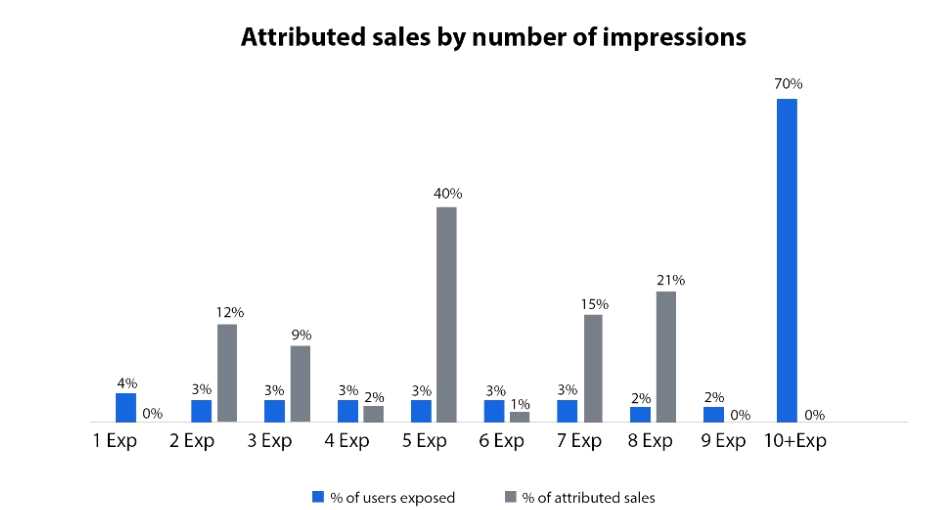
A snack retailer runs an eight-week video campaign with attributed sales. The campaign targets snack lovers, gamers, and millennials. The test results are as follows: Facebook Blueprint 200-101 question What should the company test using experimental design to improve efficiency in number of exposures?
Options
23 comments in the community discussion
6
A. Swapping ad formats can change how many exposures you get for the same budget. That’s what experimental design is for. Agree?
5
Option A since if the format changes, exposure efficiency could shift a lot. If budget or audience were capped, it’d be different.
Q: 7
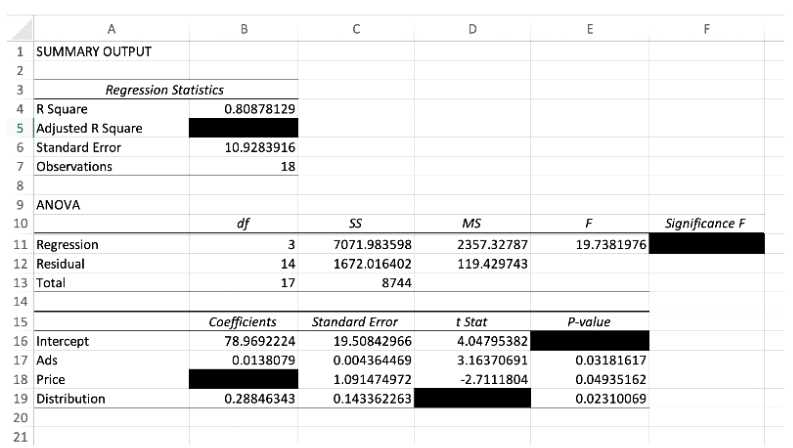
A marketing effectiveness analyst based in an emerging market obtains the following multiple linear regression output for predicting sales as function of price (Price), distribution (Distribution) and advertising (Ads). Some issues occurred with the software, and some of the regression results are corrupted on the output. Facebook Blueprint 200-101 question What interpretation should be made from the output?
Options
33 comments in the community discussion
5
Option A. C is tempting but the output doesn't show adjusted R square. The trap is thinking you can see more details than you actually can with the corrupted output. I've seen this in similar practice sets.
2
Its C. That adjusted R square range looks reasonable for a multiple regression in marketing, especially with those predictors. Saw a lot of practice sets use 0.8+ for model fits. I get A is tempting since the sign thing is clear, but sometimes those outputs throw curveballs if stats are missing. Let me know if I'm misr
Q: 8
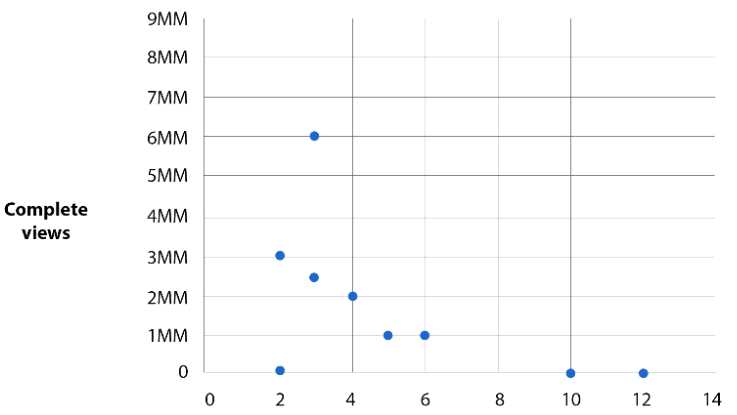
A brand that has traditionally focused on TV campaigns has recently started advertising on digital channels like Facebook and YouTube. The brand manager has advised the company to invest in developing mobile-optimized creative and that its TV ads are too long to perform well online. A post-campaign analysis was run to assess the relationship between complete video views and video duration in order to make the case that videos with shorter duration tend to achieve a greater number of complete views. This scatter plot demonstrates the findings of the analysis. Facebook Blueprint 200-101 question How many of these data points are likely to skew the findings of this analysis?

Options
20 comments in the community discussion
1
Option B
1
Maybe D. Had something like this in a mock, and it was 3 points skewing the results.
Q: 9
A beauty brand notices an increase in consumer demand for organic beauty products and wants to increase sales with its current budget. Its media spend is across four media channels with equal budget allocation. The company buys two target audiences. One audience is a demographic target audience, ages 25-35. The other audience is a behavioral target audience of people who have expressed interest in organic beauty products. This beauty brand gives credit for a conversion when one of these high-intent consumers is served an ad and clicks the ad. The analyst recommends shifting the total budget to the demographic target audience. What is a possible reason for this recommendation? Facebook Blueprint 200-101 question
Options
22 comments in the community discussion
4
Option A makes sense based on CPA logic. Nice clear scenario, saw something similar on a practice exam.
2
Makes sense to pick A for this. If the analyst suggests reallocating budget, it's probably because the demographic group gets a lower cost per extra conversion so more bang for the buck. Pretty standard approach, but correct me if I'm missing something.
Q: 10
An analyst reviews Conversion Lift test results mid-flight and has the option to take action immediately. The conversion cycle for this advertiser is 14 days, and the advertiser is running a multi- cell Conversion Lift test with equal budgets between both cells: • Strategy A: Auction buying; Automatic Placements • Strategy B: Auction buying; Facebook News Feed only After the first day, the results are as follows: • Strategy A: Automatic Placements: 12 conversions • Strategy B: Facebook News Feed only: 14 conversions What should the analyst recommend?
Options
18 comments in the community discussion
2
C or D? Only one day in and not sure you can call it yet.
1
Option C seems right, but I'm not totally sure since it's only day one and that 14-day conversion cycle makes things tricky. Official guides and practice tests mention reallocating budget mid-test, but I'd double-check that with real test scenarios. Anyone else read it differently?
Q: 11

An ecommerce brand runs a multi-cell Conversion Lift test. The brand needs to determine if bidding in the Facebook auction based on user value calculated from its LTV model versus demographic targeting improves performance by 10%. The p-value for the test is calculated as p = 0.95. How should the analyst interpret bidding based on user value?

Options
29 comments in the community discussion
2
No, not C here. B fits since with p = 0.95, you can't claim a 10% effect from user value bidding.
1
Its B for sure. With that high p-value (0.95), there's no statistical significance-so you can't claim the 10% lift is due to bidding based on user value. Pretty sure stats rules back this up, but happy if anyone disagrees.
Q: 12
A small retailer wants to measure the impact of its Facebook campaigns on in-store sales. The company operates a store in a local city with most customers within a 10-mile radius. What measurement solution should it use?
Options
21 comments in the community discussion
1
D , even though it's usually for big brands, the exam seems to want Marketing Mix Modeling for overall in-store impact. Not totally confident since for just one store C could fit too. Anyone disagree?
1
D, encountered exactly similar question in my exam. Marketing Mix Modeling is what they wanted for overall in-store impact tracking, even for small retailers.
Q: 13

A spa wants to increase awareness of its package holiday deals internationally. It has been investing heavily in influencer marketing and social media campaigns. Its most popular influencer recently posted a video about the retreat that received 500,000 likes in the first day. The spa gained more than 3,000 new followers on its Instagram account. Given the outcome of this organic post, the spa decides to pull their paid social media campaigns because this spend generates only a quarter of the engagement compared to influencer posts. What advice should the analyst share about measuring success in this way? from paid campaigns.

Options
24 comments in the community discussion
2
D imo. Shares can be tempting to chase but real business value doesn't always follow big engagement numbers. I think the trap here is focusing only on likes/followers without considering sales or brand impact.
1
Had something like this in a mock, pretty sure C since shares boost organic reach more directly than likes or comments.
Q: 14
An analyst for a primarily brick-and-mortar retailer is reviewing measurement results from the last half for all marketing. The media plan was 50% TV spend, with some Facebook (10%), search (10%), print (10%), and radio (20%). No solution provides the same numbers for a single point in time. The analyst needs to recommend how to allocate budget across channels to maximize sales for the next business quarter. Which measurement solution should be the primary source of the analyst's recommendation?
Options
29 comments in the community discussion
1
Why is no one mentioning how Marketing Mix Models take into account all those offline spends like TV and print? Feels like only A gives the full picture, since C or D would miss half the data.
1
I get why some people might consider C, but it doesn't handle offline channels like print and radio, which are a big chunk here. Marketing mix model (A) is designed to evaluate both online and offline spend across the entire media plan. Pretty sure A is best for this scenario, but let me know if I'm missing somethin
Q: 15
An advertiser wants to know whether campaign strategy A had significantly different performance than campaign strategy B in terms of additional sales. The campaigns both ran at the same time against mutually exclusive portions of the advertiser's customer base. What is the null hypothesis of the test design?
Options
30 comments in the community discussion
4
Option C. had exactly this on my exam. Confirms what I saw.
2
C
Question 1 of 20

Premium Access Includes

  • Quiz Simulator
  • Exam Mode
  • Progress Tracking
  • Question Saving
  • Flash Cards
  • Drag & Drops
  • 3 Months Access
  • PDF Downloads
Get Premium Access
Scroll to Top

FLASH OFFER

Days
Hours
Minutes
Seconds

avail 10% DISCOUNT on YOUR PURCHASE