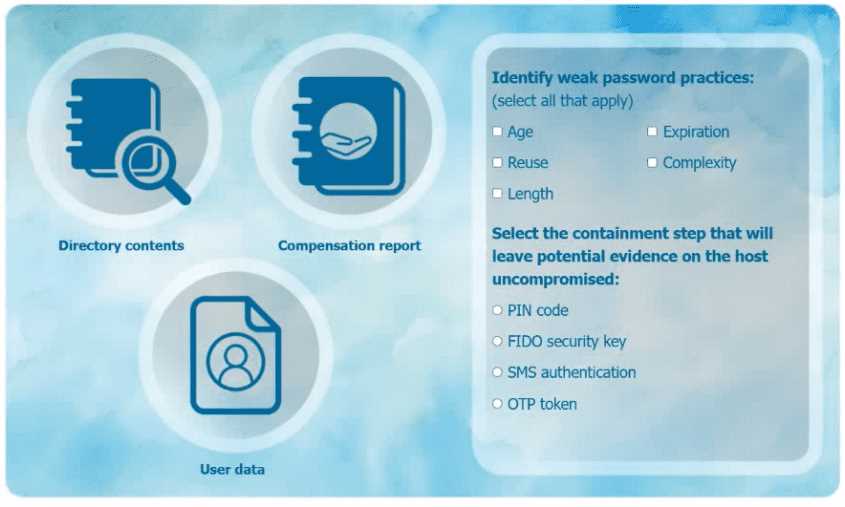
The options provided represent common characteristics of weak passwords. The Age and Expiration of a password relate to how long it has been in use, with a longer lifespan increasing its vulnerability to cracking. Reuse is a critical security flaw where a single compromised password can give an attacker access to multiple accounts. The Length and Complexity of a password directly affect its resistance to brute-force and dictionary attacks. A short password with low complexity is easily guessed or cracked by automated tools. All of these factors contribute to the overall weakness of a password and are considered poor security practices.
A FIDO security key provides a hardware-based, phishing-resistant form of authentication. Unlike PIN codes, SMS authentication, or OTP tokens, which rely on information or signals that can be intercepted or compromised remotely, a FIDO key requires physical possession and interaction. This method is a containment step because it immediately prevents unauthorized remote access to an account, effectively containing a potential breach. Because it operates independently and doesn't involve altering the host system's configuration or data, it leaves the potential evidence on the host uncompromised, allowing for subsequent forensic analysis.