
Q: 2
Refer to the exhibit.
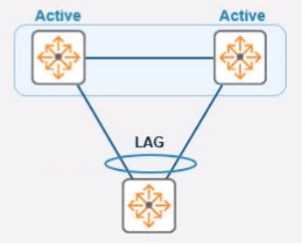 In the given topology, a pair of Aruba CX 8325 switches are in a VSX stack using the active gateway
What is the nature and behavior of the Virtual IP for the VSX pair if clients are connected to the
access switch using VSX as the default gateway?
In the given topology, a pair of Aruba CX 8325 switches are in a VSX stack using the active gateway
What is the nature and behavior of the Virtual IP for the VSX pair if clients are connected to the
access switch using VSX as the default gateway?
In the given topology, a pair of Aruba CX 8325 switches are in a VSX stack using the active gateway
What is the nature and behavior of the Virtual IP for the VSX pair if clients are connected to the
access switch using VSX as the default gateway?Options
Discussion
Had something like this in a mock. in other practice sets and option B fits since the Virtual IP is meant to float between the VSX switches if one fails. That's the whole point of active gateway in this Aruba setup: seamless failover for clients. I think this matches what the exam wants, but let me know if you see a different angle.
Maybe C. Since both switches participate in VSX active gateway, I'd expect the Virtual IP to be usable through both devices in steady state. Feels like a common trap, though, since failover is also important. Not totally convinced but C seemed closest at first glance. Anyone see it this way?
B
B saw a similar scenario from labs and B is what you'd be expected to pick.
B but only if they're actually asking about failover, not just steady-state. With VSX active gateway, the VIP floats so B matches. If you interpret "nature" as purely steady-state, could see confusion with C.
Yeah, B makes sense. The virtual IP is designed to float over to the secondary switch if the primary goes down, so clients keep their default gateway without even noticing a change. That’s basically the point of using an active gateway in a VSX setup. Pretty sure that’s what Aruba doc examples show too, but happy to hear counterpoints.
Its D for me. The SVI IP gets synced across both switches using VSX so both can take over if needed, that's what the active gateway is about. I think B is close but I remember Aruba docs talking about the SVI sync part specifically, maybe I'm missing something though.
D
B here, had something similar in a mock. The virtual IP floats so clients won't lose gateway during a switch failure. Not totally sure but the floating VIP is the key behavior they look for.
B tbh. C looks tempting since it mentions "active on both" but exam guides for VSX always point to the VIP floating between switches in a failover, not being simultaneously active. If anyone has seen an Aruba question where D fits, happy to be corrected.
Be respectful. No spam.
