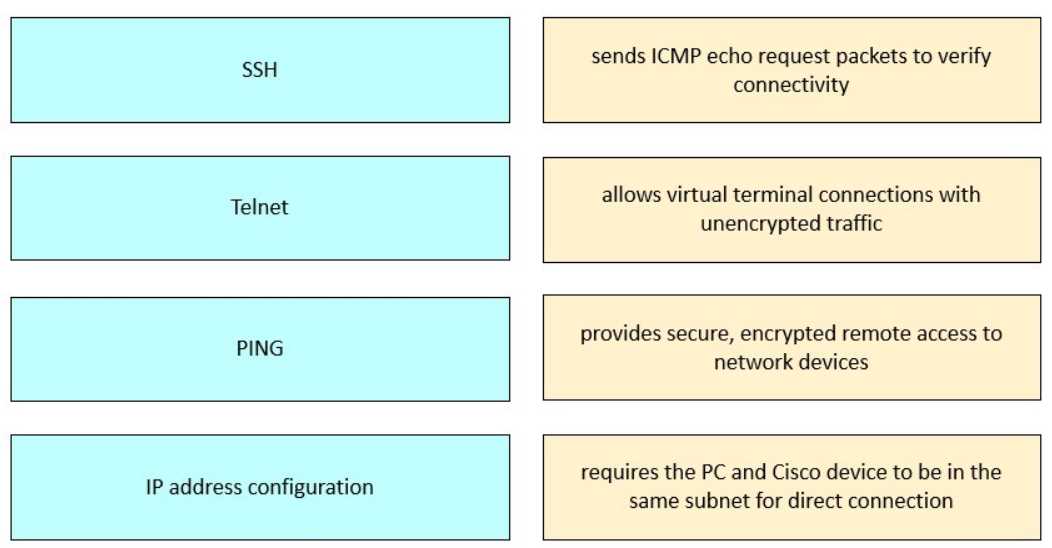
PING → Sends ICMP echo request packets to verify connectivity Telnet → Allows virtual terminal connections with unencrypted traffic SSH → Provides secure, encrypted remote access to network devices IP address configuration → Requires the PC and Cisco device to be in the same subnet for direct connection These tools and their functions are covered under “Device Configuration and Verification” in the FLDTEC course: PING: Utilized to test basic network connectivity using ICMP echo request/reply messages. It confirms whether a device is reachable and measures the round-trip time. Telnet: A protocol that allows for remote device access but transmits data in plaintext, which makes it insecure. It's typically disabled by default on modern Cisco devices due to security concerns. SSH (Secure Shell): Replaces Telnet as the preferred method for secure CLI access. It encrypts the session, protecting sensitive information such as login credentials. IP Address Configuration: For direct device access via the same local network, both the PC and the Cisco device must be in the same subnet. This allows the use of tools like browser-based GUIs or terminal emulators when connecting directly.