Free Data Management Foundations Practice Test Questions and Answers (2026)

What's covered in this practice questions set
4: Data Querying · 5 questions
📖 About this Domain
This domain focuses on retrieving data from relational databases using Structured Query Language (SQL). You will learn the syntax and structure for writing queries to extract and manipulate data. Core concepts include SELECT statements, filtering, joining tables, and data aggregation.
🎓 What You Will Learn
- You will learn to write SELECT statements to retrieve data from single or multiple tables.
- You will learn to filter data using the WHERE clause and comparison operators.
- You will learn to combine data from related tables using various JOIN types like INNER and LEFT JOIN.
- You will learn to use aggregate functions with the GROUP BY clause to summarize data.
🛠️ Skills You Will Build
- You will build the skill to write SQL queries to answer specific business questions.
- You will build the ability to filter large datasets to isolate specific information using logical conditions.
- You will build competency in joining multiple tables to create comprehensive result sets.
- You will build proficiency in using aggregate functions for data analysis and reporting.
💡 Top Tips to Prepare
- Practice extensively in the ZyBooks labs to master SQL syntax and query logic.
- Memorize the logical order of operations for SQL clauses: FROM, WHERE, GROUP BY, HAVING, SELECT, ORDER BY.
- Focus on understanding the differences between INNER, LEFT, and RIGHT JOINs and their use cases.
- Use the pre-assessment to identify and remediate weak areas in your understanding of SQL commands.
3: Relational Database Fundamentals · 4 questions
📖 About this Domain
This domain introduces the relational model, the theoretical foundation for relational database management systems (RDBMS). It covers the structure of data in relations, the use of keys to establish relationships, and the integrity constraints that ensure data consistency.
🎓 What You Will Learn
- You will learn the core terminology of the relational model, including relations, attributes, tuples, and domains.
- You will identify different types of keys, such as primary, candidate, and foreign keys, and their function in maintaining data integrity.
- You will understand the fundamental operations of relational algebra, like SELECT, PROJECT, and JOIN, which are the basis for data manipulation.
- You will learn the process of normalization up to Third Normal Form (3NF) to reduce data redundancy and avoid modification anomalies.
🛠️ Skills You Will Build
- You will build the skill to model data logically using tables, columns, and relationships.
- You will develop the ability to enforce entity integrity and referential integrity through the correct application of keys.
- You will gain the skill to formulate logical data retrieval strategies based on relational algebra principles.
- You will learn to design normalized database schemas that are efficient and maintain data integrity.
💡 Top Tips to Prepare
- Focus on mastering the definitions and differences between primary keys, foreign keys, and candidate keys.
- Practice identifying functional dependencies in data sets to correctly apply the rules for 1NF, 2NF, and 3NF.
- Use small, sample tables to manually walk through relational algebra operations to visualize how data is retrieved and combined.
- Memorize the two main integrity rules: entity integrity (ensured by primary keys) and referential integrity (ensured by foreign keys).
2: Data Modeling · 3 questions
📖 About this Domain
This domain covers the process of creating a data model for the data to be stored in a database. You will learn to visually represent database structures using diagrams and formal techniques. The focus is on designing well-structured, efficient relational databases by defining entities, attributes, and their relationships.
🎓 What You Will Learn
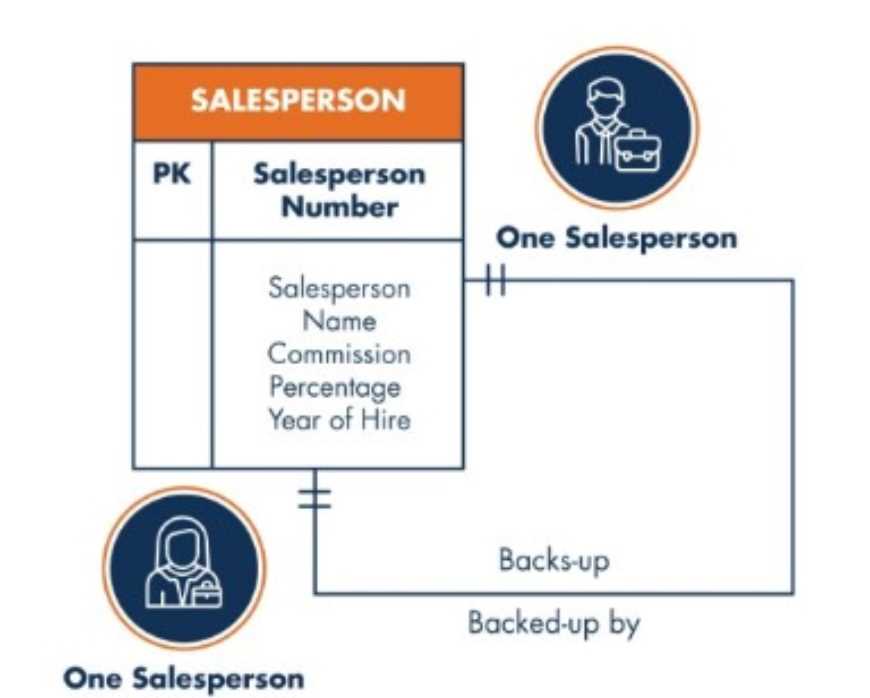
- How to use Entity-Relationship Diagrams (ERDs) to illustrate the logical structure of a database.
- The concepts of cardinality and modality to define the specific nature of relationships between entities.
- The process of normalization, specifically First (1NF), Second (2NF), and Third (3NF) Normal Forms, to eliminate data redundancy.
- The distinction and purpose of conceptual, logical, and physical data models in the database design lifecycle.
🛠️ Skills You Will Build
- Constructing ERDs using Crow's Foot notation to model business requirements.
- Applying normalization rules to decompose tables and create an efficient relational schema.
- Identifying and defining primary keys, foreign keys, and composite keys to enforce referential integrity.
- Translating a set of business rules into a logical data model ready for implementation.
💡 Top Tips to Prepare
- Master drawing ERDs; practice converting written scenarios into visual diagrams using Crow's Foot notation.
- Drill the rules for 1NF, 2NF, and 3NF until you can identify and resolve violations quickly.
- Pay close attention to the ZyBooks examples on cardinality and modality, as these are frequent OA question types.
- Understand the function of primary and foreign keys, as they are fundamental to relational modeling and normalization.
5: Data Management Systems · 2 questions
📖 About this Domain
This domain introduces the core components and functions of data management systems. You will learn about the architecture of a Database Management System (DBMS) and its role in managing the data lifecycle.
🎓 What You Will Learn
- You will learn to identify the primary components of a DBMS, including the query processor and storage manager.
- You will understand different system architectures like client-server and distributed database systems.
- You will explore transaction management concepts, focusing on the ACID properties for data integrity.
- You will learn about physical data storage and the function of indexing for efficient data retrieval.
🛠️ Skills You Will Build
- You will build the skill to differentiate between various data management system architectures.
- You will be able to describe the function of key DBMS components in processing data requests.
- You will develop the ability to explain how transaction management ensures data consistency.
- You will gain the skill to analyze how indexing structures impact database query performance.
💡 Top Tips to Prepare
- Focus on the interaction between DBMS components; use architectural diagrams from the course material to study.
- Create flashcards for key terms like query processor, transaction manager, ACID, and B-tree.
- Practice applying ACID properties to transaction scenarios to understand their practical importance.
- Compare and contrast centralized, client-server, and distributed architectures in a study chart.
1: Data Management Fundamentals · 1 questions
📖 About this Domain
This domain introduces the core principles of data management. It establishes the distinction between data and information, the purpose of a database management system (DBMS), and the roles of data professionals.
🎓 What You Will Learn
- You will learn to differentiate between raw data, processed information, and the function of metadata.
- You will learn the fundamental purpose of a DBMS and its advantages over traditional file systems.
- You will learn to identify the responsibilities of key data professionals like database administrators (DBAs).
- You will learn the basic differences between operational (OLTP) and analytical (OLAP) databases.
🛠️ Skills You Will Build
- You will build the skill to articulate the core principles of data management and its business importance.
- You will build proficiency in using fundamental data management terminology like DBMS, schema, and data integrity.
- You will build the skill to distinguish between different data-centric job roles and their functions.
- You will build the ability to differentiate database systems based on their primary use case.
💡 Top Tips to Prepare
- Master the vocabulary in the first sections of the course material, focusing on terms like DBMS and metadata.
- Review the official ZyBooks content for Unit 2, as it directly covers these foundational concepts.
- Understand the 'why' behind using a DBMS instead of flat-file systems for data management.
- Utilize the end-of-section quizzes to test your recall of fundamental definitions and concepts.