Free AZ-500 Practice Test Questions and Answers (2026)

Last Update Check
View Mode
Q: 1

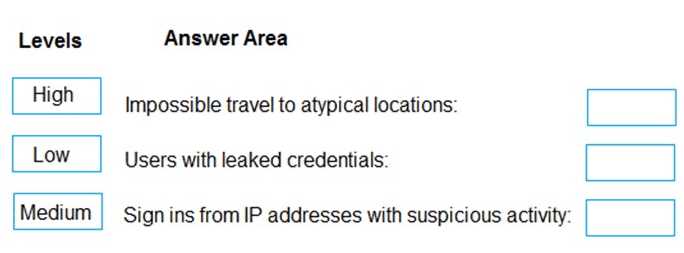
DRAG DROP You are implementing conditional access policies. You must evaluate the existing Azure Active Directory (Azure AD) risk events and risk levels to configure and implement the policies. You need to identify the risk level of the following risk events: Users with leaked credentials Impossible travel to atypical locations Sign ins from IP addresses with suspicious activity Which level should you identify for each risk event? To answer, drag the appropriate levels to the correct risk events. Each level may be used once, more than once, or not at all. You may need to drag the split bar between panes or scroll to view content. AZ-500 question
Drag & Drop
31 comments in the community discussion
6
Nah, I don’t think Impossible travel is Low risk here. Azure actually sets: Impossible travel to atypical locations: Medium, Users with leaked credentials: High (that's an easy trap for Medium), Sign ins from IP addresses with suspicious activity: Medium. Pretty sure this is the default mapping, but let me know if you
6
Impossible travel to atypical locations: Medium, Users with leaked credentials: High, Sign ins from IP addresses with suspicious activity: Medium
Q: 2

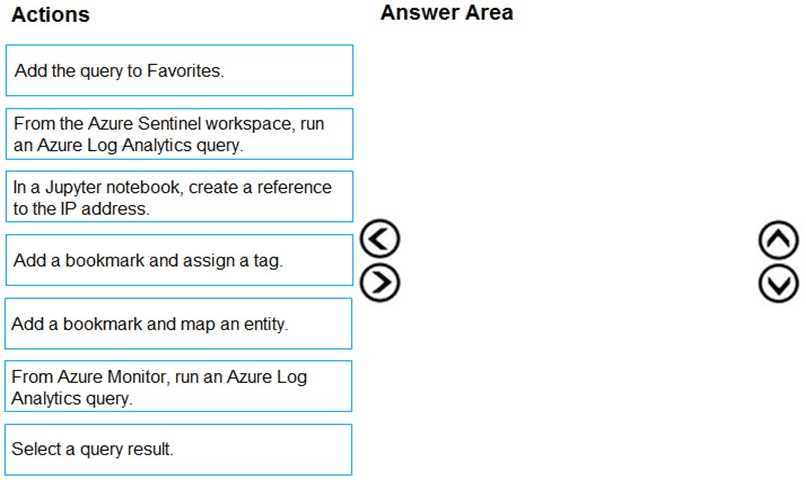
DRAG DROP You have an Azure Sentinel workspace that has an Azure Active Directory (Azure AD) data connector. You are threat hunting suspicious traffic from a specific IP address. You need to annotate an intermediate event stored in the workspace and be able to reference the IP address when navigating through the investigation graph. Which three actions should you perform in sequence? To answer, move the appropriate actions from the list of actions to the answer area and arrange them in the correct order. AZ-500 question

Drag & Drop
29 comments in the community discussion
6
Run query in Sentinel workspace → select result → add bookmark and map entity. Mapping the entity is critical since just tagging won’t let you reference the IP in the investigation graph. Easy to miss because tagging or 'add to Favorites' feel like annotation, but for graph navigation you’ve gotta map the entity. Prett
5
From Sentinel workspace run Log Analytics query, select result, then add bookmark and map entity. Saw this sequence in a mock.
Q: 3

You have an Azure subscription that contains an Azure App Services web app named WebApp1. WebApp1 is accessed by users in multiple Azure regions. You need to secure access to WebApp1. The solution must meet the following requirements:

* Protect against common web vulnerabilities.

* Optimize the routing of traffic from different regions.

What should you use?

Options
40 comments in the community discussion
3
D . Azure Front Door Premium handles both global load balancing and has integrated WAF, so it checks the boxes for security and optimized routing across regions. A is tricky since App Gateway gives WAF, but it's more regional, not global. CDN (B) won't give you full WAF coverage for web app vulnerabilities. Open to pus
1
This looks like one from my exam last year, on the official practice test, pretty sure it's D. If you want more on this, check the Microsoft docs and run through some lab scenarios.
Q: 4

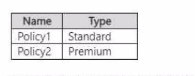
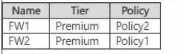
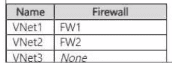
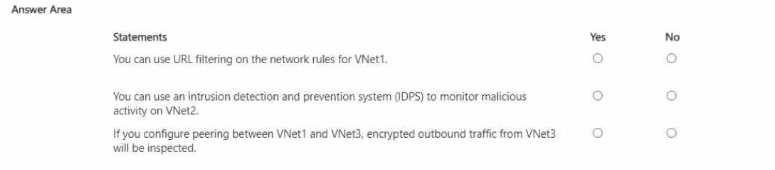
HOTSPOT You have an Azure subscription that contains the Azure Firewall policies shown in the following table. AZ-500 question The subscription contains the firewalls shown in the following table. AZ-500 question The subscription contains the virtual networks shown in the following table. AZ-500 question For each of the following statements, select Yes if the statement is true. Otherwise, select No. AZ-500 question
Your Answer
38 comments in the community discussion
6
No, Yes, No
5
No, Yes, No. URL filtering can't be done with network rules (has to be application rules), and only premium supports IDPS so VNet2 is covered there. Encrypted traffic isn't inspected just by peering VNets, you need proper routing plus TLS inspection configured. Think that's accurate but I'm open to corrections.
Q: 5

You have an Azure AD tenant. You plan to implement an authentication solution to meet the following requirements:

• Require number matching.

• Display the geographical location when signing in.

Which authentication method should you include in the solution?

Options
38 comments in the community discussion
2
Option C is the way to go. Had something like this in a mock, and Microsoft Authenticator is the only one that does both number matching and shows the sign-in location info. SMS, TAP, and FIDO2 don't hit both requirements. Pretty sure on this but open to corrections!
2
Option C TAP (B) is tempting but it doesn't provide number matching or show geo info, unlike Authenticator.
Q: 6

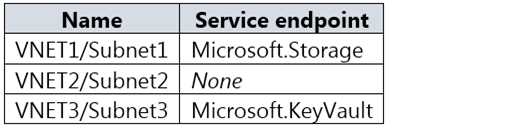
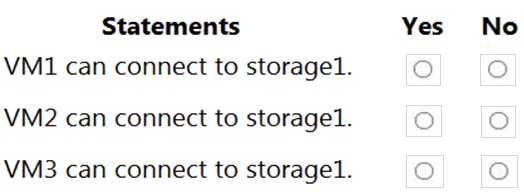
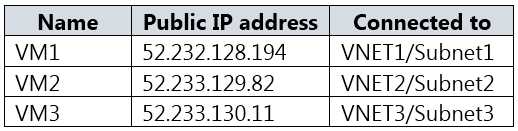
HOTSPOT You have an Azure subscription that contains a storage account named storage1 and several virtual machines. The storage account and virtual machines are in the same Azure region. The network configurations of the virtual machines are shown in the following table. AZ-500 question The virtual network subnets have service endpoints defined as shown in the following table. AZ-500 question You configure the following Firewall and virtual networks settings for storage1: Allow access from: Selected networks Virtual networks: VNET3\Subnet3 Firewall – Address range: 52.233.129.0/24 For each of the following statements, select Yes if the statement is true. Otherwise, select No. AZ-500 question
Your Answer
46 comments in the community discussion
6
NO, YES, NO
6
NO, YES, NOPretty sure about this since VM2’s public IP matches the allowed range in the storage firewall, while VM1 and VM3 aren't included in the permitted subnet rules. Real exam questions like this show up a lot. Official docs and practice sets cover these scenarios well.
Q: 7

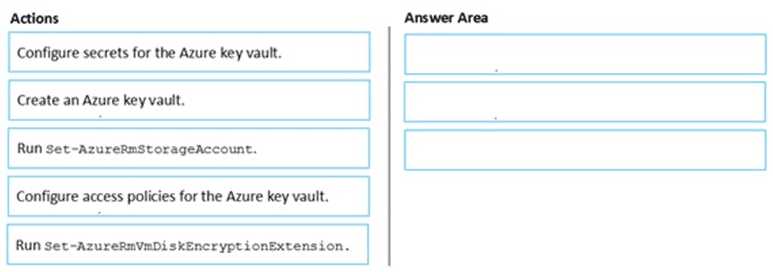
DRAG DROP Note: This question is part of a series of questions that present the same scenario. Each question in the series contains a unique solution that might meet the stated goals. Some question sets might have more than one correct solution, while others might not have a correct solution. After you answer a question in this section, you will NOT be able to return to it. As a result, these questions will not appear in the review screen. You have an Azure Subscription named Sub1. Sub1 contains an Azure virtual machine named VM1 that runs Windows Server 2016. You need to encrypt VM1 disks by using Azure Disk Encryption. Which three actions should you perform in sequence? To answer, move the appropriate actions from the list of actions to the answer area and arrange them in the correct order. AZ-500 question

Drag & Drop
40 comments in the community discussion
6
Yeah, this follows the Microsoft docs order. First set up the key vault, then configure access policies so the VM can actually use it, finally run the Set-AzureRmVmDiskEncryptionExtension to trigger encryption. Seen this sequence in similar exam questions, pretty sure it's what they expect. Anyone see another combo
5
Create an Azure key vault → configure access policies for the key vault → run Set-AzureRmVmDiskEncryptionExtension. You need to grant the VM access before running the extension, not set secrets unless it's BYOK. Some might mix up the secrets step here.
Q: 8
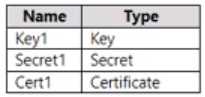
You have an Azure key vault named Vault1 that stores the resources shown in following table. AZ-500 question Which resources support the creation of a rotation policy?
Options
36 comments in the community discussion
9
Option C right? I remember rotation policy is only for keys and secrets, not certs. Can someone confirm if that's correct?
2
C . In Azure Key Vault, only keys and secrets let you set a real rotation policy. Certificates have lifetime actions for renewal but that's technically not a "rotation policy" per MS docs. Seen similar qs on practice tests, always tripped up by the terms.
Q: 9

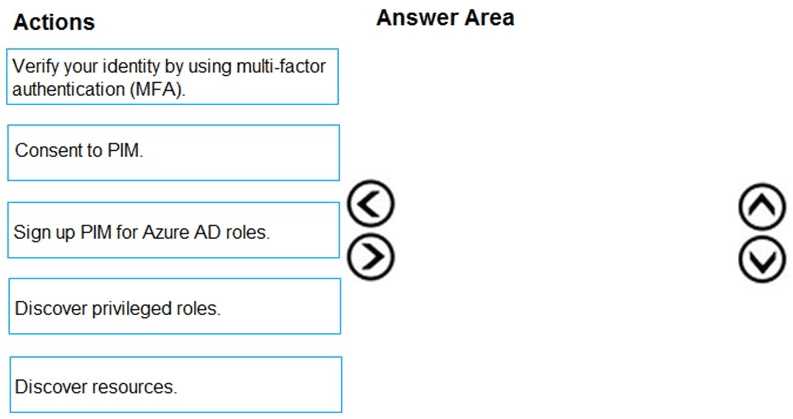
DRAG DROP You create an Azure subscription. You need to ensure that you can use Azure Active Directory (Azure AD) Privileged Identity Management (PIM) to secure Azure AD roles. Which three actions should you perform in sequence? To answer, move the appropriate actions from the list of actions to the answer area and arrange them in the correct order. AZ-500 question

Drag & Drop
43 comments in the community discussion
6
Yeah, this follows the typical onboarding in the portal for a fresh subscription. Consent to PIM first so tenant permissions are set, then you're hit with MFA prompt to prove admin identity, finally sign up PIM to manage Azure AD roles. Practice labs and official docs both show this sequence, pretty sure it's still
5
Consent to PIM, then verify with MFA, finally sign up PIM for roles.
Q: 10
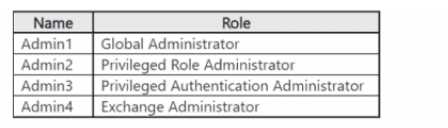
You have a Microsoft Entra tenant that uses Microsoft Entra Permissions Management and contains the accounts shown in the following table: AZ-500 question Which accounts will be listed as assigned to highly privileged roles on the Azure AD insights tab in the Entra Permissions Management portal?

Options
40 comments in the community discussion
3
D . User Admin isn't flagged as highly privileged in the Insights tab, so Admin4's out. Only Global Admin, Privileged Role Admin, and Security Admin show up from my experience. Pretty sure this matches how it works now, but open to corrections.
2
D , User Admin isn’t counted as "highly privileged" for this tab, so Admin4 gets excluded.
Q: 11
You have an Azure subscription that contains an app named App1. App1 has the app registration shown in the following table. AZ-500 question You need to ensure that App1 can read all user calendars and create appointments. The solution must use the principle of least privilege. What should you do?
Options
9 comments in the community discussion
2
Not A. It's B since you need Application permission for the app to access all user calendars, not just the signed-in user's. Delegated only works when a user is present, so that's a common trap here. I think B is correct but open to other opinions if I missed something.
1
B tbh, only Application permission gives that org-wide access for scheduling, so makes sense here.
Q: 12
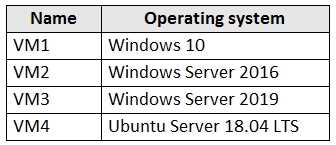
You have an Azure subscription that contains the Azure virtual machines shown in the following table. AZ-500 question You create an MDM Security Baseline profile named Profile1. You need to identify to which virtual machines Profile1 can be applied. Which virtual machines should you identify?
Options
8 comments in the community discussion
5
Option A. Had something like this in a mock. Only VM1 can get the MDM Security Baseline because it's Windows 10 and Azure AD joined, which is what's required for Intune management. Pretty sure that's the intent but happy to hear other takes.
1
C is not it, has to be A. Only VM1 meets the requirements for MDM Security Baseline with Intune management here.
Q: 13

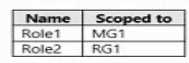
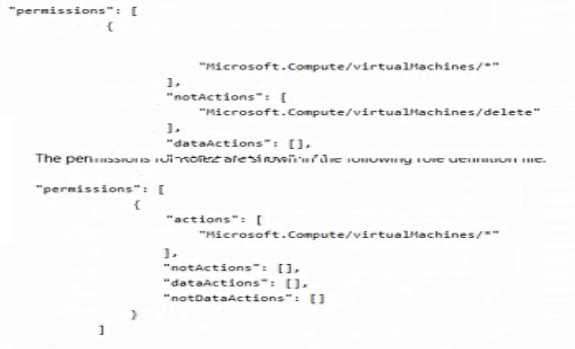
HOTSPOT You have a management group named MG1 that contains an Azure subscription and a resource group named RG1. RG1 contains a virtual machine named VM1. You have the custom Azure roles shown in the following table. AZ-500 question The permissions for Role1 are shown in the following role definition file. AZ-500 question You assign the roles to the users shown in the following table. AZ-500 question For each of the following statements, select Yes if the statement is true. Otherwise, select No AZ-500 question
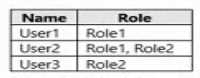

Your Answer
13 comments in the community discussion
7
NO, NO, YES. Saw similar question on exam reports, notActions always overrides.
5
This matches what I’ve seen on practice tests: NO, NO, YES. The notActions in Role1 block the delete even if another role allows it. Pretty sure that’s how Azure RBAC works, but let me know if anyone found otherwise.
Q: 14
Note: The question is included in a number of questions that depicts the identical set-up. However, every question has a distinctive result. Establish if the solution satisfies the requirements. Your company has an Active Directory forest with a single domain, named weylandindustries.com. They also have an Azure Active Directory (Azure AD) tenant with the same name. You have been tasked with integrating Active Directory and the Azure AD tenant. You intend to deploy Azure AD Connect. Your strategy for the integration must make sure that password policies and user logon limitations affect user accounts that are synced to the Azure AD tenant, and that the amount of necessary servers are reduced. Solution: You recommend the use of federation with Active Directory Federation Services (AD FS). Does the solution meet the goal?
Options
8 comments in the community discussion
B, not A
B vs A, because AD FS definitely adds more servers which doesn't fit the "reduce servers" part, even if it controls password policy. That extra infrastructure is a common trap. Pretty sure B is what they're looking for, but open to other takes.
Q: 15

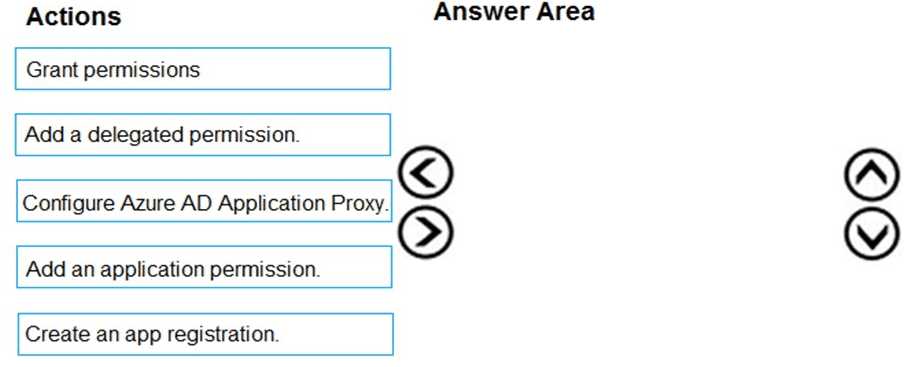
DRAG DROP Your company has an Azure Active Directory (Azure AD) tenant named contoso.com. The company is developing an application named App1. App1 will run as a service on server that runs Windows Server 2016. App1 will authenticate to contoso.com and access Microsoft Graph to read directory data. You need to delegate the minimum required permissions to App1. Which three actions should you perform in sequence from the Azure portal? To answer, move the appropriate actions from the list of actions to the answer area and arrange them in the correct order. AZ-500 question

Drag & Drop
9 comments in the community discussion
6
Create an app registration, add an application permission, grant permissions. Love how clear the sequence is in this setup.
2
Nice typical exam flow from practice tests: Create app registration, add application permission, grant permissions. Official docs show this exact order too.
Q: 16
From Azure Security Center, you need to deploy SecPol1. What should you do first?
Options
12 comments in the community discussion
5
B . You gotta set the management group first, otherwise you can't assign SecPol1 to anything meaningful. Seen this step called out in a bunch of official guides and labs, pretty sure it's the right starting point.
1
Does anyone know if the question says there's already a management group? If so, would C (create an initiative) be next or are we missing something else in the requirements?
Q: 17

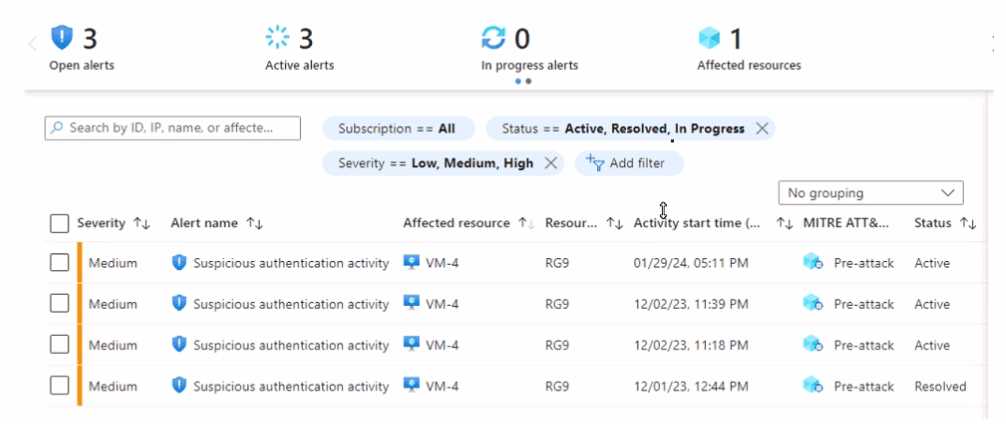
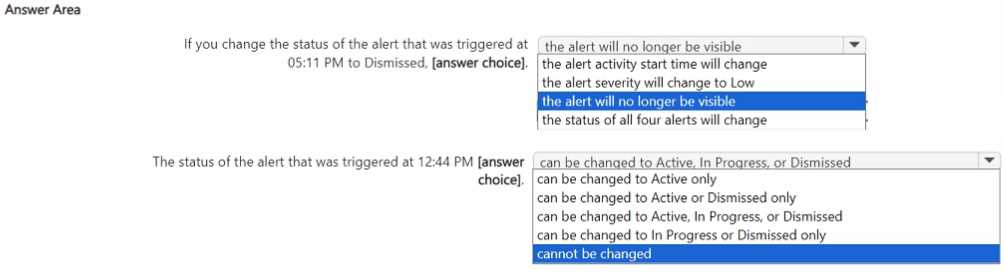
HOTSPOT You have an Azure subscription that uses Microsoft Defender for Cloud. Defender for Cloud has the security alerts shown in the following exhibit. AZ-500 question AZ-500 question

Your Answer
10 comments in the community discussion
5
Just to clarify, does dismissing the 05:11 PM alert make it totally disappear from the default view in Defender for Cloud?
4
If you dismiss the 05:11 PM alert, it won't show up in the default list anymore. Nice clear screenshots for this one.
Q: 18
You have a Microsoft 365 E5 subscription. You have an Azure subscription that uses Microsoft Defender for Cloud. You have an on-premises datacenter that contains the servers shown in the following table. You enable direct onboarding to Microsoft Defender for Cloud. Which servers will be onboarded to Defender for Cloud?
Options
13 comments in the community discussion
5
Option C, Server3 is the only one that meets Microsoft's supported OS list for direct onboarding, since Server1 and Server2 don't fit those criteria. I checked recent docs and nothing changed there.
1
C Only Server3 qualifies for direct onboarding since that's the only supported OS version right now. Pretty sure Microsoft hasn't expanded it yet, let me know if I'm wrong.
Q: 19

DRAG DROP You have an Azure subscription that contains an Azure web app named Appl. You plan to configure a Conditional Access policy for Appl. The solution must meet the following requirements:

• Only allow access to App1 from Windows devices.

• Only allow devices that are marked as compliant to access Appl.

Which Conditional Access policy settings should you configure? To answer, drag the appropriate settings to the correct requirements. Each setting may be used once, more than once, or not at all. You may need to drag the split bar between panes or scroll to view content. AZ-500 question

Drag & Drop
12 comments in the community discussion
5
Saw almost this exact match on a recent exam. Conditions maps to restricting by Windows device, Grant for requiring compliance.
4
Yeah, this matches what I've seen: Conditions for the Windows device restriction and Grant for requiring compliant devices. That's how you'd set it up in Azure Conditional Access, I think. Anyone disagree?
Q: 20

DRAG DROP You have an Azure subscription. You plan to create two custom roles named Role1 and Role2. The custom roles will be used to perform the following tasks:

• Members of Role1 will manage application security groups.

• Members of Role2 will manage Azure Bastion.

You need to add permissions to the custom roles. Which resource provider should you use for each role? To answer, drag the appropriate resource providers to the correct roles. Each resource provider may be used once, more than once, or not at all. You may need to drag the split bar between panes or scroll to view content AZ-500 question

Drag & Drop
8 comments in the community discussion
6
Both should be mapped to Microsoft.Network since ASGs and Bastion are networking resources. Makes sense given their resource scopes.
4
This one's super clear, nice! Both Role1 (ASG management) and Role2 (Azure Bastion) use resources under Microsoft.Network. So, map Microsoft.Network to both roles here-makes sense since they're all networking features in Azure.
Question 1 of 20

Premium Access Includes

  • ✓Quiz Simulator
  • ✓Exam Mode
  • ✓Progress Tracking
  • ✓Question Saving
  • ✓Flash Cards
  • ✓Drag & Drops
  • ✓3 Months Access
  • ✓PDF Downloads
Get Premium Access
Scroll to Top