Free RHIA Practice Test Questions and Answers (2026)

View Mode
Q: 1
When interviewing a candidate, which of the following questions is inappropriate to ask?
Options
Q: 2
Recurrent internal derangement of the left knee; diagnostic arthroscopy of the knee.
Options
Q: 3
A patient is undergoing hemodialysis for end-stage renal disease in the outpatient department of observation for several hours, at which time the patient is admitted to inpatient care for further workup. The cardiologist diagnoses the patient’s problem as unstable angina. What is the principal diagnosis for the acute hospital stay?
Options
Q: 4
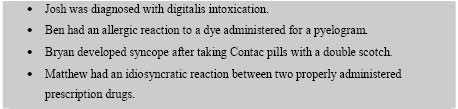
Four people were seen in v_ our emergency department yesterday. Which one will be coded as a poisoning? AHIMA RHIA question
Options
Q: 5
Home health agencies are reimbursed on a prospective payment system (PPS) for Medicare patients. This PPS is called
Options
Q: 6
Out of 2,543 records requested from the HIM Department, 2375 were located. What is the filing accuracy ratio?
Options
Q: 7
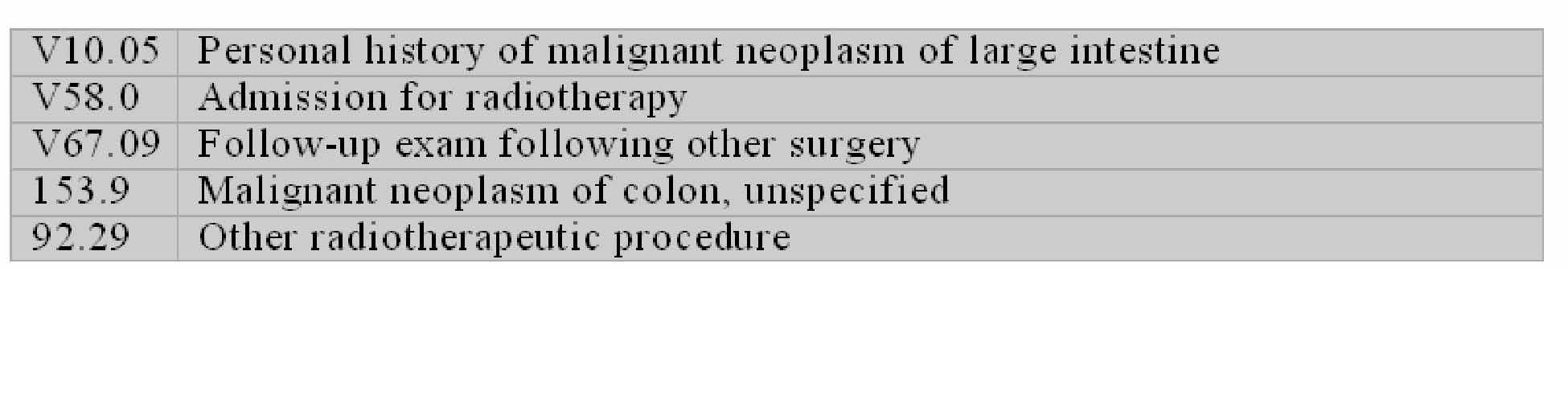
Mary had resection of the large bowel for carcinoma of the colon. She is admitted for further staging of her cancer and receives radiation therapy during this admission. AHIMA RHIA question
Options
Q: 8
Joint Commission does not approve of auto authentication of entries in a health record. The primary objection to this practice is that
Options
Q: 9
A basic concept of office layout and workflow is that the
Options
Q: 10
Which department will most likely be responsible for taking corrective action regarding following quality indicator? AHIMA RHIA question
Options
Q: 11
A 40-year-old female suddenly develops a painful rash. A visit to her physician reveals she has shingles. She is experiencing a great amount of anxiety and stress, so her physician prescribes medication for the shingles and for the anxiety that occurred as a reaction to the stress. AHIMA RHIA question
Options
Q: 12
These are assigned to every HCPCS/CPT code under the Medicare hospital outpatient prospective payment system to identify how the service or procedure described by the code would be paid.
Options
Q: 13
There are a limited number of late effect codes in ICD-9-CM. When coding a residual condition where there is no applicable late effect code, one should code
Options
Q: 14
The supervisor of retention and retrieval was receiving frequent complaints from the file clerks regarding the discharge clerk's job performance. The file clerks stated it was becoming difficult to maintain their productivity levels because the discharge clerk was not processing the requisition slips in a timely manner. In order to get a clearer understanding of the situation, the supervisor asked the file clerks and the discharge clerk to complete a task list for a 2-week period. The supervisor is constructing a
Options
Q: 15
Strong lateral relationships within a facility are most likely when
Options
Q: 16
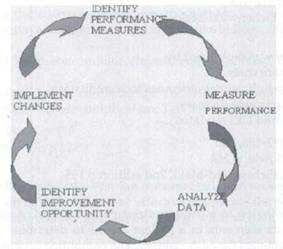
Your facility has been working to develop a strong performance improvement model and, have come up with the model shown .They ask if you see anything missing from model. You tell them they AHIMA RHIA question
Options
Q: 17
Which of the following best describes the situation of a provider who agrees to accept assignment for Medicare Part B services?
Options
Q: 18
Your job description states that as Assistant Director of the Health Information Management Department, you will supervise day-to-day operations for the record processing, transcription, and release of information areas. What principle of management is described?
Options
Q: 19
Which of the following statements demonstrates a violation of protected health information?
Options
Q: 20
Which of the following is a valid ICD-9-CM principal diagnosis code?
Options
Question 1 of 20

What's covered in this practice questions set

1: Information Governance · 7 questions

📖 About this Domain

Information Governance establishes the strategic framework for managing information as a critical organizational asset. This domain focuses on the policies, standards, and strategy required to ensure the proper control and use of health data throughout its lifecycle. It is foundational to enterprise information management and compliance.

🎓 What You Will Learn

  • You will learn to apply AHIMA's Information Governance Principles for Healthcare (IGPHC) to ensure data accountability, integrity, and protection.
  • You will learn to define and implement roles such as data stewardship and data ownership within an IG program.
  • You will learn to manage the complete information lifecycle, from data creation and capture to secure archival or destruction.
  • You will learn to create and maintain an information asset inventory to classify and control organizational data.

🛠️ Skills You Will Build

  • You will build skills to develop and implement an enterprise-wide Information Governance framework aligned with organizational strategy.
  • You will build skills in conducting risk analysis of information assets to mitigate security and compliance vulnerabilities.
  • You will build skills to design and execute compliance audits that measure adherence to IG policies and external regulations.
  • You will build skills in data mapping and metadata management to improve data quality and interoperability.

💡 Top Tips to Prepare

  • Master the core concepts of AHIMA's Information Governance Principles for Healthcare (IGPHC) and the IG HealthRate model.
  • Clearly differentiate the scope and function of Information Governance versus the more tactical Data Governance.
  • Review the AHIMA Information Governance Adoption Model (IGAM) to understand implementation maturity levels.
  • Focus on scenario-based questions that test your ability to apply IG principles to real-world health information challenges.

5: Management and Leadership · 6 questions

📖 About this Domain

Domain 5 evaluates your knowledge of managing HIM operations and leading personnel. It integrates principles of human resources, financial management, and strategic planning within the healthcare environment. Competency in resource management and organizational leadership is the core focus.

🎓 What You Will Learn

  • Manage human capital through recruitment, training, performance evaluation, and adherence to labor laws like FLSA and FMLA.
  • Execute financial management tasks including budget formulation, variance analysis, and oversight of the revenue cycle management (RCM) continuum.
  • Implement strategic planning using tools like SWOT analysis, develop operational plans, and manage projects with established methodologies.
  • Apply leadership theories, direct change management processes, and uphold ethical standards for enterprise-wide communication and governance.

🛠️ Skills You Will Build

  • Develop proficiency in resource allocation, including capital budgeting, human resource planning, and supply chain management.
  • Build competency in operational oversight through workflow redesign, productivity monitoring, and quality control implementation.
  • Acquire skills in strategic analysis by conducting environmental scans, formulating departmental goals, and aligning with organizational vision.
  • Cultivate leadership capabilities for team development, conflict resolution, and steering organizational change initiatives.

💡 Top Tips to Prepare

  • Drill down on financial management concepts, particularly operational and capital budgeting processes and revenue cycle key performance indicators (KPIs).
  • Commit key federal labor laws (ADA, FMLA, OSHA) to memory and understand their direct application to HIM department staffing.
  • Practice applying strategic management frameworks like SWOT and PESTLE to case-study scenarios common in healthcare.
  • Differentiate between management functions and leadership theories and be prepared to identify appropriate styles for given situations.

4: Revenue Management · 4 questions

📖 About this Domain

This domain covers key concepts related to 4: Revenue Management.

🎓 What You Will Learn

  • Core concepts of 4: Revenue Management
  • Best practices and implementation
  • Real-world application scenarios

🛠️ Skills You Will Build

  • Technical proficiency in 4: Revenue Management
  • Problem-solving abilities
  • Practical implementation skills

💡 Top Tips to Prepare

  • Review official documentation and study guides
  • Practice with hands-on exercises
  • Focus on understanding core principles

2: Compliance with Uses and Disclosures of PHI · 3 questions

📖 About this Domain

This domain covers the legal framework for Protected Health Information (PHI) management. It emphasizes the application of HIPAA, HITECH, and state statutes governing PHI use and disclosure. Core competencies include managing patient rights and ensuring organizational compliance.

🎓 What You Will Learn

  • Apply the HIPAA Privacy Rule to operational scenarios involving the use and disclosure of PHI.
  • Validate and process authorizations for release of information (ROI) according to federal and state laws.
  • Administer patient rights, including requests for access, amendment, and an accounting of disclosures.
  • Execute breach notification protocols as mandated by the HITECH Act for unsecured PHI.

🛠️ Skills You Will Build

  • Perform regulatory analysis of federal and state laws impacting health information.
  • Develop organizational policies and procedures to ensure compliant PHI disclosure.
  • Conduct risk analysis for potential privacy breaches and non-compliance with disclosure rules.
  • Audit access logs and disclosure management systems to monitor for inappropriate PHI access.

💡 Top Tips to Prepare

  • Master the definitions and applications of key HIPAA concepts like TPO, minimum necessary, and Business Associate Agreements (BAA).
  • Utilize case studies to practice applying ROI regulations to complex requests from diverse entities.
  • Differentiate HITECH Act modifications from the original HIPAA rules, particularly regarding breach notification triggers and penalties.
  • Memorize the specific timelines and requirements for fulfilling patient rights requests for access and amendment.

3: Data Analytics and Informatics

📖 About this Domain

This domain covers the transformation of raw health data into actionable intelligence through robust information governance and stewardship. It emphasizes the management of data assets, the application of analytical methods, and the use of health informatics to support decision-making.

🎓 What You Will Learn

  • Apply information governance (IG) principles to manage the information lifecycle and ensure data integrity.
  • Utilize data management tools including databases, data dictionaries, and data models to organize health information.
  • Perform data analytics, including statistical analysis and data mining, to support clinical and business intelligence.
  • Evaluate health informatics standards like HL7 and FHIR and terminologies like SNOMED CT for system interoperability.

🛠️ Skills You Will Build

  • Querying and manipulating datasets to extract relevant clinical and administrative data for analysis.
  • Developing data quality management programs to ensure the accuracy, validity, and reliability of enterprise data.
  • Interpreting statistical outputs and creating data visualizations to communicate analytical findings to stakeholders.
  • Applying principles of research methodology to evaluate clinical studies and support evidence-based practice.

💡 Top Tips to Prepare

  • Master the definitions of key terms such as metadata, data warehouse, data mart, and data dictionary.
  • Review fundamental statistical concepts, including descriptive statistics, inferential statistics, and data distributions.
  • Understand the purpose and function of major interoperability standards and clinical terminologies.
  • Practice with data-centric scenarios that require analysis, interpretation, and reporting of health data.

Premium Access Includes

  • Quiz Simulator
  • Exam Mode
  • Progress Tracking
  • Question Saving
  • Flash Cards
  • Drag & Drops
  • 3 Months Access
  • PDF Downloads
Get Premium Access
Scroll to Top

FLASH OFFER

Days
Hours
Minutes
Seconds

avail 10% DISCOUNT on YOUR PURCHASE