Free DP-900 Practice Test Questions and Answers (2026)

View Mode
Q: 1

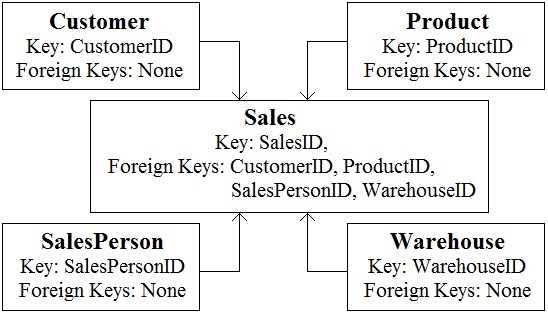
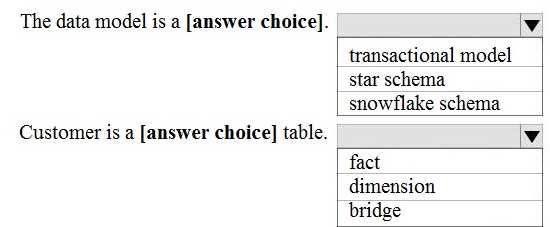
HOTSPOT You are reviewing the data model shown in the following exhibit. DP-900 question Use the drop-down menus to select the answer choice that completes each statement based on the information presented in the graphic. DP-900 question
Your Answer
25 comments in the community discussion
6
Pretty sure it’s a star schema since the sales table sits in the middle and links out to customer, product, etc. For the second blank, customer looks like a dimension table as it just describes entities (no measures). I’ve seen similar diagrams in past practice tests. Correct me if anyone thinks otherwise!
5
Star schema, Customer dimension table
Q: 2
Which Azure Cosmos DB API should you use for a graph database?
Options
31 comments in the community discussion
5
A. official docs and practice tests both point to Gremlin API for graph databases.
3
A . Lot of folks get tripped up thinking NoSQL (B) covers everything, but Gremlin (A) is the actual graph API here.
Q: 3

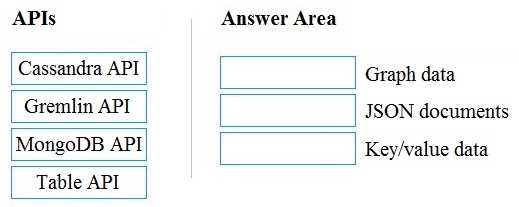
DRAG DROP Match the Azure Cosmos DB APIs to the appropriate data structures. To answer, drag the appropriate API from the column on the left to its data structure on the right. Each API may be used once, more than once, or not at all. DP-900 question

Drag & Drop
25 comments in the community discussion
6
Gremlin API goes with Bucket 1 (graph data), MongoDB API with Bucket 2 (documents/JSON), Table API for Bucket 3 (key-value). That's the typical mapping you see in most practice exams. I think that's correct, but let me know if someone saw a different order.
6
Gremlin API → Bucket 1, MongoDB API → Bucket 2, Table API → Bucket 3. That's what official study guide and practice exams use for graph, document, and key-value mappings. Pretty sure that's right but let me know if you saw a different order.
Q: 4

DRAG DROP Match the Azure Data Lake Storage terms to the appropriate levels in the hierarchy. To answer, drag the appropriate term from the column on the left to its level on the right. Each term may be used once, more than once, or not at all. DP-900 question

Drag & Drop
28 comments in the community discussion
6
Azure Storage account maps to 1, File system goes to 2. File share isn't part of Data Lake Gen2.
6
Azure Storage account → 1, File system → 2. File share doesn't fit for Data Lake.
Q: 5

HOTSPOT Select the answer that correctly completes the sentence. DP-900 question

Your Answer
27 comments in the community discussion
6
Gotta watch for unique vs primary here, it's primary key.
5
PRIMARY KEY
Q: 6

HOTSPOT Select the answer that correctly completes the sentence. DP-900 question

Your Answer
29 comments in the community discussion
5
DATABASE ADMINISTRATORRestoring databases is really a core DBA job, not for Data Engineers or Analysts. The whole point of the DBA role is handling backups, maintenance, and recovery when stuff goes wrong. Seen this in Microsoft docs and training a lot so I’m pretty confident, but if someone’s seen this phras
5
Database Administrator. It's the DBA who handles operational stuff like backup and recovery, so if the question is about restoring a database or similar tasks, that's their job. Data engineers are more focused on pipelines. Pretty sure this fits but let me know if anyone sees an edge case.
Q: 7

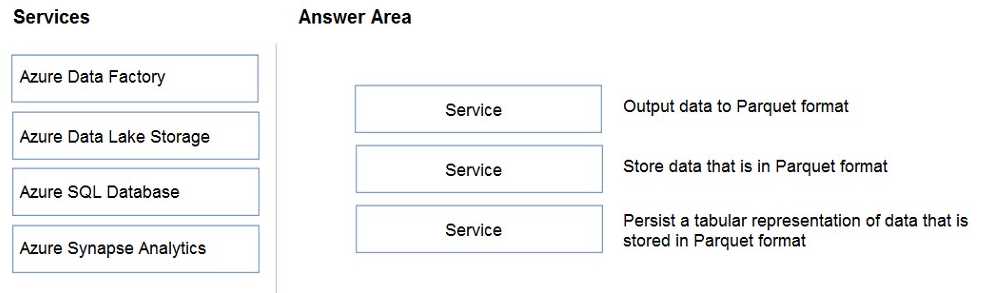
DRAG DROP Match the Azure services to the appropriate requirements. To answer, drag the appropriate service from the column on the left to its requirement on the right. Each service may be used once, more than once, or not at all. DP-900 question

Drag & Drop
30 comments in the community discussion
6
I agree with mapping Data Factory to Target 1, Data Lake Storage to Target 2, and Synapse Analytics to Target 3. Data Factory handles orchestration, Data Lake is the storage layer, and Synapse is made for analytics and external tables. Makes sense based on how each service is used in typical Azure data pipelines, pr
5
Data Factory to Target 1, Data Lake Storage to Target 2, Synapse Analytics to Target 3. Had something like this in a mock, looks right to me.
Q: 8

HOTSPOT Select the answer that correctly completes the sentence. DP-900 question

Your Answer
29 comments in the community discussion
8
Azure SQL Edge
6
Is it possible the answer is just "SQL Edge" instead of the full Azure SQL Edge branding here?
Q: 9
You need to create an Azure resource to store data in Azure Table storage. Which command should you run?
Options
28 comments in the community discussion
6
Option B D is a common trap since container creation only works for blob storage, not Table storage, right?
5
B.
Q: 10

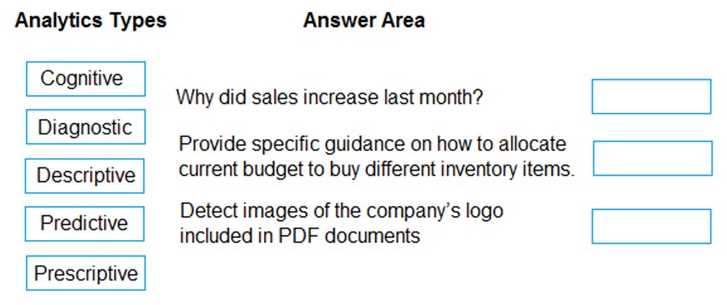
DRAG DROP Match the types of analytics that can be used to answer the business questions. To answer, drag the appropriate analytics type from the column on the left to its question on the right. Each analytics type may be used once, more than once, or not at all. DP-900 question

Drag & Drop
30 comments in the community discussion
6
Yeah, this mapping looks solid to me. Diagnostic matches the "why" sales question (root causes), Prescriptive gives budget guidance, Cognitive is for the logo/image recognition stuff. I've seen it phrased like this in recent practice sets, but open to debate if there's a different source.
6
Diagnostic → Why sales increased last month, Prescriptive → budget allocation, Cognitive → logo detection. This fits how MS describes them: diagnostic for causes, prescriptive for recommendations, cognitive for AI/image tasks. I think that's right but open to corrections.
Q: 11

DRAG DROP Match the Azure services to appropriate requirements. To answer, drag the appropriate services from the column on the left to its requirement on the right. Each service may be used once. more than once, or not at all. DP-900 question

Drag & Drop
9 comments in the community discussion
5
Azure Data Factory → Bucket 1, Azure Data Lake Storage → Bucket 2, Azure Synapse Analytics → Bucket 3. This matches what I saw in some practice sets. ADF is for ingest/transform, ADLS holds the raw data, and Synapse is used to query/analyze it in SQL-like fashion. Pretty sure this is what exam questions are after.
4
Azure Data Factory → Bucket 1, Azure Data Lake Storage → Bucket 2, Azure Synapse Analytics → Bucket 3. I don't think Azure SQL Database fits here since it can't natively handle Parquet files for direct tabular access like Synapse does-easy trap to pick that one if you're thinking just "SQL." Used a similar mapping o
Q: 12

HOTSPOT To complete the sentence, select the appropriate option in the answer area. DP-900 question

Your Answer
8 comments in the community discussion
8
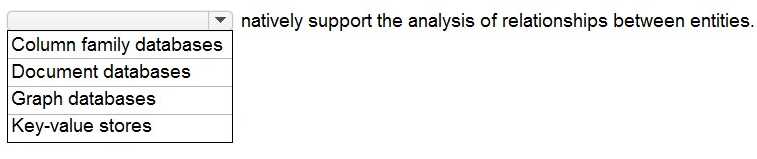
Makes sense here, it's graph databases. They're designed specifically to handle and navigate complex relationships between data points. Seen similar wording in the official study guide too.
4
Graph databases is the right fill. Relational DBs can store linked data but don't natively handle the traversal or deep connection queries as efficiently. Easy to fall for thinking "document" if you skim, since Azure loves both as NoSQL types, but only graph DBs are optimized for relationships. Open to arguments if
Q: 13

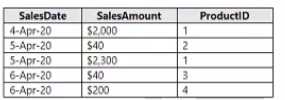
DRAG DROP You have a table named Sales that contains the following data.

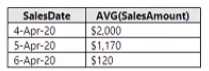
You need to query the table to return the average sales amount day. The output must produce the following results.

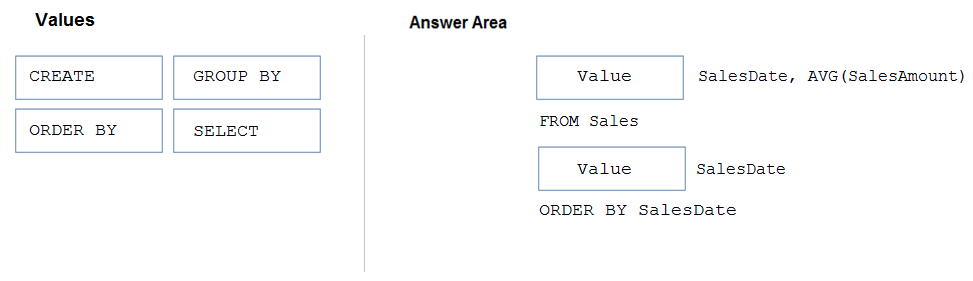
How should you complete the query? To answer, drag the appropriate values to the correct targets. Each value may be used once, more than once, or not at all. You may need to drag the split bar between panes or scroll to view content.


Drag & Drop
8 comments in the community discussion
4
Nah, CREATE and ORDER BY are tricks here. It should be SELECT for Target 1 and GROUP BY for Target 2, since you need aggregation by date not just sorting. Seen similar questions on practice exams.
3
SELECT -> Target 1, GROUP BY -> Target 2It should be SELECT and then GROUP BY. You need SELECT to choose what columns/aggregations to show, and GROUP BY to aggregate averages by date. CREATE is a distractor here, that’s for table definitions not queries. I’m pretty sure this matches the needed output, but
Q: 14

HOTSPOT Select the answer that correctly completes the sentence. DP-900 question

Your Answer
10 comments in the community discussion
6
Azure Synapse Analytics is the only option that actually uses MPP for large-scale analytics, not the usual SMP like the regular Azure SQL Database. The question's about big data warehousing, so Synapse fits best. I think that's the intended answer unless they're focusing on OLTP, but don't see evidence of that.
6
Azure Synapse Analytics. MariaDB and SQL Database look tempting, but only Synapse uses MPP for massive analytical workloads. Azure SQL is more OLTP or smaller-scale analytics. Pretty sure that's what the question is after, unless I missed some fine print in the image.
Q: 15
Which statement is an example of Data Manipulation Language (DML)?
Options
10 comments in the community discussion
3
A. had something like this in a mock and it was INSERT as DML.
Yeah, INSERT is the DML action here so A. DML handles data itself (like adding rows), while ALTER or DROP are more about table structure (that would be DDL). Makes sense to me, anyone disagree?
Q: 16

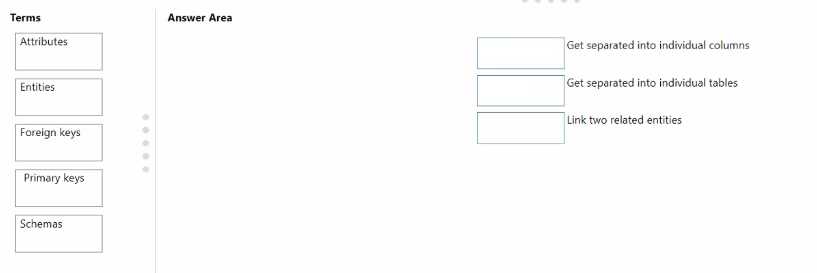
DRAG DROP Match the database normalization terms to the appropriate descriptions. To answer, drag the appropriate term from the column on the left to its description on the right. Each term may be used once, more than once, or not at all. DP-900 question

Drag & Drop
7 comments in the community discussion
6
Attributes -> Target 1, Entities -> Target 2, Foreign keys -> Target 3. Official guide covers these basics.
4
Nice, this is a pretty standard one. Attributes go with Target 1 because they’re the properties/columns in a table. Entities map to Target 2 since those are basically your tables themselves. Foreign keys fit Target 3-they link tables and enforce relationships, which comes up a lot in normalization questions. Pretty
Q: 17
Which type of Azure resource supports the serverless configuration of an Azure SQL database?
Options
9 comments in the community discussion
C is right here. Only a single database in Azure SQL Database offers the serverless configuration, where it can pause during inactivity and scale compute automatically. Managed Instance and elastic pools don't have that true serverless feature, they're always provisioned. Pretty sure on this one but if anyone seen some
C imo, only a single database in Azure SQL Database supports the true serverless compute tier where it auto-pauses and resumes. Managed Instances and elastic pools don’t do that. Not 100% but that’s what docs say. Agree?
Q: 18

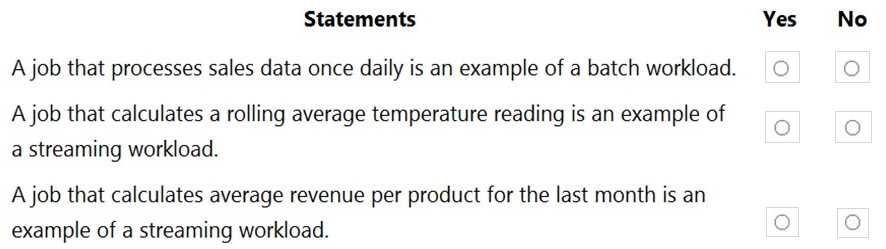
HOTSPOT For each of the following statements, select Yes if the statement is true. Otherwise, select No. DP-900 question

Your Answer
7 comments in the community discussion
5
Had something like this in a mock. Processing sales data once daily really is batch (so Yes). Calculating rolling average temps and streaming revenue per product for last month doesn’t fit streaming (No). Pretty sure this lines up, but open to other takes.
2
Yeah, first one's batch so that's Yes. Rolling average temp and streaming revenue for last month is No.
Q: 19

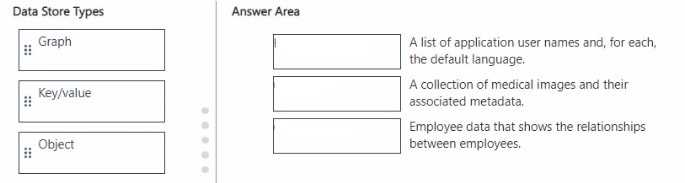
DRAG DROP Match The Types of data stores to The appropriate scenarios. To answer, drag the appropriate data store type from the column on the left to its scenario on the right. Each data store type may be used once, more than once, or not at all.DP-900 question

Drag & Drop
8 comments in the community discussion
5
Key/value goes to Bucket 1, Object to Bucket 2, Graph to Bucket 3. Pretty sure that's the right mapping since user settings fit key/value, images are best with object storage, and relationships point to graph. Some might swap Object and Graph by mistake.
4
Yeah this order makes sense to me: Key/value for Bucket 1, Object for Bucket 2, Graph for Bucket 3. Key/value is fast and simple for things like user settings, Object works best with unstructured stuff like images, and Graph is definitely the pick when relationships are key. I think that lines up with how Azure brea
Q: 20

HOTSPOT To complete the sentence, select the appropriate option in the answer area. DP-900 question

Your Answer
7 comments in the community discussion
4
Target data store powerful enough to transform data. Saw a similar question in an exam dump, main thing with ELT is the transformations happen in the destination itself, so it needs to handle heavy compute. Pretty sure that's what they're looking for here.
2
Target data store powerful enough to transform data
Question 1 of 20

What's covered in this practice questions set

3: Describe how to work with non-relational data on Azure · 9 questions

📖 About this Domain

This domain covers the fundamentals of non-relational data, also known as NoSQL data, on the Azure platform. It focuses on the core characteristics of non-relational data stores and introduces the primary Azure services used to manage them. You will explore services like Azure Storage and Azure Cosmos DB.

🎓 What You Will Learn

  • Describe the characteristics and types of non-relational data, including key-value, document, columnar, and graph models.
  • Explore the capabilities of Azure Blob, Azure File, and Azure Table storage for managing unstructured and semi-structured data.
  • Understand the core concepts of Azure Cosmos DB, including its global distribution, multi-model APIs, and consistency levels.
  • Identify the basic provisioning and configuration options for non-relational data services in the Azure portal.

🛠️ Skills You Will Build

  • Ability to differentiate between relational and non-relational data workloads.
  • Skill in selecting the appropriate Azure Storage service (Blob, File, Table) for a given data scenario.
  • Competence in identifying the correct Azure Cosmos DB API (e.g., Core SQL, Gremlin, MongoDB) for specific application needs.
  • Capability to describe the process of provisioning a basic Azure Cosmos DB account and an Azure Storage account.

💡 Top Tips to Prepare

  • Focus on the specific use cases for each Azure Cosmos DB API, as this is a common topic for exam questions.
  • Memorize the differences between Azure Blob Storage access tiers (Hot, Cool, Archive) and their cost and latency implications.
  • Create a clear mental model distinguishing the purpose of Azure Blob, Azure File, and Azure Table storage.
  • Utilize the Microsoft Learn sandboxes or an Azure free account to practice creating and configuring these non-relational data services.

2: Describe how to work with relational data on Azure · 9 questions

📖 About this Domain

This domain covers key concepts related to 2: Describe how to work with relational data on Azure.

🎓 What You Will Learn

  • Core concepts of 2: Describe how to work with relational data on Azure
  • Best practices and implementation
  • Real-world application scenarios

🛠️ Skills You Will Build

  • Technical proficiency in 2: Describe how to work with relational data on Azure
  • Problem-solving abilities
  • Practical implementation skills

💡 Top Tips to Prepare

  • Review official documentation and study guides
  • Practice with hands-on exercises
  • Focus on understanding core principles

1: Describe core data concepts · 1 questions

📖 About this Domain

This domain introduces foundational data concepts, including data formats and processing types. It establishes the core terminology for relational, non-relational, and analytical data workloads.

🎓 What You Will Learn

  • Differentiate between transactional workloads (OLTP) and analytical workloads (OLAP).
  • Identify the responsibilities for data roles like database administrator, data engineer, and data analyst.
  • Describe relational data concepts including tables, normalization, and structured query language (SQL).
  • Describe non-relational data concepts including NoSQL databases and types like key-value, document, and graph.

🛠️ Skills You Will Build

  • Ability to classify data as structured, semi-structured, or unstructured.
  • Skill to differentiate between batch data and streaming data processing.
  • Competency in describing relational database constructs like tables, indexes, and views.
  • Skill to identify appropriate use cases for non-relational NoSQL data stores.

💡 Top Tips to Prepare

  • Focus on the characteristics of OLTP versus OLAP systems, as this is a fundamental concept.
  • Memorize the specific duties of the three core data roles: administrator, engineer, and analyst.
  • Understand the concept of normalization and why it is used in relational databases.
  • Practice matching data types like JSON or CSV to semi-structured data definitions.

4: Describe an analytics workload on Azure · 1 questions

📖 About this Domain

This domain covers the fundamentals of data analytics workloads on Azure. You will explore the differences between transactional (OLTP) and analytical (OLAP) systems. It introduces core Azure services for data warehousing, big data processing, and real-time analytics.

🎓 What You Will Learn

  • Understand the core components of a modern data warehouse, including data ingestion and ETL/ELT processes.
  • Identify the features and use cases for Azure Synapse Analytics, Azure Databricks, and Azure HDInsight.
  • Learn about real-time data streaming and analytics using services like Azure Stream Analytics.
  • Explore data visualization concepts and the role of Microsoft Power BI for creating reports and dashboards.

🛠️ Skills You Will Build

  • Ability to differentiate between transactional (OLTP) and analytical (OLAP) data processing workloads.
  • Skill to identify appropriate Azure services for batch and real-time data analytics scenarios.
  • Competency in describing the architecture of a modern data warehouse on Azure.
  • Understanding of how to use Power BI for business intelligence and data visualization.

💡 Top Tips to Prepare

  • Focus on the high-level purpose of Azure Synapse Analytics, Azure Databricks, and Azure HDInsight, not their deep implementation details.
  • Memorize the key differences between batch processing and stream processing and which Azure services support each.
  • Understand the core concepts of ETL (Extract, Transform, Load) and ELT (Extract, Load, Transform) pipelines.
  • Review the main components of a Power BI report, such as dashboards, visuals, and datasets.

Premium Access Includes

  • Quiz Simulator
  • Exam Mode
  • Progress Tracking
  • Question Saving
  • Flash Cards
  • Drag & Drops
  • 3 Months Access
  • PDF Downloads
Get Premium Access
Scroll to Top

FLASH OFFER

Days
Hours
Minutes
Seconds

avail 10% DISCOUNT on YOUR PURCHASE