Free 200-201 Practice Test Questions and Answers (2026)

View Mode
Q: 1
What is a benefit of using asymmetric cryptography?
Options
30 comments in the community discussion
5
Option D
1
Seen similar questions in Cisco official guides. D is correct here, since ACK acknowledges receipt and RST does abrupt termination. Labs or mock exams show this pattern a lot, pretty sure that's the distinction.
Q: 2
What is a difference between rule-based and role-based access control mechanisms?
Options
27 comments in the community discussion
2
C or A. I'm kind of split here, since if you reuse the keystream attackers could spot patterns in the ciphertexts (so C), but I've also seen arguments that forgery (A) is possible if you manipulate outputs. Still, stream cipher key reuse usually points to ciphertext-only attacks. Anyone disagree?
1
Feels like C, since reusing a stream cipher key (like RC4) lets attackers analyze just ciphertexts to recover info about the plaintext. A is tempting but it's more about forging, not just ciphertext analysis. Pretty sure that's the classic weakness for key reuse. Open if anyone has a different take.
Q: 3
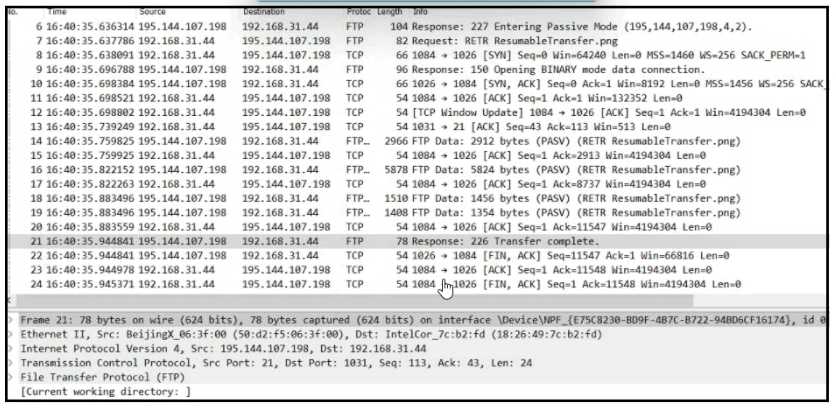
Refer to the exhibit. CISCO 200-201 question Which frame numbers contain a file that is extractable via TCP stream within Wireshark?
Options
25 comments in the community discussion
6
Checking SIEM logs to investigate a host happens during detection and analysis. Option A matches what you'd do first after spotting suspicious activity. Saw similar on a practice test, pretty sure it's A.
2
Makes sense to pick A here, since checking the SIEM logs is all about detecting and analyzing the threat. You can't really contain until you've figured out what's happening. Pretty sure that's what Cisco wants, but feel free to jump in if you disagree.
Q: 4
Which evasion method involves performing actions slower than normal to prevent detection?
Options
24 comments in the community discussion
4
Option D makes sense because full packet capture stores every bit of network traffic, not just metadata or summaries. Compared to session or transaction data, this takes up way more disk space. I think that's what Cisco wants here, unless they've changed something recently. Open to correction if anyone has seen otherwi
3
Option D. saw a similar question in an old exam report and it was full packet capture for max storage every time.
Q: 5
Which two elements of the incident response process are stated in NIST Special Publication 800-61 r2? (Choose two.)
Options
37 comments in the community discussion
5
Option C is the one here. Application-level whitelisting only lets pre-approved apps execute, while B (host-based IPS) generally catches known threats but doesn't default-deny by app name. I see why B trips people up, but it's not actually a whitelist. Makes sense?
2
C’s the best fit. Only application-level whitelisting actually defaults to allowing just approved apps, while HIPS might block bad stuff but doesn’t always default-deny. Pretty sure that matches the question’s wording, unless I missed a trick.
Q: 6
A threat actor penetrated an organization's network. Using the 5-tuple approach, which data points should the analyst use to isolate the compromised host in a grouped set of logs?
Options
34 comments in the community discussion
5
Option D
1
I don't think it's A, since SSL interception is actually used to help monitor HTTPS traffic, not make it harder. The real issue is D, encryption, which scrambles the data and keeps packet inspection from working out of the box. Some folks trip up here because A looks tempting but it's really D. Pretty confident unless
Q: 7
When an event is investigated, which type of data provides the investigate capability to determine if data exfiltration has occurred?
Options
30 comments in the community discussion
3
Option A since official study materials and practice exams both flag javascript: in IMG tags as cross-site scripting.
1
Not B, A. The string uses an <IMG SRC=javascript:...> tag, which is textbook cross-site scripting (XSS), not SQL injection or MITM. B is a bit of a trap here since the code looks odd at first glance, but it's about browser code execution, not interception or DB queries. Pretty sure A is right, open to more inp
Q: 8
A company is using several network applications that require high availability and responsiveness, such that milliseconds of latency on network traffic is not acceptable. An engineer needs to analyze the network and identify ways to improve traffic movement to minimize delays. Which information must the engineer obtain for this analysis?
Options
26 comments in the community discussion
1
I don't think it's B, since data exfiltration usually doesn't cause such a big traffic spike. A.
1
I think A, since that's what most official practice tests lean toward for traffic spike scenarios. Wouldn't hurt to double check with Cisco's official guide or lab sim if you're unsure though.
Q: 9
A security consultant must change the identity access management model fof their organization The new approach will put responsibility on the owner, who will decide whichusers will have access to which resources Which low-cost model must be used for this purpose?
Options
37 comments in the community discussion
5
Option C is right. Data exfiltration alerts mean info is leaving the network, which is a bigger deal than just a policy violation. Stealthwatch flags that clearly in the dashboard. Pretty sure about this but open to other takes.
2
Its C, I remember a similar scenario from labs and data exfiltration alerts were always flagged as critical threats on Stealthwatch.
Q: 10
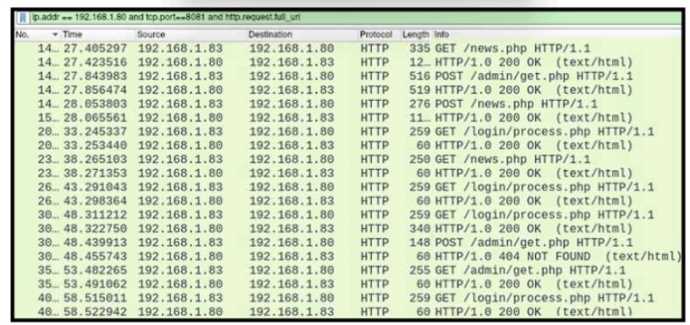
Refer to the exhibit. CISCO 200-201 question What is shown in this PCAP file?
Options
24 comments in the community discussion
2
C tbh, those repeated PASS commands scream brute-force attack.
1
C. not B. ARP poisoning is a common trap here, but the PASS commands signal brute-force for sure.
Q: 11
Which type of access control depends on the job function of the user?
Options
8 comments in the community discussion
D or E. I remember "reflected" and "direct" from my studies, but scanning sounds almost right for attacks in general. Not totally sure since some practice questions mention scanning too.
Option B but D also makes sense. Anyone else pick B for scanning?
Q: 12
An organization has recently adjusted its security stance in response to online threats made by a known hacktivist group. What is the initial event called in the NIST SP800-61?
Options
7 comments in the community discussion
3
Option A
Yeah, it's A here since patents and inventions are classic intellectual property. None of the other options really fit that context. Pretty confident about this, but let me know if you see it differently.
Q: 13
An engineer is working with the compliance teams to identify the data passing through the network. During analysis, the engineer informs the compliance team that external penmeter data flows contain records, writings, and artwork Internal segregated network flows contain the customer choices by gender, addresses, and product preferences by age. The engineer must identify protected dat a. Which two types of data must be identified'? (Choose two.)
Options
8 comments in the community discussion
2
Option C makes sense since exploitation is literally when the attacker takes advantage of a vulnerability. The other phases are about delivery, persistence or objectives, not the actual attack step. I think that's spot on but I'm open if anyone disagrees.
1
C here since exploitation is when someone actually attacks a weakness. Delivery and installation are different steps, not about hitting the vuln directly. Pretty confident but willing to hear counterpoints.
Q: 14
Which items is an end-point application greylist used?
Options
10 comments in the community discussion
1
Probably B. ARP cache poisoning lets an attacker reroute or sniff packets on a switched network by tricking the switch’s ARP tables. Other options don’t really intercept traffic at layer 2 like this. Pretty sure that’s what they’re asking, but open to other takes.
1
Its C, seen something like this in some practice tests and think official guide touches on it too.
Q: 15
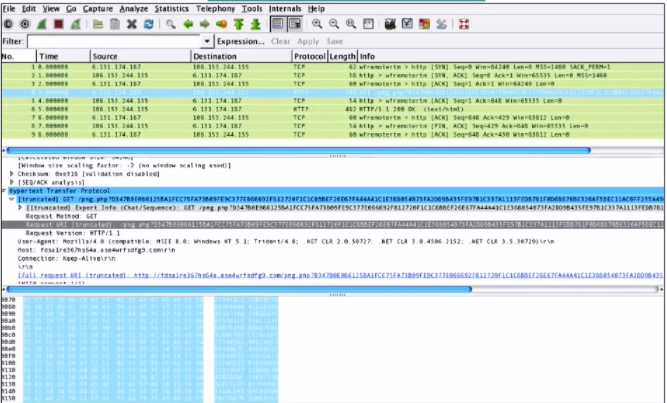
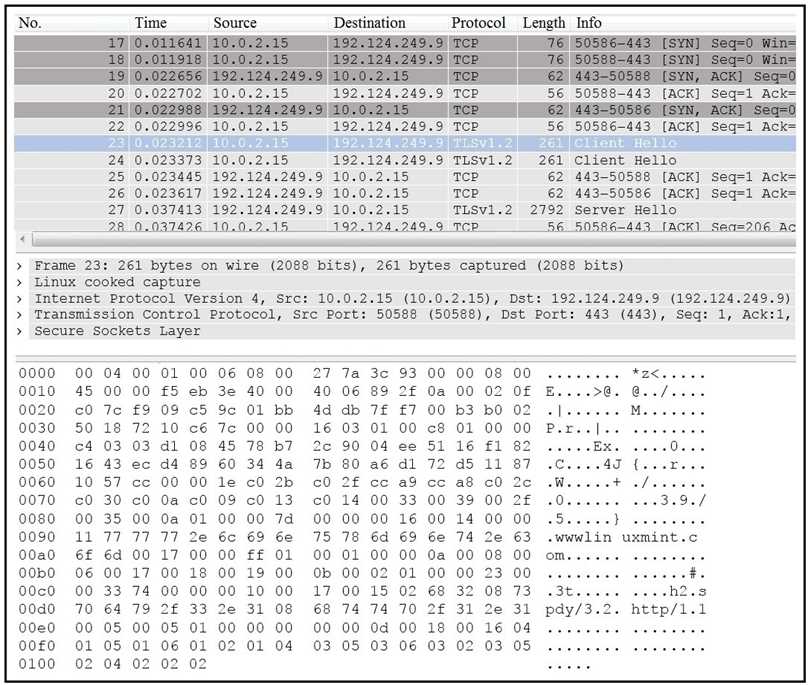
Refer to the exhibit. CISCO 200-201 question A network administrator is investigating suspicious network activity by analyzing captured traffic. An engineer notices abnormal behavior and discovers that the default user agent is present in the headers of requests and data being transmitted What is occurring?
Options
12 comments in the community discussion
3
Option C fits what I've seen in the official guide. Attack vector in CVSS gives a higher score if the exploit can be done remotely, making it more severe. If you want more examples, check labs or practice questions.
1
Call it D, had something like this in a mock and D seemed right there.
Q: 16
Which regular expression is needed to capture the IP address 192.168.20.232?
Options
6 comments in the community discussion
1
B , this is basic from the official guide and also in Cisco's exam practice.
1
C tbh
Q: 17
What is the difference between vulnerability and risk?
Options
3 comments in the community discussion
1
C makes sense here. Agent-based runs locally so it can see all device traffic, pretty sure that’s the key point.
C tbh, clear question and good focus on endpoint local detection advantage.
Q: 18
Which two elements are assets in the role of attribution in an investigation? (Choose two.)
Options
7 comments in the community discussion
2
C tbh. Digital certificates let devices decrypt and inspect SSL/TLS traffic for threats, which is what the question wants. Not totally confident, but that's usually how C2 detection works at the perimeter.
1
Not B, C. Saw a similar question on a practice test and certificates are what let perimeter devices decrypt traffic for inspection.
Q: 19

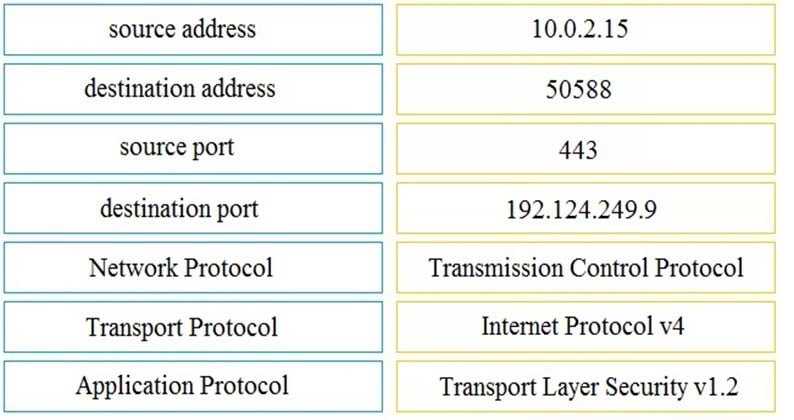
DRAG DROP Refer to the exhibit. CISCO 200-201 question Drag and drop the element name from the left onto the correct piece of the PCAP file on the right. CISCO 200-201 question
Drag & Drop
4 comments in the community discussion
1
I don't think D is right, that's more about exposure. A matches what Cisco highlights as a threat definition in the docs.
1
A or D? Saw a similar question in exam reports, pretty sure it's A.
Q: 20

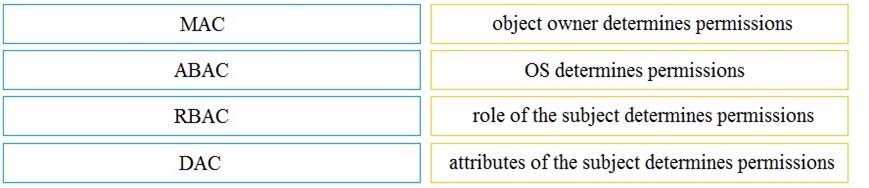
DRAG DROP Drag and drop the access control models from the left onto the correct descriptions on the right. CISCO 200-201 question

Drag & Drop
5 comments in the community discussion
D imo, since eavesdropping between endpoints fits man-in-the-middle. Anyone disagree?
Question 1 of 20

Premium Access Includes

  • Quiz Simulator
  • Exam Mode
  • Progress Tracking
  • Question Saving
  • Flash Cards
  • Drag & Drops
  • 3 Months Access
  • PDF Downloads
Get Premium Access
Scroll to Top

FLASH OFFER

Days
Hours
Minutes
Seconds

avail 10% DISCOUNT on YOUR PURCHASE