
Q: 1
You have an Azure Active Directory (Azure AD) tenant.
You need to review the Azure AD sign-in logs to investigate sign-ins that occurred in the past.
For how long does Azure AD store events in the sign-in logs?
Options
Discussion
B matches the default retention for Azure AD sign-in logs with Premium. It's not as long as people think, just 30 days unless you export it. Pretty sure that's right, but if your tenant has extra storage settings it could differ.
B tbh
B or D? If question had mentioned export or external storage, D might fit but here looks like B applies.
I don’t think it’s A, 14 days is a trap from old docs. B.
Its B, Azure AD sign-in logs are kept for 30 days if you have P1 or P2. I think folks mixing with the old 14 days (that was before MS updated retention). Not totally sure if Free tier is in scope here though, correct me if I'm off.
B had something like this in a mock exam and 30 days was the answer there.
C vs B. I get why people say C since audit logs stick around for 90 days, but I think sign-in logs specifically are just 30 unless exported. Wouldn't bet my life on it though, pretty close on the details.
Option C makes sense to me since I remember some audit logs being kept for 90 days by default, thought sign-in logs followed the same. Could be confusing with activity logs though. Not 100% sure, happy if someone points out where I'm off.
I don’t think it’s D, 30 days is the standard for sign-in logs unless they mention exporting or a different SKU. B.
B is the one I've seen on recent study guides and MS docs for Premium tenants. Logs are only kept 30 days by default in Azure AD unless exported, so older reports of 14 days aren't current anymore. Pretty sure about this unless something changed very recently, let me know if you heard differently.
Be respectful. No spam.
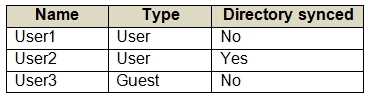 All the users work remotely. Azure AD Connect is configured in Azure AD as shown in the following exhibit.
 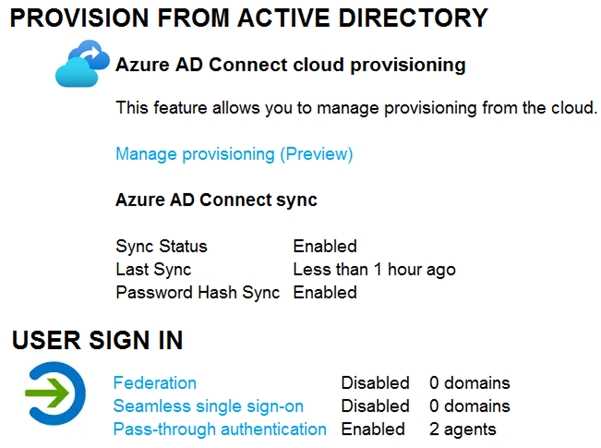 Connectivity from the on-premises domain to the internet is lost. Which users can sign in to Azure AD?
 You need to ensure that Admin can enable Security defaults for contoso.com. What should you do first?
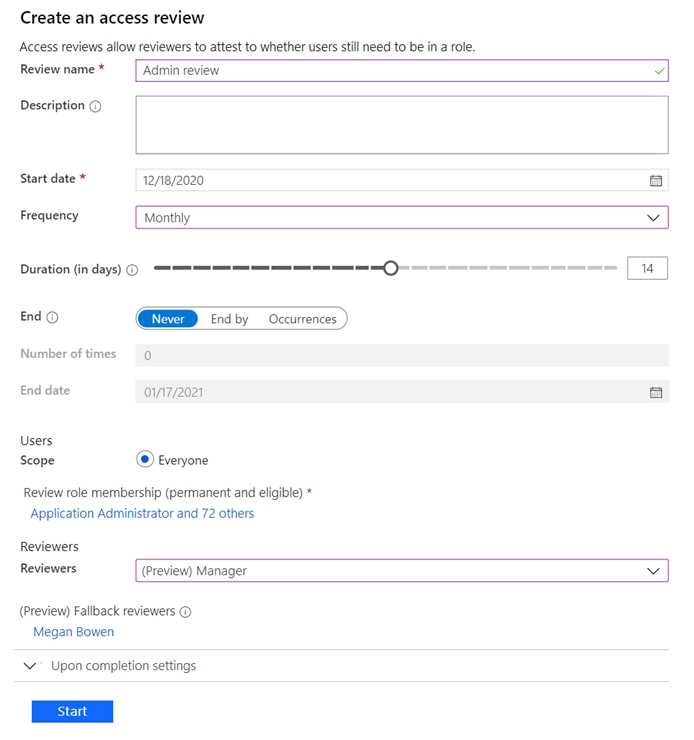 You discover that all access review requests are received by Megan Bowen. You need to ensure that the manager of each department receives the access reviews of their respective department. Solution: You modify the properties of the IT administrator user accounts. Does this meet the goal?