Q: 1
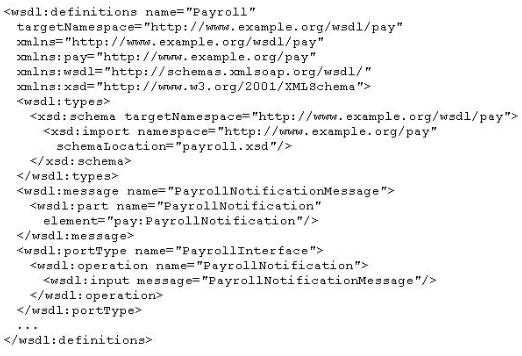
You have written the following WSDL definition to describe the Payroll service, which provides a
"PayrollNotification" operation that sends out employee payroll information:
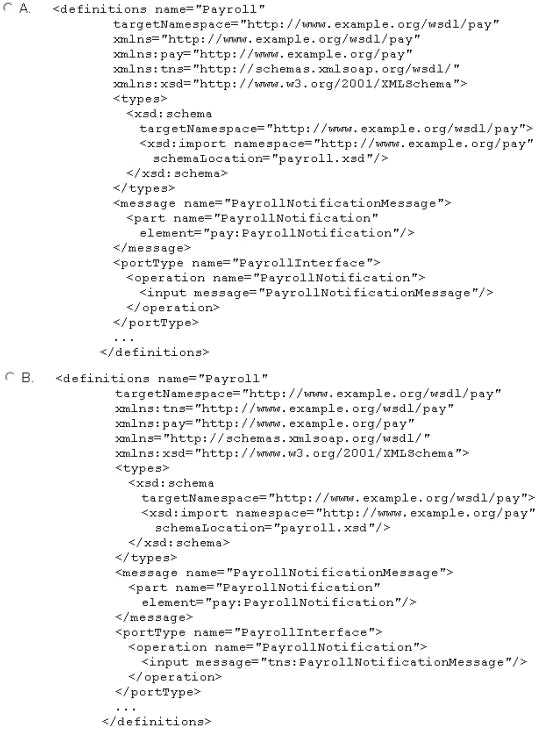
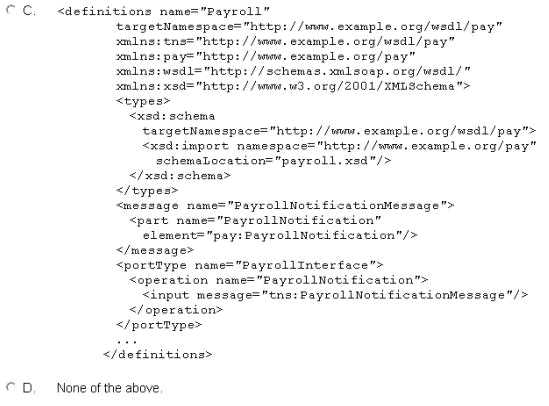
 Subsequent to a review by the enterprise architecture team, you are notified that although this
WSDL definition is technically correct, it is not in compliance with current internal design standards.
Specifically, it is a current convention for the WSDL namespace to be the default namespace, rather
than using the "wsdl" prefix. Furthermore, another design standard dictates that the "Ins" always be
used to represent the target namespace. Which of the following WSDL definitions have been
correctly revised to comply with the design standards?
Subsequent to a review by the enterprise architecture team, you are notified that although this
WSDL definition is technically correct, it is not in compliance with current internal design standards.
Specifically, it is a current convention for the WSDL namespace to be the default namespace, rather
than using the "wsdl" prefix. Furthermore, another design standard dictates that the "Ins" always be
used to represent the target namespace. Which of the following WSDL definitions have been
correctly revised to comply with the design standards?
 Subsequent to a review by the enterprise architecture team, you are notified that although this
WSDL definition is technically correct, it is not in compliance with current internal design standards.
Specifically, it is a current convention for the WSDL namespace to be the default namespace, rather
than using the "wsdl" prefix. Furthermore, another design standard dictates that the "Ins" always be
used to represent the target namespace. Which of the following WSDL definitions have been
correctly revised to comply with the design standards?
Subsequent to a review by the enterprise architecture team, you are notified that although this
WSDL definition is technically correct, it is not in compliance with current internal design standards.
Specifically, it is a current convention for the WSDL namespace to be the default namespace, rather
than using the "wsdl" prefix. Furthermore, another design standard dictates that the "Ins" always be
used to represent the target namespace. Which of the following WSDL definitions have been
correctly revised to comply with the design standards?
Options
Discussion
No comments yet. Be the first to comment.
Be respectful. No spam.
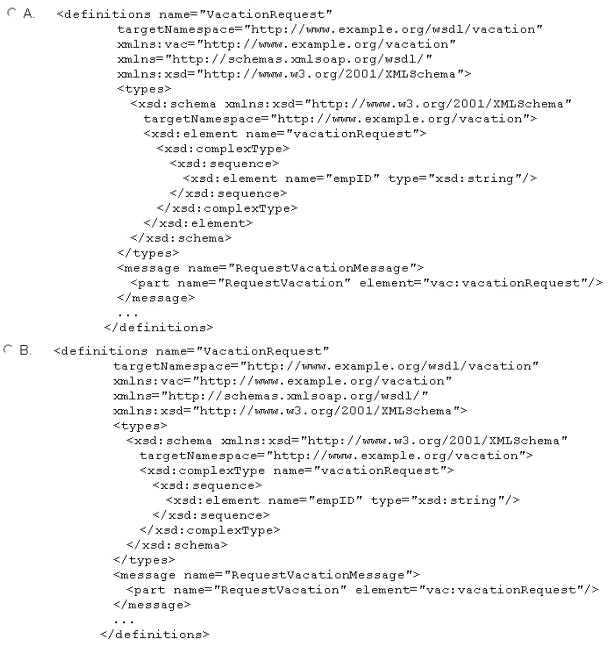
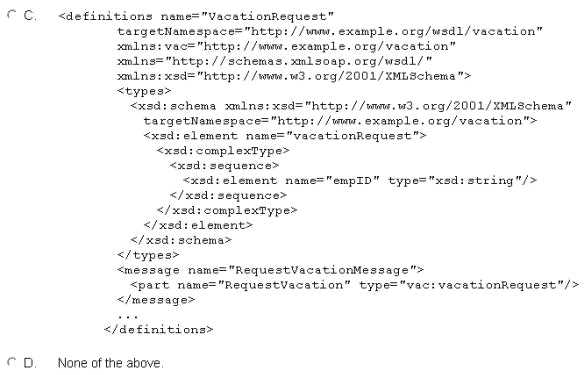
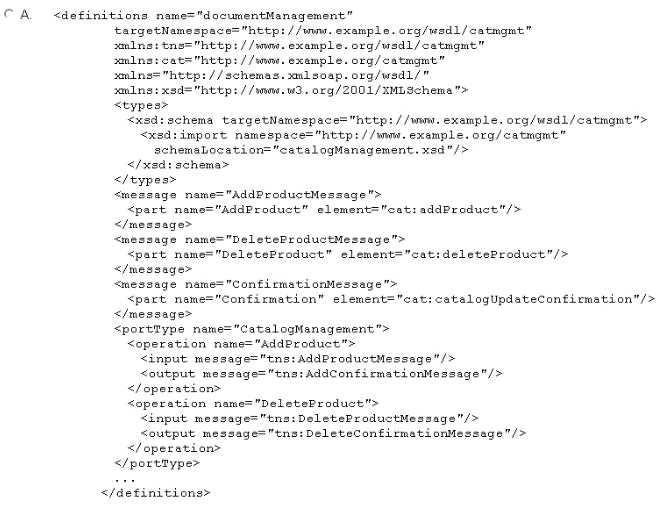
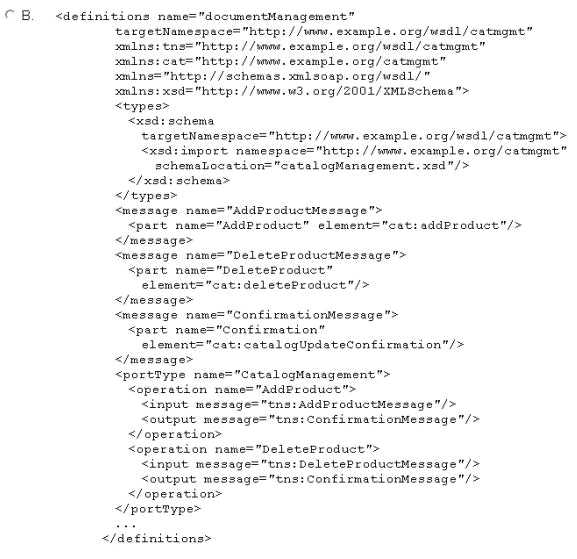
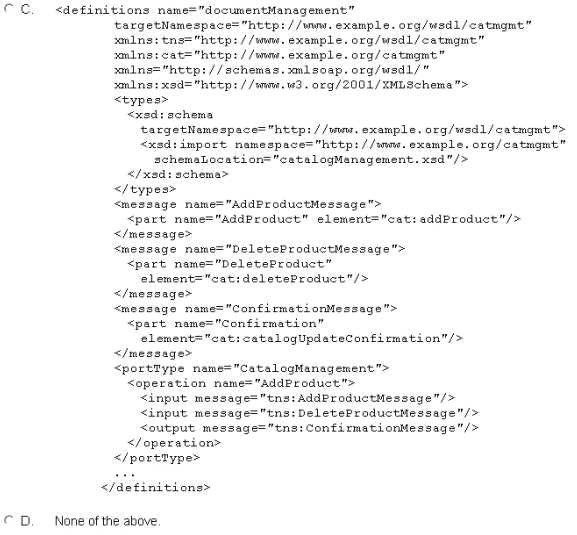
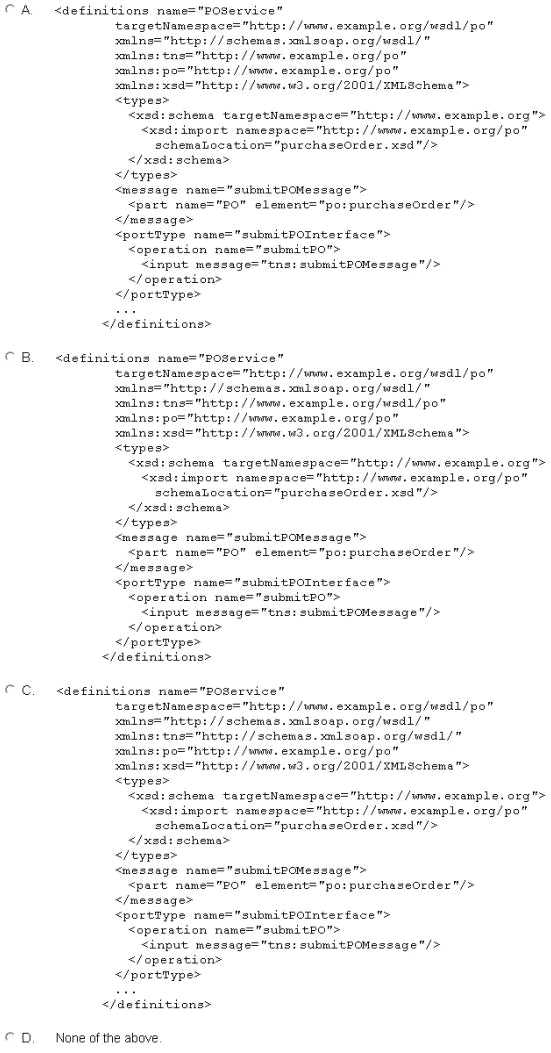
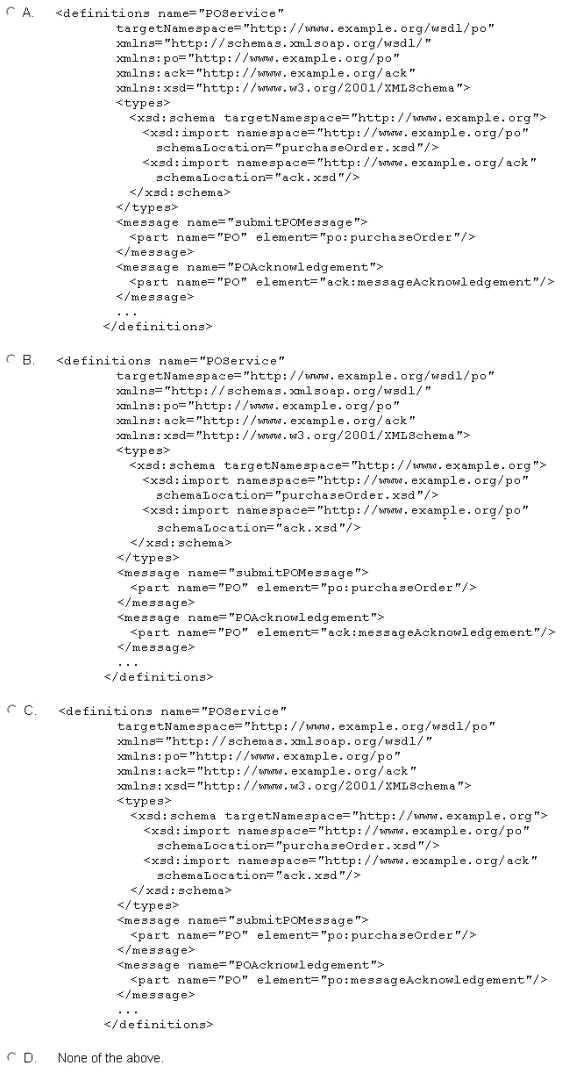
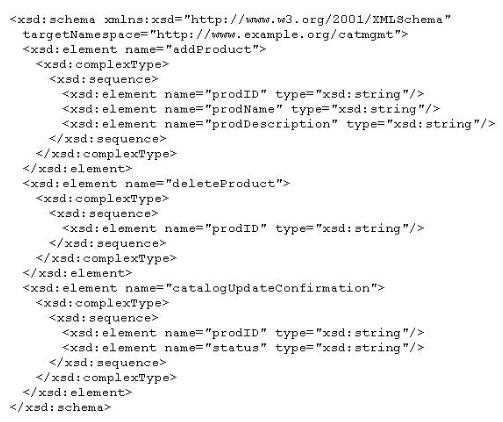 Which of the following shows a WSDL definition that correctly incorporates this schema and fulfills
the requirements for this service?
Which of the following shows a WSDL definition that correctly incorporates this schema and fulfills
the requirements for this service?
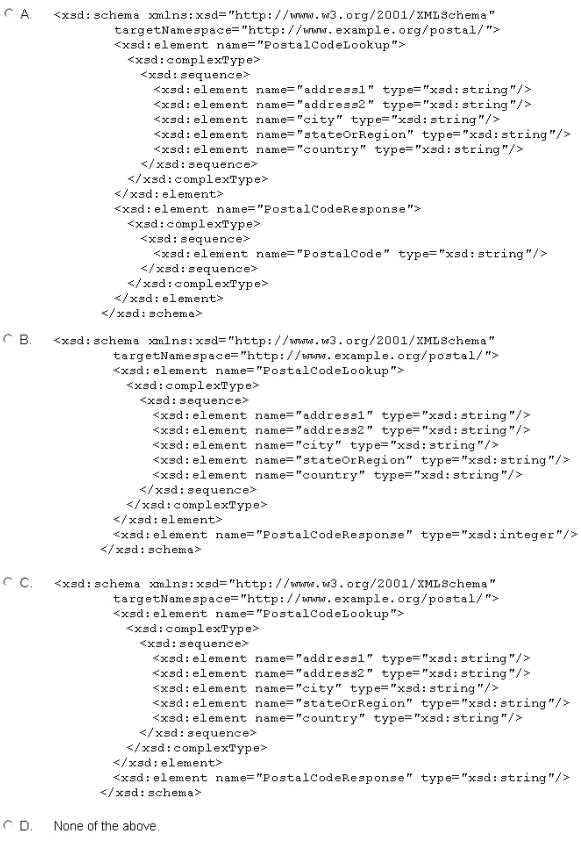
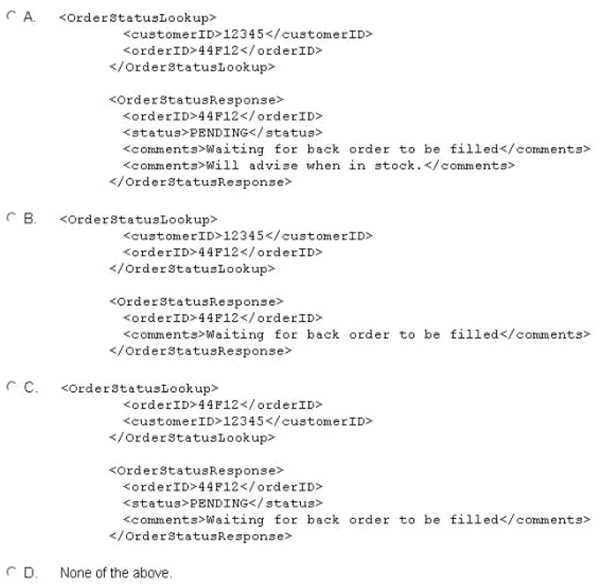
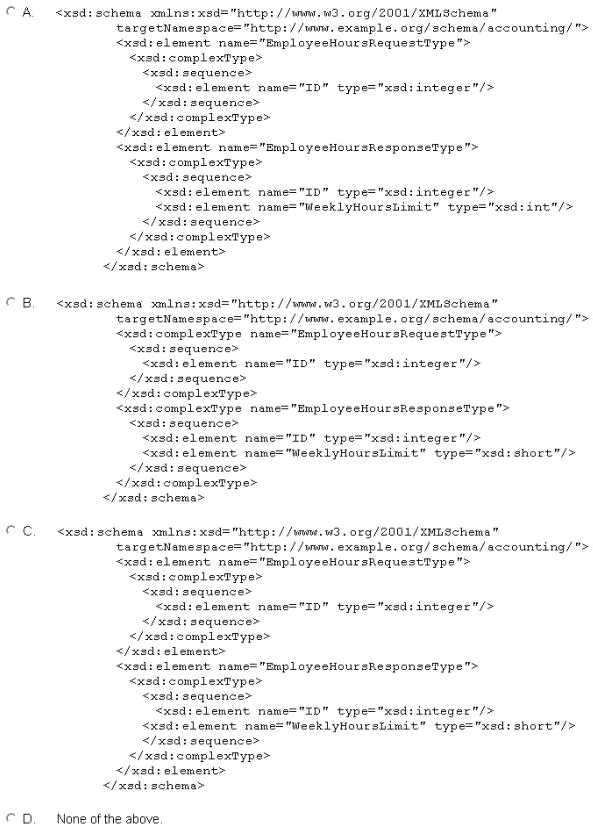
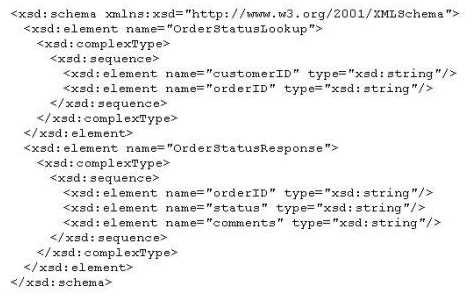 A new customer plans to use your service, but they want to test it first. They have asked for two
sample XML documents that show typical input and output message content. Which of the following
pairs of XML elements will validate with the schema shown above?
A new customer plans to use your service, but they want to test it first. They have asked for two
sample XML documents that show typical input and output message content. Which of the following
pairs of XML elements will validate with the schema shown above?
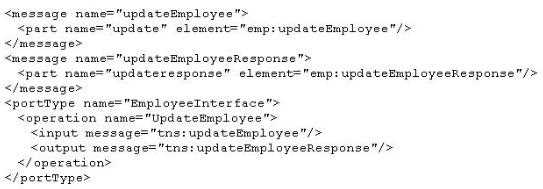
 However, when you try to use this WSDL definition, your system returns an error message stating
that it is invalid due to a problem with namespaces. Which of the following revised WSDL definitions
correct the problem?
However, when you try to use this WSDL definition, your system returns an error message stating
that it is invalid due to a problem with namespaces. Which of the following revised WSDL definitions
correct the problem?
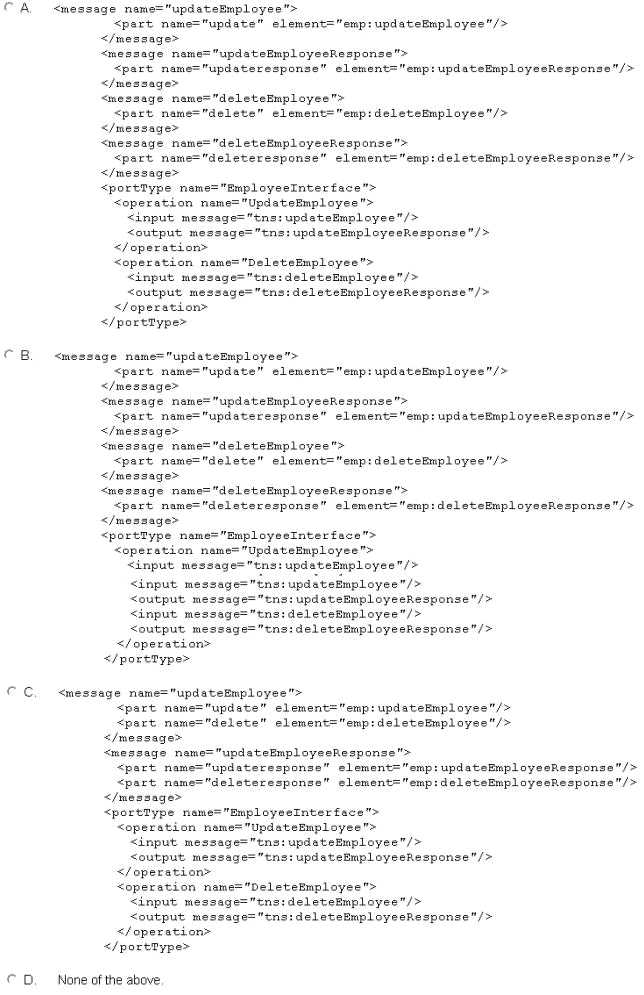
 You are asked to add a new "DeleteEmployee" operation to the WSDL definition that is capable of
receiving a message with a "emp:deleteEmployee" element and then responding with a message
that contains the "emp:deleteEmployeeResponse" element. Which of the following accomplishes
this?
You are asked to add a new "DeleteEmployee" operation to the WSDL definition that is capable of
receiving a message with a "emp:deleteEmployee" element and then responding with a message
that contains the "emp:deleteEmployeeResponse" element. Which of the following accomplishes
this?
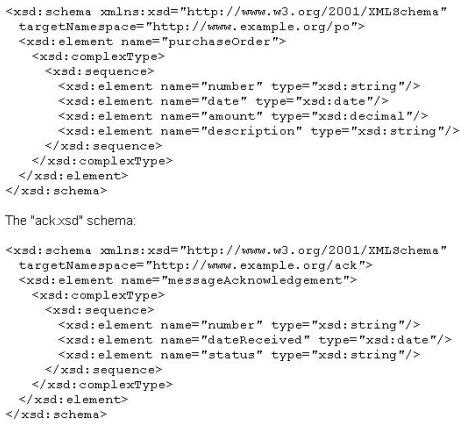 Note that these two schemas have different namespaces. That is because the "purchaseOrder.xsd"
schema is specific to purchase order-related functions, while the "ack.xsd" schema is more generic
and used for a variety of different purposes.
Note that these two schemas have different namespaces. That is because the "purchaseOrder.xsd"
schema is specific to purchase order-related functions, while the "ack.xsd" schema is more generic
and used for a variety of different purposes.
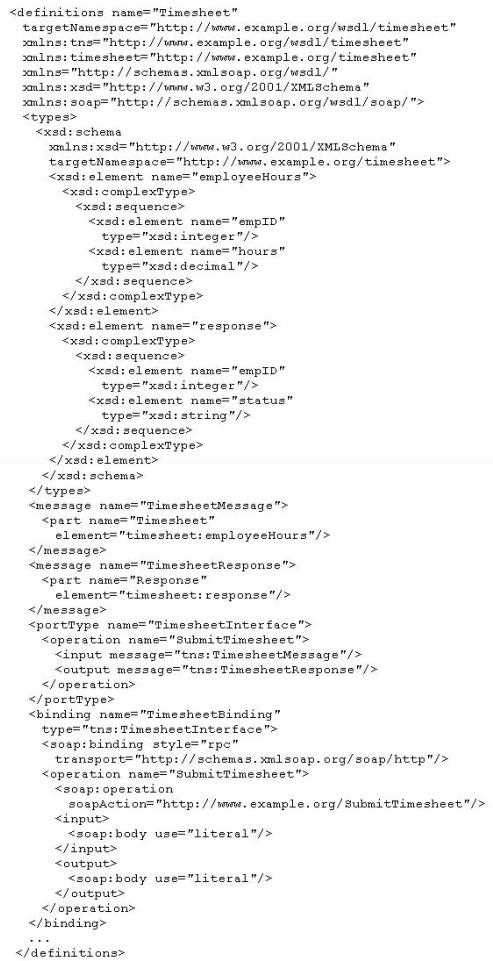 The only revision you suggest is that the value of the "style" attribute of the "soap: binding" element
be changed to "document" instead of "rpc". Why?
The only revision you suggest is that the value of the "style" attribute of the "soap: binding" element
be changed to "document" instead of "rpc". Why?