1. Cisco IOS XE Interface and Hardware Component Configuration Guide
Cisco IOS XE Gibraltar 16.12.x
"Configuring BFD Session Parameters on the Interface": This document details the bfd interval milliseconds minrx milliseconds multiplier number command. It explains that this command is used to customize BFD timers on an interface to prevent BFD from reporting false link failures on unstable networks. This directly supports the configuration in the correct answer. (Source: Cisco Official Documentation
URL: https://www.cisco.com/c/en/us/td/docs/ios-xml/ios/iproutebfd/configuration/16-12/irb-16-12-book/irb-bfd.html#ID-2112-0000004d)
2. Cisco IOS XE BGP Configuration Guide
Cisco IOS XE Fuji 16.9.x
"BGP Support for BFD": This guide explains that when BFD is enabled for a BGP neighbor using the neighbor fall-over bfd command
the BGP session state is tied to the BFD session state. If the BFD session goes down
BGP immediately tears down its peering relationship. This confirms why an unstable BFD session leads to BGP flapping. (Source: Cisco Official Documentation
URL: https://www.cisco.com/c/en/us/td/docs/ios-xml/ios/iproutebgp/configuration/xe-16-9/irg-xe-16-9-book/bgp-support-for-bfd.html)
3. Cisco SD-WAN BGP Configuration Guide
Cisco IOS XE SD-WAN Release 17.x
"Configure BFD for BGP": This document explicitly states
"If you configure BFD to be too aggressive
BFD may report a link as having failed
when the link has not failed. For example
if you configure a very low BFD timer and multiplier
a slight increase in traffic on a link may cause BFD to miss the required number of packets to keep the link active." This directly describes the problem scenario and validates the solution of adjusting BFD timers to be less aggressive. (Source: Cisco Official Documentation
URL: https://www.cisco.com/c/en/us/td/docs/routers/sdwan/configuration/routing/ios-xe-17/routing-book-xe/m-bgp.html#CiscoConcept.dita1109c59f-115e-411b-811b-111111111111)


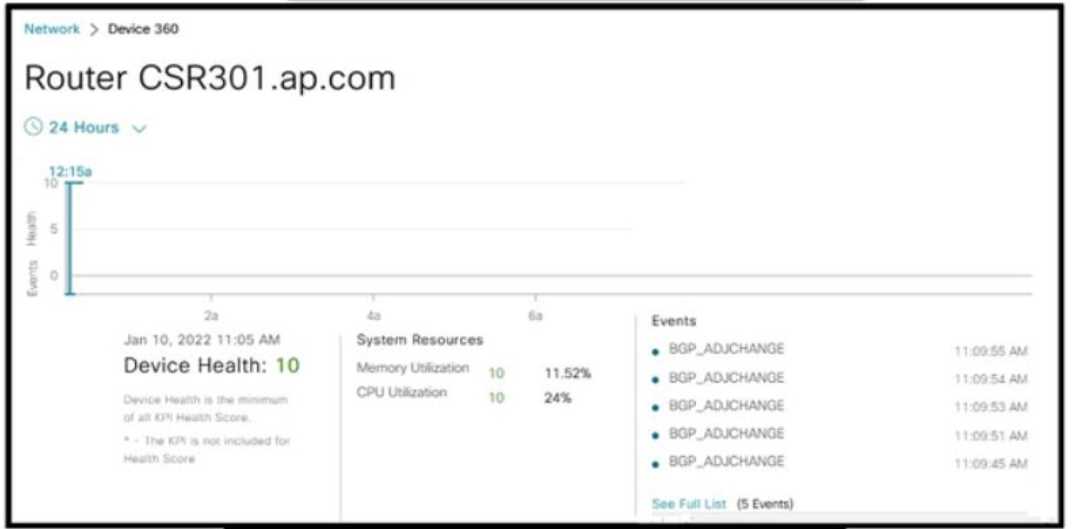
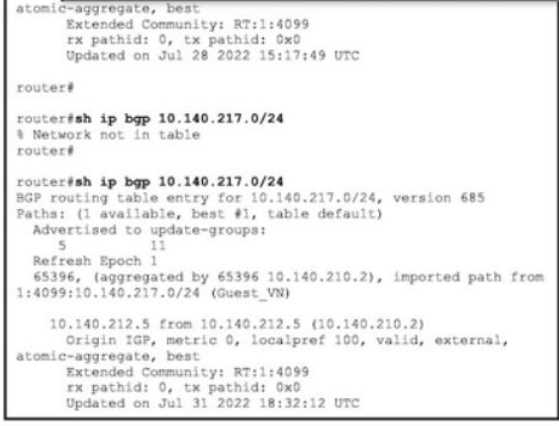 Refer to the exhibit. In Cuco DNA Center, a network engineer identifies that BGP-learned networks
are repeatedly withdrawn from peers. Which configuration must the engineer apply to resolve the
Issue?
A)
Refer to the exhibit. In Cuco DNA Center, a network engineer identifies that BGP-learned networks
are repeatedly withdrawn from peers. Which configuration must the engineer apply to resolve the
Issue?
A)
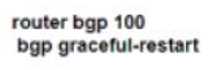 B)
B)
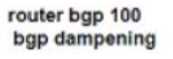 C)
C)
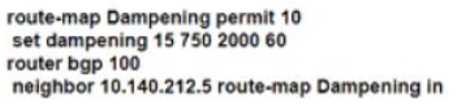 D)
D)

