View Mode
Q: 11
Structural costs for wind resistance increase exponentially as building height is increased, primarily due to which of the following factors? Check the two that apply.
Options
Q: 12
Which strategy enhances passive solar residential design in the northern hemisphere?
Options
Q: 13
An architect is designing a mixed-use building and must provide fire separation between the various use types. Which properties must be considered to meet the fire separation requirements? Check the three that apply.
Options
Q: 14
A one-story residence in a dry climate with cold winter nights is designed with an unconditioned dirt floor crawlspace utilizing underfloor plumbing and HVAC ductwork. The owner is interested in using a concrete slab-on-grade floor instead of the pier-and-beam concrete floor over an open crawlspace as originally designed. What are the impacts of changing the design to a slab-on-grade floor system? Check the two that apply.
Options
Q: 15
An architect has just received client approval of the Schematic Design documents for a three-story, outpatient medical clinic. The clinic is located within a mixed-use development governed by a City-approved Planned Development (PD) document. The medical clinic design utilizes standardized departmental layouts and includes outpatient clinics, as well as treatment spaces, administrative spaces and public/lobby spaces. The site needs to accommodate four different vehicular traffic flows: patient traffic, staff traffic, service and delivery traffic, and emergency services traffic. In addition, a pedestrian plaza must connect to the mixed-use development sidewalks. The plaza must provide space for bicycle parking and will serve as the future bus stop. The site design addresses several challenges related to building orientation. The southeast facade, with excellent visibility from the highway, is the location of all service equipment. The building entrance faces northwest, convenient to the parking but not visible from the highway. The client believes future patient volumes will outgrow the clinic. The PD document allows for a planned Phase 2 development on the adjacent vacant site to the southwest. Phase 2 would include a second building (2 story, 80,000 BGSF) and/or a parking deck. Other considerations for the project include: Protected tree requirements are defined in the PD document. Easy pedestrian access must be provided from Sycamore Boulevard. All required parking for the clinic must be accommodated on site. Programmed area includes 109,450 Departmental Gross Square Feet (DGSF) / 130,184 Building Gross Square Feet (BGSF). Exterior material percentages are dictated by the PD document and shall not exceed specific percentages for Primary and Secondary Finishes. All service equipment needs to be screened; see PD document for restrictions. Signage opportunities are important to the client. Acoustical privacy is a concern of the healthcare system. The following resources are available for your reference: Drawings, including a perspective, plans, and exterior elevations Building Program, including client's departmental program and detailed program for Treatment 01 (Infusion) Exterior Material Cost Comparisons Planned Development Document IBC Excerpts, showing relevant code sections ADA Excerpts, showing relevant sections from the ADA Standards for Accessible Design During the city planning review process, the city planner discovers that two of the building elevations deviate from the building design requirements set forth in the Planned Development Document. The owner is granted a variance for only one of the non-compliant facades. The facade must face the Pedestrian Access Easement.
Options
Q: 16
During design development of a new college laboratory facility, the owner asks the architect to include way-finding signage mounted adjacent to doors. The type of signage requested will project into the corridors of the building. Which of the following should the architect consider when selecting the signage? Check the three that apply.
Options
Q: 17
An architect has just received client approval of the Schematic Design documents for a three-story, outpatient medical clinic. The clinic is located within a mixed-use development governed by a City-approved Planned Development (PD) document. The medical clinic design utilizes standardized departmental layouts and includes outpatient clinics, as well as treatment spaces, administrative spaces and public/lobby spaces. The site needs to accommodate four different vehicular traffic flows: patient traffic, staff traffic, service and delivery traffic, and emergency services traffic. In addition, a pedestrian plaza must connect to the mixed-use development sidewalks. The plaza must provide space for bicycle parking and will serve as the future bus stop. The site design addresses several challenges related to building orientation. The southeast facade, with excellent visibility from the highway, is the location of all service equipment. The building entrance faces northwest, convenient to the parking but not visible from the highway. The client believes future patient volumes will outgrow the clinic. The PD document allows for a planned Phase 2 development on the adjacent vacant site to the southwest. Phase 2 would include a second building (2 story, 80,000 BGSF) and/or a parking deck. Other considerations for the project include: Protected tree requirements are defined in the PD document. Easy pedestrian access must be provided from Sycamore Boulevard. All required parking for the clinic must be accommodated on site. Programmed area includes 109,450 Departmental Gross Square Feet (DGSF) / 130,184 Building Gross Square Feet (BGSF). Exterior material percentages are dictated by the PD document and shall not exceed specific percentages for Primary and Secondary Finishes. All service equipment needs to be screened; see PD document for restrictions. Signage opportunities are important to the client. Acoustical privacy is a concern of the healthcare system. The following resources are available for your reference: Drawings, including a perspective, plans, and exterior elevations Building Program, including client's departmental program and detailed program for Treatment 01 (Infusion) Exterior Material Cost Comparisons Planned Development Document IBC Excerpts, showing relevant code sections ADA Excerpts, showing relevant sections from the ADA Standards for Accessible Design The client decides to build-out and lease the second floor shell space as a lunch cafe with cooking classes as an additional function in the evening.
Options
Q: 18
Which of the following is considered when using natural light as the primary source of ambient light to improve building quality and reduce energy costs?
Options
Q: 19
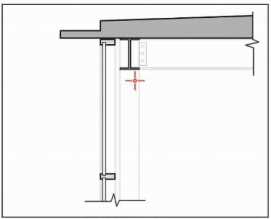
HOTSPOT An owner requests full height, motorized solar shades for the lobby curtainwall. Click on the area of the section detail where the shade should be installed so that it is concealed from the lobby. NCARB PROJECT PLANNING DESIGN question
Your Answer
Q: 20

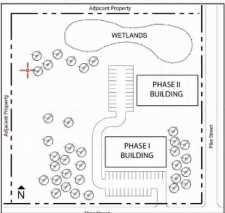
HOTSPOT On the site plan, the Phase I building is a 24-hour emergency veterinary clinic. The Phase II building is a boarding kennel for dogs and cats. The cat enclosures will face north for views of the wetlands. Eventually, a landscape architect will design a memorial garden on the northwest area of the site. The architect needs to locate a service drive for the property and wants to minimize the impact of construction on site vegetation and wildlife. Click on the property line location on the site plan to indicate the appropriate location for the service drive. Enlarged

Your Answer
Question 11 of 20 · Page 2 / 2

Premium Access Includes

  • Quiz Simulator
  • Exam Mode
  • Progress Tracking
  • Question Saving
  • Flash Cards
  • Drag & Drops
  • 3 Months Access
  • PDF Downloads
Get Premium Access
Scroll to Top

FLASH OFFER

Days
Hours
Minutes
Seconds

avail 10% DISCOUNT on YOUR PURCHASE