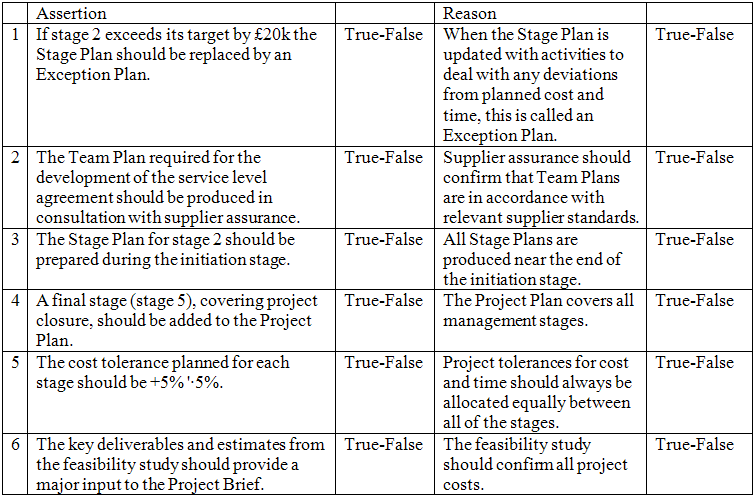
Line 1 (Option E): Assertion is False. The deviation (£20k) is within the tolerance (±£45k), so no Exception Plan is needed. Reason is False. Exception Plans are created to replace plans only when tolerances are forecast to be exceeded, not for "any deviations" (which are handled via corrective action).
Line 2 (Option A): Assertion is True. Consulting assurance helps ensure the plan passes review. Reason is True. Supplier Assurance must confirm Team Plans meet supplier standards. The Reason explains why consultation is necessary (to ensure the required confirmation is successful).
Line 3 (Option C): Assertion is True. The plan for the next stage (Stage 2) is created during the current stage (Initiation). Reason is False. Only the Stage 2 plan is created in Initiation; subsequent Stage Plans are created in the preceding stage.
Line 4 (Option D): Assertion is False. Closure is a process (Closing a Project), typically performed within the final delivery stage, not a mandatory separate "Stage 5" added solely for closure. Reason is True. The Project Plan covers the entire project duration, including all stages.
Line 5 (Option E): Assertion is False. There is no rule that stage tolerances must equal the project tolerance percentage. Reason is False. Tolerances are allocated based on risk/complexity, not equally.
Line 6 (Option C): Assertion is True. Feasibility data (if available) is a primary input to the Project Brief. Reason is False. A feasibility study provides estimates/viability, it does not "confirm all project costs" (which is done in the Project Plan during Initiation).