
Q: 1
Green Elk & Company is the world's leading manufacturer of agricultural and forestry machinery. The
former company slogan "Elk always runs" has recently been changed to "Elk feeds the world". One of
Green Elk's strategic goals is to increase its revenue in the emerging markets of China, India, and
other parts of Asia by 80 % within three years. This requires a new business model that caters to
significantly smaller farms with limited budgets. You are the Chief Enterprise Architect and the CIO
asks you to assess the now business model for smaller farms with smaller budgets. By applying the
Sustainable Business Model Canvas, which sequence of steps is best practice?

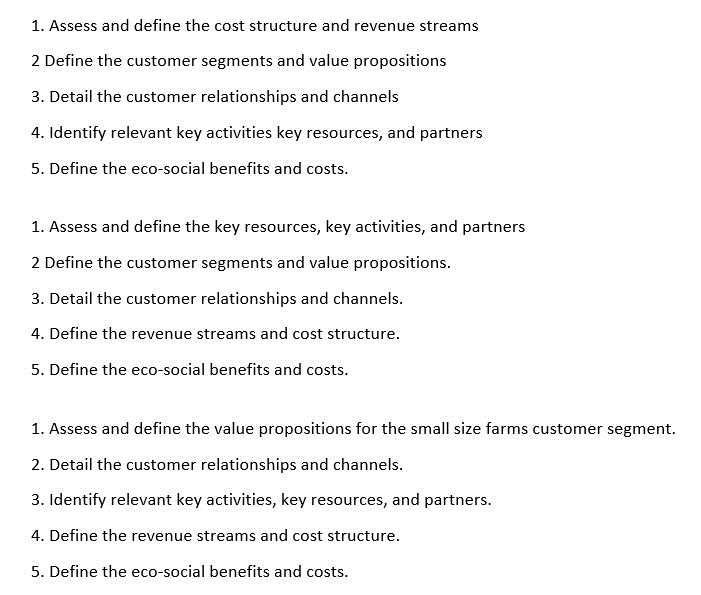
Options
Discussion
C. saw something similar in a recent exam report too.
Option C
C over B here. Best practice with the Sustainable Business Model Canvas is always to start by clarifying the value proposition for your target segment (in this case, smaller farms), not internal resources. B is a common trap because it flips that order. Pretty sure C fits what exam guides say but open if someone has other reasoning.
B. not C. Feels like the trap is thinking Canvas always starts with value props, but SAP has old guidance starting with key resources/partners in some scenarios. Not fully certain though.
It’s C, but how many SAP questions have you seen flip the Canvas order just to trip people up? This one sticks with best practice: nail the value prop and customer segment at the start, then build out channels, activities, resources. Not 100% because SAP loves a twist sometimes, but C matches what I’ve seen in similar exam reports.
Why wouldn't we consider A if the company was focused mostly on financial viability?
C . Had something like this in a mock, and it always starts with defining value proposition and customer segment for the Canvas. Resource assessment comes later. Pretty sure that's what they want here, but open if anyone's got a different take.
B . If the scenario requires verifying available resources or partnerships before pitching to small farms, B becomes more practical.
Not B, C follows the usual canvas flow since you always start by clarifying the value proposition and target customer. B is tempting but jumps into resources too early, which isn’t best practice from what I’ve seen in similar questions.
Maybe B, since starting with resources and partners sometimes makes sense if you need to check technical feasibility first for niche markets.
Be respectful. No spam.
