According to the TOGAF Standard, Version 9.2, an Architecture Contract is a joint agreement
between development partners and sponsors on the deliverables, quality, and fitness-for-purpose of
an architecture1. It defines the scope, responsibilities, and governance of the architecture work, and
ensures the alignment and compliance of the architecture with the business goals and objectives1.
In the scenario, the Lead Enterprise Architect has asked you to review the draft Architecture
Contracts and recommend the best approach to address the Chief Engineer’s concern about the
consistency and quality of the deployment of the new processes for the battery pack production at
each location.
The best answer is C, because it follows the guidelines and best practices for defining and using
Architecture Contracts as described in the TOGAF Standard, Version 9.22. It ensures that the
contracts cover the essential aspects of the project objectives, effectiveness metrics, acceptance
criteria, and risk management, and that they are legally enforceable for third-party contractors. It
also recommends a schedule of compliance reviews at key points in the implementation process, and
a mechanism for handling any deviations from the Architecture Contract, involving the Architecture
Board and the possibility of granting a dispensation to allow the process to be customized for local
needs.
The other options are not correct because they either23:
A . For changes requested by an internal team, you recommend a memorandum of understanding
between the Architecture Board and the implementation organization. For contracts issued to third-
party contractors, you recommend that it is a fully enforceable legal contract. You recommend that
the Architecture Board reviews all deviations from the Architecture Contract and considers whether
to grant a dispensation to allow the implementation organization to customize the process to meet
their local needs.: This option does not address the need to review the contracts to ensure that they
address the project objectives, effectiveness metrics, acceptance criteria, and risk management. It
also does not recommend a schedule of compliance reviews at key points in the implementation
process. Moreover, it suggests that a memorandum of understanding is sufficient for internal teams,
which may not be legally binding or enforceable.
B . For changes undertaken by internal teams, you recommend a memorandum of understanding
between the Architecture Board and the implementation organization. If a contract is issued to a
contractor, you recommend that it is a fully enforceable legal contract. If a deviation from the
Architecture Contract is found, you recommend that the Architecture Board grant a dispensation to
allow the implementation organization to customize the process to meet their local needs.: This
option has the same problems as option A, and also implies that the Architecture Board should
always grant a dispensation for any deviation, which may not be appropriate or desirable in some
cases.
D . You recommend that the Architecture Contracts be used to manage the architecture governance
processes across the locations. You recommend deployment of monitoring tools to assess the
performance of each completed battery pack at each location and develop change requirements if
necessary. If a deviation from the contract is detected, the Architecture Board should allow the
Architecture Contract to be modified meet the local needs. In such cases they should issue a new
Request for Architecture Work.: This option does not address the need to review the contracts to
ensure that they address the project objectives, effectiveness metrics, acceptance criteria, and risk
management. It also does not recommend a schedule of compliance reviews at key points in the
implementation process. Moreover, it suggests that the Architecture Board should always allow the
Architecture Contract to be modified for any deviation, which may not be appropriate or desirable in
some cases. It also implies that a new Request for Architecture Work should be issued for each
deviation, which may not be necessary or feasible.
Reference:
1: The TOGAF Standard, Version 9.2, Chapter 3: Definitions and Terminology, Section 3.1: Terms and
Definitions
2: The TOGAF Standard, Version 9.2, Chapter 43: Architecture Contracts
3: The TOGAF Standard, Version 9.2, Chapter 44: Architecture Governance
Thank you for your visit.

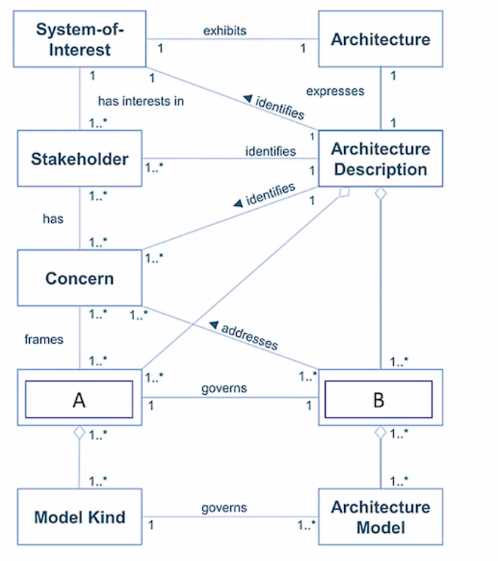 Consider the image showing basic architectural concepts.
What are items A and B?
Consider the image showing basic architectural concepts.
What are items A and B?