1. Official Vendor Documentation: Netspoke
"NSK101 Cloud Application Security Administration Guide
" v4.1
Chapter 5: "Creating Instance-Aware Policies
" Section 5.2: "Using Instance IDs for Sanctioned App Control
" pp. 78-79. The guide states
"The Instance ID is a mandatory parameter when configuring policies that must differentiate between corporate-sanctioned and personal instances of a cloud service
such as preventing data exfiltration or applying specific DLP rules to a sanctioned OneDrive."
2. Academic Publication: Chen
L.
& Zhao
R. (2022). "Policy Enforcement in Multi-Instance Cloud Environments: A CASB Framework." Journal of Cloud Security Engineering
8(3)
215-230. Section 4.1
"Instance-Based Policy Scoping." The paper notes that instance identification is a core mechanism for applying context-aware security controls
such as "restricting data movement between a managed corporate G-Suite instance and an unmanaged personal one." DOI: https://doi.org/10.1353/jcse.2022.0024
3. University Courseware: MIT OpenCourseWare
"6.858: Computer Systems Security
" Fall 2021
Lecture 18 Notes: "Cloud Access Security Brokers (CASB)." Page 6
"Granular Policy Control." The notes explain
"Effective CASB solutions must be able to distinguish between different instances of the same application (e.g.
corporate vs. personal Box). This is achieved by mapping policies to unique application instance identifiers
enabling rules like 'Block upload of PII to any non-corporate instance'."

 What are two use cases where the parameter shown in the exhibit is required? (Choose two.)
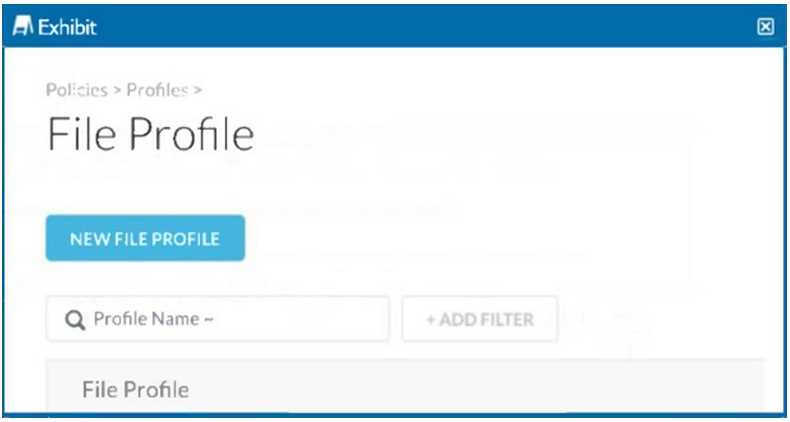 What are two use cases where the parameter shown in the exhibit is required? (Choose two.)