
Q: 1
Refer to the exhibit.
 A RAML definition has been proposed for a new Promotions Process API, and has been published to
Anypoint Exchange.
The Marketing Department, who will be an important consumer of the Promotions API, has
important requirements and expectations that must be met.
What is the most effective way to use Anypoint Platform features to involve the Marketing
Department in this early API design phase?
A) Ask the Marketing Department to interact with a mocking implementation of the API using the
automatically generated API Console
B) Organize a design workshop with the DBAs of the Marketing Department in which the database
schema of the Marketing IT systems is translated into RAML
C) Use Anypoint Studio to Implement the API as a Mule application, then deploy that API
implementation to CloudHub and ask the Marketing Department to interact with it
D) Export an integration test suite from API designer and have the Marketing Department execute
the tests In that suite to ensure they pass
A RAML definition has been proposed for a new Promotions Process API, and has been published to
Anypoint Exchange.
The Marketing Department, who will be an important consumer of the Promotions API, has
important requirements and expectations that must be met.
What is the most effective way to use Anypoint Platform features to involve the Marketing
Department in this early API design phase?
A) Ask the Marketing Department to interact with a mocking implementation of the API using the
automatically generated API Console
B) Organize a design workshop with the DBAs of the Marketing Department in which the database
schema of the Marketing IT systems is translated into RAML
C) Use Anypoint Studio to Implement the API as a Mule application, then deploy that API
implementation to CloudHub and ask the Marketing Department to interact with it
D) Export an integration test suite from API designer and have the Marketing Department execute
the tests In that suite to ensure they pass
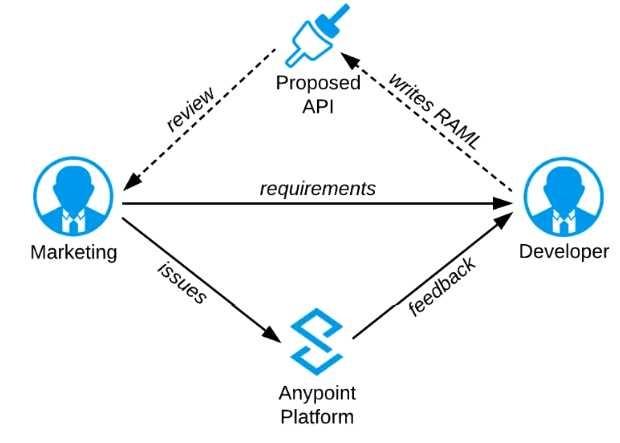 A RAML definition has been proposed for a new Promotions Process API, and has been published to
Anypoint Exchange.
The Marketing Department, who will be an important consumer of the Promotions API, has
important requirements and expectations that must be met.
What is the most effective way to use Anypoint Platform features to involve the Marketing
Department in this early API design phase?
A) Ask the Marketing Department to interact with a mocking implementation of the API using the
automatically generated API Console
A RAML definition has been proposed for a new Promotions Process API, and has been published to
Anypoint Exchange.
The Marketing Department, who will be an important consumer of the Promotions API, has
important requirements and expectations that must be met.
What is the most effective way to use Anypoint Platform features to involve the Marketing
Department in this early API design phase?
A) Ask the Marketing Department to interact with a mocking implementation of the API using the
automatically generated API Console
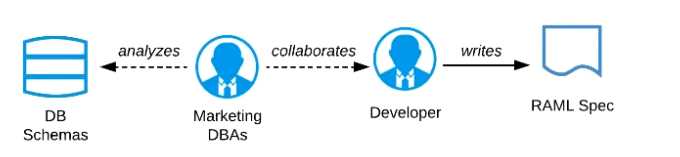
 B) Organize a design workshop with the DBAs of the Marketing Department in which the database
schema of the Marketing IT systems is translated into RAML
B) Organize a design workshop with the DBAs of the Marketing Department in which the database
schema of the Marketing IT systems is translated into RAML
 C) Use Anypoint Studio to Implement the API as a Mule application, then deploy that API
implementation to CloudHub and ask the Marketing Department to interact with it
C) Use Anypoint Studio to Implement the API as a Mule application, then deploy that API
implementation to CloudHub and ask the Marketing Department to interact with it
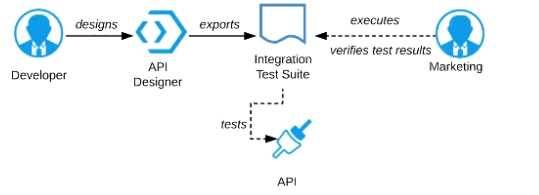
 D) Export an integration test suite from API designer and have the Marketing Department execute
the tests In that suite to ensure they pass
D) Export an integration test suite from API designer and have the Marketing Department execute
the tests In that suite to ensure they pass
Options
Discussion
No comments yet. Be the first to comment.
Be respectful. No spam.
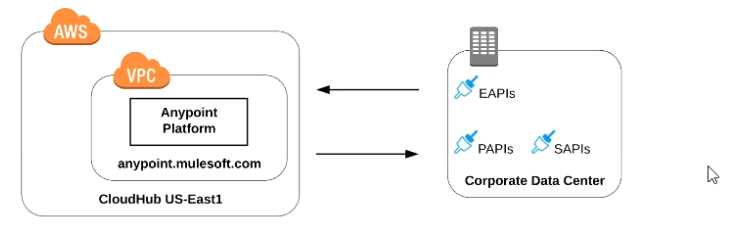 what is true when using customer-hosted Mule runtimes with the MuleSoft-hosted Anypoint
Platform control plane (hybrid deployment)?
what is true when using customer-hosted Mule runtimes with the MuleSoft-hosted Anypoint
Platform control plane (hybrid deployment)?