Note that private flow has error scope defined as On Error Continue . So when error occurs in private
flow , it is handled by this On Error Continue scope which sends success response back to main flow
and does not throw back an error. So main continues normally and payload is set to Success - main
flow.
Hence correct answer is Success - main flow
1) HTTP listener received request
2) The Flow Reference calls the child flow
3) The Is Number validator creates an Error Object because the payload isn’t an integer. Child Flow
execution stops
#[error.description] = “payload is not a valid INTEGER value”
#[error.errorType] = VALIDATION:INVALID_NUMBER
4) The On Error Continue handles the errorThe payload is set to “Error – Sub Flow”
5) “Error – Sub Flow” is returned to the main flow as if the child flow was a success. The Set Payload
is executed. The payload is reset to “Success – Finished Main Flow”
6) “Success – Main Flow” is returned to the requestor in the body of the HTTP request. HTTP Status
Code: 200
As you can see, in the above example, because the error was caught by an On Error Continue scope
in the child flow (RED in, GREEN out) when the Mule Message returns to the parent flow, the parent
flow knows none-the-different that there was a failure because the on error continue returns a 200
success message. Note that because, to the mainFlow, the childFlow appeared to succeed, the
processing of mainFlow resumed after the flow reference.
https://kxbjsyuhceggsyvxdkof.supabase.co/storage/v1/object/public/file-images/MuleSoft_MCD-Level-1/page_42_img_1.jpg

 B)
B)
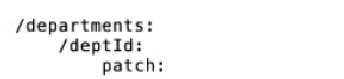 B)
B)
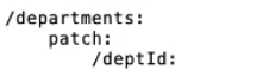 C)
C)
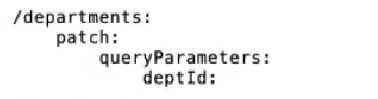 D)
D)
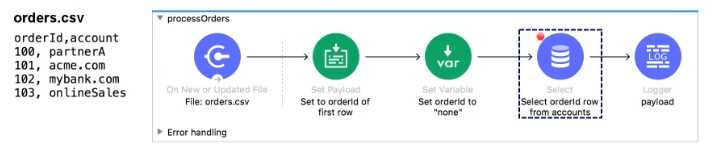 The orders.csv file is read, then processed to look up the orders in a database. The Mule application
is debugged in Any point Studio and stops at the breakpoint.
What is the payload shown in the debugger at this breakpoint?
The orders.csv file is read, then processed to look up the orders in a database. The Mule application
is debugged in Any point Studio and stops at the breakpoint.
What is the payload shown in the debugger at this breakpoint?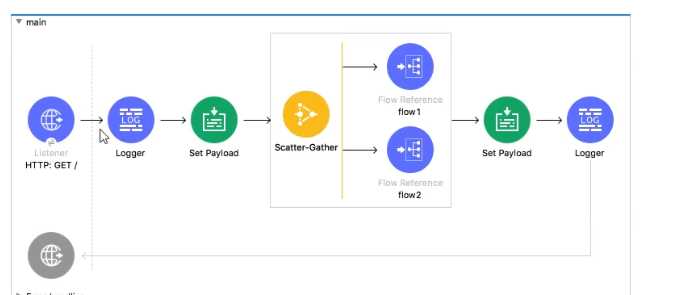 In the execution of the Scatter_Gather, the flow1 route completes after 10 seconds and the flow2
route completes after 20 seconds.
How many seconds does it take for the Scatter_Gather to complete?
In the execution of the Scatter_Gather, the flow1 route completes after 10 seconds and the flow2
route completes after 20 seconds.
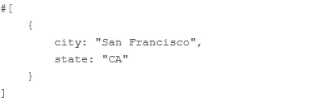
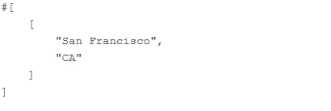
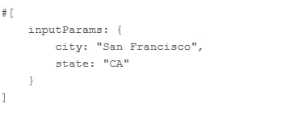
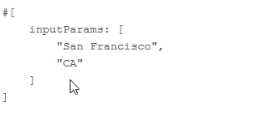
How many seconds does it take for the Scatter_Gather to complete?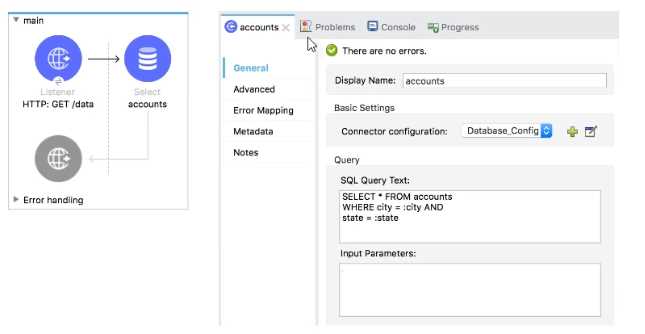 What expression correctly specifies input parameters to pass the city and state values to the SQL
query?
A)
What expression correctly specifies input parameters to pass the city and state values to the SQL
query?
A)
 B)
B)
 C)
C)
 D)
D)
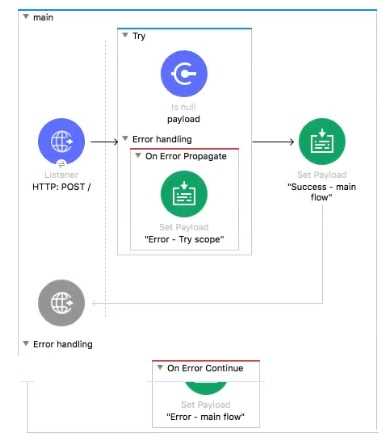
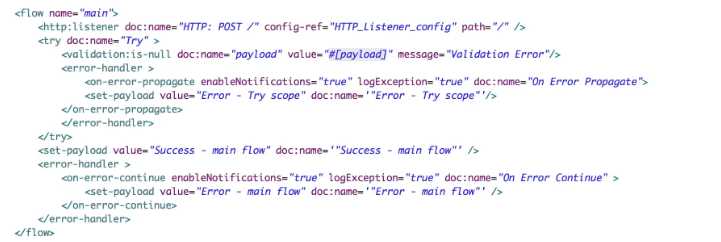 The Validation component in the Try scope throws an error.
What response message is returned to a client request to the main flow's HTTP Listener?
The Validation component in the Try scope throws an error. What response message is returned to a
client request to the main flow's HTTP Listener?
The Validation component in the Try scope throws an error.
What response message is returned to a client request to the main flow's HTTP Listener?
The Validation component in the Try scope throws an error. What response message is returned to a
client request to the main flow's HTTP Listener?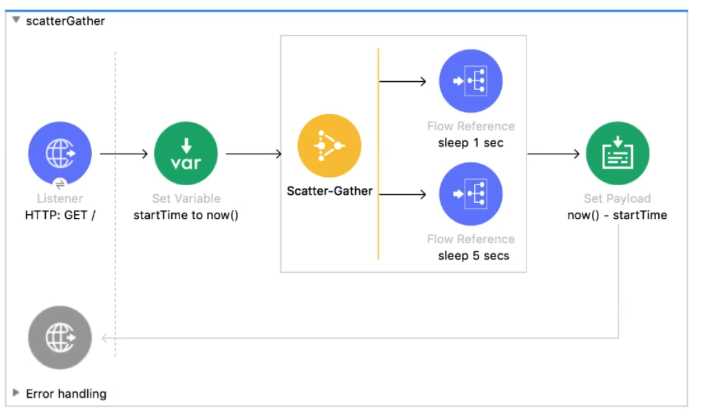
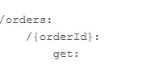 B)
B)
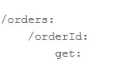 C)
C)
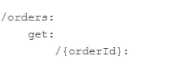 D)
D)
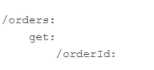
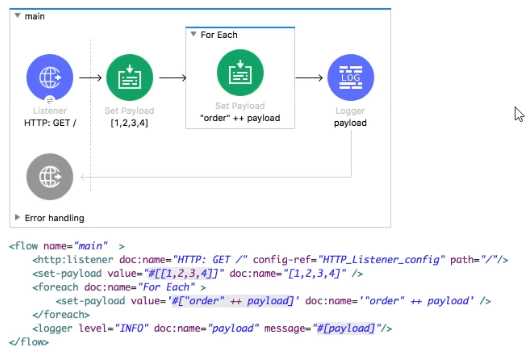
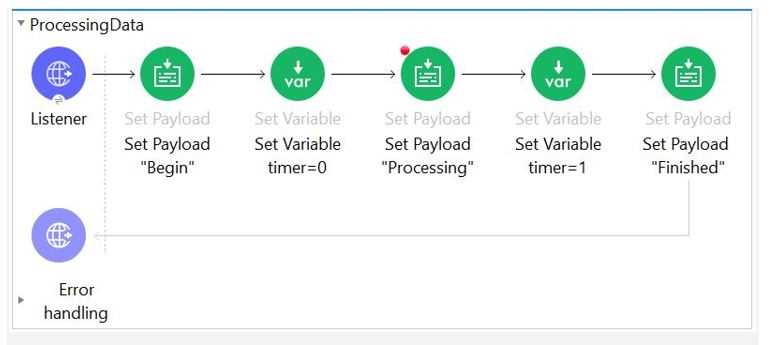 The Mule Application is being debugged in Anypoint Studio and stops at breakpoint. What is the
value of payload displayed in debugger at this breakpoint?
The Mule Application is being debugged in Anypoint Studio and stops at breakpoint. What is the
value of payload displayed in debugger at this breakpoint?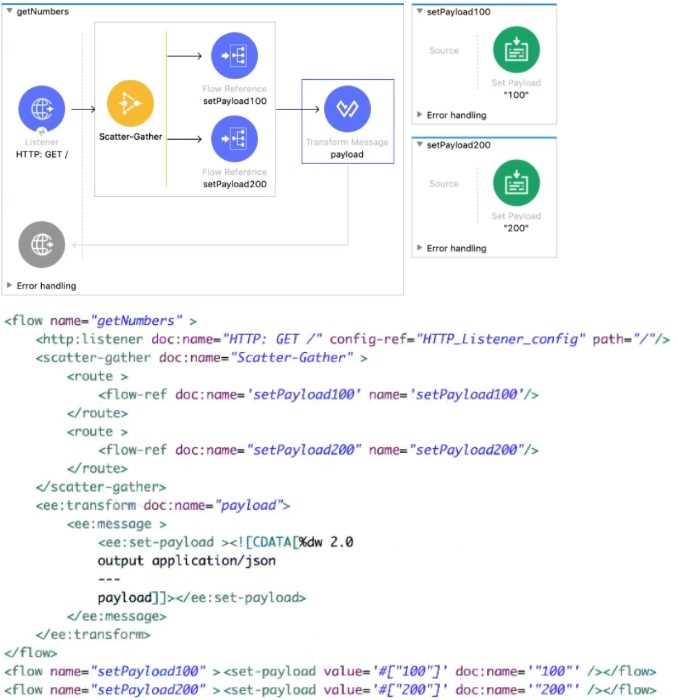 Each route in the Scatter-Gather sets the payload to the number shown in the label. What response
is returned to a web client request to the HTTP Listener?
A)
Each route in the Scatter-Gather sets the payload to the number shown in the label. What response
is returned to a web client request to the HTTP Listener?
A)
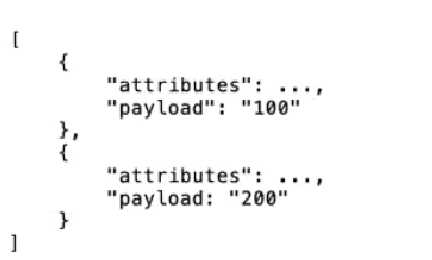 B)
B)
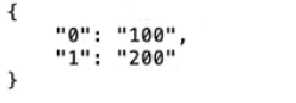 C)
C)
 D)
D)