📖 About this Domain
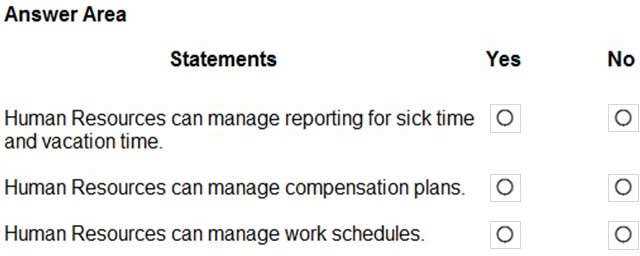
This domain introduces the core Human Capital Management (HCM) capabilities of Dynamics 365 Human Resources. It focuses on managing the complete employee lifecycle from hire to retire. Key areas include personnel administration, compensation, benefits, and leave and absence management.
🎓 What You Will Learn
- Explore core HR functionalities, including personnel management, organizational hierarchies, and employee and manager self-service (ESS/MSS) portals.
- Understand the processes for creating and managing compensation and benefits plans, including fixed and variable compensation structures.
- Learn the configuration and administration of leave and absence plans, including accrual rules and request workflows.
- Discover the capabilities for managing employee development, including performance management, training, and compliance tracking.
🛠️ Skills You Will Build
- Ability to describe the key components of the personnel management workspace and the employee record.
- Skill in identifying the features used for benefits administration and compensation management processes.
- Competency in explaining the workflow for leave and absence requests and approvals via self-service portals.
- Understanding of how to articulate the value of integrating D365 Human Resources with other business applications.
💡 Top Tips to Prepare
- Complete the official Microsoft Learn path for MB-920, focusing specifically on the Dynamics 365 Human Resources module.
- Memorize the key functions of core HR modules: Personnel management, Compensation, Benefits, and Leave and absence.
- Understand the distinction and purpose of Employee Self-Service (ESS) versus Manager Self-Service (MSS) portals.
- Review the solution's capabilities for compliance management and how it helps organizations meet regulatory requirements.
📖 About this Domain
This domain covers the core financial management capabilities within Dynamics 365 Finance. You will explore key modules such as General ledger, Accounts payable, and Accounts receivable. The focus is on understanding how the application supports financial planning, budgeting, and expense tracking for an organization.
🎓 What You Will Learn
- Explore core financial capabilities including the General ledger, chart of accounts, and financial dimensions.
- Understand key financial management processes like Accounts payable (AP), Accounts receivable (AR), and cash and bank management.
- Learn about budgeting, planning, and forecasting features, including budget control and registry entries.
- Discover expense management capabilities for creating, submitting, and approving expense reports.
🛠️ Skills You Will Build
- Identify the function of core financial components like the General ledger, financial dimensions, and journals.
- Describe the financial impact of the procure-to-pay and order-to-cash business processes.
- Explain how budget planning, budget control, and forecasting tools help manage organizational finances.
- Articulate the end-to-end process for expense management, from submission to reimbursement.
💡 Top Tips to Prepare
- Memorize the core functions of General ledger, Accounts payable, and Accounts receivable modules.
- Master the concept of financial dimensions and how they are used for financial reporting and analysis.
- Focus on the high-level process flows for budget control and expense management, not deep configuration.
- Utilize the Microsoft Learn learning path for MB-920 to navigate the Finance and Operations user interface.
📖 About this Domain
This domain covers the core functional capabilities of Dynamics 365 Supply Chain Management. It focuses on modules that enable a connected, resilient, and intelligent supply chain. You will explore functionalities from inventory and logistics to manufacturing and asset management.
🎓 What You Will Learn
- You will learn the capabilities of core logistics modules, including Inventory Management, Warehouse Management (WMS), and Transportation Management (TMS).
- You will learn to identify different manufacturing strategies such as discrete, process, and lean manufacturing within the solution.
- You will learn how the Asset Management module helps organizations minimize downtime and maximize asset performance.
- You will learn the function of Product Information Management (PIM) for centralizing product master data across the enterprise.
🛠️ Skills You Will Build
- You will build the skill to identify key SCM modules and their specific business use cases.
- You will build the ability to articulate the value proposition of an integrated supply chain solution using Dynamics 365.
- You will build the skill to differentiate between various manufacturing and warehousing strategies supported by the application.
- You will build the ability to describe how IoT Intelligence and mixed reality enhance supply chain visibility and operations.
💡 Top Tips to Prepare
- Focus on the purpose of each major module like Inventory, WMS, TMS, Manufacturing, and Asset Management.
- Complete the official Microsoft Learn path for Dynamics 365 Supply Chain Management fundamentals to cover all exam objectives.
- Understand the key differentiators between discrete, process, and lean manufacturing concepts as they apply to Dynamics 365.
- Review case studies on how features like the Planning Optimization Add-in and IoT Intelligence solve real-world supply chain challenges.
📖 About this Domain
This domain covers Dynamics 365 Commerce, an end-to-end omnichannel solution for B2C and B2B organizations. It unifies back-office, in-store, call center, and digital e-commerce experiences. The focus is on creating a seamless and personalized customer journey across all commerce channels.
🎓 What You Will Learn
- You will learn the omnichannel capabilities that connect physical and digital retail operations for a unified customer view.
- You will learn about the B2B and B2C e-commerce functionalities, including the site builder and digital asset management.
- You will learn how Dynamics 365 Fraud Protection uses AI to protect e-commerce revenue against payment fraud.
- You will learn the core capabilities for managing store operations with Modern POS (MPOS) and Cloud POS (CPOS), and for handling customer service via the call center module.
🛠️ Skills You Will Build
- You will build the skill to describe how the unified commerce platform enables buy online, pickup in store (BOPIS) scenarios.
- You will build the skill to differentiate between B2B-specific features like partner onboarding and B2C features like ratings and reviews.
- You will build the skill to explain the function of the Commerce Scale Unit (CSU) in supporting store and e-commerce operations.
- You will build the skill to articulate the value of integrated fraud protection within the e-commerce checkout workflow.
💡 Top Tips to Prepare
- Focus on the concept of a headless commerce engine and how it enables channel-agnostic experiences.
- Review the architecture of Commerce, including the roles of Commerce Headquarters and the Commerce Scale Unit (CSU).
- Understand the key differences in functionality and user experience between the B2B and B2C e-commerce portals.
- Memorize the three main capabilities of Dynamics 365 Fraud Protection: account protection, purchase protection, and loss prevention.
📖 About this Domain
This domain covers the cross-application functionalities and foundational capabilities shared across Dynamics 365 Finance and Operations apps. It focuses on core platform features that enhance productivity, data analysis, and system interoperability. Understanding these shared components is critical for a holistic view of the F&O ecosystem.
🎓 What You Will Learn
- You will learn about reporting and analytics capabilities, including SSRS reports, Power BI integration, and the Financial reporting tool.
- You will learn about the Dynamics 365 mobile app and how to create and publish mobile workspaces for on-the-go access.
- You will learn about Microsoft Office integration features like the Excel Data Connector add-in for data manipulation and document templates.
- You will learn about the Data Management Framework (DMF) and data entities for data migration and integration tasks.
🛠️ Skills You Will Build
- You will build the skill to identify the correct reporting tool, such as Power BI or SSRS, for a given business intelligence scenario.
- You will build the skill to describe the process of configuring and deploying mobile workspaces to enable task-based mobile access.
- You will build the skill to apply Office integration, specifically the Excel add-in, for bulk data editing and publishing back to F&O.
- You will build the skill to articulate how the Data Management Framework (DMF) uses data entities for data import and export jobs.
💡 Top Tips to Prepare
- Focus on the specific use cases for each reporting tool; differentiate when to use SSRS, Power BI, or Financial reporting.
- Gain practical understanding of the Excel Data Connector's functions, including data refresh, filtering, and publishing.
- Master the concept of data entities as the primary mechanism for all data migration and integration within the DMF.
- Review the steps for creating a mobile workspace to understand how F&O forms and business logic are exposed on mobile devices.
📖 About this Domain
This domain covers Dynamics 365 Project Operations, an application that unifies operational workflows for project-centric businesses. It connects sales, resourcing, project management, and finance teams in a single solution. The application manages the complete project lifecycle from opportunity management to project accounting.
🎓 What You Will Learn
- You will learn project-based sales capabilities, including quoting, contracting, and opportunity management for services.
- You will learn project planning and execution, focusing on the Work Breakdown Structure (WBS), resource scheduling, and task management.
- You will learn project financials, including time and expense tracking, project costing, budgeting, and revenue recognition.
- You will learn about project analytics for monitoring key performance indicators (KPIs) like project profitability and resource utilization.
🛠️ Skills You Will Build
- You will build the skill to describe the end-to-end quote-to-cash process for project-based organizations.
- You will build the skill to identify core components like project contracts, bookable resources, and project tasks.
- You will build the skill to explain how project management and resource management capabilities support project delivery.
- You will build the skill to articulate how project accounting integrates with core finance modules for accurate financial tracking.
💡 Top Tips to Prepare
- Focus on the complete project lifecycle, from the initial sales quote to final project invoicing and analysis.
- Understand the key differentiators between Project Operations deployment types, such as Lite versus Resource/non-stocked scenarios.
- Memorize core entities and their relationships, including Work Breakdown Structure (WBS), project contracts, and resource requirements.
- Utilize the official Microsoft Learn path for MB-920 to understand the application's core features and business value.