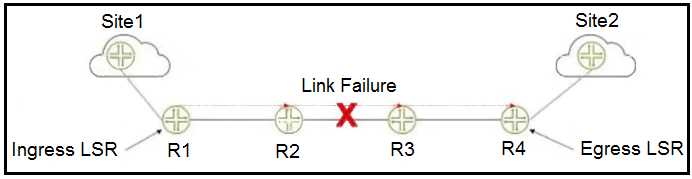
You are advertising a summary route that represents your local network (172.20.0.0716) to both ISP
A and ISPB. You want to influence all traffic sent to you from ISP C to go through R2.
How would you accomplish this task?Q: 1
Exhibit
You are advertising a summary route that represents your local network (172.20.0.0716) to both ISP
A and ISPB. You want to influence all traffic sent to you from ISP C to go through R2.
How would you accomplish this task?
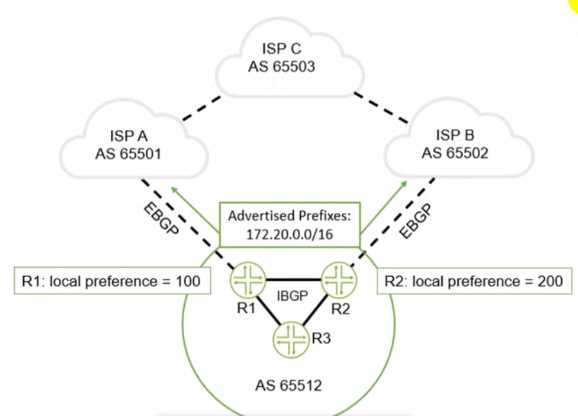
You are advertising a summary route that represents your local network (172.20.0.0716) to both ISP
A and ISPB. You want to influence all traffic sent to you from ISP C to go through R2.
How would you accomplish this task?Options
Discussion
Had something just like this on my exam. The trick is to use AS path prepending from R2 so ISP C sees a longer path if coming via R1, making traffic favor the R2 route. Option C lines up with that. Anyone see it differently?
A I think changing local preference on R1 (B) would push inbound traffic through that path, since higher local pref is preferred. Not totally sure if that affects ISP C though, but seems logical to me. Open to other takes.
Yeah, C makes the most sense. If you want to steer incoming routes from ISP C via R2, you need to manipulate the AS path by prepending your AS on R2's outbound route towards ISP 2. Pretty sure that's the usual BGP trick for this scenario.
C here. The distractor is A, but to influence inbound from ISP C you need to prepend on R2 when sending to ISP 2, not on R1. Seen similar logic in practice exams, pretty sure this is the right call.
These BGP questions are always tricky with the path engineering. C
Maybe C. Not totally confident here but AS path prepending on R2 looks like the best bet to affect traffic from ISP C. Anyone see a situation where A could work instead?
C
C here, not A. The trap is thinking you prepend on R1, but for inbound traffic engineering from ISP C, the AS path must be lengthened out of R2 toward ISP 2. Seen this on Juniper practice sets, pretty sure it's C unless I'm missing something.
C imo. You want ISP C to prefer the path via R2, so you prepend your AS on that route when advertising it out from R2 to influence BGP path selection using AS path length. Local preference changes (like B or D) won’t work across different ASes. Pretty sure C’s what Juniper expects here.
Be respectful. No spam.
Q: 2
You are implementing traffic engineering in your MPLS network. You must ensure that the MPLS
routes are used to traverse your network. Your solution should not affect IGP routes in your route
tables.
In this scenario, which traffic engineering setting will accomplish this behavior?
Options
Discussion
Option B
B is the way to go here since 'mpls-forwarding' makes sure only the MPLS traffic engineering paths are used for forwarding, but it doesn't touch regular IGP routing tables. That's what the question is getting at. I'm pretty sure about this since it's straight from Juniper docs. Disagree?
Don’t think it’s B this time, I’m picking D. People sometimes pick A here but that one can be a bit misleading.
D , because bgp can direct traffic paths and sometimes that's how TE is set. But A feels like a trap option.
A isn’t right, B is. With mpls-forwarding, you keep IGP routing untouched and let MPLS pin TE paths, which is the whole point here. Pretty sure that’s what the exam expects-unless they sneak in LSP distribution tweaks.
You want to force MPLS to handle the forwarding without touching IGP routes, so B.
A isn't right here, it's B. Super clear wording in this one.
Be respectful. No spam.
Q: 3
Click the Exhibit button.
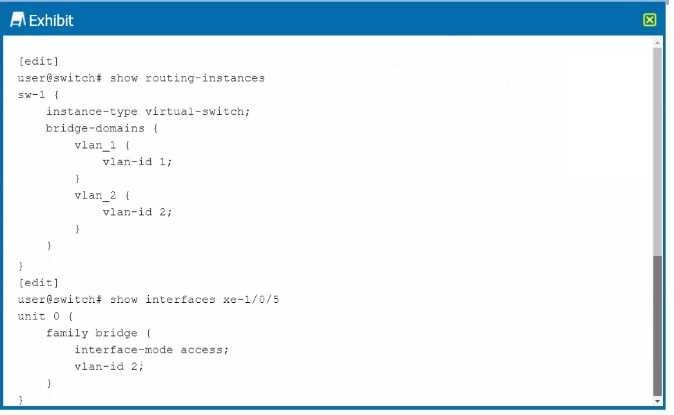
Referring to the exhibit, you have an established RSVP LSP between R1 and R4 when you experience
a link failure between R2 and R3.
Which two statements are correct? (Choose two.)
Referring to the exhibit, you have an established RSVP LSP between R1 and R4 when you experience
a link failure between R2 and R3.
Which two statements are correct? (Choose two.)Options
Discussion
Agreed, it should be A and D here. That's how RSVP handles teardown after a link fails-ResvTear goes upstream from R2, and ResvTear also gets sent downstream from R3. Pretty sure that's straight from Juniper docs, but let me know if someone saw different behavior in lab.
Wouldn't C make sense if R2 had to clear state upstream first in certain RSVP scenarios?
B , but C is a trap here, correct pair is A and D based on RSVP signaling. Seen this split in Juniper practice material.
C or D? I remember something about PathTear and ResvTear messages when the RSVP LSP breaks, but not sure which router sends which. Anyone got this one right on a practice test?
Be respectful. No spam.
Q: 4
Exhibit
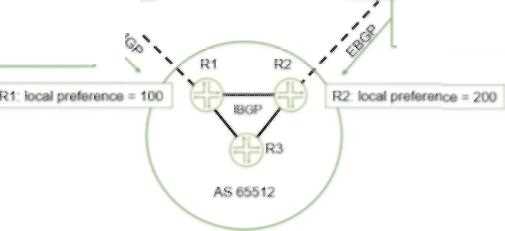
You are asked to assign interface xe-1/0/5 to a virtual switch.
What must be accomplished to complete the configuration?
You are asked to assign interface xe-1/0/5 to a virtual switch.
What must be accomplished to complete the configuration?Options
Discussion
Option A
Had something like this in a mock. Pretty sure A is right because you need to tie the interface to the correct VLAN within the routing-instance. Don't think trunking or IRB config is needed in this case, just need to add it under vlan_2. Let me know if anyone did it differently.
Pretty sure it's A here.
Its D-if the question asked for the first config step only, would that change which resource is best to review in the official guide?
Be respectful. No spam.
Q: 5
Which BGP message type is used to re-advertise routes that have already been sent to a peer and
acknowledged using TCP?
Options
Discussion
Option A
A is the BGP message for sending updates or withdrawals. D (refresh) is just a capability, not an actual message type in the standard. Pretty confident on A but correct me if I mixed something up here.
A does the re-advertising here, since it's the actual BGP message for updates or withdrawals. D gets folks confused, but it's not a real BGP message type. I think A is right based on protocol docs, but open to corrections.
Maybe D
A tbh
C/D? A is for advertising or re-advertising routes, but D (refresh) sometimes gets mixed up since there's a route refresh capability. Not 100% sure, leaning A since refresh isn't an actual BGP message type.
A
Update is the actual message type for sending/re-advertising routes. D is a trap here because Route Refresh isn't a BGP message, it's a capability. Seen similar question in labs. Pretty sure A is right unless they meant something else.
Be respectful. No spam.
Q: 6
Which BGP attribute Is used to detect touting loops?
Options
Discussion
A, AS path
Loop detection in BGP depends on the AS path, so A. But if confederations are used, it can get tricky.
Be respectful. No spam.
Q: 7
Exhibit
S Exhibit
LSI1 A AS 65501
ISPB AS 65502
Advertised Prefixes: 172.20.0.0/24 172.20.20.0/24 172.20.21.0/24
\ N
Advertised Prefixes: 172.20.0.0/24
172.20.1.0/24
Referring to the exhibit, which two statements are correct? (Choose two.)
Referring to the exhibit, which two statements are correct? (Choose two.)Options
Discussion
These Juniper questions always twist BGP basics. It's A and B.
Yep, both A and B fit the BGP local preference logic here.
A/B here. ISP B not advertising 172.20.21.0/24 is the trap, so only ISP A can be used for that prefix. Disagree?
Small catch here, it's A and B since ISP B isn't even advertising 172.20.21.0/24 so that flips the logic.
Its A and B, but only because ISP B doesn’t announce 172.20.21.0/24 so default tie-breakers don’t even apply there.
Option A and Option D. Not totally sure since the prefixes overlap a bit, but I think AS 65512 will use ISP A for traffic to 172.20.21.0/24 (since only A advertises it), and ISP B for 172.20.0.0/24 because of higher local pref.
Be respectful. No spam.
Q: 8
What are three types of MPLS routers? (Choose three.)
Options
Discussion
I don’t think B is correct. Peering routers isn’t a specific MPLS router type, but ingress, egress, and transit (A, C, E) are defined roles in MPLS. Pretty sure that's what the question wants.
Option B Saw a similar question in practice, picked B but maybe missed something.
Totally see why people wonder about B or D, but pretty sure it's A, C, E. Ingress, egress, and transit are the terms Junos uses for MPLS label application/removal/forwarding. Not 100 percent, so open to debate if someone has a different source.
Not B, ACE is right. Transit, ingress, and egress are the three actual MPLS router roles from the official guide and labs. Peering and aggregation are just general network terms, not specific to MPLS. Pretty sure about this but let me know if you see it differently in official practice tests.
ACE tbh
I don't think it's D, I'd pick B instead. Peering routers seem like they could be MPLS router types since they're often at boundaries, while aggregation feels more like a design function. Not sure if that's a trap though. B.
A, C, and E make sense here. Ingress, egress, and transit are the core MPLS router roles-they apply, swap, or remove labels. B and D aren't defined MPLS roles, just more generic terms. I think ACE is correct but open if there's another take.
Be respectful. No spam.
Q: 9
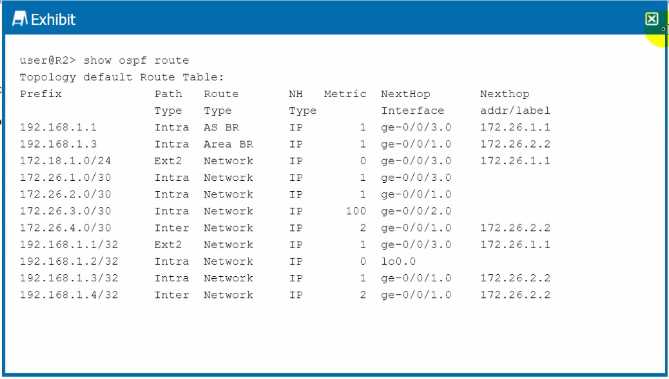
Exhibit
Which prefix in the output shown in the exhibit is an external prefix injected by an OSPF router?
Which prefix in the output shown in the exhibit is an external prefix injected by an OSPF router?Options
Discussion
B or maybe D, depends if the output tags Ext2 properly. With Junos sometimes odd formatting throws me off.
B tbh, the Ext2 tag in Junos literally shows it's an OSPF external route. D looks weird with that format but I don't think it's meant to trip us up here.
Option D, just because the formatting looks odd but maybe that's an external too?
B here, since OSPF 'Ext2' marks external prefixes redistributed from other sources. Junos always shows that tag for external routes in the table. Not 100% but matches what I've seen in lab sims, correct me if I'm off.
Pretty sure it's B, seen similar asked in official guide and OSPF labs.
Be respectful. No spam.
Q: 10
Which OSPF database packet determines which router is in charge of the database synchronization
and the transferring of LSA headers between the two systems?
Options
Discussion
Its B. Database description packets set the master/slave roles for OSPF sync. Link-state request is just for missing LSAs, not control.
A tbh, since link-state request packets seem like they're doing the actual work of database sync by asking for LSAs that are missing. Database description feels more like just sharing summaries, not deciding who controls the process. I could be missing a detail but that's how I remember it from OSPF section. Anyone see it differently?
Probably B, not A. The link-state request is a common trap but the sync control actually happens with database description packets.
I don’t think it’s B. A should be the correct answer, since link-state request packets are used for database synchronization too, right? I remember similar questions mentioning that as a common trap.
B imo. The database description packet (DBD) is what OSPF uses during adjacency setup to decide the master/slave relationship between neighbors, so it determines who manages the sync and exchanges the LSA headers. The others like hello or update don't do this part. Pretty sure that's right but open to corrections.
Be respectful. No spam.
Question 1 of 20 · Page 1 / 2