1. Massachusetts Institute of Technology (MIT) OpenCourseWare. (2005). 1.018J / 7.30J / 10.021J / 1.963J Ecology I: The Earth System, Lecture 19 - Industrial Ecology and Life Cycle Assessment. Section on "Life Cycle Assessment of Concrete." This courseware explains how using industrial byproducts like fly ash in concrete reduces environmental impact and embodied energy. Available at: https://ocw.mit.edu/courses/1-018j-ecology-i-the-earth-system-fall-2009/resources/mit1018jf09lec19/
2. Glavinich, T. E. (2008). Contractor's Guide to Green Building Construction: Management, Project Delivery, Documentation, and Risk Reduction. John Wiley & Sons. Chapter 10, "Site and Building Envelope," distinguishes between embodied energy (related to materials like fly ash concrete) and operational energy (affected by shading and high-SRI surfaces).
3. Ochsendorf, J. (2013). Sustainable Engineering: Embodied Energy. University of Cambridge. This academic resource details the concept of embodied energy, highlighting that cement production accounts for 5-10% of global CO2 emissions and that replacing it with materials like fly ash is a key reduction strategy. It also lists aluminum as a material with very high embodied energy.

 What strategy is good for embodied energy saving?
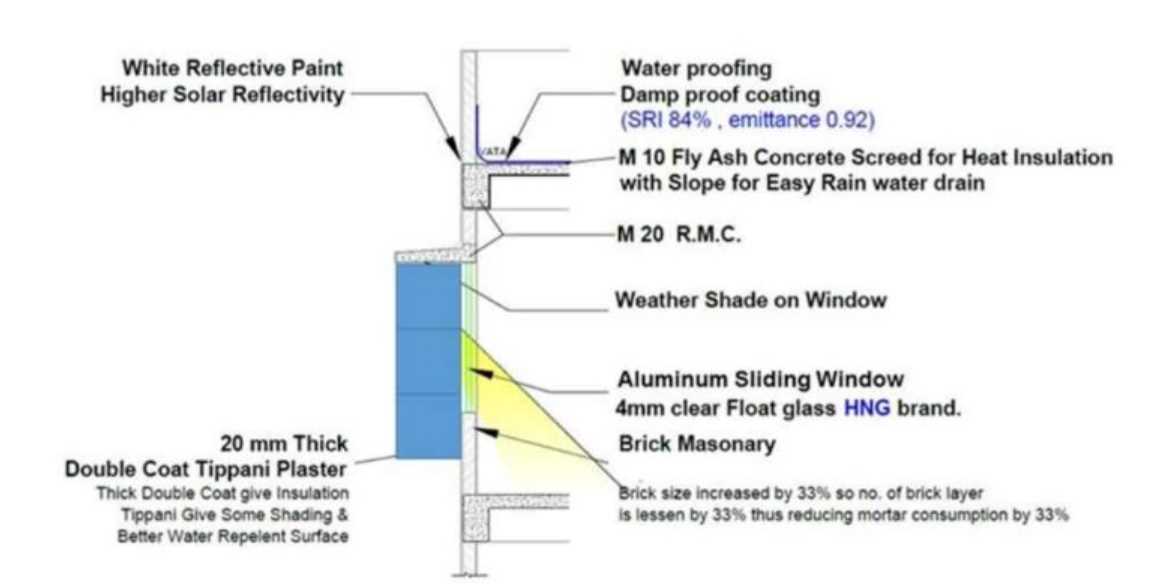 What strategy is good for embodied energy saving?