
Q: 18
DRAG DROP Order the below steps to create an effective vulnerability management process. 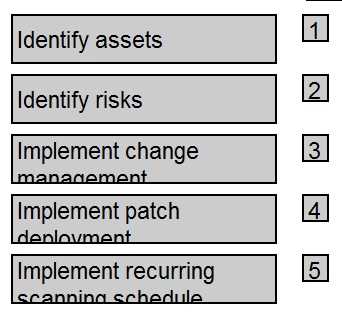
Drag & Drop
Discussion
Identify assets → Identify risks → Implement recurring scanning schedule → Implement change management → Implement patch deployment. I'd put change management before patching to fit CISSP's best practice, since skipping approvals is a big governance risk. Saw some get tripped up by that swap, agree?
Identify assets → Identify risks → Implement recurring scanning schedule → Implement change management → Implement patch deployment. Saw similar flow in the official guide, pretty sure that's the textbook sequence for vulnerability management. If anyone's seen a different order on practice tests, let me know.
Identify assets → Identify risks → Implement recurring scanning schedule → Implement patch deployment → Implement change management. I usually see patching done before formal change management in a crisis, so that's how I lined it up. Not totally sure if this goes against CISSP exam-style but it's what most ops teams do in practice, right?
Identify assets → Identify risks → Implement recurring scanning schedule → Implement patch deployment → Implement change management. I think patching should come before change management, since sometimes urgent patches go out without waiting for strict process. Not 100% but operationally this feels common.
Identify assets → Identify risks → Implement recurring scanning schedule → Implement patch deployment → Implement change management.
Pretty sure patching usually comes before formal change management in some orgs, since urgent fixes may skip approval. I think this ordering is common in real-world ops, but open to correction.
Pretty sure patching usually comes before formal change management in some orgs, since urgent fixes may skip approval. I think this ordering is common in real-world ops, but open to correction.
Identify assets, Identify risks, Implement recurring scanning schedule, Implement change management, Implement patch deployment. Nice straightforward sequence here.
Be respectful. No spam.
