
Q: 12
DRAG DROP Place in order, from BEST (1) to WORST (4), the following methods to reduce the risk of data remanence on magnetic media. 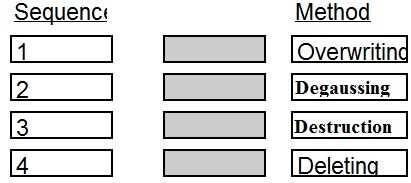
Drag & Drop
Discussion
Totally agree, for magnetic media it should be Destruction first, then Degaussing, Overwriting, and last Deleting. That's classic CISSP approach.
This one's pretty straightforward. Destruction should be first (best), followed by degaussing, then overwriting, and deleting last (worst). Destruction physically destroys the data, while deleting barely touches it. Makes sense per CISSP standards.
- Destruction
- Degaussing
- Overwriting
- Deleting
Destruction, Degaussing, Overwriting, Deleting. Deleting looks tempting to put higher but it's weakest for remanence risk on magnetic media.
I think the right order is Destruction, Degaussing, Overwriting, then Deleting. Destroying media makes recovery impossible, degaussing scrambles magnetic info, overwriting isn’t as strong but still helps, and deleting just removes references. Pretty sure that's what CISSP expects but open to disagreement.
Be respectful. No spam.
