
HOTSPOT You have a management group named MG1 that contains an Azure subscription and a resource group named RG1. RG1 contains a virtual machine named VM1. You have the custom Azure roles shown in the following table. 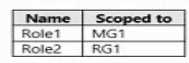 The permissions for Role1 are shown in the following role definition file.
 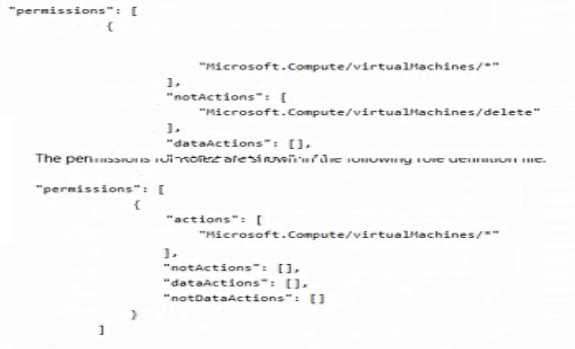 You assign the roles to the users shown in the following table.
 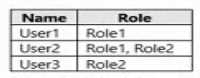 For each of the following statements, select Yes if the statement is true. Otherwise, select No
This matches what I’ve seen on practice tests: NO, NO, YES. The notActions in Role1 block the delete even if another role allows it. Pretty sure that’s how Azure RBAC works, but let me know if anyone found otherwise.
Not quite, it's NO, NO, YES. The notActions in Role1 will override even if Role2 allows delete. Lot of folks miss that deny always wins over an allow in Azure RBAC. Correct me if you see it differently.
