
Q: 17
HOTSPOT You are developing an Azure Web App. You configure TLS mutual authentication for the web app. You need to validate the client certificate in the web app. To answer, select the appropriate options in the answer area. NOTE: Each correct selection is worth one point. 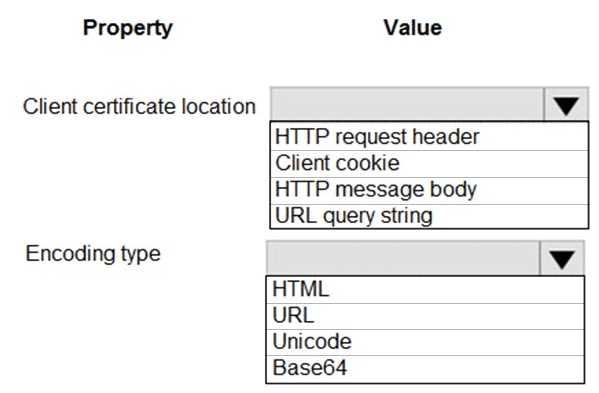
Your Answer
Discussion
Saw something like this in recent exam reports, the answer is the second image with the header and Base64 certificate.
I don’t think just any method works here, it has to be the X-ARR-ClientCert header for Azure Web Apps. The trap is thinking you can pull the cert straight from the request properties, but on App Service it’s always passed in Base64 through that header. Seen this called out in several practice sets. Anyone disagree?
Be respectful. No spam.
