DRAG DROP - You have an Azure subscription that contains two virtual networks named VNet1 and VNet2. Virtual machines connect to the virtual networks. The virtual networks have the address spaces and the subnets configured as shown in the following table.  You need to add the address space of 10.33.0.0/16 to VNet1. The solution must ensure that the hosts on VNet1 and VNet2 can communicate. Which three actions should you perform in sequence? To answer, move the appropriate actions from the list of actions to the answer area and arrange them in the correct order. Select and Place: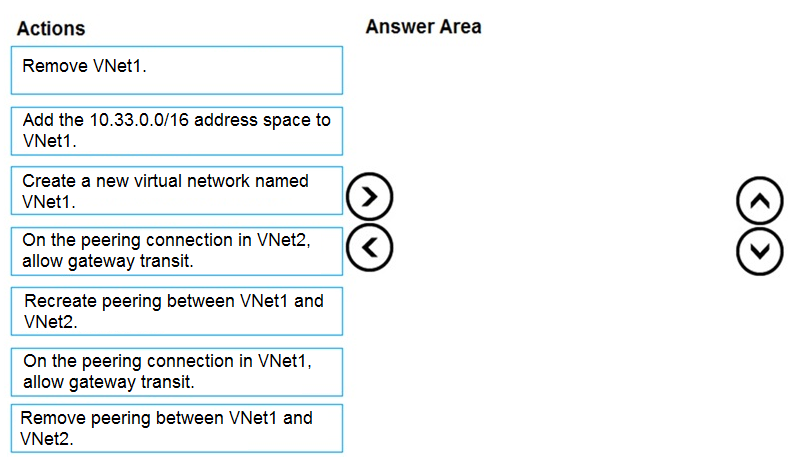
This order makes sense: Remove peering, add 10.33.0.0/16 to VNet1, then recreate the peering. Azure won’t automatically update routes for new address spaces on an active peering unless you remove and re-add it. I think that’s still how it works unless there’s a sync option (which isn’t here). Someone correct me if that’s changed recently.
Avoids the trap of trying to add address space while peering still exists, which won’t update routes properly. I’ve seen this sequence in similar exam questions before, pretty sure that’s what Microsoft expects here.
Seen this type before, order should be: remove peering between VNet1 and VNet2, add the 10.33.0.0/16 address space to VNet1, then recreate the peering. Azure doesn’t let peerings see new address ranges until they’re re-established. That’s what most study guides and Microsoft docs show too. If anyone's seen a different method lately drop a note.
- Remove peering between VNet1 and VNet2
- Add the 10.33.0.0/16 address space to VNet1
- Recreate peering between VNet1 and VNet2
I don't think creating or removing the actual VNet is needed here. The trick is that you can't add a new address space to VNet1 while there's an active peering-it'll fail or not sync the route. So it goes: Remove peering between VNet1 and VNet2, then add 10.33.0.0/16 to VNet1, then recreate peering so both sides see the updated address spaces.
- Remove peering between VNet1 and VNet2
- Add the 10.33.0.0/16 address space to VNet1
- Recreate peering between VNet1 and VNet2
I'm pretty sure that's right but let me know if anyone has seen Azure change this flow lately, since UI can sometimes surprise.
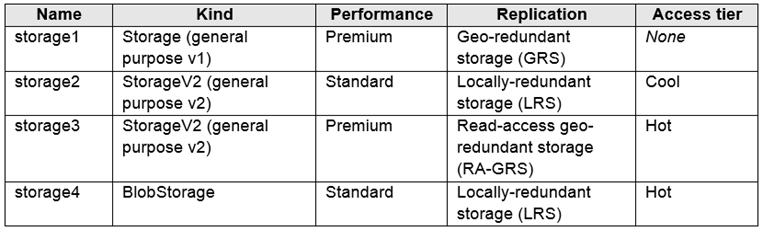 You need to identify which storage account can be converted to zone-redundant storage
(ZRS) replication by requesting a live migration from Azure support. What should you
identify?
You need to identify which storage account can be converted to zone-redundant storage
(ZRS) replication by requesting a live migration from Azure support. What should you
identify?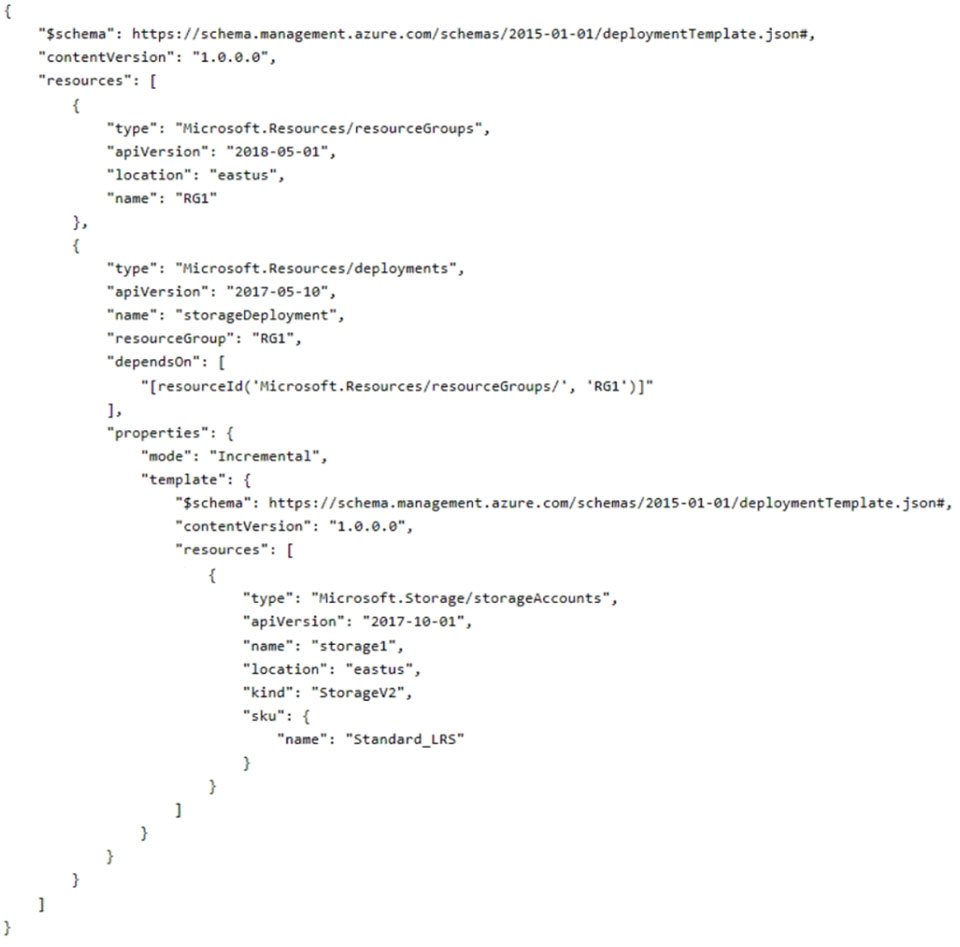 Which cmdlet should you run to deploy the template?
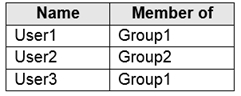 You plan to monitor storage1 and to configure email notifications for the signals shown in
the following table.
You plan to monitor storage1 and to configure email notifications for the signals shown in
the following table.
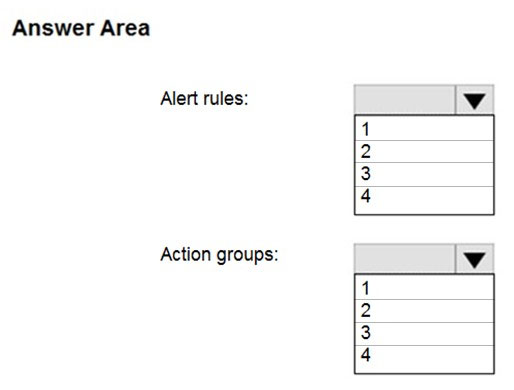
 You need to identify the minimum number of alert rules and action groups required for the
planned monitoring.
How many alert rules and action groups should you identify? To answer, select the
appropriate options in the answer area.
Hot Area:
You need to identify the minimum number of alert rules and action groups required for the
planned monitoring.
How many alert rules and action groups should you identify? To answer, select the
appropriate options in the answer area.
Hot Area: