Had something like this in a mock, C is LTV (Lifetime Value) which helps decide customer acquisition spend. Makes sense here, pretty sure that's what they want.
Call it it's C for LTV, since that's the main metric companies use to set how much they'll spend acquiring new customers. I've seen this logic pop up in official guides and practice exams too. If you look at the exam topics for this cert, they focus a lot on planning and metrics, so LTV just fits. Anyone disagree?

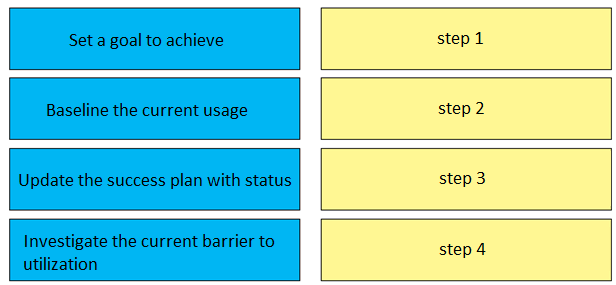
Promote internally → schedule training → monitor usage → review feedback. Internal promotion gets users interested first, then training ramps up skills, usage tracking sees the impact, and finally feedback drives improvements. Pretty sure that's the order most Cisco adoption guides suggest.
Actually, I'd swap it and start with scheduling training before internal promotion, then review feedback, monitor usage last. Some practice tests or the official guide show training often comes first in adoption projects. Let me know if I'm off base.
I always thought schedule training should go before promote internally, then review feedback and finally monitor usage. That way people know how to use the system right off the bat. Not totally sure, open to corrections if there's a Cisco-specific sequence here.

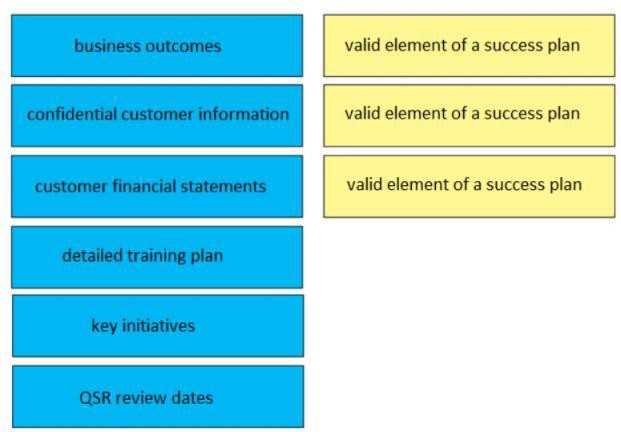
Yeah, every guide I’ve seen lists customer objectives, key stakeholders, and implementation timeline as core elements for Cisco success plans. Critical risks and constraints aren’t picked unless the question says otherwise. This matches what shows up on most practice tests.
Customer objectives, key stakeholders, implementation timeline. These three are the main elements Cisco looks for in a success plan, not critical risks or constraints. Pretty sure that's how it's shown on their official materials.
Seen these pop up in the official guide and some practice exams, it's always customer objectives, key stakeholders, and implementation timeline.

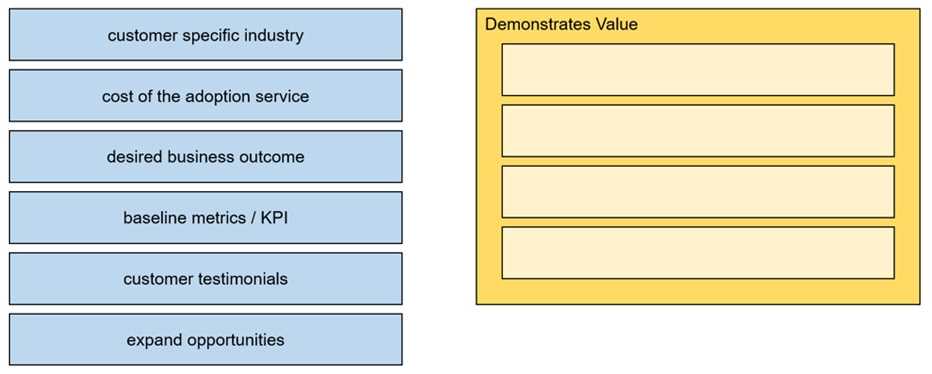
saw pretty similar problem in my exam. before, tricky with what counts as actual value. Usually, measurable outcomes (like increased uptime, cost savings, reduced deployment time) belong on the 'value shown' side, not just general quotes or generic praise. So stuff like ROI percentage or specific metrics are in. It's easy to miss if the success is just described vaguely.
Cost savings, uptime improvements, and ROI stats all show real value for the case study, so those map to 'value shown.' Stuff like customer praise or vague statements doesn't really cut it here. Pretty sure that's what they're looking for, but open if someone sees it different.

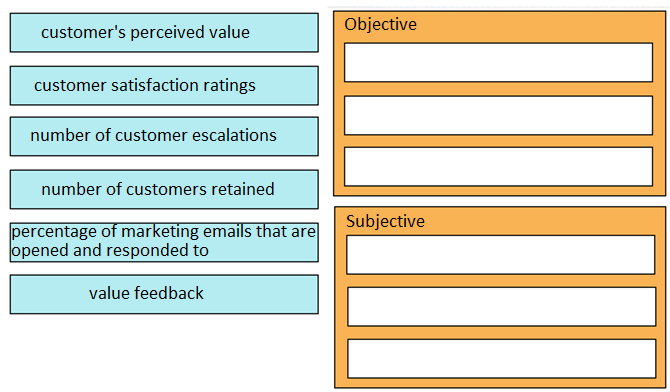
Yeah, seen similar on practice tests. Subjective is CSAT and NPS since they measure perception or sentiment, not hard data. Objective would be case count and adoption rate since they're number-based. Not 100% sure but most exam guides split it like that. Disagree?
- Subjective: CSAT, NPS
- Objective: Case count, Feature adoption rate
B is the right sequence-define, measure, analyze, improve, control. Had something like this in a mock and it always followed classic DMAIC structure for process improvement. Pretty sure about this but open if anyone knows a Cisco-specific twist.
B tbh and D seem right to me. Customer business outcomes definitely go in a success plan, and services cost sometimes gets tracked as part of showing value. Saw similar logic in the Cisco success plan guide, but not 100% sure if both always apply on the actual exam. If you check the official study guide, it lines up. Anyone disagree?